

KeywordRanker
KeywordRanker swiftly identifies low-competition, high-value SEO keywords using the Keyword Golden Ratio for optimal.
tool Details
Explore More
Alternatives
About KeywordRanker
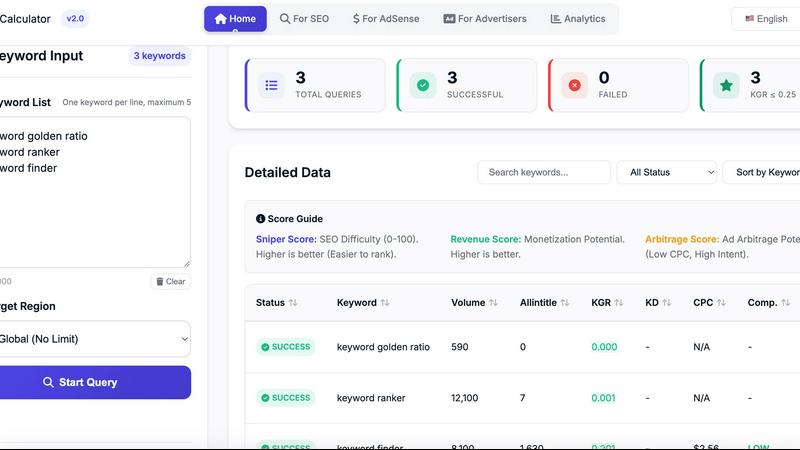
KeywordRanker is an advanced SEO analysis platform designed to help users discover high-value, low-competition keywords through the innovative application of the Keyword Golden Ratio (KGR) methodology. This tool is essential for SEO professionals, digital marketers, content creators, and affiliate bloggers who seek a systematic approach to navigating saturated markets. KeywordRanker's primary value proposition is its ability to automate the complex KGR calculation, streamlining the process of dividing the number of competing pages, identified through Google's allintitle: operator, by the keyword's monthly search volume. By focusing on keywords with a KGR of 0.25 or lower, users can uncover "blue ocean" long-tail keywords that are frequently overlooked, thereby fostering rapid organic growth and optimizing content creation efforts. The platform offers bulk keyword analysis, integrates real-time data from APIs like Google Ads and Ahrefs for accurate search volume and competition metrics, and supports granular targeting across various global regions, making it an indispensable tool for data-driven SEO strategies.
Features
KGR Calculator
The KGR Calculator allows users to input multiple keywords and obtain their KGR values rapidly. This feature automates the tedious process of calculating competition against search volume, providing actionable insights in seconds without the need for a sign-up.
Bulk Keyword Analysis
KeywordRanker supports bulk analysis for up to 5 keywords simultaneously. This feature is designed to enhance efficiency, enabling users to analyze large keyword lists quickly and identify optimal targets for their SEO strategies.
Real-Time Data Integration
The platform seamlessly integrates real-time data from prominent APIs like Google Ads and Ahrefs. This integration ensures that users have access to the latest search volume and keyword difficulty metrics, allowing for informed decision-making in their keyword selection processes.
Regional Targeting
KeywordRanker offers granular targeting capabilities across multiple regions, including the United States, China, and Europe. This feature allows users to tailor their keyword strategies according to specific geographical markets, enhancing the relevance and effectiveness of their SEO efforts.
Use Cases
SEO Optimization for Blogs
Bloggers can utilize KeywordRanker to find low-competition keywords that align with their niche. By focusing on KGR keywords, they can create content that ranks quickly on search engines, driving organic traffic and improving visibility.
Affiliate Marketing Strategies
Affiliate marketers can leverage the KGR methodology to discover hidden long-tail keywords that yield high conversion rates. Targeting these keywords can significantly enhance affiliate revenue by attracting more qualified leads.
Local Business SEO
Local businesses can use KeywordRanker to identify KGR keywords specific to their services and locations, such as "City + Service." This targeted approach helps in dominating local search results and increasing inquiries from potential customers.
Content Creation Planning
Content creators can benefit from KeywordRanker by systematically identifying a series of related KGR keywords. This helps in planning content calendars and building topical authority, ultimately boosting the overall performance of their websites.
Frequently Asked Questions
What is the Keyword Golden Ratio (KGR)?
The Keyword Golden Ratio (KGR) is a metric used to evaluate the competition and value of keywords. It is calculated by dividing the number of Google results for the keyword (using the allintitle: operator) by the monthly search volume. A KGR of 0.25 or lower indicates an excellent opportunity for ranking.
How does KeywordRanker help with SEO?
KeywordRanker helps users identify low-competition, high-value keywords quickly. By focusing on KGR keywords, users can bypass saturated markets, achieve faster rankings, and attract targeted traffic to their websites.
Can I analyze multiple keywords at once?
Yes, KeywordRanker supports bulk keyword analysis, allowing users to analyze up to 5 keywords simultaneously. This feature is designed to enhance efficiency and streamline the keyword research process.
Is there a free version of KeywordRanker?
Yes, KeywordRanker offers a free KGR calculator that provides results without requiring user registration. This allows potential users to experience the tool's capabilities before committing to any paid plans.
Similar to KeywordRanker

Forms Plugin
The #1 Native Form Builder Plugin for Framer - No Code, No Embeds, No External Platforms.


BriefIQ
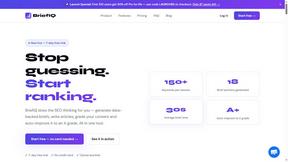
AI SEO platform for keyword research, content briefs, writing, grading, optimization and publishing.


ContextBolt SEO
Research keywords, competitors, backlinks and AI visibility inside Claude or Codex, with findings saved to your SEO dashboard.
