

iGPT
iGPT transforms enterprise email data into secure, context-aware answers for AI agents, streamlining workflows.
tool Details
Explore More
Alternatives
About iGPT
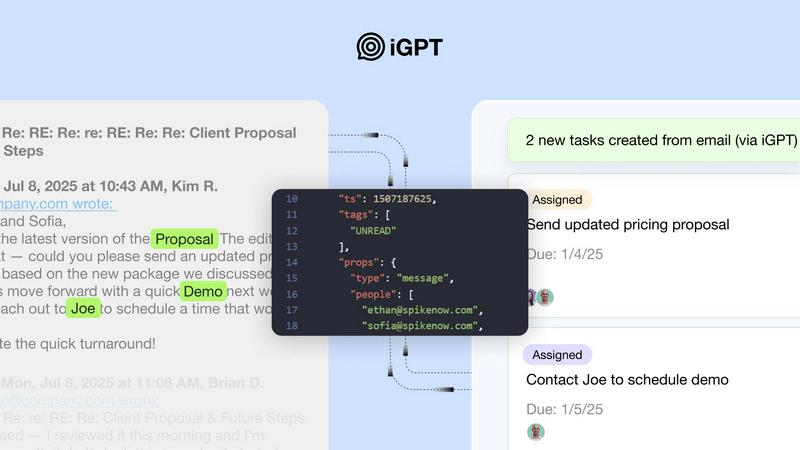
iGPT is an advanced, enterprise-grade email intelligence API specifically designed to extract actionable insights from unstructured email communications and attachments. This product serves as the foundational layer for agentic and AI-powered systems, addressing the critical need for reliable and contextually aware information derived from complex data sets. By deeply indexing emails and associated documents, iGPT converts fragmented conversations into coherent, trusted responses that can be utilized for reasoning and automation. Its core value proposition revolves around simplifying the data processing pipeline, eliminating the need for manual tasks such as parsing, indexing, or prompt tuning. iGPT offers a single unified API endpoint, which streamlines retrieval, context shaping, and reasoning processes. Built with security-conscious enterprises in mind, iGPT ensures zero data training, granular Role-Based Access Control (RBAC), and comprehensive audit trails, allowing organizations to deploy intelligent agents confidently while adhering to stringent compliance and data governance standards. With iGPT, businesses can harness the power of email intelligence to enhance productivity and decision-making.
Features
Immediate Integration
iGPT provides an SDK and live playground that allows developers to test requests and responses quickly, facilitating seamless integration into existing systems. Users can begin leveraging the API's capabilities without extensive setup.
Contextual Responses
The API delivers contextual responses that are ready for reasoning and automation. Each response includes citations to the source messages and attachments, ensuring transparency and traceability of the information provided.
Real-time Ingestion
iGPT indexes new messages and attachments instantly, ensuring that users always have access to the most current data. This feature allows for continuous updates to insights and answers derived from email communications.
Unified Endpoint
With iGPT, users can replace multiple endpoints with a single, natural language request across various data sources. This consolidation simplifies the interaction with the API and enhances the user experience by streamlining operations.
Use Cases
Email Assistants
Organizations can build AI-driven email assistants that draft, prioritize, and act on emails with full context, improving response times and overall productivity in managing communications.
Workflow Automation
iGPT enables the transformation of email threads into actionable tasks, deadlines, and approvals. This capability allows teams to efficiently manage workflows and flag issues or delays in processes.
Support Copilots
The API assists in reconstructing comprehensive customer narratives by analyzing long email chains, attachments, and tone shifts. This feature enhances customer support by providing agents with complete context.
Insights from Attachments
iGPT can summarize and extract relevant information from attachments, such as invoices and contracts, within the context of the email thread and its participants. This capability aids in decision-making and enhances data utilization.
Frequently Asked Questions
What types of data can iGPT process?
iGPT can process a variety of unstructured data found in email communications, including text from emails and attachments such as PDFs, spreadsheets, and documents.
How does iGPT ensure data security?
iGPT employs zero data training, Role-Based Access Control (RBAC), and zero data retention policies. Inferences are processed in memory, and no data is stored after processing, ensuring the highest level of security.
Is there a limit to the number of emails iGPT can index?
While specific limits may depend on the subscription plan, iGPT is designed to handle large volumes of email data efficiently, providing real-time indexing to keep insights up to date.
How can businesses test iGPT before implementing it?
iGPT offers a live playground where users can connect and test various data sources, try different Context Engineering Framework (CEF) tiers, and receive $10 in credits without requiring a credit card.
Similar to iGPT
Tally Counter
Online tally counter for tracking attendance, workouts, inventory, visitors, sports scores, habits, and everyday counting tasks.

GROWNX
Real-time App Store analytics with an AI copilot for portfolio owners.
Optilise
Optilise is a Dutch Power BI consultancy helping SMEs get a grip on their numbers with clear BI software and solutions. We make companies self suffici

EchoLeads AI
EchoLeads AI is an enterprise-grade platform using autonomous AI voice agents to automate cold calling, lead qualification, and omnichannel.

Edge Arena
Edge Arena empowers businesses to test decisions through competing AI agents, ensuring optimal, verified solutions for strategic execution.
Decker
Decker is a deliverable OS that empowers consultants to create, refine, and monetize high-quality work with AI-driven workflows and expert support.
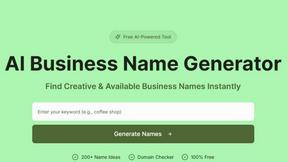
AI Business Name Generator
Generate unique, brandable business names instantly using advanced AI algorithms designed for startups, domains, and companies.
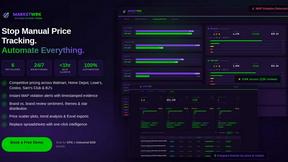
MarketWrk
MarketWrk automates CPG pricing, MAP monitoring, and review tracking across all retailers with instant alerts.