AutoPhish vs MarketWrk
Side-by-side comparison to help you choose the right tool.

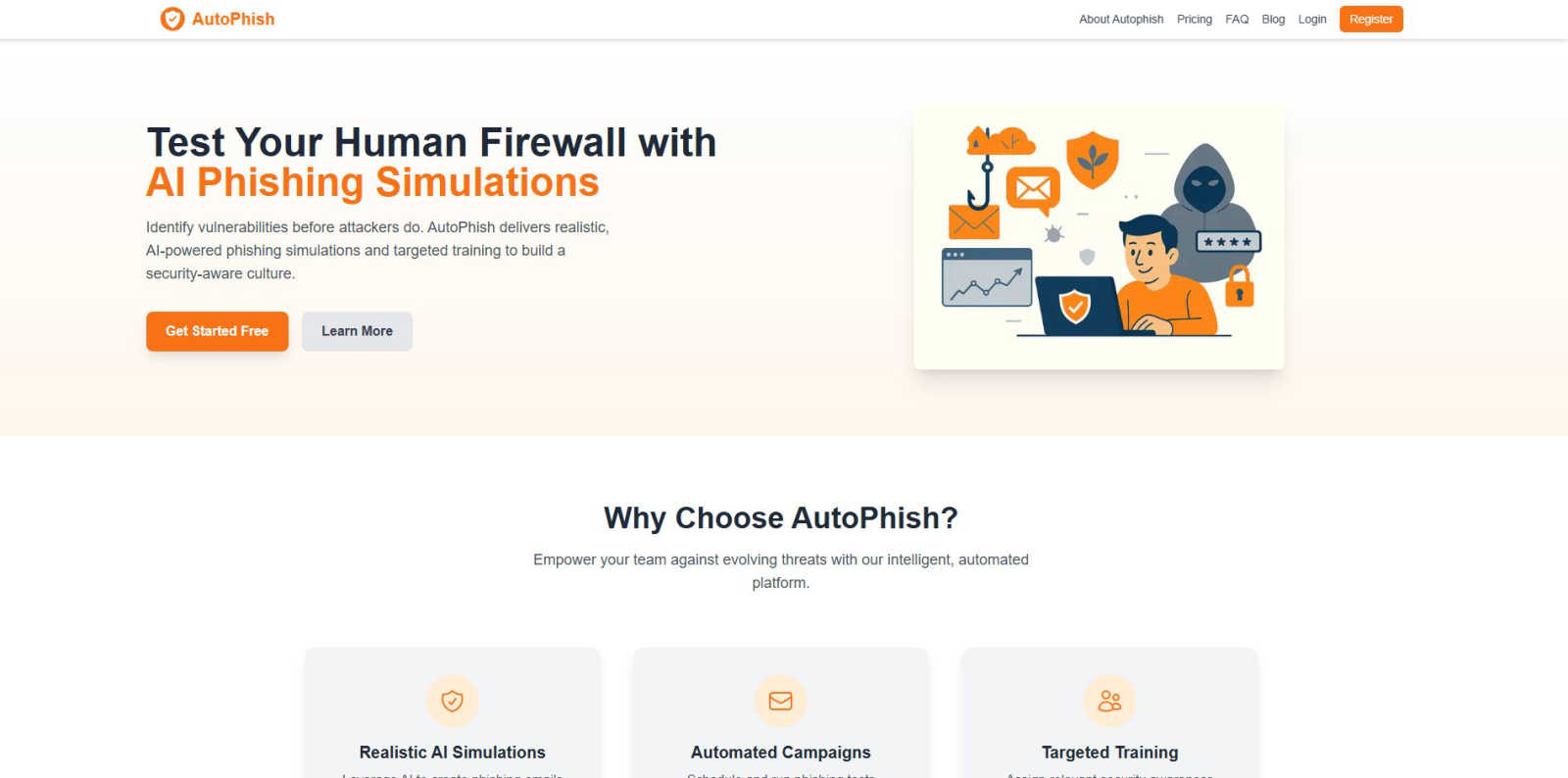
AutoPhish uses AI to run automated phishing simulations and deliver targeted security training.
Last updated: March 1, 2026

MarketWrk
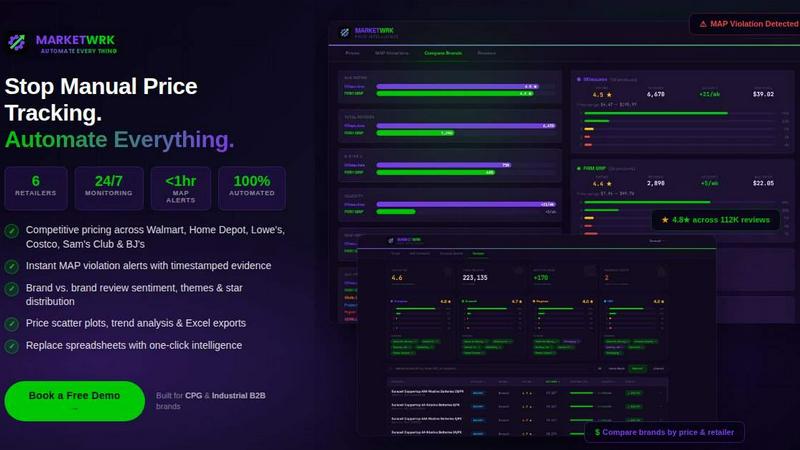
MarketWrk automates CPG pricing, MAP monitoring, and review tracking across all retailers with instant alerts.
Last updated: March 18, 2026
Visual Comparison
AutoPhish
MarketWrk
Feature Comparison
AutoPhish
AI-Powered Phishing Simulation Engine
The platform's core engine utilizes artificial intelligence to dynamically generate and adapt phishing email templates. This AI analyzes current threat intelligence and real-world attack patterns to create simulations that accurately mimic the latest tactics, techniques, and procedures (TTPs) used by malicious actors. The content is context-aware, allowing for customization based on industry, department, or specific known threats, ensuring a realistic and challenging test of employee awareness beyond generic, easily recognizable templates.
Automated Campaign Management
AutoPhish provides full automation for the phishing simulation lifecycle. Administrators can schedule campaigns in advance, define target user groups, and set launch parameters. The platform handles the entire execution process, including email delivery, click and interaction tracking, and post-campaign reporting. This automation ensures consistent, ongoing testing without requiring manual intervention from security teams, saving significant time and operational overhead while maintaining program regularity.
Granular Reporting and Analytics
Following each simulation campaign, the platform delivers detailed, actionable analytics. Reports provide metrics on click-through rates, credential submission attempts, and user susceptibility across different departments or roles. Data is presented in dashboards that highlight high-risk individuals and trends over time. This granular visibility allows security teams to quantitatively measure the human risk surface and track the effectiveness of their awareness training initiatives with precision.
Targeted, Automated Training Assignment
Based on simulation results, AutoPhish automatically assigns relevant security awareness training modules to users. This targeted approach ensures that individuals who fail a simulation receive immediate, context-specific education on the phishing tactics they encountered. Training assignments can also be role-based, providing finance teams with different content than engineering staff, for example. This closed-loop system of test, measure, and educate accelerates the development of a security-conscious workforce.
MarketWrk
Automated Retail Price Monitoring
MarketWrk provides continuous, automated monitoring of competitor pricing across a configurable set of retailers and geographic zip codes. The system tracks price movements, promotions, and stock levels in real-time, aggregating this data into a centralized dashboard. This eliminates the need for manual data scraping and spreadsheet management, transforming raw pricing data into immediately actionable intelligence. Users can view historical price trends through interactive charts to correlate competitor actions with their own sales performance, enabling proactive pricing strategies.
Real-Time MAP Violation Detection & Alerts
The platform enforces Minimum Advertised Price policies by continuously scanning authorized and unauthorized seller pages across monitored retailers. The instant a listed price falls below a brand's predefined MAP floor, MarketWrk triggers an automated violation alert. This notification includes detailed information such as the product, retailer, MAP price, advertised price, and violation amount, allowing brand teams to take immediate corrective action to protect brand equity and maintain healthy channel margins.
AI-Powered Ratings & Review Monitoring
MarketWrk employs artificial intelligence to monitor product reviews and Q&A sections across all tracked retail channels. The system goes beyond simple aggregation by extracting key themes and sentiment from customer feedback. It provides instant notifications for negative reviews or unanswered customer questions, enabling brand teams to engage swiftly. This capability helps mitigate damage to conversion rates and provides direct insights into product perception and potential quality issues.
Competitive Brand Comparison Engine
This feature allows brands to benchmark their entire product portfolio against key competitors across multiple dimensions. The comparison engine analyzes metrics such as per-unit price indices, average ratings, review sentiment, and retailer shelf presence. Interactive visualizations, including price-by-retailer scatter plots and indexed comparisons, highlight competitive advantages, vulnerabilities, and market white space, providing a holistic view of the brand's position within its category.
Use Cases
AutoPhish
Proactive Human Risk Assessment
Organizations use AutoPhish to conduct regular, controlled phishing simulations across their entire employee base. This proactive testing identifies which users are most susceptible to social engineering attacks, quantifying the human element of security risk. The data gathered provides a baseline security posture metric and helps prioritize security awareness efforts and budget allocation towards the most vulnerable segments of the workforce.
Compliance and Audit Readiness
For companies subject to regulatory frameworks like GDPR, HIPAA, or ISO 27001, AutoPhish provides documented evidence of ongoing security awareness training and testing. The platform's detailed reporting and audit trails demonstrate due diligence in educating employees about phishing threats, which is a common requirement for compliance. This helps organizations pass security audits and meet regulatory mandates for employee cybersecurity training.
Security Awareness Program Automation
IT and security teams leverage AutoPhish to automate the repetitive tasks associated with running a security awareness program. Instead of manually creating emails, sending tests, and tracking responses, the platform handles these operations. This allows security professionals to focus on analyzing results, developing strategic improvements, and responding to actual security incidents rather than administrative program management.
Post-Incident Reinforcement Training
Following a real phishing incident or a failed simulation where multiple users clicked a malicious link, AutoPhish enables rapid deployment of targeted training. Administrators can immediately assign specific training modules related to the attack vector used, reinforcing correct behavior and ensuring employees understand the specific red flags they missed. This timely intervention strengthens institutional memory and reduces the likelihood of repeat failures.
MarketWrk
Enforcing MAP Policy Compliance
Brands utilize MarketWrk to automate the surveillance of their MAP agreements across hundreds of online retail listings. By receiving instant, detailed alerts the moment a violation occurs, brand protection and sales teams can immediately contact the offending retailer to enforce policy. This rapid response prevents margin erosion, maintains fair competition among retailers, and upholds the brand's premium market positioning without manual daily checks.
Conducting Competitive Price Analysis
Pricing managers and revenue analysts use the platform's historical pricing charts and competitor tracking to perform deep competitive analysis. By visualizing when and where competitors drop prices or launch promotions, they can directly correlate these external events with internal sales data peaks and valleys. This insight informs strategic pricing decisions, promotional timing, and discount strategies to defend or gain market share.
Managing Online Brand Reputation
Marketing and customer service teams leverage the AI-driven review monitoring to manage brand health on the digital shelf. Immediate alerts for negative reviews allow for prompt, public responses to resolve customer issues, demonstrating accountability. Monitoring Q&A sections ensures customer inquiries are answered quickly, improving conversion rates and providing valuable product feedback directly from the point of sale.
Strategic Product Portfolio Benchmarking
Product managers and strategists employ the brand comparison engine during planning cycles. By benchmarking their products against competitors on price, ratings, and retailer presence, they can identify underperforming SKUs, justify price adjustments, discover opportunities for new product development in underserved segments, and allocate trade marketing resources more effectively to retailers where they have a competitive edge.
Overview
About AutoPhish
AutoPhish is an advanced, AI-powered cybersecurity platform engineered to proactively strengthen an organization's human firewall through realistic phishing simulations and targeted security awareness training. The platform is designed for IT security teams, compliance officers, and organizational leaders across all industries who are responsible for mitigating the risk posed by social engineering attacks. Its core value proposition lies in its ability to leverage artificial intelligence to generate highly convincing, context-aware phishing email templates that mimic current, real-world threat actor tactics, techniques, and procedures (TTPs). This moves beyond generic simulations to provide a true test of employee vigilance. The platform automates the entire lifecycle of a security awareness program, from campaign scheduling and execution to detailed analytics and the automated assignment of role-specific training modules based on individual user performance. By identifying behavioral vulnerabilities before malicious actors can exploit them, AutoPhish enables organizations to cultivate a resilient, security-aware culture, reduce incident response costs, and demonstrably improve their overall security posture against evolving email-based threats.
About MarketWrk
MarketWrk is a comprehensive brand management and retail intelligence platform engineered specifically for Consumer Packaged Goods (CPG) and industrial B2B brands. The platform automates the complex and time-consuming process of monitoring the digital shelf across major retailers, including Walmart, Home Depot, Lowe's, Costco, Sam's Club, BJ's, and Ace Hardware. Its core function is to deliver actionable pricing intelligence by tracking competitor pricing, detecting Minimum Advertised Price (MAP) violations, monitoring product ratings and reviews, and facilitating in-depth brand comparison. Designed for brand managers, sales directors, and revenue management teams, MarketWrk consolidates disparate data streams into a single, dark-mode portal featuring interactive charts, one-click Excel exports, and automated email alerts. The primary value proposition lies in its ability to replace costly, slow-to-implement enterprise solutions, offering the same depth of real-time data and analytics at a significantly reduced cost and with implementation timelines measured in days rather than months or quarters. This enables brands to protect margins, respond to competitive threats instantly, and make data-driven decisions to optimize sales and brand equity.
Frequently Asked Questions
AutoPhish FAQ
How does AutoPhish ensure simulation emails are safe?
AutoPhish simulations are conducted in a fully controlled environment. All links within simulation emails point to internal, secure servers owned and operated by AutoPhish, not to external malicious websites. No actual malware is deployed, and any credentials entered by users during a test are captured in a secure, encrypted database solely for reporting purposes and are never used for authentication. The platform is designed to educate, not harm, user systems or data.
What is required to start sending phishing simulations?
To begin, an administrator must verify ownership of the company domain they intend to use for sending simulations. This involves configuring specific DNS records (like SPF) to authorize AutoPhish to send email on the organization's behalf, ensuring deliverability and preventing the simulations from being marked as spam. The platform provides step-by-step guidance for this domain verification and connection process.
Can I customize the phishing templates?
Yes, AutoPhish offers extensive customization capabilities. While the AI engine provides a library of realistic, up-to-date templates, administrators can fully edit email subject lines, body content, sender addresses (from verified domains), and landing pages. This allows for the creation of hyper-targeted simulations that reflect internal communication styles or mimic specific, credible threats relevant to the organization.
How does the targeted training work?
When a user interacts with a simulated phishing email (e.g., clicks a link), AutoPhish logs this event. The platform can be configured to automatically enroll that user in a pre-defined training course relevant to the type of phishing attack simulated. Training modules are typically short, interactive videos or quizzes focused on identifying phishing indicators. Assignment rules can also be based on user department or job role for broader, proactive education.
MarketWrk FAQ
Which retailers does MarketWrk monitor?
MarketWrk currently monitors major online retailers critical for CPG and industrial B2B brands, including Walmart, Home Depot, Lowe's, Costco, Sam's Club, BJ's, and Ace Hardware. The platform tracks pricing, inventory, ratings, and reviews across these channels, with the capability to configure monitoring by specific geographic zip codes for localized competitive analysis.
How quickly does the system detect and alert for MAP violations?
The system is designed for real-time monitoring and provides instant notifications. MarketWrk detects MAP violations on the day they occur on the retailer's website. Upon detection, configured team members receive an automated email alert with all relevant violation details, enabling same-day enforcement actions to mitigate brand and margin damage.
Can I export the data collected by MarketWrk for further analysis?
Yes, all data within the MarketWrk dashboard is exportable. The platform features a one-click "Export to Excel" function that allows users to download pricing, inventory, competitive data, and review metrics. This facilitates deeper custom analysis, integration with internal reports, and sharing insights across departments such as finance, sales, and executive leadership.
How does MarketWrk's pricing compare to enterprise solutions?
MarketWrk is positioned as a cost-effective alternative to traditional enterprise brand monitoring tools, which often exceed $50,000 annually and require lengthy implementation cycles spanning multiple quarters. MarketWrk delivers comparable, real-time data and analytics at a fraction of that cost, with a streamlined setup process that gets brands operational within days, not months.
Alternatives
AutoPhish Alternatives
AutoPhish is an AI-powered cybersecurity platform within the business intelligence and productivity management category. It specializes in automating sophisticated phishing simulations and targeted security awareness training to proactively strengthen an organization's human layer of defense. Organizations may seek alternatives to AutoPhish for various operational and strategic reasons. Common drivers include budget constraints and specific pricing model requirements, the need for different feature integrations or platform capabilities, and preferences for alternative deployment methods or user interface designs. When evaluating alternative solutions, key criteria should include the sophistication and realism of the simulation engine, the depth of analytics and reporting provided, the flexibility and automation of campaign management, and the relevance and personalization of the accompanying training modules. The chosen platform must align with both technical requirements and organizational security culture goals.
MarketWrk Alternatives
MarketWrk is a brand management and competitive intelligence platform designed for CPG and industrial B2B companies. It automates critical tasks like competitive pricing analysis, Minimum Advertised Price (MAP) monitoring, and review sentiment tracking across major retail channels. This places it within the business intelligence software category, specifically focused on retail and e-commerce analytics. Users may explore alternatives for several reasons, including budget constraints, the need for integration with specific e-commerce platforms or ERP systems, or requirements for different data sources and retailer coverage. Some may seek more advanced analytics, custom reporting features, or a different user interface that better aligns with their internal workflows. When evaluating an alternative solution, key considerations should include the breadth and accuracy of retailer data coverage, the sophistication of violation detection algorithms, the depth of review analytics, and the overall implementation timeline. The total cost of ownership, including setup, training, and ongoing subscription fees, must be weighed against the platform's ability to deliver actionable, real-time insights that protect brand equity and optimize pricing strategy.