Giga AI vs rfpaihub
Side-by-side comparison to help you choose the right tool.

Giga AI is a context engineering tool that eliminates AI coding errors and hallucinations for faster, higher-quality.
Last updated: February 28, 2026

rfpaihub
RFP AI Hub is a comprehensive directory for comparing AI-powered RFP response, proposal management, and security questionnaire automation tools.
Last updated: April 13, 2026
Visual Comparison
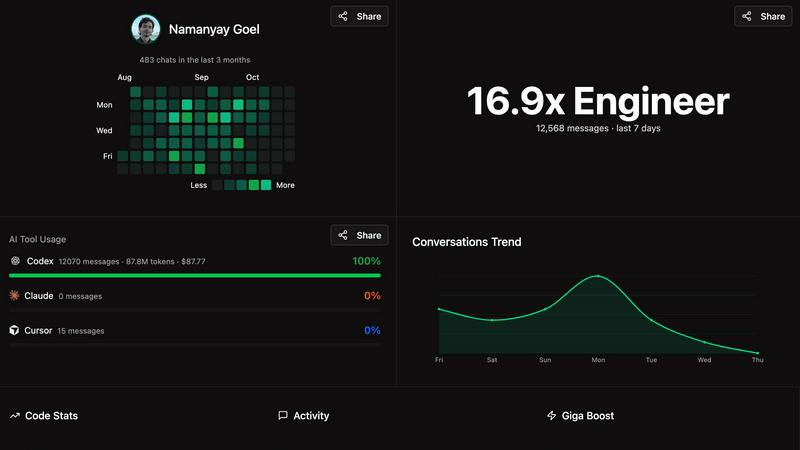
Giga AI
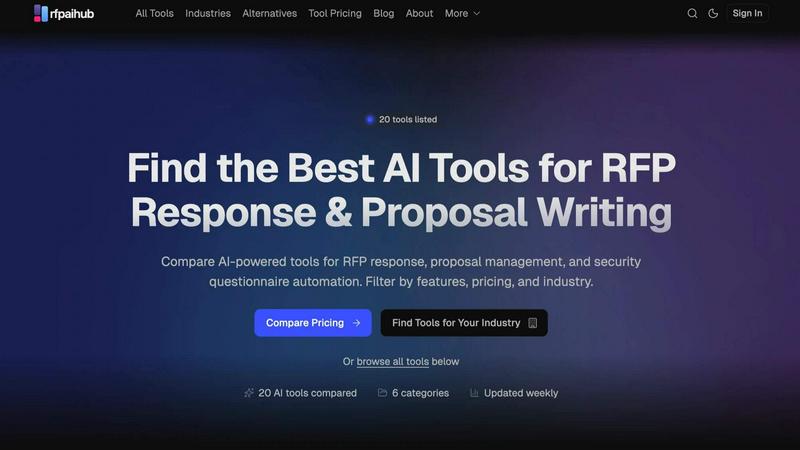
rfpaihub
Feature Comparison
Giga AI
Automated Codebase Analysis & Context Generation
Giga AI automatically scans and analyzes your entire project structure upon installation. It generates multiple, detailed "rules" files that document your codebase from different technical angles, including architecture, dependencies, naming conventions, and existing patterns. This process creates a persistent, high-fidelity model of your project that serves as the foundational context for all subsequent AI interactions, eliminating the need for manual context provisioning.
Persistent Project Memory & Intent Management
Unlike standard AI assistants that operate with limited, ephemeral context windows, Giga AI maintains a dynamic and persistent memory of your project. It continuously updates its understanding as you code, tracking decisions, architectural patterns, and developer intent. This ensures that the AI's suggestions remain coherent and aligned with the project's long-term goals over time, preventing contradictory or out-of-context code generation.
Multi-Agent Integration Layer
Giga AI is engineered as a seamless integration layer for popular AI coding environments. It works directly within Cursor, Claude Code, VS Code, and other compatible editors. The installation process takes seconds, after which Giga operates silently in the background, enriching the prompts and context sent to the underlying AI model without disrupting the developer's existing workflow or requiring platform switching.
Hallucination & Error Reduction Engine
The system is specifically designed to mitigate common AI failure modes in coding. By providing the AI with precise, project-specific context, Giga AI drastically reduces instances of hallucinated code (e.g., inventing non-existent functions or libraries), incorrect API implementations, and architectural mismatches. This leads to a documented reduction in bugs and errors, allowing generated code to work correctly within your unique codebase the first time.
rfpaihub
Curated Tool Directory
The platform maintains a meticulously researched and regularly updated directory of AI-powered RFP and proposal software. Each tool listing includes detailed specifications, categorized features, and verified information to ensure users are comparing accurate and current data. This curation eliminates the need for manual web searches and unreliable third-party reviews.
Advanced Filtering System
Users can refine the tool database using multiple, simultaneous filters. Key filter criteria include software categories (e.g., RFP Response vs. Security Automation), specific features (like AI drafting or content library integration), target industry (such as SaaS, Healthcare, or Finance), and published pricing tiers. This granular filtering allows for highly targeted discovery based on precise workflow needs.
Comparative Analysis Framework
RFP AI Hub provides a structured framework for comparing tools side-by-side. This goes beyond basic feature lists to include practical differentiators relevant to response teams, enabling direct comparison of AI capabilities, integration options, collaboration features, and security protocols to identify the optimal solution for complex organizational requirements.
Vendor-Neutral Educational Content
The site supplements its directory with a dedicated blog and resource sections that offer unbiased educational content on selecting and implementing RFP technology. This includes guides on workflow assessment, ROI justification, and best practices for leveraging AI in proposal processes, positioning the hub as an authoritative source rather than a lead-generation portal.
Use Cases
Giga AI
Accelerating MVP Development for Solo Founders
Non-technical founders and solo developers can leverage Giga AI to ship products faster and with greater confidence. By ensuring the AI understands the project's full scope and technical stack from the outset, Giga minimizes costly debugging cycles and architectural missteps. This allows individuals to focus on product vision and feature development rather than wrestling with AI inaccuracies or complex integration errors.
Enhancing Team Development Velocity & Consistency
For engineering teams, Giga AI standardizes the context provided to AI assistants across all developers. This ensures code generation adheres to shared project conventions, libraries, and patterns, improving code consistency and reducing review time. Team leads can trust that AI-assisted work will align with the established architecture, accelerating overall development velocity while maintaining code quality.
Managing Large, Complex Legacy Codebases
Developers working on large or legacy projects often struggle to provide sufficient context to AI tools. Giga AI's automated analysis comprehensively maps intricate dependencies, custom modules, and existing patterns. This allows engineers to safely use AI for feature additions, refactoring, or bug fixes within these complex systems without the AI introducing breaking changes or incompatible code.
Automating Repetitive Development & Maintenance Tasks
Giga AI enables the reliable automation of bulk coding tasks. With a stable and accurate understanding of the codebase, developers can issue high-level commands for generating multiple components, implementing widespread changes, or creating comprehensive documentation. This transforms the AI from a simple line-by-line assistant into a dependable partner for executing large-scale project plans autonomously.
rfpaihub
Procurement for Sales Operations Teams
Sales operations leaders tasked with selecting an enterprise RFP response platform can use RFP AI Hub to create a shortlist of qualified vendors. By filtering for tools with specific AI-matching algorithms, Salesforce integration, and enterprise-grade security, they can efficiently evaluate options that meet strict corporate procurement and technical requirements.
Tool Selection by Security & Compliance Teams
Security and compliance professionals overwhelmed by vendor security questionnaires (VSQs) and due diligence queries can utilize the directory to find specialized security questionnaire automation tools. They can filter for platforms with capabilities like automated mapping to frameworks (e.g., SOC 2, ISO 27001) and library management for standardized security responses.
Evaluation by Proposal Management Consultants
Independent consultants or agencies that manage proposals for multiple clients need to recommend tools appropriate for different business sizes and industries. RFP AI Hub allows them to quickly compare pricing models, feature sets, and industry specializations across the market to provide tailored, evidence-based recommendations to each client.
Market Research by Software Vendors
Competing software vendors in the RFP technology space can use the directory to conduct competitive analysis. The structured presentation of features and categories provides a clear overview of the competitive landscape, highlighting market gaps, feature differentiators, and prevailing pricing strategies within specific tool categories.
Overview
About Giga AI
Giga AI is a sophisticated context engineering and project management layer designed to augment AI-powered coding assistants like those in Cursor, Claude Code, and VS Code extensions. It functions as a persistent "project brain" for your development environment, engineered to dramatically improve the quality, accuracy, and relevance of AI-generated code. The core technical value proposition is the systematic elimination of AI errors, hallucinations, and the significant context-switching overhead that plagues standard AI coding tools. Giga AI achieves this by performing an automatic, multi-faceted analysis of your entire codebase to generate a dynamic, detailed understanding of project structure, dependencies, libraries, and developer intent. This persistent context ensures that your AI assistant operates with full awareness of your project's unique architecture from the start, building the right thing immediately. It is engineered for builders of all skill levels, from solo founders and non-technical entrepreneurs shipping their first MVP to seasoned engineers and team leads seeking to accelerate development velocity and reduce bug rates. By maintaining a dynamic memory of technical decisions and managing context seamlessly across all integrations, Giga AI enables a fundamental shift from constant debugging and repetitive re-prompting to focused, efficient building.
About rfpaihub
RFP AI Hub is a specialized, free-to-use online directory dedicated to the systematic evaluation and comparison of AI-powered software tools designed for the request for proposal (RFP) response lifecycle, proposal management, and security questionnaire automation. The platform serves as a centralized resource for sales operations teams, proposal managers, security compliance officers, and business development professionals who are seeking to modernize and accelerate their response processes. Its core value proposition lies in its ability to cut through market noise by providing detailed, filterable listings that allow users to identify the most suitable software based on specific functional requirements, industry vertical, team size, and budget constraints. By aggregating and categorizing tools across six distinct categories—including RFP Response, Proposal Writing, Security Questionnaire Automation, Knowledge Base management, Document Generation, and Contract & Bid Management—RFP AI Hub enables informed procurement decisions, potentially reducing tool evaluation time by providing transparent, side-by-side comparisons of capabilities and pricing structures.
Frequently Asked Questions
Giga AI FAQ
How does Giga AI integrate with my existing AI coding assistant?
Giga AI installs as a lightweight layer that operates within your chosen Integrated Development Environment (IDE), such as VS Code, Cursor, or compatible editors. It works silently in the background, intercepting and enriching the context sent to your primary AI assistant (e.g., the agent in Cursor or a Claude Code instance). There is no need to change your primary AI tool; Giga enhances its capabilities by providing it with superior, project-specific information.
What happens to my source code? Is it stored or used for training?
Giga AI prioritizes security and privacy. According to the provided information, your code is never stored or used for training models. The analysis occurs locally or in a secure, transient manner to generate the context rules needed for your session. This ensures your intellectual property remains confidential and is not exposed to external training datasets or long-term storage.
Is Giga AI suitable for beginner or non-technical users?
Yes, Giga AI is explicitly engineered for builders of all skill levels. For beginners, its primary value is in preventing the AI from generating confusing, incorrect, or irrelevant code that can halt progress. By keeping the AI focused on the project's actual structure and goals, Giga reduces frustration and allows non-technical users to effectively direct the AI to build what they envision, making the development process more accessible.
Can Giga AI handle projects with multiple languages and frameworks?
The core functionality of Giga AI is based on analyzing project structure, file relationships, and code patterns. This makes it inherently capable of working with polyglot codebases that use multiple programming languages and frameworks. Its automated analysis will map the dependencies and conventions within each part of the project, providing the necessary context to the AI assistant regardless of the specific technologies in use.
rfpaihub FAQ
What types of tools does RFP AI Hub compare?
RFP AI Hub compares AI-powered software across six primary operational categories: RFP Response software, Proposal Writing and management platforms, Security Questionnaire Automation tools, Knowledge Base & Answer Library systems, Document Generation engines, and comprehensive Contract & Bid Management suites. This categorization helps users align their search with their core workflow.
How does the platform ensure the accuracy of its tool information?
The platform employs a documented methodology involving direct vendor submissions, verification of public information, and ongoing updates. Vendors are encouraged to submit their product details for review at no cost, and the editorial team cross-references this data with publicly available specifications on vendor websites and product documentation.
Is there a cost to use RFP AI Hub for browsing and comparison?
No, RFP AI Hub operates as a free directory for all end-users. Individuals and teams can browse the entire tool database, utilize all filtering and comparison features, and access educational blog content without any requirement to create an account or pay a subscription fee.
Can I submit a tool to be listed on RFP AI Hub?
Yes, software vendors are invited to submit their AI-powered RFP, proposal, or security questionnaire products for inclusion in the directory. The submission process is free of charge. The editorial team reviews each submission against the platform's inclusion criteria to ensure it fits the defined categories and offers relevant AI-driven functionality before listing.
Alternatives
Giga AI Alternatives
Giga AI is a context engineering and project management layer designed to augment AI-powered coding assistants. It operates within the development tool category, acting as a sophisticated "project brain" that integrates with your IDE to eliminate coding errors and hallucinations, thereby accelerating development velocity and improving output quality. Users may explore alternatives for various practical reasons. Common considerations include budget constraints and specific pricing models, the need for different feature sets or integration capabilities with particular IDEs or AI models, and platform requirements such as operating system compatibility or deployment preferences like cloud versus local installation. When evaluating an alternative to a tool like Giga AI, focus on core capabilities that address the fundamental challenges of AI-assisted coding. Key criteria should include the solution's ability to maintain persistent project context to prevent hallucinations, its method for learning from developer decisions to ensure consistency, and the depth of its automated codebase analysis to generate accurate, actionable guidance for the AI.
rfpaihub Alternatives
RFP AI Hub is a specialized directory and comparison platform within the proposal management and productivity software category. It provides a centralized resource for teams to discover, evaluate, and compare AI-powered tools designed for RFP response, proposal creation, and security questionnaire automation. The platform allows users to filter options based on specific features, pricing models, and industry relevance to aid in the software selection process. Users often seek alternatives to any software directory, including RFP AI Hub, for several practical reasons. These can include the need for a platform with different curation criteria, more granular comparison metrics, or integration with existing procurement workflows. Budget constraints may also drive the search for free or lower-cost information sources, while some organizations require evaluation frameworks tailored to highly specific compliance or technical requirements. When evaluating an alternative resource, key considerations should include the depth and accuracy of the tool database, the recency and objectivity of the information provided, and the availability of detailed feature breakdowns. The ideal platform should offer transparent filtering capabilities that align with your team's primary needs, whether that's advanced AI functionality, robust security features, or specific integration capabilities, to ensure an efficient and informed decision-making process.