Iphone Phone House vs Miget

Side-by-side comparison to help you choose the right tool.

Iphone Phone House logo

Iphone Phone House

Iphone Phone House provides direct, low-latency access to physical iPhone fleets with full control, security, and automation for enterprise scale.

Last updated: April 13, 2026

Miget offers one flat-rate compute plan for unlimited app and service deployments with no per-service fees.

Last updated: April 13, 2026

Visual Comparison

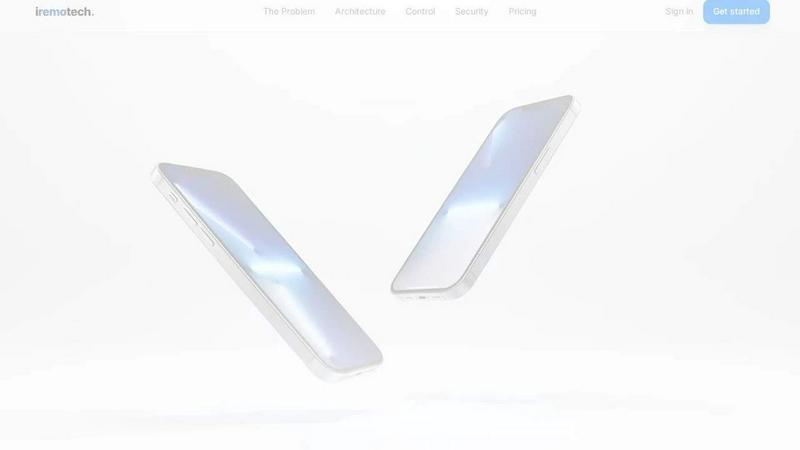
Iphone Phone House

Iphone Phone House screenshot

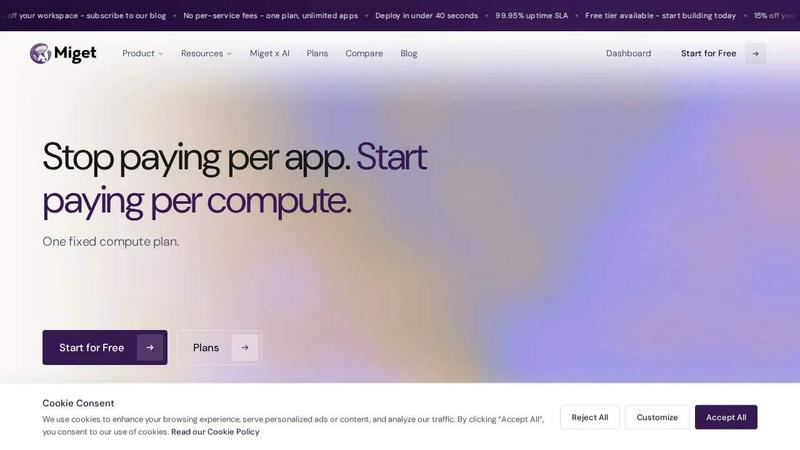
Miget

Miget screenshot

Feature Comparison

Iphone Phone House

Bare-Metal Device Streaming

iPhone Phone House utilizes an edge-optimized remote protocol to deliver direct, low-latency streaming from physical iPhone hardware. With average latency maintained below 50ms globally, users experience real-time interaction indistinguishable from handling a local device. This bare-metal approach ensures genuine iOS behavior, including accurate GPU rendering and sensor responses, which is critical for reliable automation and testing, eliminating the performance inconsistencies and high latency floor inherent in software-based emulation layers.

Dedicated Hardware Provisioning

Each client receives provisioned, physical iPhones allocated to their exclusive use. This architecture guarantees zero shared environments, providing predictable performance and eliminating "noisy neighbor" effects common in virtualized solutions. Devices are pre-configured and ready for immediate operation, removing setup overhead and ensuring infrastructure-grade reliability tailored for production-scale deployments without the need for internal hardware management.

Complete Session Telemetry & Control

The platform provides comprehensive oversight through live screen access, full session recordings, and detailed activity logs. All interactions are timestamped and attributable to specific users via cryptographic role attribution. This creates a complete audit trail for security and compliance. Furthermore, administrators retain ultimate control with remote lock and kill-switch capabilities, allowing for instant device shutdown in response to security anomalies or policy violations.

Enterprise-Grade Security Architecture

Security is engineered into the platform's foundation with a zero-trust access model. Features include dedicated device pools per client, network restrictions with IP whitelisting, and end-to-end encrypted data streams. This design ensures no credential sharing is necessary and mitigates risks associated with uncontrolled personal devices, making the platform suitable for compliance-sensitive operations and protecting against systemic security vulnerabilities.

Miget

Fixed Compute, Unlimited Services

Miget operates on a capacity-based billing model. Users select a compute plan with specific CPU and memory allocations. Within this reserved capacity, they can deploy an unlimited number of web apps, databases, background workers, and preview environments. This feature directly counters the traditional PaaS model where each component incurs a separate charge, providing complete cost predictability and eliminating financial barriers to deploying new services or creating full-stack previews for every pull request.

GitHub-Native Deployments & Preview Apps

Integration with GitHub is seamless and central to the workflow. Connecting a repository enables automatic deployments on every push to the main branch. Furthermore, every pull request automatically generates a complete, isolated preview environment with its own unique URL, including the application, its database, and data. This feature, coupled with aggressive build caching (Migetpacks), enables average deployment times under 40 seconds, streamlining CI/CD without complex configuration.

Managed Databases Within Plan

Miget includes fully managed database services like PostgreSQL, Valkey (Redis-compatible), and MySQL as integral parts of the platform, not as costly add-ons. These databases run within the user's purchased compute allocation, meaning there are no separate fees for database instances, storage, or connections. This provides a true full-stack solution where the database is a first-class citizen of the deployment workflow, not a secondary billed service.

Full-Stack Application Cloning

For development and testing, Miget allows users to clone an entire application stack—including the application code, its associated database schema, and live data—with a single click. This creates an exact, isolated replica of the production environment, enabling developers to test new features, debug issues, or conduct performance analysis against real conditions without affecting the live service or incurring additional infrastructure costs.

Use Cases

Iphone Phone House

Large-Scale App Testing & QA

Development and QA teams can perform functional, compatibility, and performance testing on a fleet of real iPhones. This allows for validating app behavior on genuine iOS versions and physical Apple silicon, catching bugs that emulators miss, such as those related to memory management, GPU rendering, or specific sensor interactions, thereby accelerating release cycles with higher confidence.

Social Media Management & Operations

Marketing and social media teams can operate multiple authentic iOS accounts securely from a centralized dashboard. The platform enables the management of campaigns, content posting, and community engagement directly through real device interfaces, which is often required by platform algorithms to avoid detection and banning associated with automated APIs or emulated environments.

Mobile Device Management (MDM) & Security Auditing

IT and security teams can deploy, monitor, and audit iOS device fleets remotely. The session recording and activity log functionality allow for thorough security reviews, compliance verification, and employee training. It provides a controlled environment for testing MDM policy deployments and investigating security incidents with a clear, immutable audit trail.

Visual Automation & Workflow Execution

Teams can build and execute AI-driven visual automations directly on physical devices without requiring SDK integration or code modifications. This is ideal for repetitive business workflows like data entry, multi-app processes, or content moderation that require interacting with applications as a real user would, ensuring high reliability and bypassing limitations of standard automation frameworks.

Miget

Indie Hackers & Solo Developers

For individuals bootstrapping projects, Miget offers a fast path to production with predictable costs. A developer can launch a web application, its PostgreSQL database, and a Redis cache for background jobs on a single, low-cost plan. The fixed monthly pricing ensures there are no surprise fees as the project evolves, while features like push-to-deploy and custom domains provide a professional-grade deployment pipeline without operational overhead.

Engineering Teams with Microservices

Teams building with a microservices or service-oriented architecture benefit immensely. Instead of each new service, API endpoint, or worker process adding linearly to the monthly bill, all components can be deployed within the team's compute allocation. This model supports scaling the number of services horizontally without re-platforming or exploding costs, and includes team roles, audit logs, and SSO for collaboration.

AI Application Prototyping & Deployment

Developers working with AI-generated code or rapid prototypes can leverage Miget's AI Copilot and declarative config features to ship instantly. The platform supports deploying from prompts or simple configuration files, bypassing complex Git or terminal workflows. Instant preview URLs allow for quick sharing and feedback on AI-driven projects, making it ideal for hackathons and experimental builds.

Enterprise Development & Preview Environments

Large organizations can use Miget to provide robust, cost-controlled preview environments for every pull request across multiple teams. This eliminates the traditional cost barrier of per-environment pricing, fostering a culture of quality assurance. Enterprises can also opt for on-premise deployments, using Helm charts and Terraform for custom orchestration while maintaining the core benefits of predictable compute-based billing.

Overview

About Iphone Phone House

iPhone Phone House is a specialized infrastructure platform that provides businesses with secure, scalable, and direct remote access to physical iPhone hardware. It solves the fundamental challenge of operating genuine iOS devices at an enterprise scale without the logistical and financial burden of procuring, managing, and securing a physical device fleet. The platform enables users to instantly rent, control, and monitor real iPhones hosted in secure data centers via ultra-low latency streaming. This grants full interactive capabilities, including touch, gestures, and camera access, replicating the exact experience of handling a physical device. Designed for technical and operational teams, its core value proposition is replacing fragile, human-dependent processes and unreliable emulators with a controlled, auditable, and production-ready iPhone infrastructure. By offering dedicated hardware, cryptographic access controls, and complete session telemetry, iPhone Phone House transforms iPhones from unmanaged assets into a reliable operational foundation for critical business workflows.

About Miget

Miget is a modern, Kubernetes-based Platform-as-a-Service (PaaS) that fundamentally rethinks cloud pricing and deployment. It is engineered for developers, indie hackers, and engineering teams who are frustrated with the escalating, unpredictable costs of traditional PaaS platforms. The core value proposition is simple yet powerful: you pay for a fixed block of compute resources, and within that allocation, you can deploy an unlimited number of applications, managed databases (PostgreSQL, Redis/Valkey, MySQL), background workers, and preview environments without any per-service fees. This model eliminates billing surprises and punishes budgeting, encouraging experimentation and rapid iteration. Miget provides a full-stack, production-ready environment featuring GitHub-native deployments with zero-config builds, automatic TLS for custom domains, and a 99.95% uptime SLA. It combines the affordability and predictable cost of a VPS with the developer experience and simplicity of platforms like Heroku, enabling users to scale from a single side project to a complex microservices architecture on a single, predictable invoice.

Frequently Asked Questions

Iphone Phone House FAQ

How does iPhone Phone House differ from iOS simulators or cloud emulators?

iPhone Phone House provides access to physical iPhone hardware, while simulators and emulators are software approximations. Physical devices deliver genuine iOS behavior, true GPU performance, accurate sensor data, and are indistinguishable from user-owned phones to applications and services. Emulators often exhibit detectable simulation patterns, have higher latency, and can fail to replicate hardware-specific bugs, making them unsuitable for production operations and certain types of testing.

What kind of latency can I expect during a remote session?

The platform is engineered for ultra-low latency, with an average of less than 50ms globally. This is achieved through an edge-optimized streaming protocol that connects users to the physical devices via a global network of edge nodes. This performance level enables real-time interaction, including precise touch inputs and gestures, making the remote experience feel direct and instantaneous.

How is security and data privacy managed on the platform?

Security is architectural, not additive. Each client's devices are housed in a dedicated pool within secure data centers. Access follows a zero-trust model with role-based controls and cryptographic authentication. All streaming sessions are protected with end-to-end encryption. No credentials are shared on the platform, and comprehensive session logs ensure full auditability. The infrastructure is designed to be compliance-ready for enterprise requirements.

Can I automate tasks on the rented iPhones?

Yes, the platform includes capabilities for AI-driven visual automation. This allows you to build and run automation scripts that interact with the device's screen visually, mimicking human actions like tapping, swiping, and typing. This occurs directly on the real iOS interface without needing to install an SDK or modify the target applications, making it powerful for scaling complex, repetitive workflows.

Miget FAQ

How does billing work with unlimited services?

You are billed solely for the compute plan you select, which specifies a guaranteed allocation of vCPU and memory resources. Within that resource pool, you can run as many applications, databases (PostgreSQL, Redis, etc.), workers, and preview environments as the capacity allows. There are no additional charges per service, per database, or per environment. Your monthly cost is fixed and predictable based on your chosen plan.

What is the difference between Miget and traditional VPS hosting?

While both offer fixed pricing, a VPS requires you to manually configure and maintain the entire software stack, including web servers, databases, runtimes, and security updates. Miget is a fully managed PaaS; it automatically handles provisioning, scaling, load balancing, TLS/SSL certificates, builds, and deployments. You get the cost predictability of a VPS combined with the developer experience and automation of a premium platform like Heroku.

How are preview environments isolated and managed?

Each pull request automatically triggers the creation of a dedicated preview environment. This environment is a fully isolated stack running on Kubernetes, containing its own build of your application and a cloned or linked database. It has a unique, secure URL. These environments are ephemeral and are automatically cleaned up when the pull request is closed, all within your existing compute allocation without extra fees.

Can I use my own cloud provider or on-premises infrastructure?

Yes, for enterprise needs, Miget offers a self-hosted option. You can bring your own cloud (AWS, GCP, Azure) or bare metal servers. Miget provides the orchestration software via Helm charts and Terraform modules, allowing you to run the Miget platform within your own infrastructure, maintaining data sovereignty and custom compliance requirements while utilizing the same deployment workflow and cost model.

Alternatives

Iphone Phone House Alternatives

Iphone Phone House is a service in the Device-as-a-Service (DaaS) and cloud device access category. It provides remote, low-latency access to physical iPhones hosted in secure data centers, enabling businesses to operate genuine iOS hardware at scale without the burden of physical ownership and management. Users may seek alternatives for various reasons, including budget constraints, specific feature requirements not offered, or a need for access to different mobile platforms like Android. The search often centers on finding a balance between cost, performance, and the authenticity of the device environment. When evaluating alternatives, key criteria include the type of device offered (real hardware versus software emulators), the quality and latency of the remote streaming connection, the breadth of interaction capabilities like touch and camera access, and the robustness of the security and scalability provisions for enterprise deployment.

Miget Alternatives

Miget is a modern Platform-as-a-Service (PaaS) solution that simplifies application deployment and management. It operates within the low-code and no-code infrastructure category by abstracting the underlying complexity of container orchestration. The platform's core innovation is a flat-rate compute model, allowing users to deploy an unlimited number of applications, databases, and background workers within a single, predictable pricing tier. Users often seek alternatives to any service to find a better fit for their specific technical or financial requirements. Common reasons include needing a different pricing structure, such as pay-as-you-go versus reserved capacity, requiring specific runtime environments or programming language support, or seeking deeper control over the underlying infrastructure. Platform lock-in, specific compliance needs, and the availability of integrated developer tools are also significant factors in the evaluation process. When evaluating alternatives, key considerations should include the fundamental pricing model and its alignment with your usage patterns. Assess the platform's supported technologies, deployment workflows, and integration capabilities with your existing development stack. Security features, data residency options, and the level of operational control or abstraction provided are also critical technical specifications to compare.

Continue exploring