Mod vs OGimagen
Side-by-side comparison to help you choose the right tool.
Mod is a CSS framework with a component library for rapidly building SaaS application user interfaces.

OGImagen is an AI-powered generator that creates and delivers optimized Open Graph, Twitter, and LinkedIn images with ready-to-use meta tags.
Last updated: March 11, 2026
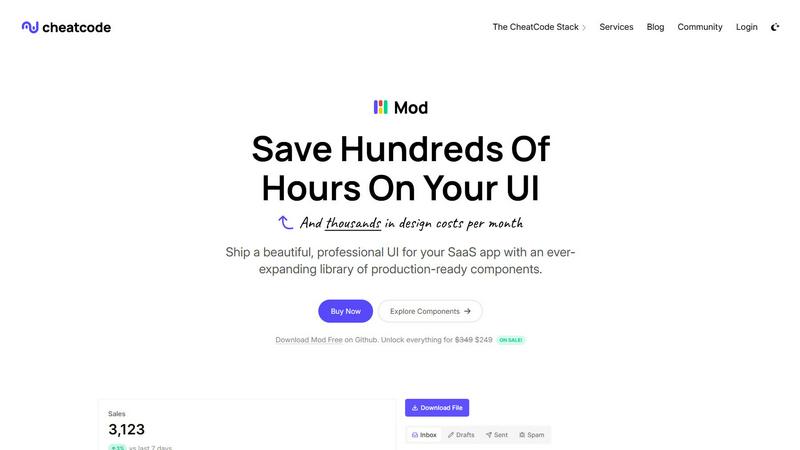
Visual Comparison
Mod
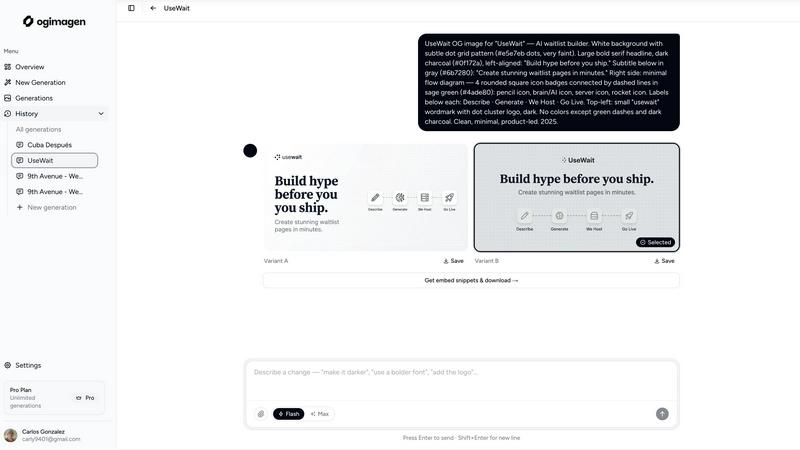
OGimagen
Feature Comparison
Mod
Extensive Component Library
Mod includes a library of over 88 professionally designed, reusable UI components essential for SaaS applications. This comprehensive collection covers everything from complex data tables, forms, and modals to navigation bars, cards, and feedback elements like alerts and toasts. Each component is built with accessibility and semantic HTML in mind, ensuring a solid foundation. The components are designed to be modular and composable, allowing developers to assemble complex interfaces quickly while maintaining visual consistency and reducing the need to write repetitive, boilerplate CSS code from scratch.
Framework-Agnostic Integration
A core technical feature of Mod is its complete independence from any specific JavaScript framework or library. The CSS is delivered as pure, utility-class-based styles that can be applied to HTML elements within any front-end or full-stack environment. This includes popular meta-frameworks like Next.js and Nuxt, build tools like Vite, UI libraries like Svelte, and even traditional server-rendered applications built with Rails or Django. This agnostic approach provides maximum flexibility, prevents vendor lock-in, and allows teams to adopt Mod without overhauling their existing technology stack.
Built-in Design Systems & Themes
Mod ships with two complete, production-ready visual themes—light and dark mode—that can be toggled dynamically via CSS custom properties (variables). Beyond the base themes, it offers 168 distinct style variations across its components, providing extensive customization options for colors, spacing, typography, and border radii. This structured design system ensures that all components share a cohesive visual language, enabling teams to maintain brand consistency effortlessly. The theming is built on a scalable foundation, making it straightforward to extend or create custom theme variants to match specific brand guidelines.
Comprehensive Icon Suite & Responsive Design
The framework includes an integrated suite of over 1,500 vector icons, covering a wide range of common SaaS UI needs, from user interface actions to file types and indicators. All icons are consistent in style and can be easily customized with CSS. Furthermore, Mod is built with a mobile-first, responsive grid and layout system. Every component and utility class is designed to adapt fluidly across all screen sizes, from mobile devices to desktop monitors. This ensures that applications built with Mod provide an optimal user experience on any device without requiring additional responsive design work.
OGimagen
AI-Powered Multi-Platform Generation
OGimagen's core engine uses artificial intelligence to generate two distinct visual variants (A & B) from user-provided titles, descriptions, and brand colors. The system is specifically tuned to create pixel-perfect images optimized for the precise specifications of each social platform. With a single generation action, it automatically produces three correctly sized assets: a standard Open Graph image, a Twitter Card, and a LinkedIn Card. This eliminates the need for manual resizing, reformatting, or maintaining multiple design templates.
Framework-Specific Meta Tag Snippets
Following image generation, OGimagen provides immediate access to copy-paste code snippets for embedding the generated images into a website's HTML <head> section. While free users receive a standard HTML snippet, Pro subscribers unlock framework-specific code for Next.js (App Router and Pages Router), Astro, SvelteKit, and Remix. These snippets include correctly formatted openGraph and twitter metadata objects, ensuring proper integration and immediate preview functionality upon deployment.
Model Context Protocol (MCP) Integration
For Pro users, OGimagen offers deep integration into the developer workflow via Model Context Protocol (MCP). This allows developers to generate, list, and manage OG images directly from within compatible code editors and AI agents like Claude Code, Cursor, and Windsurf. Users can attach brand logos as reference images and fetch meta tag snippets without leaving their coding environment, dramatically streamlining the content creation and deployment pipeline.
Global CDN Hosting & Management
All generated images are automatically uploaded and served from a global Cloudflare Content Delivery Network (CDN). This ensures high-performance image deliverability with low latency worldwide, which is critical for social platform crawlers that fetch preview images. Hosting duration varies by plan, from 45 days for Starter to permanent hosting for Pro. The platform manages the entire asset lifecycle, including storage, optimization, and global distribution.
Use Cases
Mod
Rapid Prototyping and MVP Development
For startups and solo developers under tight deadlines, Mod is an ideal tool for rapidly prototyping ideas and building Minimum Viable Products (MVPs). The extensive pre-built component library allows developers to assemble functional, aesthetically pleasing user interfaces in hours or days instead of weeks. This speed enables teams to validate product-market fit with a polished-looking application without investing heavily in custom UI design during the early, uncertain stages of development, significantly reducing initial time and cost overhead.
Enterprise SaaS Application Scaling
Large development teams working on complex enterprise SaaS platforms can leverage Mod to enforce design consistency and accelerate feature development. By adopting Mod as the central UI foundation, different teams and squads can work on various application modules while ensuring all outputs adhere to the same design standards. This eliminates design debt and fragmentation, streamlines the review process, and allows senior developers and engineers to focus on complex business logic and architecture rather than basic styling and component creation.
Modernizing Legacy Application UIs
Organizations with older, monolithic applications built on stacks like Rails or Django can use Mod to perform a gradual, non-disruptive UI modernization. Because Mod is framework-agnostic, its CSS can be incrementally applied to new features or refactored sections of the legacy codebase. This allows teams to deliver a modern, responsive user experience with dark mode support without the risk and cost of a complete front-end rewrite, enabling a smoother transition to contemporary design standards over time.
Building Internal Tools and Admin Panels
Development teams frequently need to build robust internal dashboards, admin panels, and operational tools. These projects often have lower design priority but still require functional, clear, and professional interfaces. Mod provides the perfect solution with its data-rich components like tables, charts, and filters, and its utilitarian styling. Teams can quickly deploy effective internal tools that are both usable and visually coherent, freeing up design resources for customer-facing product work.
OGimagen
Technical Blog and Documentation Sites
Developers maintaining technical blogs or documentation can use OGimagen to automatically generate relevant social cards for every new article or API reference page. By simply inputting the post title and a brief description, they receive a professional, code-themed image and the exact meta tags needed for their static site generator (like Next.js or Astro), ensuring every shared link presents a polished, credible preview.
SaaS Product Launch and Feature Updates
SaaS companies can maintain a consistent brand image across social media when announcing new features or product launches. Marketing teams can quickly generate on-brand social cards using company colors and logos, creating engaging previews for shared announcement links on LinkedIn, Twitter, and community platforms like Discord or Slack, thereby increasing engagement and click-through rates.
E-commerce and Product Marketing
E-commerce stores can automate the creation of social preview images for individual product pages. By pulling in product titles and descriptions, OGimagen can generate attractive card images that showcase the product contextually. This improves the visual appeal when products are shared on social platforms or messaging apps like WhatsApp, directly influencing potential customer clicks.
Content Agencies and Freelancers
Agencies and freelancers managing multiple client websites can standardize and scale their OG image production. OGimagen allows them to swiftly create client-specific images by adjusting brand colors and styles, then provide clients with the correct embed code for their specific web framework. This saves significant design and development time while delivering a high-value, consistent service.
Overview
About Mod
Mod is a comprehensive, production-ready CSS framework and component library specifically engineered for building modern, polished Software-as-a-Service (SaaS) user interfaces. It functions as a core pillar of the CheatCode developer stack, designed to eliminate the front-end design bottleneck that often slows down development teams. By providing a vast, pre-built collection of meticulously styled UI elements, Mod enables developers and teams to ship professional-grade applications significantly faster, without the need for extensive custom CSS or dedicated design resources. Its primary value proposition lies in its extensive scope—offering 88+ reusable components, 168 distinct style variations, and over 1,500 icons—coupled with a strictly framework-agnostic architecture. This allows seamless integration into virtually any modern tech stack, including Next.js, Nuxt, Vite, Svelte, Ruby on Rails, and Django. With built-in support for dark mode, responsive mobile-first design principles, and yearly thematic updates, Mod provides a robust, scalable foundation for solo developers, startups, and enterprise teams aiming to reduce design costs, accelerate time-to-market, and maintain a consistent, high-quality user experience across their SaaS products.
About OGimagen
OGimagen is an AI-powered platform engineered to automate and optimize the creation of Open Graph (OG) images and social media cards. It addresses the technical and design challenges developers and content creators face when generating platform-specific preview images for shared links. The core value proposition lies in its ability to transform simple text inputs—like a title and description—into production-ready, visually compelling social cards within seconds. The tool is built for developers, marketers, and website owners who require professional-looking link previews for platforms like Facebook, X (Twitter), and LinkedIn without needing design software or manual image editing. OGimagen ensures technical compliance by generating images in the exact pixel dimensions required by each major platform (1200x630 for OG, 1200x600 for Twitter, 1200x627 for LinkedIn) and delivers them via a global Cloudflare CDN for fast, reliable delivery. Furthermore, it streamlines the implementation workflow by providing ready-to-paste meta tag snippets for all major web frameworks, including Next.js, Astro, and SvelteKit. This end-to-end solution significantly improves click-through rates by guaranteeing that shared links display engaging, on-brand preview imagery with minimal effort and zero design skills required.
Frequently Asked Questions
Mod FAQ
What makes Mod different from other CSS frameworks like Tailwind or Bootstrap?
While frameworks like Tailwind provide low-level utility classes and Bootstrap offers generic components, Mod is specifically tailored for SaaS applications. It provides a higher-level, opinionated set of 88+ components with a cohesive visual design language out-of-the-box, including SaaS-specific elements like subscription plan selectors and complex data tables. It combines the ready-to-use nature of a component library with the flexibility of utility classes, all within a framework-agnostic package designed explicitly for business software interfaces.
How does the framework-agnostic nature work in practice?
Mod is distributed as standard CSS files (and likely SCSS source files). You include these stylesheets in your project, just like any other CSS. The provided HTML structure for components uses plain, semantic tags with Mod's specific CSS classes. This HTML can be generated by any backend template engine (ERB, Jinja, Blade) or front-end framework component (React, Vue, Svelte). There is no proprietary JavaScript or framework-binding; you use your stack's tools to render the markup, and Mod handles the styling.
Does Mod include JavaScript for interactive components?
The provided context describes Mod as a CSS framework, indicating its core offering is styling. Interactive behaviors (like opening a modal, toggling a dropdown, or validating a form) would typically need to be implemented using your chosen framework's capabilities or with custom JavaScript. Mod provides the styled "shell" (the HTML structure and CSS) for these components, ensuring they look correct in all states (open, closed, focused, etc.), while you control the logic.
What is included in the "yearly updates" mentioned?
The yearly updates refer to scheduled, versioned releases of the Mod library that include new components, additional style variants, updated icon sets, and enhancements to existing features. This ensures that applications built with Mod have a clear upgrade path to incorporate modern UI trends, improved accessibility standards, and new capabilities without the project's design becoming stagnant or requiring a costly manual redesign effort.
OGimagen FAQ
What exactly is an OG image?
An OG (Open Graph) image is the preview picture that appears when a website link is shared on social media platforms, messaging apps, or other services that support the Open Graph protocol. It is defined by specific HTML meta tags (og:image, og:image:width, og:image:height) in your webpage's code. This image is crucial for engagement as it provides a visual context for your link, significantly impacting whether users decide to click.
How does AI generation work?
OGimagen's AI generation process analyzes the text inputs you provide—such as title, description, and selected style preset—to create a coherent visual representation. The AI is trained to combine typography, layout, color theory, and thematic elements to produce two unique, aesthetically balanced image variants optimized for readability and visual impact at social card dimensions. You do not need to provide image prompts; the system constructs the design based on your content.
What is MCP integration?
MCP (Model Context Protocol) integration allows OGimagen to connect directly with your code editor or AI-assisted development environment. For Pro users, this means you can invoke OGimagen's functionality—such as generating a new image or fetching an embed snippet—via commands within tools like Claude Code, Cursor, or Windsurf. This bridges the gap between content creation and development, enabling you to manage social images as part of your core coding workflow.
What happens when CDN hosting expires?
When the CDN hosting period for your generated image expires (e.g., after 45 days on the Starter plan), the image file is removed from the active CDN cache and will no longer be publicly accessible. If a social platform or user tries to load the preview after expiration, they will encounter a broken image link. To prevent this, you can extend hosting by purchasing additional generation packs, upgrading your plan, or downloading and self-hosting the image assets before the expiry date.