Learniverse vs Phishly
Side-by-side comparison to help you choose the right tool.

Learniverse
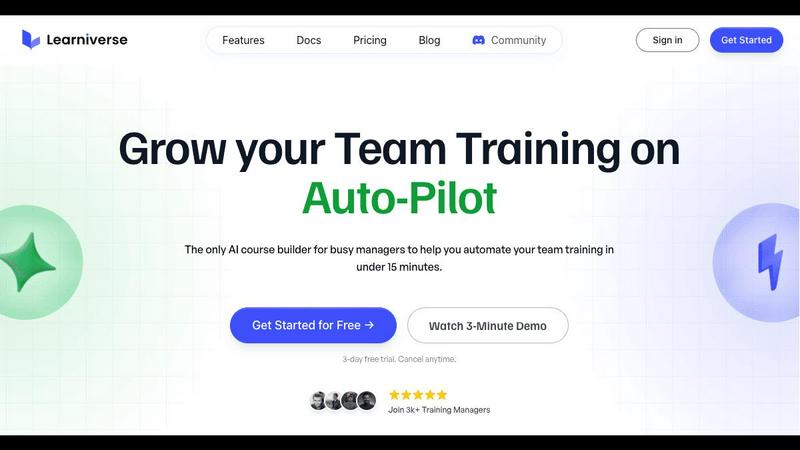
Learniverse is an AI-powered LMS that automates course creation from existing documents and media.
Last updated: February 28, 2026

Phishly
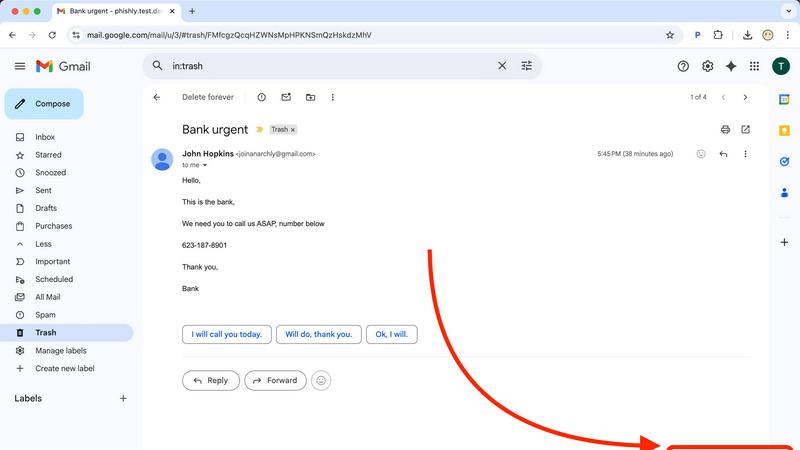
Phishly is an AI-powered Chrome extension that instantly detects phishing emails in Gmail.
Visual Comparison
Learniverse
Phishly
Feature Comparison
Learniverse
AI-Powered Course Generation
The platform's proprietary AI engine is its central feature, designed to ingest unstructured content from various sources including PDFs, videos, and documents. It automatically analyzes, structures, and converts this raw material into a complete, interactive course. This includes creating logical lesson flows, generating summaries, and formulating relevant assessment quizzes, all without manual intervention from the user. This process transforms weeks of manual course development work into a task that can be completed in minutes.
Interactive AI Training Assistant
Beyond initial course creation, Learniverse features an interactive AI assistant that users can chat with to build and modify courses dynamically. Users can describe a new training need, such as an updated process, and the assistant will generate the corresponding module. It can also analyze new content, like a meeting recording, and extract key points to build targeted lessons. This feature provides an ongoing, conversational interface for continuous training management and rapid content iteration.
Branded Training Academy Portal
Learniverse enables organizations to launch a fully customized, professional training portal that reflects their brand identity. Users can apply their company colors, logo, and even use a custom domain. This results in a polished, cohesive learning environment for employees that enhances engagement and credibility, moving away from the generic appearance of many off-the-shelf training solutions.
Comprehensive Analytics Dashboard
The platform includes a detailed analytics suite that tracks learner progress, engagement, assessment scores, and overall training impact across teams and departments. Managers gain visibility into completion rates, identify areas where learners are struggling, and monitor overdue training without relying on manual spreadsheets. This data-driven approach allows for informed decisions to optimize training effectiveness.
Phishly
AI-Powered Multi-Indicator Detection Engine
The platform's core analytical capability is driven by an advanced AI engine that scans for a comprehensive array of phishing signatures. This includes technical indicators like domain spoofing, mismatched sender addresses, and suspicious URL structures. Furthermore, it performs semantic analysis to detect social engineering tactics such as urgent or threatening language, impersonation of authority figures, and offers that seem too good to be true. The model is continuously updated to recognize emerging phishing patterns and zero-day social engineering campaigns, providing a dynamic defense that improves over time.
Seamless Gmail Integration via Chrome Extension
Phishly offers a native Chrome extension that adds a dedicated "Scan with Phishly" button directly within the Gmail web interface. This feature allows for one-click analysis of any open email thread without requiring the user to copy, paste, or leave their inbox. The extension maintains a minimal footprint, operating only upon explicit user activation. This integration streamlines the security check into the user's existing email workflow, eliminating friction and encouraging regular use for suspicious messages.
Privacy-First, On-Demand Scanning Protocol
A foundational feature of Phishly is its strict privacy-centric operational model. Unlike security suites that scan all incoming mail automatically, Phishly employs an explicit consent framework. The AI algorithms are activated solely when a user manually initiates a scan via the extension or web tool. This ensures complete user control over data sharing, with no passive monitoring, email storage, or analysis of correspondence beyond the single submitted message. This design addresses critical privacy concerns for professionals handling sensitive communications.
Clear, Actionable Risk Assessment Reports
Upon analysis, Phishly generates a detailed diagnostic report that transcends a simple pass/fail alert. Each scan result is categorized into a clear risk tier: Safe, Medium Risk, or High Risk. The report elaborates with specific, plain-language explanations for the verdict, pinpointing exact issues found, such as "The sender's domain 'paypa1-security.com' is a homoglyph attack impersonating 'paypal.com'" or "The message uses high-pressure language demanding immediate action." This educational component helps users understand the threat and learn to identify similar attempts in the future.
Use Cases
Learniverse
Rapid Onboarding Program Deployment
Organizations can drastically accelerate new hire onboarding by using Learniverse to consolidate all scattered onboarding materials—HR documents, product manuals, compliance videos, and recorded team meetings—into a single, structured, and interactive onboarding course. This ensures every new employee receives consistent, up-to-date, and engaging training from day one, reducing time-to-productivity and manager workload.
Standardizing Operational Procedures
For companies with complex or frequently updated operational procedures, Learniverse automates the conversion of SOPs, process guides, and policy PDFs into mandatory training modules. The AI automatically generates knowledge checks, ensuring employees understand and adhere to standardized workflows. This is critical for maintaining quality, safety, and compliance across distributed teams.
Transforming Meeting Content into Training
Key insights and decisions from all-hands meetings, training workshops, or leadership presentations often get lost. Learniverse allows teams to upload meeting recordings or notes. The AI identifies key topics and action items, structuring them into digestible lessons for those who could not attend or for future reference, turning ephemeral conversations into persistent institutional knowledge.
Continuous Compliance Training
Industries with regular compliance updates can use Learniverse to quickly transform new regulatory documents, policy changes, or safety protocols into required training courses. The speed of AI-driven course creation ensures all employees are informed of critical updates immediately, with built-in tracking to audit completion and comprehension for reporting purposes.
Phishly
Verification of Financial and Invoice Emails
Users frequently receive emails purporting to be from banks, payment processors like PayPal, or vendors with urgent invoice updates. These are prime targets for phishing. With Phishly, a user can instantly scan such an email to verify the legitimacy of the sender's domain, check for subtle misspellings in links, and assess whether the tone matches a genuine financial alert. This use case is critical for preventing business email compromise (BEC) and direct financial fraud.
Screening Potential Credential Theft Attempts
A common phishing vector involves fake login pages for services like Microsoft 365, Google, Dropbox, or social media. Phishly analyzes emails containing login prompts or password reset requests. It examines the embedded links for authenticity and checks if the email's headers and content align with the official communication patterns of the service being impersonated, helping users avoid surrendering their credentials to malicious actors.
Analyzing Unsolicited Job Offers or Prize Notifications
Suspicious job offers, grant opportunities, or prize win notifications are often used as lures. Individuals, especially freelancers and job seekers, can use Phishly to scrutinize these emails. The AI detects hallmarks of such scams, including poorly written content, requests for personal information upfront, and links to unverified domains, protecting users from advance-fee fraud and identity theft schemes.
Educational Tool for Security Awareness Training
For small business owners or team leads, Phishly serves as a practical, real-world training tool. When a suspicious email is received, teams can use the web tool to analyze it together. The detailed breakdown provided in the risk report educates employees on the specific tactics used by phishers, such as sender spoofing or deceptive link text, thereby building a more security-conscious organizational culture through hands-on experience.
Overview
About Learniverse
Learniverse is an AI-powered Learning Management System (LMS) engineered to eliminate the administrative burden and technical complexity of corporate training. It is a zero-effort training platform specifically designed for busy teams, training managers, and organizations that need to scale their knowledge dissemination efficiently without dedicating extensive resources to course development. The core value proposition lies in its proprietary AI engine, which automates the transformation of unstructured, scattered knowledge assets—such as PDF documents, video recordings, meeting notes, and existing Standard Operating Procedures (SOPs)—into fully structured, interactive, and branded learning courses within minutes. This automation encompasses the entire workflow from content ingestion and structuring to automatic quiz generation and integrated progress tracking. By removing the requirement for instructional design expertise or lengthy technical setup, Learniverse enables organizations to deploy a professional, custom-branded training academy rapidly. This allows managers and subject matter experts to focus on strategic initiatives while ensuring consistent, engaging, and perpetually up-to-date employee training, directly addressing the challenges of inconsistent training completion and knowledge fragmentation across teams.
About Phishly
Phishly is a specialized AI-powered cybersecurity platform engineered to provide real-time phishing detection and analysis. Its core architecture is built around a multi-layered machine learning model trained to identify sophisticated phishing indicators that often evade traditional spam filters. The platform is delivered through two primary interfaces: a lightweight Chrome browser extension that integrates directly with Gmail's web interface and a standalone web application for analyzing email content pasted from any source. This dual-access model ensures comprehensive coverage for users regardless of their email client or workflow. Phishly is specifically designed for individuals, remote workers, freelancers, and small to medium-sized businesses that require enterprise-grade security analysis without the associated complexity, cost, or IT overhead. Its fundamental value proposition lies in its on-demand, privacy-centric scanning model; the AI only processes emails that a user explicitly submits for review, ensuring no background data collection or unauthorized access to the inbox. The system delivers a clear, triage-based risk assessment (Safe, Medium Risk, High Risk) accompanied by a granular breakdown of detected threats, empowering users with actionable intelligence to make informed security decisions instantly.
Frequently Asked Questions
Learniverse FAQ
What types of content can I upload to Learniverse?
Learniverse is designed to process a wide array of unstructured knowledge assets. Supported formats include PDF documents, video files, audio recordings, text-based documents (like Google Docs or Word files), and meeting notes. The AI engine extracts and structures the informational content from these sources to build cohesive learning modules.
Do I need instructional design experience to use this platform?
No, instructional design expertise is not required. Learniverse is engineered as a zero-effort platform where the proprietary AI handles the heavy lifting of instructional design, including content structuring, sequencing, and interactive quiz creation. The user's role is primarily to provide the source material and review the AI-generated output.
How does the branded academy work?
Upon setup, you can customize your training portal with your organization's logo, brand colors, and imagery. You can also launch the academy on a custom subdomain for a seamless brand experience. This creates a professional, dedicated learning environment for your team that reinforces company culture and credibility.
Can I track my team's progress and performance?
Yes, Learniverse includes a comprehensive analytics dashboard. You can track individual and team-wide progress on course completion, monitor quiz scores and assessment performance, identify knowledge gaps, and see engagement metrics. This data is presented in an intuitive interface, eliminating the need for manual tracking via spreadsheets.
Phishly FAQ
How does Phishly protect my privacy compared to other security tools?
Phishly is architected with a strict on-demand analysis model. The system has no access to your email account or inbox. Scanning is only performed on the specific email content you actively choose to submit, either by clicking the extension button in an open Gmail or by pasting text into the web tool. We do not store, log, or analyze any email you do not explicitly send for review. This ensures maximum user control and data privacy.
What specific indicators does the AI look for in an email?
The AI engine conducts a multi-faceted analysis. Technically, it examines email headers for spoofing (e.g., mismatched 'From' addresses), analyzes domain names for homoglyphs and typosquatting, and inspects URLs for redirects and suspicious registrations. Linguistically, it uses Natural Language Processing (NLP) to flag social engineering tactics, including urgency, fear, greed, impersonation of trusted entities, and grammatical inconsistencies atypical of legitimate corporate communications.
Is technical knowledge required to install and use Phishly?
No technical expertise is required. Installation involves adding the Phishly Chrome extension from the Chrome Web Store with a single click. Usage is equally straightforward: within Gmail, simply open any email and click the "Scan with Phishly" button. For emails outside Gmail, copy the full email text and paste it into the analysis field on the Phishly website. The interface and risk reports are designed for clarity for all user levels.
What is the difference between the 'Medium Risk' and 'High Risk' classifications?
A 'Medium Risk' classification indicates the email contains one or more suspicious characteristics but may not be a definitive phishing attempt. Examples include a slightly unusual sender domain, mildly urgent language, or a link to a newly registered but not overtly malicious site. A 'High Risk' classification is assigned when multiple, strong phishing indicators are conclusively identified, such as confirmed domain spoofing, links to known malicious infrastructure, or a clear replica of a legitimate service's login page. The detailed report explains the specific findings behind the rating.