Code Word Solver - Missing Words Finder vs PseudoRun
Side-by-side comparison to help you choose the right tool.

Code Word Solver - Missing Words Finder
Quickly find missing words in your codewords with our intuitive solver, designed for efficiency and accuracy.
Last updated: February 26, 2026

PseudoRun
PseudoRun is a free IGCSE pseudocode editor for writing, testing, and mastering algorithms with real-time validation.
Last updated: March 1, 2026
Visual Comparison
Code Word Solver - Missing Words Finder
PseudoRun
Feature Comparison
Code Word Solver - Missing Words Finder
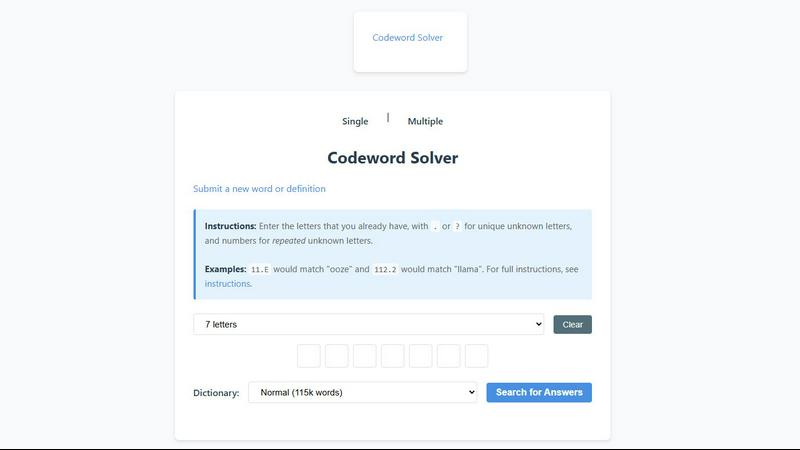
Single Pattern Solving
The single pattern solving feature allows users to input a specific word pattern and receive a list of matching word candidates. This functionality is particularly useful for solvers who may have identified a few letters in the grid but are unsure about the remaining characters. By inputting the known letters along with placeholders for unknown ones, the solver quickly narrows down possible words, enhancing the overall solving experience.
Multi-Pattern Solving
The multi-pattern solving capability lets users enter two patterns simultaneously to find linked words side-by-side. This feature is essential when the same number-to-letter relationships exist across multiple words in the puzzle. By analyzing these relationships, users can gain insights and solve for interconnected terms more efficiently, ultimately speeding up their puzzle-solving process.
Flexible Pattern Input
Code Word Solver offers a flexible pattern input system. Users can utilize placeholders such as "." or "?" to indicate unknown letters, while numbers can be used to denote repeated unknown letters. For instance, entering "112.2" can match words like "llama," which helps maintain consistency in solving. This versatility allows for a more tailored approach to different puzzles, accommodating various levels of complexity.
Customizable Dictionary Selection
Understanding that different puzzles require different word lists, the tool provides three dictionary sizes: Hard (260k words), Normal (115k words), and Easy (20k words). This feature allows users to select a dictionary that best suits their skill level and the complexity of the codeword puzzle they are tackling. By tailoring the word list, players can enjoy a more personalized experience that aligns with their puzzle-solving preferences.
PseudoRun
IGCSE Exam Focused
PseudoRun is 100% aligned with Cambridge IGCSE Computer Science pseudocode specifications and exam patterns. This focus ensures that students practice relevant material that directly prepares them for their exams, increasing their chances of success.
Real-Time Validation
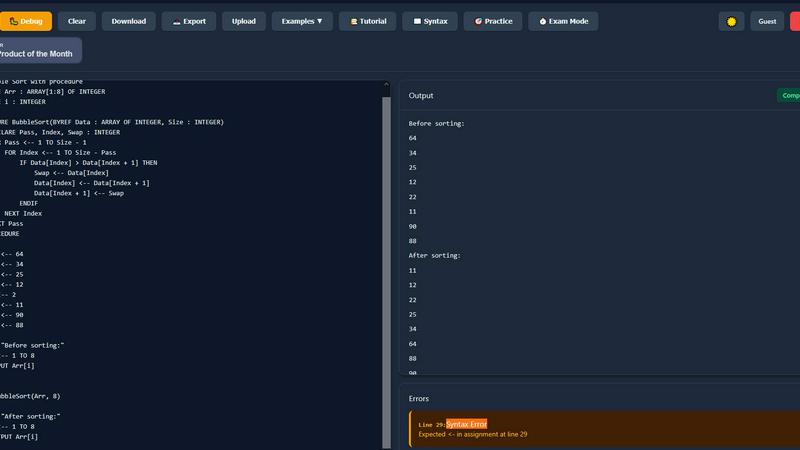
The platform features instant syntax checking and error detection, allowing users to write perfect IGCSE pseudocode effortlessly. This real-time validation helps students identify and rectify mistakes as they code, fostering a more efficient learning process.
Step-by-Step Debugger
Students can master IGCSE algorithms using PseudoRun's line-by-line execution and variable tracking features. This step-by-step debugging capability provides deeper insights into how algorithms operate, enhancing understanding and retention of complex concepts.
Free Cloud Storage
PseudoRun offers free cloud storage, enabling users to save unlimited IGCSE pseudocode programs and access them from any device. This feature allows for seamless exam preparation, letting students work on their programs anytime and anywhere.
Use Cases
Code Word Solver - Missing Words Finder
Improving Puzzle Solving Efficiency
For avid codeword puzzle enthusiasts, the Code Word Solver can significantly improve solving efficiency. By narrowing down potential answers quickly, users can spend less time guessing and more time enjoying the challenge of the puzzle. This tool is a game-changer for anyone looking to solve puzzles faster without sacrificing accuracy.
Learning Tool for New Solvers
Newcomers to codeword puzzles can benefit from the solver as a learning tool. By inputting patterns and observing the solver's output, beginners can develop a better understanding of common letter patterns and relationships in codewords. This educational aspect can enhance their skills and confidence in tackling more complex puzzles in the future.
Competitive Puzzle Solving
In competitive puzzle-solving environments, speed and accuracy are paramount. The Code Word Solver is an invaluable asset for competitors looking to gain an edge over their peers. By using the solver to quickly identify potential words, competitors can improve their performance and increase their chances of winning puzzle-solving events.
Community Contributions for Enhanced Word Coverage
The software encourages community engagement by allowing users to submit new words or definitions to improve the database over time. This feature not only enhances word coverage but also fosters a sense of community among puzzle solvers. Users can contribute to the tool's evolution, ensuring that it remains comprehensive and up-to-date with the latest language trends.
PseudoRun
Exam Preparation
Students can utilize PseudoRun to prepare for their IGCSE Computer Science exams by practicing pseudocode problems that mirror the actual exam format. With the platform's focused resources, users can enhance their skills and boost their confidence.
Algorithm Study
Educators can leverage PseudoRun as a teaching tool to illustrate algorithm concepts in a clear and interactive manner. The real-time feedback and debugging features allow students to grasp complex algorithms more effectively.
Independent Learning
Self-learners can take advantage of PseudoRun's extensive library of practice problems and examples. This flexibility allows individuals to progress at their own pace, mastering pseudocode without the constraints of classroom settings.
Collaborative Learning
Groups of students can collaborate on pseudocode projects using PseudoRun's cloud storage feature. By sharing their work and providing feedback to one another, they can deepen their understanding and foster a supportive learning environment.
Overview
About Code Word Solver - Missing Words Finder
Code Word Solver - Missing Words Finder is an advanced tool designed specifically for enthusiasts and puzzle solvers who enjoy tackling codeword puzzles. This software enhances the solving experience by eliminating the guesswork typically involved in these puzzles. When faced with a challenging codeword grid, users can input known letter patterns into the solver, which then filters and presents potential word candidates. This tool is particularly beneficial for players who are often stuck and need a reliable method to decode the letters associated with numbers ranging from 1 to 26. Whether you are a seasoned puzzle expert or a casual player, this tool empowers you to decode grids with increased accuracy and confidence. Its user-friendly interface makes it accessible to everyone, ensuring that you can enjoy solving puzzles without the frustration of unproductive guessing.
About PseudoRun
PseudoRun is the premier free online platform designed specifically for mastering IGCSE Computer Science pseudocode. This comprehensive tool serves as an editor, simulator, and learning environment meticulously aligned with the Cambridge IGCSE (0478 & 0984) pseudocode specifications. Users can effortlessly write, execute, and debug pseudocode algorithms in real-time, negating the necessity for complex local software installations. The primary value proposition of PseudoRun lies in its commitment to offering a distraction-free, ad-free, and entirely free learning tool that seamlessly connects theoretical algorithmic concepts with practical, exam-ready implementation. Tailored for IGCSE students, educators, and self-learners, PseudoRun provides instant feedback, step-by-step execution visualization, and a comprehensive suite of practice resources. By focusing on the precise syntax and logical patterns required for IGCSE exams, it transforms the abstract process of algorithm design into an interactive and effective learning experience, ultimately boosting confidence and success in exam settings.
Frequently Asked Questions
Code Word Solver - Missing Words Finder FAQ
How do I use the pattern input feature?
To use the pattern input feature, simply enter the letters you already know, using "." or "?" for unknown letters, and numbers for repeated unknown letters. For example, "11.E" would match the word "ooze," while "112.2" could match "llama."
Can I solve multiple patterns at once?
Yes, the Code Word Solver allows for multi-pattern solving, enabling you to enter two patterns simultaneously. This is particularly useful when working with linked words that share similar number-to-letter relationships.
What dictionary sizes can I choose from?
The Code Word Solver offers three dictionary sizes: Hard (260k words), Normal (115k words), and Easy (20k words). You can select the dictionary that best matches your skill level and the complexity of the puzzle you are solving.
How can I contribute to the word database?
If you come across a word that is not in the database or wish to add a definition, you can submit it directly through the tool. This community-powered feature helps improve the solver's word coverage over time and ensures that the database remains current and comprehensive.
PseudoRun FAQ
How do I get started with PseudoRun?
Getting started with PseudoRun is simple. Just visit the website, and you can start coding right away without any login required. No credit card information is needed, and you can begin your pseudocode journey in just 30 seconds.
Is PseudoRun really free, with no ads?
Yes, PseudoRun is completely free to use, and there are no ads interrupting your experience. Our commitment is to provide a distraction-free environment that prioritizes student learning and success.
Can I access my projects from different devices?
Absolutely! PseudoRun features free cloud storage, allowing you to save your pseudocode programs and access them from any device. This ensures that your work is always available, regardless of where you are.
What types of practice problems are available?
PseudoRun offers over 50 IGCSE-style examples and exercises covering essential topics such as loops, arrays, procedures, and other exam-related content. These resources are designed to help you gain a thorough understanding of IGCSE pseudocode.
Alternatives
Code Word Solver - Missing Words Finder Alternatives
Code Word Solver - Missing Words Finder is a specialized online tool designed to assist users in solving codeword puzzles efficiently. This tool falls under the category of puzzle-solving aids, focusing on enhancing the user experience through advanced pattern recognition and filtering capabilities. Many users seek alternatives to such tools for various reasons, including pricing concerns, feature sets that better match their needs, or compatibility with different platforms. When looking for an alternative, it’s essential to consider factors such as user interface, available dictionaries, and additional features that can enhance the puzzle-solving experience.
PseudoRun Alternatives
PseudoRun is a free online platform specifically designed to help users master IGCSE Computer Science pseudocode. As a comprehensive editor, simulator, and learning environment, it serves students, educators, and self-learners by providing tools to write, test, and debug algorithms in real-time while adhering to the Cambridge IGCSE pseudocode specifications. Users often seek alternatives to PseudoRun for various reasons, including the need for additional features, specific platform compatibility, or preferences for different user interfaces. When choosing an alternative, it is essential to consider the platform's alignment with exam standards, the availability of features such as real-time validation, and the overall user experience to ensure effective learning and preparation for the IGCSE exams.