MemMachine vs Quickfix AI
Side-by-side comparison to help you choose the right tool.

MemMachine
MemMachine is an open-source memory layer that empowers AI agents to learn, store, and recall user data across sessions.
Last updated: February 28, 2026

Quickfix AI
Quickfix AI instantly diagnoses and explains your system's performance and health in plain English.
Last updated: February 28, 2026
Visual Comparison
MemMachine
Quickfix AI
Feature Comparison
MemMachine
Persistent Memory Layer
MemMachine's core feature is its ability to provide a persistent memory layer that retains user information across multiple sessions. This ensures that AI agents can recall previous interactions, preferences, and contextual details, leading to more personalized user experiences.
Contextual Awareness
MemMachine enhances AI agents with contextual awareness, allowing them to understand the nuances of ongoing conversations. This capability enables agents to provide more relevant responses, improving user engagement and satisfaction.
Advanced Memory Management
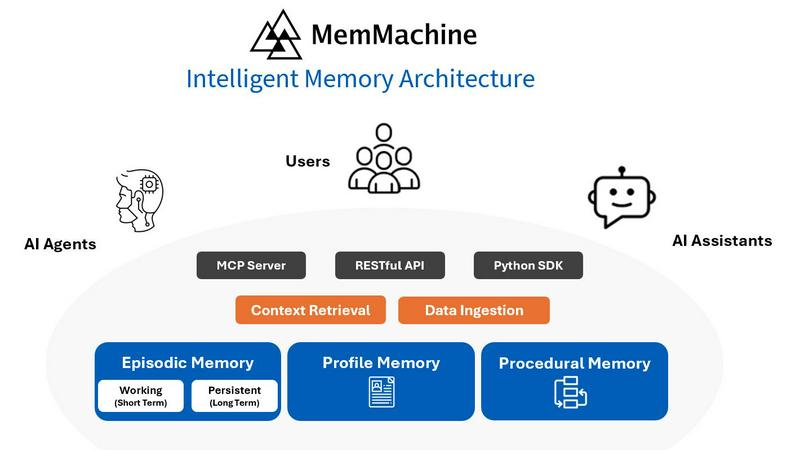
The software abstracts the complexity of memory management, integrating vector databases and graph-based relationships. This allows developers to easily implement sophisticated memory functionalities without needing to manage the underlying complexity directly.
Flexibility and Scalability
MemMachine is designed for flexibility, allowing developers to use its components independently or as an integrated solution. This scalability means it can be adapted for various applications, making it suitable for a wide range of AI projects.
Quickfix AI
Comprehensive One-Click System Scan
The agent performs a holistic scan of your entire system in under one minute. It audits key performance indicators across all major subsystems: CPU (usage per core, temperature, clock speed), RAM (utilization, pressure, available capacity), GPU (load, temperature), storage drives (health via S.M.A.R.T. data, used/free space, read/write speeds), network adapters (upload/download bandwidth, latency), battery health (maximum capacity, cycle count), and core security settings (firewall status, FileVault/Gatekeeper on macOS). This provides a unified, real-time snapshot of system status without requiring multiple disparate tools.
AI-Powered Analysis and Plain-English Reporting
Beyond data collection, Quickfix AI's proprietary AI engine analyzes the diagnostic report to identify anomalies, bottlenecks, and potential issues. It then generates an intelligible summary, explaining technical concepts in accessible language. For example, instead of merely stating "CPU at 89%," it identifies the specific processes responsible (e.g., "Chrome at 45%") and provides clear, actionable guidance such as recommending the closure of unnecessary browser tabs to alleviate immediate memory and CPU strain.
Secure Remote Diagnostics via Sharing Codes
This feature is engineered for IT support and helpdesk scenarios. A user can generate a unique, time-limited sharing code after a scan. This code can be securely provided to a technician, who can then view the full diagnostic report remotely without needing direct access to the physical machine. This facilitates rapid, accurate troubleshooting for distributed teams and remote employees, streamlining the support process and reducing resolution time significantly.
Interactive AI Chat for Detailed Inquiries
Users can engage directly with the AI using a conversational chat interface. By asking natural language questions about their system report—such as "Why is my Mac running slow?" or "Is my disk failing?"—the AI provides contextual, detailed answers drawn from the specific scan data. This interactive dialogue allows for deeper investigation and personalized recommendations, effectively acting as an on-demand system administrator for non-technical users.
Use Cases
MemMachine
Personalized Customer Support
In customer service applications, MemMachine can help AI agents remember past interactions with customers, enabling them to provide tailored support and recommendations based on individual needs and history.
Healthcare Assistants
Healthcare AI applications can leverage MemMachine to remember patient preferences and medical histories, allowing for more compassionate and personalized care plans tailored to each patient’s unique requirements.
Educational Tools
In educational settings, MemMachine can be used to create personalized learning experiences. AI tutors can remember students' previous queries and learning patterns, helping to tailor lessons and improve educational outcomes.
Collaborative AI Tools
For team collaboration tools, MemMachine allows AI assistants to remember team members' roles, preferences, and past interactions. This leads to enhanced productivity and better contextual insights during discussions or project management.
Quickfix AI
Proactive System Health and Performance Monitoring
Tech enthusiasts, developers, and power users employ Quickfix AI to continuously monitor their system's vitals. This is crucial for maintaining optimal performance during resource-intensive tasks like gaming, video editing, software compilation, or running virtual machines. The tool provides granular insights into temperatures, component loads, and memory pressure, enabling users to preemptively address thermal throttling or resource constraints before they impact performance or system stability.
End-User Troubleshooting and Problem Diagnosis
For individual users experiencing system slowdowns, unexpected crashes, or unusual behavior, Quickfix AI serves as a first-line diagnostic tool. It autonomously identifies the root cause—whether it's a failing drive, a memory leak from a specific application, or a misconfigured security setting—and explains the issue in plain English. This empowers users to resolve common problems independently without requiring deep technical knowledge or resorting to extensive web searches.
IT Helpdesk and Remote Technical Support
IT support teams integrate Quickfix AI into their workflow to diagnose issues on employee machines efficiently. Instead of relying on user-described symptoms, technicians can request a sharing code to obtain an objective, comprehensive system report. This allows for accurate remote diagnosis of issues ranging from malware infections and driver conflicts to hardware failures, dramatically reducing the need for in-person visits or lengthy screen-sharing sessions and improving first-contact resolution rates.
Pre-Purchase Audits and Security Posture Checks
Users considering purchasing a used computer or evaluating a company machine can use Quickfix AI to conduct a thorough audit. The scan reveals critical information such as battery health (cycle count and maximum capacity), storage drive condition (including reallocated sector counts), installed RAM configuration, and the status of essential security features like firewall and disk encryption. This provides a data-driven assessment of the device's value and security readiness.
Overview
About MemMachine
MemMachine is an open-source memory layer designed to enhance AI agents and applications by providing a persistent memory system. This innovative software component enables AI systems to learn, store, and intelligently recall information from past interactions. Unlike traditional AI applications that operate in a stateless manner and start fresh with each session, MemMachine allows for continuity and personalization. This capability transforms simple chatbots into sophisticated, context-aware assistants that can engage in deeper, more meaningful interactions with users. It serves developers, engineers, and teams striving to create advanced AI-powered applications that require a high degree of personalization and contextual awareness. The primary value of MemMachine lies in its ability to abstract complex memory management processes into a deployable layer. This includes combining vector search, graph-based entity relationships, and temporal context, facilitating a dynamic and evolving user profile that enriches the AI interaction experience.
About Quickfix AI
Quickfix AI is an advanced, AI-powered system diagnostics tool engineered to deliver immediate, comprehensive analysis of computer performance, health, and security. It functions as a lightweight software agent capable of executing a full system scan in under 60 seconds, generating a detailed report on all critical hardware and software components. The core innovation of Quickfix AI is its sophisticated AI engine, which transcends simple data aggregation. It interprets complex technical metrics—including CPU utilization, memory pressure, disk health (S.M.A.R.T. status), network throughput, battery cycles, and security posture—and translates them into plain-English explanations. This process demystifies system diagnostics for users of all technical proficiencies, providing not just raw data but context-specific, actionable recommendations for optimization and troubleshooting. Designed for cross-platform compatibility, it supports both Windows and macOS operating systems, consolidating the functionality of multiple specialized utilities into a single, intuitive interface. Its primary user base encompasses individual users troubleshooting performance degradation, tech enthusiasts and gamers monitoring system vitals, and IT support professionals who utilize its secure sharing code feature for efficient remote diagnostics.
Frequently Asked Questions
MemMachine FAQ
What is MemMachine?
MemMachine is an open-source memory layer for AI applications that enables persistent memory, allowing agents to learn and recall user information across sessions for a more personalized experience.
How does MemMachine improve AI interactions?
By providing a persistent memory layer, MemMachine allows AI agents to remember past interactions, user preferences, and contextual details, leading to more relevant and meaningful conversations.
Is MemMachine suitable for all AI applications?
Yes, MemMachine is designed for a wide range of AI applications, including customer support, healthcare, education, and collaborative tools, making it a versatile solution for enhancing AI interaction.
How does MemMachine handle memory management?
MemMachine abstracts the complexity of memory management by integrating vector databases and graph-based relationships, allowing developers to implement advanced memory features without deep technical knowledge.
Quickfix AI FAQ
Is Quickfix AI free?
Quickfix AI offers a free version that includes the core one-click system scan, basic health reporting, and access to the AI explanation features for personal, non-commercial use. This allows individual users to diagnose and understand their system's performance. For advanced features, such as detailed historical trend analysis, priority support, and enterprise-level deployment with centralized management for IT teams, paid subscription plans are available.
Is my data secure?
Yes. Data security is a foundational principle. Diagnostic scans are processed locally on your machine to the greatest extent possible. Any data transmitted for cloud-based AI analysis is anonymized, encrypted in transit using TLS 1.3, and is never sold to third parties. The secure sharing codes provide temporary, read-only access to a specific report and do not grant ongoing access to your system. Detailed information is available in the product's Privacy Policy and Data Processing Agreement (DPA).
Do I need technical knowledge to use Quickfix AI?
No technical knowledge is required. Quickfix AI is specifically designed to demystify system diagnostics. The interface presents information clearly, and the integrated AI explains all findings and recommendations in plain, conversational English. You can simply run the scan and read the summary, or ask follow-up questions in the chat to get tailored advice without understanding underlying technical jargon.
What platforms are supported?
Quickfix AI is a cross-platform application with native support for both major desktop operating systems. It is available for Microsoft Windows (supporting versions 10 and 11, both 64-bit) and Apple macOS (supporting recent versions, typically from macOS Catalina 10.15 and newer). The functionality and feature set are consistent across both platforms, providing a unified diagnostic experience regardless of your system.
Alternatives
MemMachine Alternatives
MemMachine is an open-source memory layer designed for AI agents and applications, facilitating persistent learning and data recall. It transforms traditional AI systems into personalized assistants by enabling them to remember user interactions, preferences, and context across multiple sessions. This capability addresses the limitations of stateless AI tools that lack continuity in user engagement. Users often seek alternatives to MemMachine for various reasons, including pricing, specific feature requirements, or compatibility with existing platforms. When selecting an alternative, it is essential to evaluate the offered memory management capabilities, integration flexibility with different AI models, and the overall ease of use. A robust alternative should enhance personalization and contextual awareness while providing a seamless user experience.
Quickfix AI Alternatives
Quickfix AI is a comprehensive system diagnostics and optimization tool within the productivity and management software category. It leverages an AI engine to perform rapid, full-system scans, delivering detailed health and performance reports with plain-English explanations and actionable advice. This tool is designed to demystify complex technical data for a broad user base. Users may seek alternatives to Quickfix AI for various reasons. Common considerations include specific budget constraints or pricing models, the need for different feature sets such as deeper hardware monitoring or integration with other IT management platforms, and compatibility requirements with specific operating systems beyond Windows and macOS. The desire for a different user interface or reporting style can also drive the search for other solutions. When evaluating an alternative system diagnostic tool, key criteria should include the scope and depth of the hardware and software analysis performed, the clarity and actionability of the generated reports, and the overall system resource footprint of the utility. Security and data privacy practices are paramount, as the tool requires deep system access. Finally, consider the target user expertise level, ensuring the tool's complexity aligns with your technical comfort.