rfpaihub vs securememo.app
Side-by-side comparison to help you choose the right tool.

rfpaihub
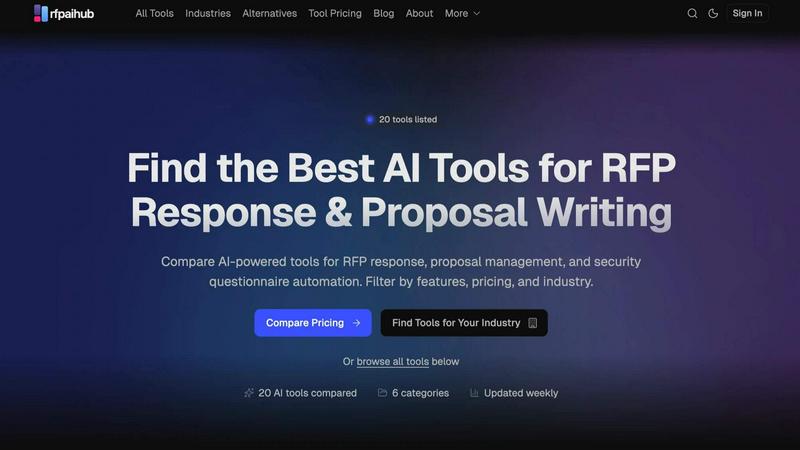
RFP AI Hub is a comprehensive directory for comparing AI-powered RFP response, proposal management, and security questionnaire automation tools.
Last updated: April 13, 2026

securememo.app
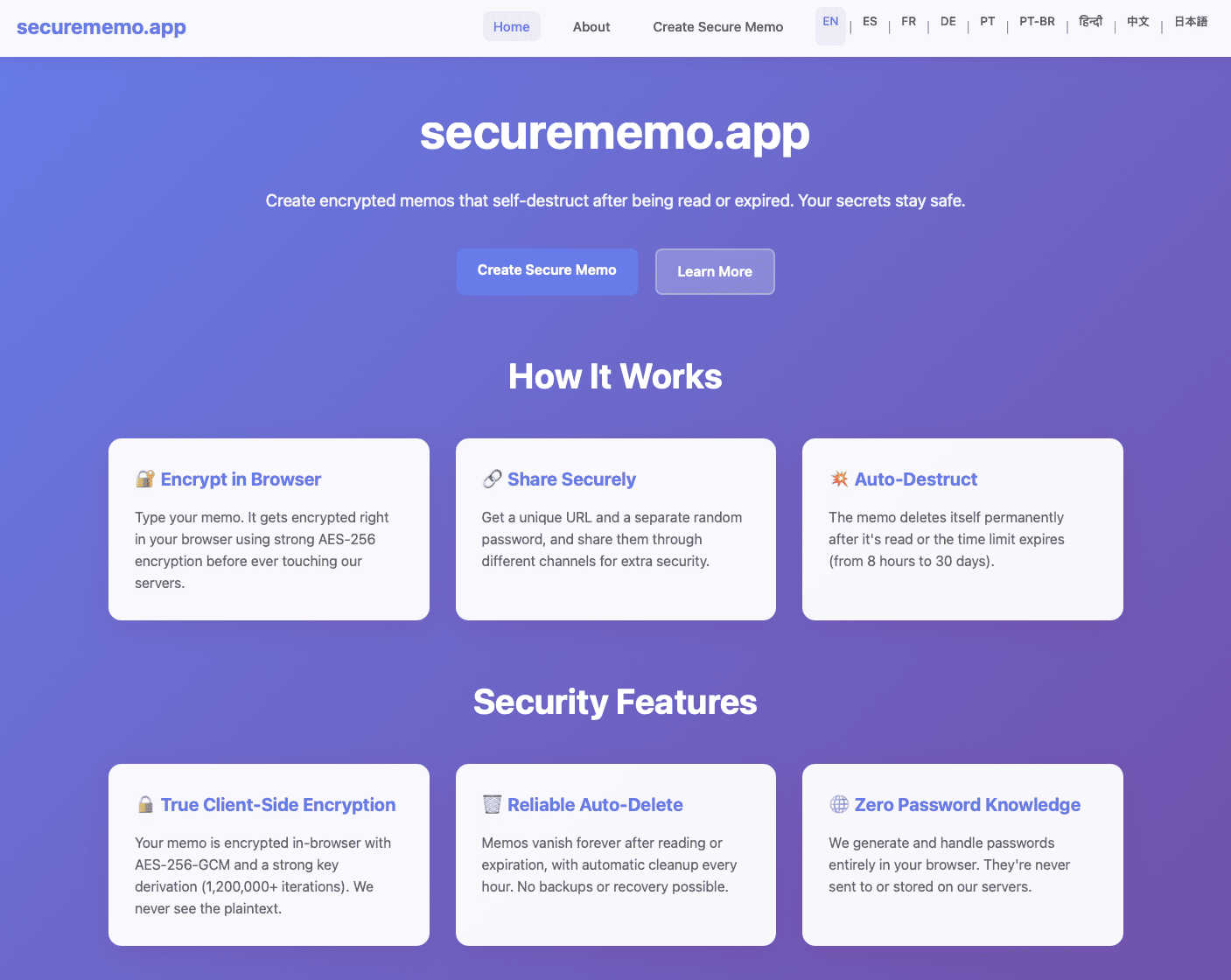
Securememo.app is an open source, client side encrypted memo service with zero tracking.
Visual Comparison
rfpaihub
securememo.app
Feature Comparison
rfpaihub
Curated Tool Directory
The platform maintains a meticulously researched and regularly updated directory of AI-powered RFP and proposal software. Each tool listing includes detailed specifications, categorized features, and verified information to ensure users are comparing accurate and current data. This curation eliminates the need for manual web searches and unreliable third-party reviews.
Advanced Filtering System
Users can refine the tool database using multiple, simultaneous filters. Key filter criteria include software categories (e.g., RFP Response vs. Security Automation), specific features (like AI drafting or content library integration), target industry (such as SaaS, Healthcare, or Finance), and published pricing tiers. This granular filtering allows for highly targeted discovery based on precise workflow needs.
Comparative Analysis Framework
RFP AI Hub provides a structured framework for comparing tools side-by-side. This goes beyond basic feature lists to include practical differentiators relevant to response teams, enabling direct comparison of AI capabilities, integration options, collaboration features, and security protocols to identify the optimal solution for complex organizational requirements.
Vendor-Neutral Educational Content
The site supplements its directory with a dedicated blog and resource sections that offer unbiased educational content on selecting and implementing RFP technology. This includes guides on workflow assessment, ROI justification, and best practices for leveraging AI in proposal processes, positioning the hub as an authoritative source rather than a lead-generation portal.
securememo.app
Client-Side Encryption
All data processing and encryption occur exclusively within the user's web browser using robust cryptographic algorithms before any data is sent to the securememo.app servers. This architectural design ensures that plaintext content of memos is never exposed to the network or the service's infrastructure. The encryption keys are generated and managed locally, guaranteeing that only the intended recipient with the correct password can ever decrypt and view the note's contents, providing a true zero-knowledge environment.
Self-Destructing Notes
Each memo created on the platform is ephemeral by design. Once a note is created and a unique link is generated, it is programmed to automatically and permanently delete itself from the servers after being accessed by the recipient. This feature enforces data minimalism and eliminates the risk of sensitive information persisting in any database, providing a secure, one-time viewing mechanism that leaves no long-term digital footprint.
Zero-Knowledge Password Generation
For each memo, a strong, cryptographically random password is generated locally on the creator's device. This password is never transmitted to or stored by securememo.app's servers. The service operates on a zero-knowledge principle where it has no access to this decryption key. Secure sharing of the memo requires the creator to transmit this password to the recipient through a separate, trusted channel (e.g., a secure messaging app or in person), creating a necessary two-factor access mechanism.
No-Account Anonymity
The service is designed for immediate use without any registration, sign-up, or account creation process. This approach maximizes user privacy and anonymity by not collecting any personally identifiable information (PII) such as email addresses or usernames. Users can create and share encrypted memos instantly, which lowers the barrier to entry and aligns with the product's core philosophy of privacy-by-design and operational security.
Use Cases
rfpaihub
Procurement for Sales Operations Teams
Sales operations leaders tasked with selecting an enterprise RFP response platform can use RFP AI Hub to create a shortlist of qualified vendors. By filtering for tools with specific AI-matching algorithms, Salesforce integration, and enterprise-grade security, they can efficiently evaluate options that meet strict corporate procurement and technical requirements.
Tool Selection by Security & Compliance Teams
Security and compliance professionals overwhelmed by vendor security questionnaires (VSQs) and due diligence queries can utilize the directory to find specialized security questionnaire automation tools. They can filter for platforms with capabilities like automated mapping to frameworks (e.g., SOC 2, ISO 27001) and library management for standardized security responses.
Evaluation by Proposal Management Consultants
Independent consultants or agencies that manage proposals for multiple clients need to recommend tools appropriate for different business sizes and industries. RFP AI Hub allows them to quickly compare pricing models, feature sets, and industry specializations across the market to provide tailored, evidence-based recommendations to each client.
Market Research by Software Vendors
Competing software vendors in the RFP technology space can use the directory to conduct competitive analysis. The structured presentation of features and categories provides a clear overview of the competitive landscape, highlighting market gaps, feature differentiators, and prevailing pricing strategies within specific tool categories.
securememo.app
Secure Credential Sharing
Professionals can safely transmit sensitive login credentials, API keys, or database passwords to colleagues or clients. By using securememo.app, the credentials are encrypted end-to-end and self-destruct upon first view, mitigating the risks associated with sending such data via email, SMS, or standard messaging platforms where logs are retained and security may be compromised.
Confidential Legal or Business Communication
Lawyers, journalists, or business executives can share confidential case details, draft documents, or strategic information with the assurance of client-side encryption and ephemeral storage. This use case is critical for maintaining attorney-client privilege or protecting sensitive business intelligence from interception or unauthorized server-side access.
One-Time Private Messaging
Individuals requiring a private, non-traceable conversation channel can use the service to exchange messages that leave no permanent record. This is applicable for whistleblowers, individuals in sensitive situations, or anyone needing to share personal information without creating a persistent chat history that could be subpoenaed or hacked.
Secure Disposable Notes for Personal Data
Users can create encrypted notes containing personal information like social security numbers, bank account details, or travel documents for their own temporary reference. The self-destruct feature acts as a secure, automated cleanup, ensuring this highly sensitive data does not remain stored on any device or cloud service indefinitely.
Overview
About rfpaihub
RFP AI Hub is a specialized, free-to-use online directory dedicated to the systematic evaluation and comparison of AI-powered software tools designed for the request for proposal (RFP) response lifecycle, proposal management, and security questionnaire automation. The platform serves as a centralized resource for sales operations teams, proposal managers, security compliance officers, and business development professionals who are seeking to modernize and accelerate their response processes. Its core value proposition lies in its ability to cut through market noise by providing detailed, filterable listings that allow users to identify the most suitable software based on specific functional requirements, industry vertical, team size, and budget constraints. By aggregating and categorizing tools across six distinct categories—including RFP Response, Proposal Writing, Security Questionnaire Automation, Knowledge Base management, Document Generation, and Contract & Bid Management—RFP AI Hub enables informed procurement decisions, potentially reducing tool evaluation time by providing transparent, side-by-side comparisons of capabilities and pricing structures.
About securememo.app
Securememo.app is a specialized web application engineered for the secure creation and transmission of sensitive textual information. It functions as a privacy-first, ephemeral note-taking and sharing service that operates entirely within a user's web browser. The core value proposition is its uncompromising commitment to data sovereignty and user anonymity through a robust implementation of client-side encryption and a zero-knowledge architecture. This means all cryptographic operations, including key generation and data encryption/decryption, are performed locally on the user's device before any data is transmitted. The service is designed for individuals and professionals who require a trusted, temporary channel for sharing confidential data such as passwords, access keys, personal messages, or sensitive documents in plain text. By eliminating the need for user accounts and ensuring the service provider has no technical means to access the content of the memos, securememo.app prioritizes ease of use without sacrificing the highest standards of security. Its availability in over 20 languages further extends its accessibility to a global audience seeking a reliable tool for discrete, one-time communication.
Frequently Asked Questions
rfpaihub FAQ
What types of tools does RFP AI Hub compare?
RFP AI Hub compares AI-powered software across six primary operational categories: RFP Response software, Proposal Writing and management platforms, Security Questionnaire Automation tools, Knowledge Base & Answer Library systems, Document Generation engines, and comprehensive Contract & Bid Management suites. This categorization helps users align their search with their core workflow.
How does the platform ensure the accuracy of its tool information?
The platform employs a documented methodology involving direct vendor submissions, verification of public information, and ongoing updates. Vendors are encouraged to submit their product details for review at no cost, and the editorial team cross-references this data with publicly available specifications on vendor websites and product documentation.
Is there a cost to use RFP AI Hub for browsing and comparison?
No, RFP AI Hub operates as a free directory for all end-users. Individuals and teams can browse the entire tool database, utilize all filtering and comparison features, and access educational blog content without any requirement to create an account or pay a subscription fee.
Can I submit a tool to be listed on RFP AI Hub?
Yes, software vendors are invited to submit their AI-powered RFP, proposal, or security questionnaire products for inclusion in the directory. The submission process is free of charge. The editorial team reviews each submission against the platform's inclusion criteria to ensure it fits the defined categories and offers relevant AI-driven functionality before listing.
securememo.app FAQ
How does the encryption work technically?
The encryption process is executed entirely within your web browser. When you create a memo, the application generates a strong, random encryption key locally. Your text is then encrypted with this key using advanced standards (like AES-256-GCM) before it is ever sent over the internet to securememo.app's servers. The service only stores and transmits this encrypted ciphertext. The decryption key is presented to you as a password, which must be shared separately with the recipient to unlock the note.
What happens if the recipient loses the password?
Due to the zero-knowledge architecture, the password for decrypting the memo exists only with the creator and the recipient. Securememo.app's servers never receive or store this password. Therefore, if the password is lost, there is absolutely no technical way for anyone, including the service administrators, to recover the contents of the encrypted memo. The data remains cryptographically secure and permanently inaccessible.
Are there any limits on memo size or content?
While specific limits are subject to the service's operational policy, typical constraints for such a service involve a maximum character count for the memo body (e.g., several thousand characters) to ensure performance and manage server storage for the encrypted text. The content is usually plain text, and the service is designed for textual data rather than file attachments. Users should consult the application interface for the exact, current limitations.
How is the "self-destruct" mechanism enforced?
Once a memo is created, it is stored on securememo.app's servers in its encrypted state. The system is programmed to permanently delete the encrypted data from its databases immediately after the unique access link is used successfully (i.e., the correct password is entered and the note is decrypted and displayed for the first time). This deletion is automatic, irreversible, and is a fundamental part of the data processing workflow.