
Finsi OS vs Terradium
Side-by-side comparison to help you choose the right tool.

Finsi OS
Finsi OS is an AI operating system that surfaces e-commerce insights and automates actions to increase customer.
Last updated: February 27, 2026

Terradium
Terradium automatically transforms Semrush keyword research into SEO-optimized blog posts for your CMS.
Last updated: March 1, 2026
Visual Comparison
Finsi OS
Terradium

Feature Comparison
Finsi OS
Retention Intelligence
This module provides deep cohort analysis, churn prediction algorithms, and customer health scoring to identify at-risk subscribers before they cancel. It orchestrates automated, personalized lifecycle campaigns across email and other channels based on these predictions. The system integrates behavioral data from platforms like Recharge and Shopify to trigger proactive retention actions, moving from reactive support to intelligent, pre-emptive customer retention.
Profit Intelligence
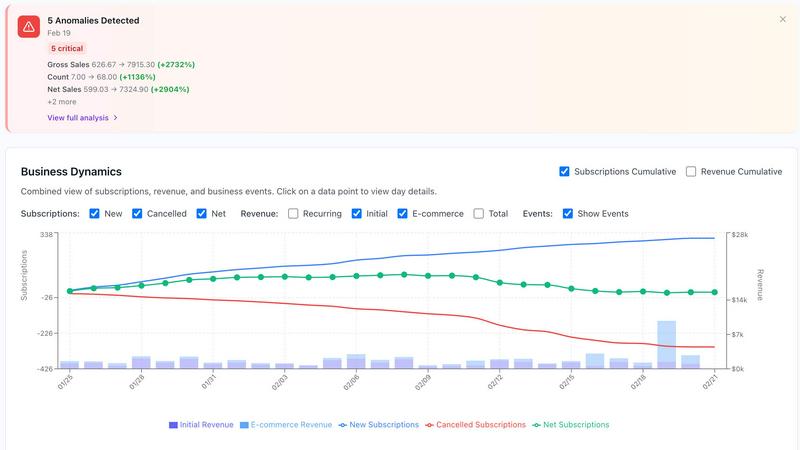
Finsi OS delivers real-time P&L analytics, unit economics, and contribution margin tracking updated daily, not monthly. It connects advertising spend from Meta and Google directly to revenue and profit data, allowing brands to understand the true profitability of each customer cohort, product, and marketing channel. This feature shifts financial reporting from a backward-looking monthly exercise to a daily operational tool for strategic decision-making.
Ads Autopilot
This AI-powered execution module manages Meta and Google Ads campaigns autonomously. It applies performance rules to pause underperforming ad sets, scale winners, and optimize budgets in real-time based on profitability goals. The system continuously tests and learns, removing manual guesswork and constant monitoring to drive efficient customer acquisition at scale.
AI Recommendations Engine
The platform's central intelligence layer unifies data from all connected sources to generate a ranked, weekly list of actionable recommendations. Each recommendation specifies what action to take, why it matters, and its estimated revenue impact across all modules—from launching a win-back campaign to adjusting ad creative. This prioritizes efforts on the highest-value opportunities.
Terradium
Multi-Agent AI Architecture
Terradium utilizes a specialized multi-agent AI system where distinct AI agents are assigned specific tasks within the content creation workflow. One agent may handle strategic calendar planning based on search volume and competition, while another conducts SERP and competitor gap analysis. A separate writing agent then drafts the content, ensuring each piece is researched, optimized, and crafted to meet specific SEO and quality benchmarks. This division of labor mirrors a professional content team but operates with machine efficiency and consistency, eliminating human bottlenecks and variability.
Direct Research Import & Analysis
The platform directly integrates with leading SEO research tools, allowing users to import keyword data seamlessly from Semrush or upload CSV files. This feature eliminates manual data entry and ensures no valuable keyword research goes to waste. Upon import, Terradium's AI automatically analyzes the data, assessing metrics like search volume, keyword difficulty, and competitive landscape to intelligently prioritize content opportunities and inform the strategic planning phase.
Automated Content Calendar & Planning
Based on the imported keyword data and user-defined goals, Terradium's AI autonomously generates a strategic content calendar. It schedules publications by analyzing optimal posting frequency, topic clustering opportunities, and competitive gaps. This automated planning ensures a consistent, strategic publishing schedule that aligns with SEO best practices for building topical authority, without requiring manual calendar management from the user.
Automated Publishing to CMS
Terradium features native, automated publishing integrations with popular Content Management Systems, specifically Sanity and WordPress. Once an article is drafted and finalized by the AI, the platform can automatically publish it to the connected blog on the user's predetermined schedule. This closed-loop automation ensures content moves from research to a live webpage without manual intervention, guaranteeing publishing consistency and freeing up significant operational overhead.
Use Cases
Finsi OS
Proactive Subscription Churn Reduction
For DTC subscription brands, Finsi OS analyzes usage patterns, payment history, and engagement signals to assign a churn risk score to each subscriber. It then automatically triggers tailored email sequences or offer flows via Klaviyo or Recharge to re-engage at-risk customers before they cancel, directly improving retention rates and LTV without manual segment building.
Profit-Optimized Ad Spend Management
E-commerce brands can connect their ad accounts to shift from cost-based to profit-based bidding. The Ads Autopilot module uses real-time profit data from the Profit Intelligence layer to automatically reallocate budgets away from channels or campaigns that drive volume but low lifetime value, and towards those that acquire genuinely profitable customers.
Automated Customer Lifecycle Campaign Orchestration
Marketing teams can leverage Smart Segmentation with natural language queries and predictive LTV models to build dynamic customer segments. These segments are instantly pushed to execution platforms like Klaviyo to launch automated, multi-stage campaigns for onboarding, cross-selling, win-back, and loyalty, all orchestrated and measured within Finsi OS.
Data Unification and Insight Acceleration
Operators drowning in data silos use Finsi OS to connect Shopify, Recharge, Klaviyo, and ad platforms in minutes. The AI then analyzes everything, saving an average of 4 hours weekly on manual reporting and reconciliation. Teams gain a single source of truth for performance, enabling faster, more confident strategic decisions based on unified analytics.
Terradium
SEO Agencies Scaling Client Content Production
SEO and digital marketing agencies managing multiple clients can leverage Terradium to scale their content production efficiently. The platform allows them to import client-specific keyword lists, automatically generate and execute a content calendar, and publish directly to each client's CMS. This enables agencies to deliver consistent, SEO-driven content for all clients without proportionally increasing writer costs or project management time, improving service scalability and profitability.
In-House Marketing Teams with Limited Resources
In-house marketing departments, particularly in small to medium-sized businesses, often operate with limited personnel and budgetary constraints. Terradium acts as a force multiplier, automating the foundational content creation workflow. It allows a single marketer to manage a robust, consistent content strategy that would typically require a full team, ensuring the company maintains a competitive SEO presence and continuous organic growth without expanding headcount.
Content Managers Ensuring Publishing Consistency
Content managers challenged with maintaining a rigorous editorial calendar and overcoming writer delays or bottlenecks can use Terradium to guarantee consistency. The platform automates the scheduling, creation, and publishing pipeline, ensuring that content goes live on time, every time. This reliability is crucial for building domain authority with search engines and maintaining audience engagement, all while reducing the managerial burden of coordinating multiple contributors.
Founders and Solopreneurs Building Authority
Founders, entrepreneurs, and solopreneurs who need to establish thought leadership and domain authority but lack the time or expertise to execute a full content strategy can utilize Terradium. By importing their core industry keywords, they can automate the creation of a foundational content library. This hands-off approach allows them to focus on core business operations while their blog systematically works to attract organic traffic and build brand credibility.
Overview
About Finsi OS
Finsi OS is a comprehensive AI Revenue Intelligence platform engineered specifically for direct-to-consumer (DTC) e-commerce and subscription brands. It functions as an AI operating system, moving beyond traditional dashboards by unifying a brand's entire tech stack—including Shopify, Recharge, Klaviyo, Meta Ads, Google Ads, Stripe, Chargebee, and Zendesk—into a single, actionable interface. The platform's core purpose is to transform data chaos into strategic clarity, enabling brands to reduce customer churn, maximize customer lifetime value (LTV), and acquire customers profitably. It achieves this through 12 integrated modules that span two core functions: "Understand" and "Act." The system employs AI agents to analyze customer behavior, predict churn risk, surface ranked recommendations, and automate execution across retention campaigns and paid advertising. Built by the team that scaled Scentbird, it encapsulates over 11 years of retention expertise. Finsi OS is designed for e-commerce operators, marketers, and founders who seek to act on insights rather than spend time hunting for them, delivering proven results like a 20% average LTV increase and significant weekly time savings on manual reporting.
About Terradium
Terradium is an advanced AI-powered content automation platform engineered to transform raw keyword research into a consistent pipeline of published, SEO-optimized blog content. It is specifically architected for digital marketers, SEO specialists, and content managers who understand the strategic value of search engine optimization but struggle with the resource-intensive bottlenecks of manual content planning, creation, and consistent publication. The platform's core value proposition lies in its sophisticated multi-agent AI architecture, which automates the entire workflow from strategic planning to final publishing. By directly importing keyword data from specialized tools like Semrush or via CSV files, Terradium eliminates the common inefficiency where valuable research data remains unused. The system autonomously generates a strategic content calendar, conducts in-depth SEO and competitor analysis, drafts high-quality articles optimized for search intent, and publishes them on a predetermined schedule directly to a connected Sanity CMS or WordPress site. This end-to-end automation reduces the time investment per article from several hours to mere minutes, ensuring unwavering publishing consistency critical for building domain authority and driving sustainable, long-term organic traffic growth.
Frequently Asked Questions
Finsi OS FAQ
What makes Finsi OS different from other analytics dashboards?
Finsi OS is an AI operating system, not just a dashboard. While dashboards visualize data, Finsi OS unifies data from your entire stack, analyzes it with AI to surface specific, ranked recommendations, and provides built-in tools to execute those actions—from automated ad management to triggered email campaigns. It closes the loop from insight to action.
How does the platform's AI predict customer churn?
The churn prediction model analyzes a multitude of behavioral and transactional signals, including purchase frequency, engagement with emails, product usage patterns, support ticket sentiment, and payment history. It uses machine learning algorithms trained on over 11 years of subscription commerce data to identify patterns indicative of future cancellation and assigns a dynamic risk score to each customer.
Which integrations does Finsi OS support?
The platform offers native, pre-built integrations with core e-commerce and marketing systems including Shopify, Recharge, Klaviyo, Meta Ads, Google Ads, Stripe, Chargebee, and Zendesk. These connections are typically established in minutes via OAuth, ensuring secure and seamless data synchronization for real-time analysis and execution.
Is there a free trial or pilot program available?
Yes, Finsi OS offers a Start Free Pilot program. This allows qualified e-commerce brands to connect their data sources and experience the platform's modules—such as Profit Intelligence, Retention Intelligence, and AI Recommendations—firsthand to validate the impact and ROI before committing to a full subscription.
Terradium FAQ
How does Terradium ensure the quality of AI-generated content?
Terradium ensures content quality through its multi-agent AI architecture, which separates research, planning, and writing into specialized tasks. The system conducts in-depth SERP and competitor analysis to understand context and intent before drafting. Furthermore, it optimizes content for SEO best practices beyond simple keyword stuffing, focusing on comprehensive coverage, readability, and providing value that aligns with user search queries. The output is designed to be publication-ready, high-quality content.
Which CMS platforms does Terradium integrate with for publishing?
Terradium currently offers direct, automated publishing integrations with two major Content Management Systems: Sanity CMS and WordPress. These integrations allow the platform to schedule and publish completed articles directly to the user's connected blog without requiring manual copy-pasting or uploads, creating a fully automated workflow from keyword to live post.
Can I import keyword data from sources other than Semrush?
Yes, in addition to the direct Semrush integration, Terradium supports keyword import via CSV file upload. This allows users to utilize keyword research from any other SEO tool (such as Ahrefs, Moz, or Google Keyword Planner) by exporting their data to a CSV format and uploading it directly into the Terradium platform for processing and calendar planning.
What level of control do I have over the content calendar and topics?
Users maintain strategic control by defining their core goals and providing the initial keyword research data. Terradium's AI then analyzes this input to generate a proposed content calendar. Users typically have the ability to review, adjust, and approve this calendar, set publishing frequency, and define overarching content themes before the automated writing and publishing process begins, ensuring alignment with their brand strategy.
Alternatives
Finsi OS Alternatives
Finsi OS is an AI Revenue Intelligence platform within the e-commerce marketing and customer retention category. It leverages artificial intelligence to automate churn prediction and execute personalized retention campaigns, aiming to increase customer lifetime value for direct-to-consumer brands. Users may explore alternatives for various reasons, including budget constraints, specific feature requirements not covered by the platform, or the need for integration with a niche technology stack outside of Finsi OS's core connectors. The search often stems from a desire for different pricing models, more granular control over automation workflows, or a platform with a broader or more specialized focus. When evaluating an alternative, key considerations should include the depth of AI and predictive analytics capabilities, the range and reliability of native integrations with your existing e-commerce and subscription tools, the level of automation versus manual intervention required, and the platform's proven impact on measurable metrics like LTV and churn rate. Scalability and the vendor's specific expertise in your vertical are also critical factors.
Terradium Alternatives
Terradium is an AI-powered content automation platform within the SEO and marketing technology category. It specializes in converting Semrush keyword research into fully optimized blog posts and publishing them directly to a Sanity CMS, automating the workflow from planning to publication. Users may seek alternatives for several reasons, including budget constraints, the need for different CMS integrations beyond Sanity, or a requirement for more granular control over the AI's output. Some may prefer platforms with a broader feature set, such as integrated social media distribution, or a different pricing model that aligns with their content volume. When evaluating an alternative, key considerations should include the depth of SEO automation, the quality and configurability of the AI writing engine, supported data import sources and CMS destinations, and the overall transparency and control over the automated publishing workflow. The ideal solution should align with your specific technical stack and content strategy goals.