

Alternatives to Headless Domains
Headless Domains provides portable, verifiable, machine-readable .agent identities enabling AI agents to prove authorization and handle payments.
Explore 20 alternatives to Headless Domains. Compare features, pricing, and find the best fit for your needs.
Wan Video
Create Wan video content from text, images, references, or clips with Wan Video, a flexible Wan 2.7 video generator.
AkraLabs
Where modern software products get discovered, launched, and distributed. Explore verified AI tools, SaaS startups, and developer software.
JsonTranslate
Translate JSON, Markdown, and TXT files while preserving keys, paths, and project structure.

GPT Image 2 API
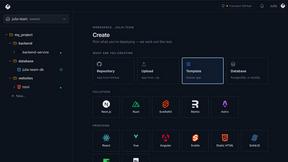
Generate and edit production-ready images with GPT Image 2 API, detailed prompts, reference images, clear text, and developer-friendly workflows.
Firma.dev
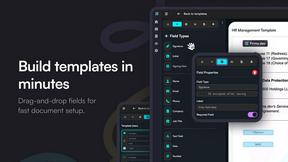
Pay-as-you-go e-signature API and no-code sending. €0.049 per envelope, no monthly minimums, legally valid in 55+ countries.
Minimax H3
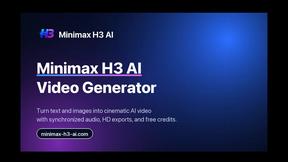
Turn raw prompts into polished videos and images with Minimax H3’s swift creative engine.
Ornold
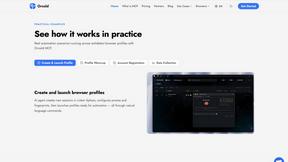
Ornold MCP lets AI agents control Chromium and antidetect browsers: click, type, read screens, record workflows, replay profiles without scripts.
AIQualityHQ
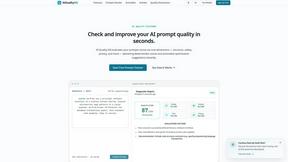
AIQualityHQ provides deterministic evaluations across six prompt quality dimensions with instant scores and actionable fixes.
RedLinz
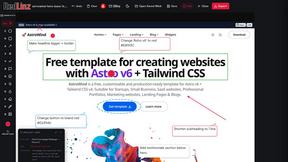
RedLinz turns screenshots into AI prompts by letting you circle and annotate exactly what you want an LLM to change.
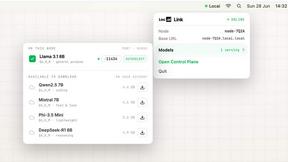
Locai
Locai lets you run powerful AI models on your own hardware, keeping data private and cutting cloud costs.
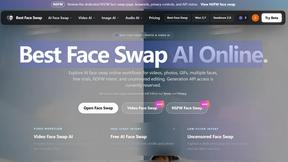
Best Face Swap
Best Face Swap offers a dedicated video and photo AI workflow for frame-consistent face replacement with reserved API access.
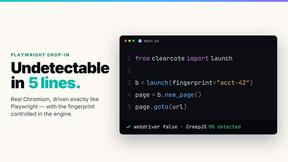
Clearcote
Clearcote is an open-source, de-Googled Chromium drop-in for Playwright and Puppeteer that gives you engine-level fingerprint control for a single.

JustLaunched
JustLaunched schedules your SaaS launch, submits to curated directories, and connects you with buyers discovering new tools daily.
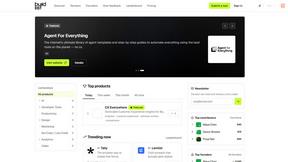
Buildlist
Buildlist transforms any AI API key into an instant SaaS directory listing for discovering, launching, and improving tools.
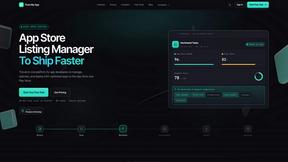
Push My App
Push My App is an AI-powered dashboard that writes ASO metadata, detects rejection risks, and submits directly to Apple and Google stores.
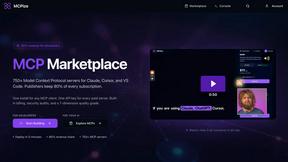
About Headless Domains Alternatives
Headless Domains is a developer tool that provides autonomous software agents with a persistent, verifiable web identity. It falls under the category of Dev Tools, specifically designed to solve identity and discoverability challenges for agents operating across decentralized and traditional web environments. While Headless Domains offers a robust solution for agent identity management, users often seek alternatives due to specific requirements such as different pricing models, the need for integration with particular blockchain networks, or a desire for more granular control over data storage and resolution protocols. Additionally, some users may require features like native support for specific agent frameworks or more extensive API rate limits for high-frequency operations. When evaluating alternatives to Headless Domains, developers should prioritize solutions that offer verifiable record systems with cryptographic proof, machine-readable manifest formats for agent capabilities, and cross-platform reachability without vendor lock-in. The ideal alternative should provide agent discovery mechanisms that work across both centralized and decentralized naming systems, and must ensure identity continuity even as agents migrate between different hosting environments or execution platforms. Key specifications to examine include the supported resolution protocols, the persistence guarantees for identity records, and the technical architecture for maintaining agent identity across network partitions or platform changes.
FAQs about Headless Domains Alternatives
What is Headless Domains?
Headless Domains is a developer tool that gives autonomous software agents a persistent, verifiable web identity. It belongs to the Dev Tools category and provides agents with a consistent identity across different platforms and environments. The system ensures that agents can be discovered, reached, and verified regardless of where they are deployed.
Who is Headless Domains for?
Headless Domains is designed for developers building autonomous software agents that require a stable and verifiable identity on the web. This includes creators of AI agents, automated trading bots, decentralized application services, and any other software entity that needs to maintain a consistent identity across different platforms. It is particularly suited for projects that need cross-platform reachability and identity continuity without being locked into a single provider.
What are the main features of Headless Domains?
Headless Domains provides persistent agent identity, verifiable records, and machine-readable manifests for describing agent capabilities. It enables agent discovery and cross-platform reachability, ensuring agents can be found and communicate across different systems. The platform also offers identity continuity, meaning an agent maintains the same identity even as it migrates between environments, and it operates with no lock-in, allowing developers to move their agents freely.
Why choose Headless Domains for agent identity management?
Headless Domains is chosen because it provides a comprehensive solution for agent identity that is both persistent and verifiable, which is critical for trust in autonomous systems. Its machine-readable manifests allow agents to advertise their capabilities in a standardized format, simplifying interoperability. The no-lock-in policy ensures that developers retain full control over their agents, and the cross-platform reachability guarantees that agents can communicate regardless of the underlying infrastructure.