
10Xprofit - Amazon Seller Tools vs Rocket Source
Side-by-side comparison to help you choose the right tool.

10Xprofit - Amazon Seller Tools
10Xprofit provides 40+ data-driven tools to build and scale a profitable Amazon business to $100K.
Last updated: March 1, 2026

Rocket Source
Rocket Source analyzes bulk wholesale data with live Amazon metrics to identify profitable FBA opportunities.
Last updated: February 28, 2026
Visual Comparison
10Xprofit - Amazon Seller Tools
Rocket Source
Feature Comparison
10Xprofit - Amazon Seller Tools
Niche Finder & Product Research Database
This feature provides a powerful search and analysis engine to uncover untapped, high-potential Amazon niches. It delivers critical data points including estimated monthly search volume, total market size, average selling price, and estimated startup costs for specific product ideas. The tool enables deep competitor analysis, displaying metrics like average competitor pricing, total review counts, and positive review percentages to validate product viability before sourcing.
Real-Time Profit Calculator & Analytics Dashboard
The platform includes a sophisticated profit calculator that automatically factors in all Amazon fees (FBA, referral, storage), cost of goods, shipping, and other expenses to provide accurate net profit margins for any ASIN. This is integrated into a real-time analytics dashboard that offers continuous financial tracking, custom reporting, and market trend analysis, allowing sellers to monitor business health and make data-driven adjustments to pricing and strategy instantly.
Comprehensive Keyword Research & Tracking Suite
This suite of tools allows sellers to discover high-traffic, relevant keywords for product listings and PPC campaigns. It provides monthly search volume data and competition level assessments. Furthermore, it includes tracking functionality to monitor keyword rankings over time, enabling sellers to optimize their SEO and advertising efforts based on performance data and shifting search trends within their category.
Competition Analyzer & Review Exporter
This feature provides in-depth competitive intelligence by allowing users to track and analyze competitors' performance metrics, pricing strategies, and inventory changes. Coupled with the Review Exporter tool, sellers can download and systematically analyze thousands of customer reviews to identify common complaints, product strengths, and feature requests, which can directly inform product improvement and listing optimization strategies.
Rocket Source
Automated Supplier Catalog Analysis
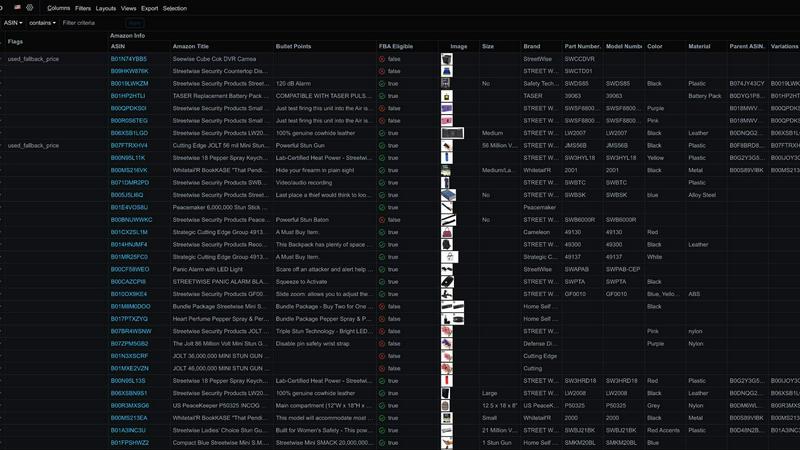
This core feature automates the entire initial sourcing analysis. Users upload supplier-provided spreadsheets, and the platform's AI engine automatically maps the supplier's column headers (like SKU, UPC, or title) to its internal data model. It then processes each row, fetching and appending over 90 data points from Amazon for every product, transforming a static list into a dynamic, analyzable dataset in minutes. This eliminates hours of manual copy-pasting, lookups, and data entry, allowing for the rapid evaluation of thousands of potential products from a single supplier file.
Comprehensive Product Data Enrichment
Rocket Source enriches each supplier product with a comprehensive suite of over 90 real-time and derived data points. Critical metrics include the current Buy Box price (for new and used conditions), precise calculated FBA fees, Amazon Best Sellers Rank (BSR), total offer count, and product dimensions. It also provides vital categorical data such as brand, color, size, and pack quantity, along with derived insights like BSR percentage and Top Level Category flags. This depth of data provides a complete picture of a product's market position, profitability, and logistical considerations.
Advanced Restriction and Flagging System
The platform proactively identifies potential pitfalls and restrictions for Amazon sellers. It scans each product for critical eligibility flags, such as Hazmat classification, brand gating, or Small and Light program eligibility. It also detects product variations by identifying Parent ASINs and listing all related child ASINs. These flags and warnings allow sellers to filter out problematic or complex inventory before purchase, mitigating risk and preventing costly mistakes related to compliance, storage fees, or listing complications.
Enterprise-Grade Scalability and Global Reach
Engineered for high-volume operations, Rocket Source can process massive supplier files containing over 500,000 product rows directly within the user's browser, without requiring local software installation or overwhelming system resources. The platform supports product analysis across 18 international Amazon marketplaces, enabling global sourcing strategies. This scalability, combined with full API access for integration into existing ERP or inventory management systems, makes it suitable for both individual high-volume sellers and large enterprise procurement teams.
Use Cases
10Xprofit - Amazon Seller Tools
Validating a New Product Idea
A seller identifies a potential product, such as a streak-free glass cleaner for automotive enthusiasts. Using the Niche Finder and Product Research tools, they input the concept to receive data-driven validation, including a 5.4K monthly search volume, a $1.2M market size, and an average price of $24.99. They then analyze competitor listings, review scores, and startup cost estimates to de-risk the investment before proceeding with supplier contact and sample orders.
Launching and Optimizing a New ASIN
Upon sourcing a product, the seller utilizes the Keyword Research tool to build a backend search term list and optimize their title, bullet points, and description with high-volume, low-competition keywords. They employ the Listing Optimization tools to craft compelling content. Post-launch, they use the PPC campaign management tools to create targeted ads and the Keyword Tracker to monitor initial ranking performance, making iterative improvements.
Managing Inventory and Profitability at Scale
An established seller with multiple SKUs uses the integrated Inventory Management System to forecast demand, prevent stockouts, and minimize storage fees. They activate Automated Repricing Tools to dynamically adjust prices based on competitor pricing rules. Simultaneously, the Real-Time Profit Dashboard provides a holistic view of each product's profitability, enabling strategic decisions on which items to reorder, promote, or discontinue.
Conducting Deep Competitive Analysis
A seller looking to expand market share for an existing product uses the Competition Analyzer to monitor key rivals' pricing changes, review velocity, and promotional tactics. They export competitors' reviews using the Review Exporter, analyzing hundreds of data points to identify unmet customer needs or frequent product issues. This intelligence guides their own product iteration, listing enhancements, and targeted marketing campaigns to capture a competitive advantage.
Rocket Source
Wholesale Product Sourcing and Vetting
Wholesale sellers and distributors use Rocket Source to efficiently vet bulk supplier catalogs. By uploading a supplier's entire product list, they can instantly see the real Amazon market data for each item. This allows for the rapid identification of products with healthy margins, sufficient demand (via BSR), and low competition (offer count), enabling data-backed negotiation and purchasing decisions at scale, directly from wholesale suppliers.
FBA Profitability and Fee Analysis
Fulfillment by Amazon (FBA) sellers leverage the platform's precise FBA fee calculations, which are derived from the exact product dimensions and weight. By comparing the supplier's cost against the net profit after all Amazon fees (referral, FBA, storage), sellers can accurately forecast margins. This prevents the common error of using estimated fees, ensuring that only genuinely profitable products, after all costs, are added to inventory.
Avoiding Restricted and Gated Products
Sellers utilize the restriction flagging system to filter out products that would be difficult or impossible to sell. Before purchasing inventory, they can filter supplier lists to exclude items flagged for Hazmat, brand gating, or those that are not eligible for preferred programs like Small and Light. This pre-emptive screening saves significant time and capital that would otherwise be tied up in unsellable or restricted stock.
Managing Product Variations and Multipacks
For sellers dealing in products with variations (e.g., different sizes or colors of apparel) or multipacks, Rocket Source provides essential data points. It identifies Parent ASINs, lists all variation ASINs, and specifies Amazon's pack quantity. This allows sellers to ensure they are sourcing the correct variation from their supplier and accurately forecasting demand for that specific variant, avoiding mismatches between purchased inventory and the live Amazon listing.
Overview
About 10Xprofit - Amazon Seller Tools
10Xprofit.io is a comprehensive, data-driven software platform engineered for Amazon sellers seeking to build, launch, and scale profitable e-commerce businesses. It functions as an all-in-one operational dashboard, consolidating the core functionalities of over 40 professional tools into a single, integrated system. The platform is architected for sellers at all proficiency levels, from entrepreneurs launching their first product to established brands managing complex portfolios across 18+ global Amazon marketplaces. Its primary value proposition lies in the unification of actionable market intelligence, automated business management tools, and structured educational training into one subscription. By providing access to advanced product research databases, real-time profit analytics, keyword tracking, supplier sourcing networks, and automated repricing tools, 10Xprofit eliminates the need for and cost associated with fragmented software subscriptions. The platform is distinguished by its emphasis on a data-first methodology, offering industry-leading analytics on niche viability, competitor performance, and financial forecasting to facilitate informed, strategic decision-making and systematic business growth. It provides a proven 6-phase roadmap to guide users from foundational setup to market mastery and sustainable scaling.
About Rocket Source
Rocket Source is an advanced, AI-powered data analysis platform engineered specifically for Amazon sellers, with a focus on wholesale, FBA (Fulfillment by Amazon), and FBM (Fulfilled by Merchant) business models. Its primary function is to automate and accelerate the product sourcing workflow by performing high-volume, real-time analysis of supplier catalogs against live Amazon marketplace data. The platform is designed to eliminate the manual, error-prone process of product research by allowing users to upload supplier spreadsheets containing thousands of SKUs. Rocket Source's proprietary AI automatically maps spreadsheet columns and enriches each product listing with over 90 critical data points sourced directly from Amazon's API and other authoritative sources. This data includes real-time Buy Box prices, precise FBA fee calculations, sales rank (BSR), offer counts, and crucial eligibility flags for potential restrictions like hazmat or brand gating. By replacing estimations with actual, current data, the platform enables sellers to identify genuinely profitable inventory opportunities with accurate, data-driven margin projections. Built for enterprise-scale operations, it can process files exceeding 500,000 rows directly within a web browser and supports analysis across 18 global Amazon marketplaces. Trusted by individual entrepreneurs and major corporations like Luxottica and Reckitt, Rocket Source integrates seamlessly into existing workflows through full API access, empowering businesses to make informed sourcing decisions, prevent overstocking of slow-moving inventory, and scale their Amazon operations efficiently.
Frequently Asked Questions
10Xprofit - Amazon Seller Tools FAQ
What makes 10Xprofit different from other Amazon seller tool suites?
10Xprofit differentiates itself through its all-in-one, consolidated platform architecture, integrating over 40 professional tools that typically require multiple separate subscriptions. Its core distinction is a unified data-first methodology, providing cohesive analytics across the entire business lifecycle—from niche discovery and product validation to real-time profit tracking and competitive intelligence—within a single dashboard. The platform is engineered for 18+ global marketplaces and is structured around a proven 6-phase educational roadmap, combining software with strategic guidance.
Do I need prior Amazon selling experience to use 10Xprofit effectively?
No prior experience is required. The platform is architecturally designed for sellers at all proficiency levels. For beginners, it provides step-by-step guidance, video tutorials, and a structured 6-phase roadmap that systematically guides users from account setup to advanced scaling. The tools feature intuitive interfaces and are complemented by educational training modules that explain core Amazon selling concepts, making the platform adaptable for both new entrepreneurs and experienced sellers managing complex portfolios.
Which Amazon marketplaces does the platform support for research and management?
10Xprofit supports comprehensive research and management capabilities across 18+ global Amazon marketplaces. This includes major platforms such as Amazon.com (USA), Amazon.ca (Canada), Amazon.co.uk (UK), Amazon.de (Germany), Amazon.fr (France), Amazon.it (Italy), Amazon.es (Spain), Amazon.co.jp (Japan), Amazon.in (India), Amazon.com.mx (Mexico), and Amazon.com.au (Australia). This allows sellers to perform localized product research, keyword analysis, and competitor tracking in virtually all significant Amazon ecosystems.
What kind of data and metrics are provided in the product research phase?
The product and niche research tools provide a comprehensive dataset for validation. This includes estimated monthly search volume for primary and related keywords, calculated total market size, historical and current average selling prices, and estimated startup costs. For competitor analysis, it delivers metrics such as individual ASIN pricing, review counts, review ratings, positive review percentage, and sales estimate ranges. This quantitative data is essential for assessing competition density, profit potential, and overall niche viability before investment.
Rocket Source FAQ
What type of files can I upload to Rocket Source?
Rocket Source is designed to process standard spreadsheet files, primarily in CSV or XLSX format. These files should contain your supplier's product catalog data, including identifiers like UPC, EAN, ISBN, or product titles and brands. The platform's AI will automatically detect and map the relevant columns in your file to begin the data enrichment process.
How does Rocket Source calculate profitability?
Profitability calculations are based on a comprehensive model using real-time data. The platform pulls the current Buy Box price and then subtracts Amazon's referral fee, the precisely calculated FBA fulfillment fee (based on the product's dimensions, weight, and category), and the estimated shipping cost from the supplier. By inputting your supplier's cost per unit, the system provides an accurate net profit projection, replacing manual estimates with data-driven figures.
What does the "BSR Percentage" data point mean?
BSR Percentage is a derived metric that provides context to a product's Best Sellers Rank (BSR). It is calculated by dividing the product's specific BSR number by the total number of products in its Amazon subcategory. A lower BSR Percentage indicates the product is closer to the top of its category (e.g., #1 out of 100,000 products = 0.001%), generally signaling stronger sales velocity compared to a product with a higher percentage, offering a more standardized way to compare demand across different categories.
Can I use Rocket Source for marketplaces outside the United States?
Yes, Rocket Source supports product analysis for 18 global Amazon marketplaces, including the UK, Germany, France, Japan, Canada, Australia, and others. This allows international sellers and those looking to expand globally to analyze supplier products against the live data of their target marketplace, ensuring accurate pricing, fee, and demand information for each specific region.
Alternatives
10Xprofit - Amazon Seller Tools Alternatives
10Xprofit - Amazon Seller Tools is a comprehensive, data-driven software platform within the e-commerce category, specifically engineered for Amazon sellers. It consolidates over 40 tools for product research, keyword tracking, and business analytics into a single operational dashboard, aiming to streamline the process of building and scaling a profitable Amazon business. Sellers may seek alternatives to 10Xprofit for various operational reasons. Common drivers include budget constraints and specific pricing model preferences, a need for more specialized or niche functionality not covered in an all-in-one suite, or a desire for a different user interface and workflow integration. The specific scale of an operation, from a single product launch to a large portfolio, also influences tool selection. When evaluating alternative Amazon seller software, key considerations should include the depth and accuracy of its core data analytics, the breadth and integration of its feature set relative to your business stage, and the total cost of ownership compared to piecing together multiple standalone tools. The platform's update frequency for market data and its capacity for automation are also critical technical specifications.
Rocket Source Alternatives
Rocket Source is a specialized data analysis platform within the Amazon wholesale and FBA sourcing software category. It is engineered to automate the evaluation of bulk supplier catalogs by enriching product lists with live Amazon metrics, enabling sellers to identify profitable inventory opportunities with high precision and at scale. Users may explore alternatives for various reasons, including budget constraints, specific feature requirements not addressed by the platform, or a need for a different operational workflow. Some may seek tools with a stronger focus on other business models like retail arbitrage or private label, or require integrations with different e-commerce ecosystems beyond Amazon's core marketplaces. When evaluating an alternative, key considerations should include the depth and accuracy of data sourcing, particularly the use of live API data versus estimates. Scalability in processing large files, the range of marketplace support, and the inclusion of critical compliance flags are also vital. Finally, assess the platform's integration capabilities and whether its automation features align with your specific sourcing volume and methodology.