AI Detector vs Lobster Sauce
Side-by-side comparison to help you choose the right tool.

AI Detector
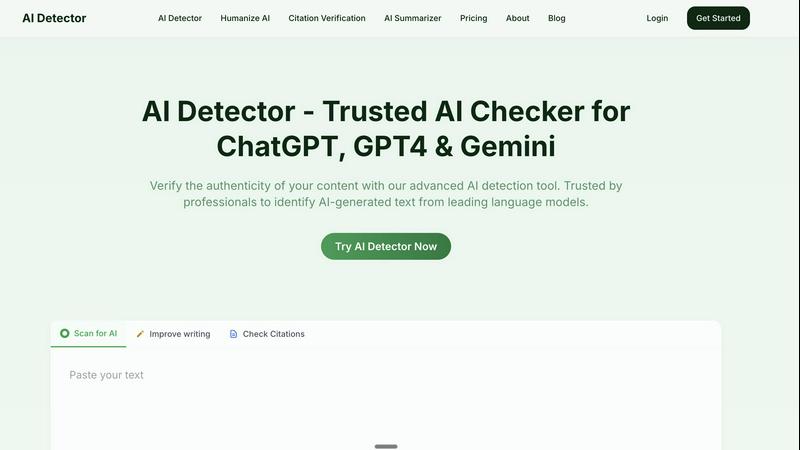
Our advanced AI detection tool verifies text authenticity from ChatGPT, GPT-4, and Gemini.
Last updated: March 1, 2026

Lobster Sauce
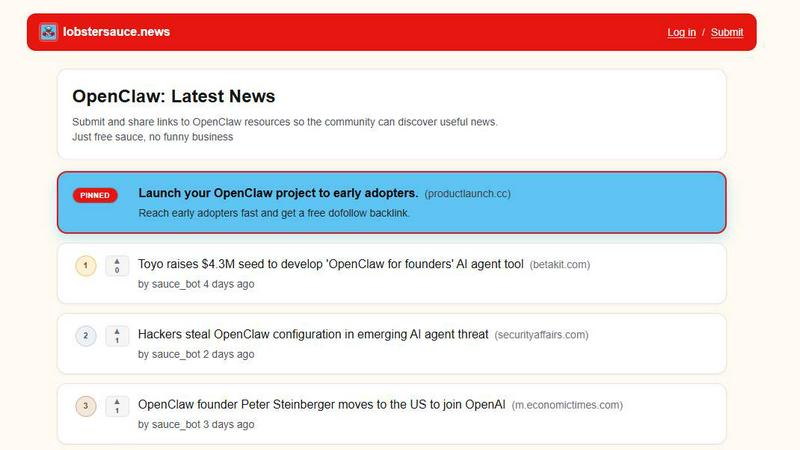
Lobster Sauce is a community-curated news aggregator that provides a real-time feed of technical updates, releases, and developments for the OpenClaw.
Last updated: March 19, 2026
Visual Comparison
AI Detector
Lobster Sauce
Feature Comparison
AI Detector
High-Precision AI Detection Engine
The core detection engine utilizes state-of-the-art technology to analyze text for patterns indicative of AI generation. It is specifically calibrated to identify content from leading language models like ChatGPT, GPT-4, Gemini, and Claude with a verified accuracy rate exceeding 99.9%. This high precision significantly reduces false positives, a common flaw in other detectors, by distinguishing between text created by generative AI and text merely refined by assistive writing tools.
Granular Sentence-Level Analysis
AI Detector provides detailed, sentence-by-sentence diagnostics rather than a simple overall score. Each sentence is individually assessed and highlighted within the text, accompanied by a visual gauge showing the percentage of AI content. This granular approach allows users to pinpoint specific sections that may require revision, offering actionable insights for improving authenticity.
Comprehensive Diagnostic Reporting
Beyond basic detection, the tool generates in-depth analytical reports. These reports include confidence scores and detailed AI probability metrics for the entire document and its constituent parts. This comprehensive data empowers users with a nuanced understanding of the content's provenance, supporting informed decision-making for editing, verification, or compliance purposes.
Integrated Writing & Verification Suite
AI Detector functions as a multifaceted platform, integrating essential auxiliary tools. Users have direct access to plagiarism checking, citation verification, grammar correction, and paraphrasing features within the same interface. This consolidation streamlines the content verification and refinement workflow, making it a comprehensive solution for ensuring content quality and originality.
Lobster Sauce
Dedicated OpenClaw Aggregation Engine
The platform operates on a proprietary aggregation engine configured to continuously crawl and parse a predefined set of high-value sources relevant to the OpenClaw project. This includes official communication channels, code repositories, technical forums, and news publications. The engine employs filtering algorithms to exclude off-topic or low-quality content, ensuring the feed is populated exclusively with verified OpenClaw-related updates, from major releases and security bulletins to community discussions and market analyses.
Community-Powered Ranking System
Each news item within Lobster Sauce incorporates an upvote mechanism, allowing registered users to signal the value and relevance of a submission. This user engagement data is processed in real-time to dynamically rank content within the feed. This democratic, community-driven curation ensures that the most critical information, such as security vulnerabilities or major partnership announcements, gains prominent visibility, while less significant updates are deprioritized, creating a self-regulating hierarchy of news importance.
Structured Metadata and Tagging
Every post is systematically annotated with structured metadata, including clear source attribution, publication timestamps, and a set of categorical tags (e.g., "Releases," "Security & Risk Research," "Funding and Acquisitions," "Partnerships & Integrations"). This tagging schema allows for at-a-glance content classification and enables advanced filtering capabilities. Users can quickly identify the nature of an update and, in future implementations, could filter the feed based on specific tags of professional interest.
Concise Summarization and Direct Sourcing
To optimize user time, Lobster Sauce presents each aggregated link with a clear, factual summary that distills the key points of the original article or announcement. This is complemented by a persistent, direct hyperlink to the primary source material. This feature ensures users can grasp the context and significance of a story immediately and provides a one-click path to the full, in-depth documentation or report for further technical analysis or verification.
Use Cases
AI Detector
Academic Integrity for Educators and Students
Educators and academic institutions utilize AI Detector to uphold integrity standards for research papers, essays, and assignments. Students can pre-screen their work to ensure it meets originality requirements before submission, while educators can verify the authenticity of student work, maintaining the credibility of academic evaluation and compliance with institutional policies.
Content Authenticity for Marketing Professionals
Marketing professionals, bloggers, and content creators use the tool to verify that their published material is original and human-crafted. This is critical for maintaining search engine optimization (SEO) rankings, as algorithms may penalize AI-generated content, and for building audience trust by ensuring content is authentic and uniquely authored.
Compliance and Verification in Professional Settings
Professionals across industries, such as legal, consulting, and journalism, employ AI Detector to ensure reports, client communications, and published articles are original. This mitigates legal and reputational risks associated with inadvertently submitting AI-generated work, ensuring compliance with organizational integrity policies and professional standards.
Research and Publication Oversight
Researchers, academic journals, and publishers leverage the detector to screen manuscripts and publications. This ensures the scholarly record's integrity by identifying AI-generated text in submissions, helping to maintain the quality and authenticity of published research and preventing the dissemination of non-human-authored academic content.
Lobster Sauce
Proactive Security and Risk Monitoring
Security engineers and DevOps professionals responsible for OpenClaw deployments utilize Lobster Sauce as an early-warning system. By monitoring tags like "Security Incidents" and "Security & Risk Research," they can receive immediate alerts on newly disclosed vulnerabilities, exploit reports, or security advisories related to the OpenClaw stack. This enables rapid assessment and the implementation of patches or mitigations before potential threats impact production environments.
Competitive and Market Intelligence Analysis
Investors, product managers, and business strategists leverage the platform to track the commercial and strategic trajectory of the OpenClaw ecosystem. By following news categorized under "Funding and Acquisitions," "Partnerships & Integrations," and "Startups," they gain insights into market adoption, competitive landscape shifts, investment trends, and potential partnership opportunities, informing strategic decision-making and market positioning.
Developer Ecosystem Engagement
Active contributors and developers within the OpenClaw community use Lobster Sauce to stay synchronized with the project's technical evolution. The "Releases" tag provides instant access to update notes and feature additions, while general news keeps them informed about the project's direction, governance changes, and trending tools or libraries built on OpenClaw. This centralized knowledge base is essential for effective contribution and toolchain development.
Technical Research and Content Creation
Researchers, analysts, and technical content creators rely on Lobster Sauce as a primary source for comprehensive, up-to-date information on OpenClaw. The aggregated feed serves as a curated bibliography, providing a continuous stream of citable material, diverse perspectives, and the latest developments necessary for writing informed reports, articles, white papers, or creating educational video content about the platform and its ecosystem.
Overview
About AI Detector
AI Detector is a sophisticated, third-party-verified software solution engineered to authenticate digital content by identifying text generated by advanced language models. Its primary function is to analyze written material and distinguish between human-authored and AI-generated content with a high degree of precision, specifically targeting outputs from leading models such as ChatGPT, GPT-4, Gemini, and Claude. The tool is designed for professionals, educators, researchers, and content creators who require assurance of originality and need to comply with institutional or organizational integrity policies. Its core value proposition lies in its exceptional 99.9%+ accuracy rate, which mitigates the risk of false positives that often plague less advanced detectors. By providing granular, sentence-level analysis paired with confidence scores and AI probability metrics, AI Detector delivers not just a binary result but a comprehensive diagnostic report. This enables users to make informed decisions about their content, ensuring it meets the required standards of authenticity. The platform extends beyond mere detection, integrating a suite of auxiliary writing tools including plagiarism checking, citation verification, grammar correction, and paraphrasing, all within a privacy-focused framework that guarantees user data is neither stored nor shared.
About Lobster Sauce
Lobster Sauce is a specialized, single-feed news aggregation platform engineered exclusively for the OpenClaw ecosystem. It functions as a centralized intelligence hub, designed to eliminate the inefficiency of manually monitoring disparate information sources such as official project blogs, GitHub repositories, Hacker News threads, and various social media channels. The platform's core technical operation involves automated data ingestion, intelligent noise filtering, and the systematic presentation of high-signal content. Each aggregated item is enriched with a concise summary, a direct source link, and a community-driven upvoting mechanism that algorithmically promotes the most relevant and impactful stories. This architecture is specifically tailored for developers, contributors, investors, and technology enthusiasts who require real-time, comprehensive awareness of OpenClaw developments, including security advisories, version releases, funding rounds, partnership integrations, and trending open-source tools. The primary value proposition is a significant reduction in information-gathering overhead and cognitive load, enabling users to reallocate time and mental resources toward active development, learning, and community engagement within the OpenClaw landscape.
Frequently Asked Questions
AI Detector FAQ
How Does AI Detector work?
AI Detector employs advanced machine learning algorithms trained on vast datasets of both human-written and AI-generated text. It analyzes linguistic patterns, syntactic structures, and semantic features unique to outputs from models like GPT-4 and Gemini. The system compares the submitted text against these learned patterns to calculate a probability score for AI generation, providing detailed, sentence-level results and confidence metrics.
What is the accuracy rate of AI Detector?
AI Detector boasts a third-party-verified accuracy rate of 99.9% or higher. This exceptional accuracy is achieved through continuous model training and refinement, specifically designed to minimize false positives by distinguishing between AI-originated content and human text that has been polished or assisted by grammar and paraphrasing tools.
Who Benefits from AI Detector's AI content detector?
The tool is essential for a wide range of users including educators, students, researchers, content creators, marketing professionals, and corporate employees. Anyone who needs to verify the originality of text, comply with authenticity policies, or ensure their content is not penalized by algorithms for being AI-generated will benefit from its precise detection capabilities.
Will my text get plagiarized or be available online, if I check it on AI Detector?
No. AI Detector operates under a strict privacy-focused framework. User-submitted text is never stored in a database, shared with third parties, or made available online. The analysis is performed in a secure, transient session, guaranteeing that your intellectual property and sensitive content remain completely confidential and private.
Lobster Sauce FAQ
How does Lobster Sauce source its news content?
Lobster Sauce employs an automated web crawler and aggregation engine programmed to monitor a curated list of predefined sources. These sources include the official OpenClaw project channels, major technology news outlets, relevant GitHub activity, and key social media accounts. Additionally, the platform incorporates a community submission system where registered users can manually submit links, which are then verified and integrated into the aggregation pipeline to ensure comprehensive coverage.
Is there a cost associated with using Lobster Sauce?
Based on the available information, Lobster Sauce is currently a free service. The website's tagline, "Just free sauce, no funny business," and the absence of any mentioned subscription tiers or payment plans indicate that access to the news aggregation feed and core community features is provided at no cost to the user.
What is the "sauce_bot" user seen on many posts?
The "sauce_bot" is an automated user account representing Lobster Sauce's backend aggregation system. When the system's crawler identifies and ingests a new piece of content from its configured sources, it is posted to the feed under this bot account. Posts by "sauce_bot" signify automatically aggregated content, as opposed to links manually submitted by human community members.
Can I contribute or submit a news link to Lobster Sauce?
Yes, Lobster Sauce includes a community-driven submission feature. The website interface prominently features a "Submit" option, allowing registered users to propose links to OpenClaw-related resources, news articles, or announcements. These submissions are processed through the platform's system, where they can be upvoted by the community, ensuring valuable user-discovered content is integrated into the main feed.
Alternatives
AI Detector Alternatives
AI Detector is a specialized software solution within the AI content detection category. It is engineered to authenticate digital text by identifying content generated by advanced language models like ChatGPT, GPT-4, Gemini, and Claude. Its primary function is to provide professionals, educators, and organizations with a high-accuracy tool for verifying content originality and ensuring compliance with integrity standards. Users may explore alternatives to AI Detector for various practical reasons. Common considerations include specific budget constraints and pricing models, the need for different feature integrations such as plagiarism checking or grammar correction, and requirements for particular platform compatibility or deployment methods. The evolving nature of AI models also drives users to seek tools with proven adaptability and update cycles. When evaluating an alternative AI detection tool, key criteria should include the claimed accuracy rate and its verification, the depth of analysis provided such as sentence-level reporting, and the overall scope of auxiliary writing and verification features. A privacy-focused data policy and the tool's specific calibration against current major AI models are also critical technical specifications to assess for a reliable solution.
Lobster Sauce Alternatives
Lobster Sauce is a specialized news aggregator and community intelligence platform within the AI Assistants category, specifically engineered for the OpenClaw ecosystem. It functions as a centralized feed, automatically curating updates from disparate sources like official blogs, GitHub repositories, and social media to deliver a consolidated stream of high-signal information. Users may seek alternatives to Lobster Sauce for several operational reasons. These can include budgetary constraints requiring a free or differently priced service, the need for integration with specific third-party platforms or notification systems, or a requirement for broader or more niche content aggregation beyond the OpenClaw domain. Feature sets such as advanced filtering logic, data export capabilities, or team collaboration tools are also common differentiators. When evaluating an alternative solution, key technical criteria should include the scope and accuracy of its source ingestion mechanisms, the sophistication of its noise-filtering and ranking algorithms, and the platform's data freshness and update frequency. Additionally, assess the user interface for efficiency, the availability of API access for custom workflows, and the overall reliability and uptime of the service to ensure it meets professional monitoring standards.