B2B Email Verifier vs rfpaihub
Side-by-side comparison to help you choose the right tool.

B2B Email Verifier
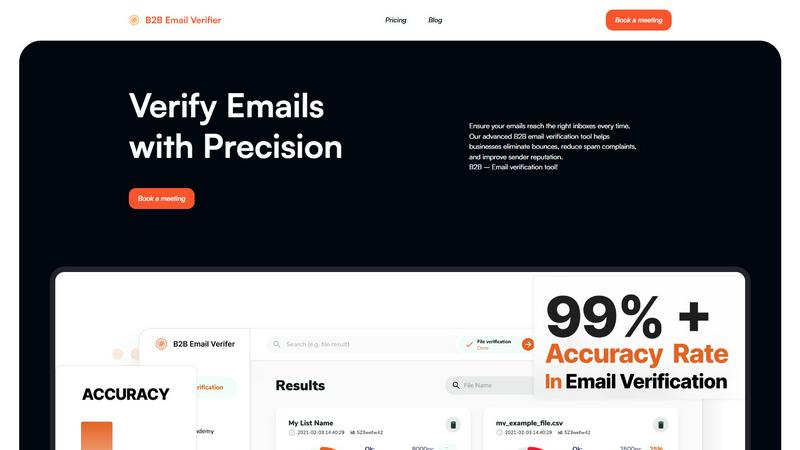
B2B Email Verifier ensures 99% accuracy for bulk email validation to eliminate bounces and improve deliverability.
Last updated: February 28, 2026

rfpaihub
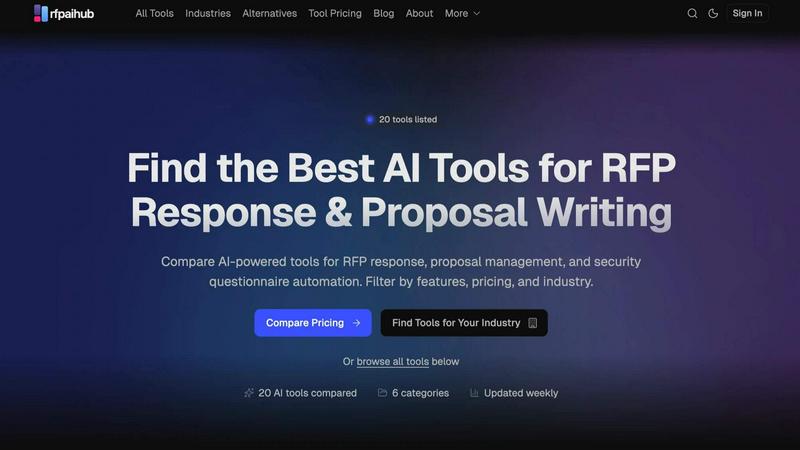
RFP AI Hub is a comprehensive directory for comparing AI-powered RFP response, proposal management, and security questionnaire automation tools.
Last updated: April 13, 2026
Visual Comparison
B2B Email Verifier
rfpaihub
Feature Comparison
B2B Email Verifier
High-Accuracy Verification Engine
The platform utilizes advanced proprietary algorithms and a multi-layered verification process to achieve a consistent accuracy rate exceeding 99%. This engine is specifically tuned for B2B data, effectively validating complex corporate domain structures, role-based addresses (e.g., info@, sales@), and identifying nuanced invalid patterns that generic checkers miss. It performs checks for syntax validity, domain MX record verification, and mailbox existence via SMTP, ensuring each address is actively deliverable.
Bulk Email List Processing
Users can upload and process entire email lists containing thousands of addresses in a single operation. The system is engineered for high-throughput validation, delivering results within seconds. This feature supports common file formats and integrates seamlessly into list hygiene workflows, enabling marketing and sales teams to cleanse large prospect databases efficiently without manual, time-consuming checks on individual emails.
Enterprise-Grade Data Security
B2B Email Verifier implements end-to-end encryption for all data in transit and at rest. The platform adheres to strict data privacy protocols, ensuring that user-uploaded email lists are processed securely and are never shared, sold, or used for any purpose other than verification. This secure infrastructure is critical for businesses handling sensitive prospect and customer data, providing compliance confidence.
Collaborative Workspace & History
Each plan includes a collaborative workspace that allows team members to manage and verify lists collectively. Coupled with a 30-day version history, this feature enables teams to track changes, revert to previous list states, and audit verification activities. This facilitates team coordination, simplifies list management, and provides a clear audit trail for campaign planning and performance analysis.
rfpaihub
Curated Tool Directory
The platform maintains a meticulously researched and regularly updated directory of AI-powered RFP and proposal software. Each tool listing includes detailed specifications, categorized features, and verified information to ensure users are comparing accurate and current data. This curation eliminates the need for manual web searches and unreliable third-party reviews.
Advanced Filtering System
Users can refine the tool database using multiple, simultaneous filters. Key filter criteria include software categories (e.g., RFP Response vs. Security Automation), specific features (like AI drafting or content library integration), target industry (such as SaaS, Healthcare, or Finance), and published pricing tiers. This granular filtering allows for highly targeted discovery based on precise workflow needs.
Comparative Analysis Framework
RFP AI Hub provides a structured framework for comparing tools side-by-side. This goes beyond basic feature lists to include practical differentiators relevant to response teams, enabling direct comparison of AI capabilities, integration options, collaboration features, and security protocols to identify the optimal solution for complex organizational requirements.
Vendor-Neutral Educational Content
The site supplements its directory with a dedicated blog and resource sections that offer unbiased educational content on selecting and implementing RFP technology. This includes guides on workflow assessment, ROI justification, and best practices for leveraging AI in proposal processes, positioning the hub as an authoritative source rather than a lead-generation portal.
Use Cases
B2B Email Verifier
Pre-Campaign List Hygiene for Marketing Teams
Marketing teams leverage the tool to cleanse their email databases before launching large-scale email marketing or nurture campaigns. By verifying lists in bulk, they systematically remove invalid, dormant, and risky addresses. This proactive hygiene directly increases open and click-through rates, reduces hard bounce rates to protect domain sender reputation, and ensures marketing resources are focused on engaging with genuinely reachable prospects.
Sales Prospecting and Lead List Validation
Sales Development Representatives (SDRs) and sales operations use the verifier to validate prospect lists acquired from lead generation tools, webinars, or trade shows. Verifying emails before initiating cold outreach ensures that communication efforts are not wasted on dead ends. This improves the efficiency of the sales funnel, increases the number of meaningful conversations, and enhances overall sales productivity by focusing effort on high-quality, deliverable leads.
Maintaining CRM Data Integrity
Businesses integrate email verification into their CRM data maintenance routines. Regularly scheduled verification of contact records within platforms like Salesforce or HubSpot purges outdated and incorrect email addresses. This ongoing maintenance ensures that CRM data remains a reliable asset for all customer-facing teams, improving the accuracy of communication, reporting, and segmentation for targeted campaigns.
Onboarding and Compliance Safeguarding
Companies use real-time or batch verification during customer or user onboarding processes to ensure the provided email addresses are valid at the point of entry. This reduces fraud, improves user activation rates, and ensures critical transactional communications are delivered. Furthermore, by minimizing sends to invalid addresses, businesses maintain better compliance with anti-spam regulations like CAN-SPAM and CASL, which frown upon high bounce rates.
rfpaihub
Procurement for Sales Operations Teams
Sales operations leaders tasked with selecting an enterprise RFP response platform can use RFP AI Hub to create a shortlist of qualified vendors. By filtering for tools with specific AI-matching algorithms, Salesforce integration, and enterprise-grade security, they can efficiently evaluate options that meet strict corporate procurement and technical requirements.
Tool Selection by Security & Compliance Teams
Security and compliance professionals overwhelmed by vendor security questionnaires (VSQs) and due diligence queries can utilize the directory to find specialized security questionnaire automation tools. They can filter for platforms with capabilities like automated mapping to frameworks (e.g., SOC 2, ISO 27001) and library management for standardized security responses.
Evaluation by Proposal Management Consultants
Independent consultants or agencies that manage proposals for multiple clients need to recommend tools appropriate for different business sizes and industries. RFP AI Hub allows them to quickly compare pricing models, feature sets, and industry specializations across the market to provide tailored, evidence-based recommendations to each client.
Market Research by Software Vendors
Competing software vendors in the RFP technology space can use the directory to conduct competitive analysis. The structured presentation of features and categories provides a clear overview of the competitive landscape, highlighting market gaps, feature differentiators, and prevailing pricing strategies within specific tool categories.
Overview
About B2B Email Verifier
B2B Email Verifier is a specialized software-as-a-service (SaaS) platform engineered to authenticate and validate business-to-business email addresses with industry-leading precision. It is architected specifically for the complexities of B2B email syntax, corporate domains, and role-based addresses, distinguishing it from generic verification tools. The platform operates by analyzing email lists through a multi-layered verification process, which rigorously checks for syntax errors, domain validity, mailbox existence, and risk factors like disposable or catch-all addresses. This process identifies invalid, non-existent, or high-risk emails before they are used in outreach campaigns. The primary user base includes sales development representatives (SDRs), marketing operations teams, and business owners who rely on email for lead generation and customer engagement. Its core value proposition is the direct enhancement of email deliverability rates by eliminating hard bounces, reducing spam complaints, and protecting sender reputation. By ensuring outreach targets only verified, deliverable inboxes, businesses can significantly improve campaign ROI, maintain compliance with email service provider regulations, and streamline their communication infrastructure with confidence and 99%+ accuracy.
About rfpaihub
RFP AI Hub is a specialized, free-to-use online directory dedicated to the systematic evaluation and comparison of AI-powered software tools designed for the request for proposal (RFP) response lifecycle, proposal management, and security questionnaire automation. The platform serves as a centralized resource for sales operations teams, proposal managers, security compliance officers, and business development professionals who are seeking to modernize and accelerate their response processes. Its core value proposition lies in its ability to cut through market noise by providing detailed, filterable listings that allow users to identify the most suitable software based on specific functional requirements, industry vertical, team size, and budget constraints. By aggregating and categorizing tools across six distinct categories—including RFP Response, Proposal Writing, Security Questionnaire Automation, Knowledge Base management, Document Generation, and Contract & Bid Management—RFP AI Hub enables informed procurement decisions, potentially reducing tool evaluation time by providing transparent, side-by-side comparisons of capabilities and pricing structures.
Frequently Asked Questions
B2B Email Verifier FAQ
How does your email verifier work?
The B2B Email Verifier employs a multi-step technical process. First, it checks the email syntax for format correctness. Next, it validates the domain by checking DNS MX records to confirm it can receive mail. Then, it performs a mailbox ping (without sending an email) to determine if the specific inbox exists on the receiving server. Finally, it applies advanced filters to flag risky addresses, such as catch-all domains, disposable emails, or known spam traps. This layered approach ensures 99%+ accuracy in identifying truly deliverable B2B email addresses.
Can I verify emails in bulk?
Yes, bulk verification is a core functionality. You can upload lists containing thousands of email addresses via a CSV or TXT file directly through the web platform. The system processes these lists concurrently using high-capacity infrastructure, providing a detailed report within seconds that categorizes each address as valid, invalid, risky, or unknown. This allows for the rapid cleansing of large prospect databases or marketing lists before campaign deployment.
What happens if I exceed my credit limit?
Credits are consumed for each email address verified. If you exceed your monthly plan's credit limit, your verification services will be paused until the next billing cycle refreshes your credits, or until you purchase an additional credit top-up. The platform typically provides notifications as you approach your limit, allowing you to manage your usage or upgrade your plan to accommodate higher volumes seamlessly.
Can I receive support if I need it?
Yes, comprehensive customer support is available. Users can access support through a dedicated chat interface or contact channel as indicated on the website. The service includes assistance with technical issues, guidance on using platform features, and best practice advice for email list management and verification strategy. Support levels may be consistent across plans or enhanced for higher-tier subscriptions.
rfpaihub FAQ
What types of tools does RFP AI Hub compare?
RFP AI Hub compares AI-powered software across six primary operational categories: RFP Response software, Proposal Writing and management platforms, Security Questionnaire Automation tools, Knowledge Base & Answer Library systems, Document Generation engines, and comprehensive Contract & Bid Management suites. This categorization helps users align their search with their core workflow.
How does the platform ensure the accuracy of its tool information?
The platform employs a documented methodology involving direct vendor submissions, verification of public information, and ongoing updates. Vendors are encouraged to submit their product details for review at no cost, and the editorial team cross-references this data with publicly available specifications on vendor websites and product documentation.
Is there a cost to use RFP AI Hub for browsing and comparison?
No, RFP AI Hub operates as a free directory for all end-users. Individuals and teams can browse the entire tool database, utilize all filtering and comparison features, and access educational blog content without any requirement to create an account or pay a subscription fee.
Can I submit a tool to be listed on RFP AI Hub?
Yes, software vendors are invited to submit their AI-powered RFP, proposal, or security questionnaire products for inclusion in the directory. The submission process is free of charge. The editorial team reviews each submission against the platform's inclusion criteria to ensure it fits the defined categories and offers relevant AI-driven functionality before listing.
Alternatives
B2B Email Verifier Alternatives
B2B Email Verifier is a specialized SaaS platform within the email validation and deliverability optimization category. It is engineered to authenticate business email addresses with high precision, utilizing a multi-layered verification process to identify invalid, risky, or non-existent addresses before campaign deployment. This directly enhances deliverability rates and protects sender reputation. Users may seek alternatives for various operational reasons. Common drivers include budget constraints, specific feature requirements not met by the current tool, or the need for integration with a particular tech stack or CRM platform. Some organizations may also evaluate alternatives based on differing pricing models, such as pay-as-you-go versus subscription plans, or require specialized compliance certifications. When evaluating an alternative solution, key technical criteria should be assessed. Prioritize verification accuracy rates and the specific methodologies used, such as syntax checks, domain/MX record validation, and mailbox pinging. Bulk processing capabilities, API reliability, data security protocols, and the tool's specialization in handling complex B2B email structures, including role-based accounts and corporate domains, are also critical decision factors.
rfpaihub Alternatives
RFP AI Hub is a specialized directory and comparison platform within the proposal management and productivity software category. It provides a centralized resource for teams to discover, evaluate, and compare AI-powered tools designed for RFP response, proposal creation, and security questionnaire automation. The platform allows users to filter options based on specific features, pricing models, and industry relevance to aid in the software selection process. Users often seek alternatives to any software directory, including RFP AI Hub, for several practical reasons. These can include the need for a platform with different curation criteria, more granular comparison metrics, or integration with existing procurement workflows. Budget constraints may also drive the search for free or lower-cost information sources, while some organizations require evaluation frameworks tailored to highly specific compliance or technical requirements. When evaluating an alternative resource, key considerations should include the depth and accuracy of the tool database, the recency and objectivity of the information provided, and the availability of detailed feature breakdowns. The ideal platform should offer transparent filtering capabilities that align with your team's primary needs, whether that's advanced AI functionality, robust security features, or specific integration capabilities, to ensure an efficient and informed decision-making process.