BoatTomorrow vs ContentBoost
Side-by-side comparison to help you choose the right tool.

BoatTomorrow
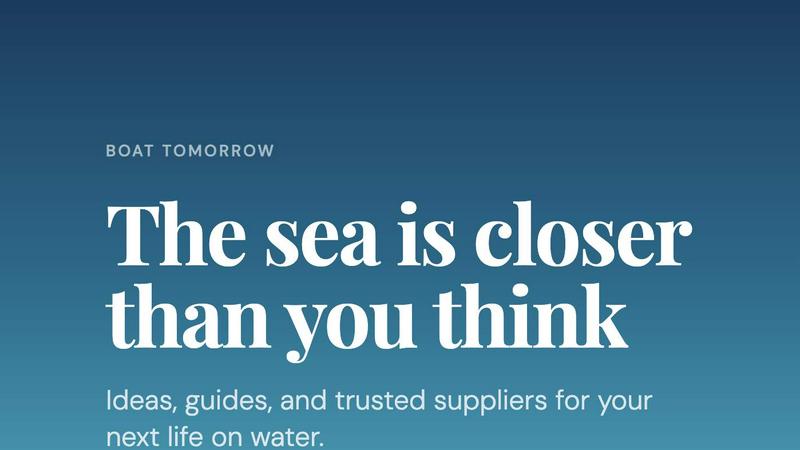
BoatTomorrow is an AI-powered platform that generates SEO-optimized articles and interactive quizzes to drive qualified leads for marine industry.
Last updated: March 18, 2026

ContentBoost
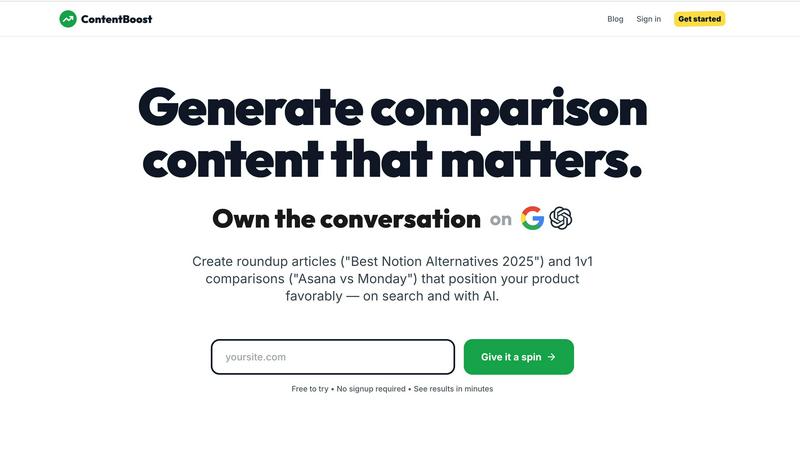
ContentBoost generates technical competitor comparisons to capture SEO and AI search traffic.
Last updated: February 28, 2026
Visual Comparison
BoatTomorrow
ContentBoost
Feature Comparison
BoatTomorrow
AI-Powered Content Generation Pipeline
The platform employs a dual-model AI system, utilizing Claude Opus and Sonnet, to transform structured supplier data into polished, long-form editorial content. This pipeline is configured to ensure technical accuracy regarding maritime specifications, destination details, and certification standards while adhering to magazine-quality narrative and SEO best practices. The output is not generic copy but contextually rich articles tailored to the supplier's unique offerings and expertise.
Search Engine Optimization for AI and Traditional Search
Articles are engineered for visibility across the modern search landscape. This includes standard on-page SEO for Google, plus specific optimizations for AI search engines (AIOS). Techniques include the integration of structured data markup to facilitate accurate citation by Large Language Models (LLMs) and the strategic placement of keyword-rich FAQ blocks that directly answer common user queries posed to tools like ChatGPT and Perplexity.
Direct Lead Capture and Delivery System
Each published article features embedded, supplier-specific lead capture forms. The platform architecture is designed to process and route inquiries with zero latency. Upon form submission, the lead data—including the reader's contact information and specific query context—is delivered directly to the supplier's designated point of contact. The system operates on a no-commission model, eliminating intermediary fees and preserving the supplier's customer relationship.
Comprehensive Content Distribution Kit
Upon article publication, the supplier receives a ready-to-deploy marketing asset package. This kit includes multiple variants of promotional text optimized for different social media platforms (e.g., LinkedIn, Instagram, Facebook), pre-designed visual assets suggestions, and professionally drafted email newsletter templates. This feature enables suppliers to immediately leverage the content across their owned marketing channels without requiring additional creative or copywriting resources.
ContentBoost
Automated Competitor Discovery & Gap Analysis
ContentBoost's system automatically identifies the key competitors that are capturing search traffic for your target commercial keywords. It performs a comprehensive gap analysis by testing real buyer questions in your niche, revealing specific search queries where competitors appear and you do not. This data-driven approach surfaces actionable content opportunities that map directly to real visibility gaps in the market, eliminating the need for manual, time-consuming research.
Proprietary Oktopa AI Content Engine
At the core of ContentBoost is its proprietary AI model, Oktopa. This engine is specifically trained to generate commercial comparison content. It goes beyond basic text generation by conducting a deep structural analysis of your product catalog and synthesizing this with live competitor data, pricing, features, and user review sentiments. This results in nuanced, accurate, and strategically framed articles that position your products favorably against identified competitors.
SEO-Optimized Comparison & Roundup Article Generation
The platform automatically generates fully-formed, long-form content pieces designed to rank for high-intent commercial searches. This includes direct comparison articles (e.g., "Sony WH-1000XM5 vs Bose QC Ultra") and "best alternatives" roundups. Each article is built with SEO best practices in mind, targeting specific keyword gaps and structured to effectively guide the reader through a decision-making process that highlights your product's advantages.
Integrated Content Calendar & Shopify Catalog Sync
ContentBoost offers a streamlined workflow by integrating directly with Shopify to import your product catalog, including all products, prices, and categories. This data forms the foundation for all content. The platform also provides an integrated content calendar that allows users to view, manage, and schedule the publication of generated articles, providing clear visibility into the content pipeline and production status.
Use Cases
BoatTomorrow
Charter Company Destination Marketing
A charter company operating in the Cyclades can use the platform to generate detailed, authoritative guides on specific sailing routes (e.g., "Athens to Mykonos in 7 Days"). These articles, optimized for travelers searching for trip planning information, capture high-intent leads directly interested in booking a yacht for that specific itinerary, effectively marketing the company's fleet and local expertise.
Sailing Academy Certification Clarification
A sailing school can leverage the platform to produce comparative technical analyses, such as "RYA vs IYT: Which Sailing Certificate Do You Need?". This content targets individuals at the research stage of their sailing education. By providing definitive, trusted advice, the academy positions itself as an authority and captures leads from prospective students seeking the certifications it offers.
Yacht Builder Showcasing Technical Specifications
A yacht manufacturer like Blue Horizon Yachts can utilize the platform to create in-depth articles on boat design, construction materials, and gear reviews. This "Boats & Gear" content attracts a technically-minded audience considering a purchase. The integrated lead forms allow potential buyers to inquire directly about yacht models, specifications, and pricing.
Industry Supplier Authority Building
Any supplier—whether a charter firm, school, or builder—can use the consistently published, high-quality editorial content to establish itself as a thought leader within the niche yachting vertical. This sustained content output improves domain authority in search engines, builds brand trust with consumers, and creates a permanent, performing asset that generates leads over an extended period.
ContentBoost
Capturing High-Intent "Alternatives" Search Traffic
E-commerce brands use ContentBoost to systematically target and own search queries where potential buyers are actively looking for alternatives to a competitor's product (e.g., "Shopify alternatives" or "AirPods Pro alternatives"). By generating authoritative, data-rich articles for these terms, brands intercept users at the critical moment of consideration, capturing traffic with a high propensity to convert.
Establishing Authority in Competitive Market Landscapes
SaaS companies and product-led businesses employ ContentBoost to build credibility and thought leadership in crowded markets. By publishing detailed, factual comparison content that honestly assesses competitors while highlighting their own unique value propositions, they position themselves as a trusted source of information, which builds brand authority and influences buyer decisions.
Scaling Content Production Without Agency Costs
Marketing teams and solo founders utilize ContentBoost to bypass the high cost and slow turnaround of agency-produced content. The platform automates the research and drafting of complex comparison articles, which typically cost $500-$2,000 each when done manually, enabling businesses to scale their content output significantly with a predictable, lower-cost subscription model.
Securing Visibility in AI-Powered Search Environments
Brands future-proof their visibility strategy by using ContentBoost to create the structured, comparative content that AI assistants like ChatGPT and Perplexity cite when answering product recommendation questions. Without this type of content, brands remain invisible in these emerging AI search ecosystems, missing a critical new channel for customer acquisition.
Overview
About BoatTomorrow
BoatTomorrow is a specialized B2B2C content marketing and lead generation platform engineered for the professional yacht industry. It functions as a technical intermediary, connecting service suppliers—specifically charter companies, sailing schools, and yacht builders—with potential customers through high-authority, AI-optimized editorial content. The platform's core operational mechanism involves suppliers completing a structured, 15-minute interactive questionnaire detailing their fleet specifications, operational destinations, and unique expertise. This data is processed through a proprietary AI pipeline utilizing Anthropic's Claude Opus and Sonnet models to generate magazine-quality articles. These articles are technically optimized for both traditional Google search and generative AI search engines like ChatGPT and Perplexity, incorporating structured data for AI citation, FAQ blocks, and integrated lead capture forms. The primary value proposition is a direct, commission-free lead delivery system; when a reader submits an inquiry via an article, the lead is transmitted directly to the supplier without any intermediary. Suppliers additionally receive a comprehensive distribution kit for each article, containing pre-formatted social media posts and email templates to amplify reach.
About ContentBoost
ContentBoost is a specialized AI-powered content generation platform engineered to automate the creation of high-intent, conversion-focused comparison content for e-commerce brands. It is specifically designed for SaaS founders, Shopify store owners, marketing teams, and content strategists who aim to capture commercial search traffic by targeting keywords like "[Competitor] alternatives" or "[Product A] vs [Product B]." The platform's core value proposition lies in its ability to condense a traditionally manual process—involving extensive competitor research, market analysis, and content drafting—into a fully automated workflow that delivers publish-ready articles in minutes. Utilizing its proprietary AI model, Oktopa, ContentBoost performs a deep structural analysis of a connected product catalog to understand unique product positioning, features, and pricing. This data is then cross-referenced against a continuously updated database of real competitor information, user reviews, and market trends. The output is a comprehensive, SEO-optimized long-form article that strategically positions a brand within its competitive landscape using verified data to build credibility and guide reader decision-making. This ensures the content is not generic AI text but is a data-backed, persuasive asset tailored to drive conversions and improve visibility across traditional search engines and emerging AI-powered platforms like ChatGPT and Perplexity.
Frequently Asked Questions
BoatTomorrow FAQ
What is the process for suppliers to get started on BoatTomorrow?
Suppliers begin by completing a detailed, interactive questionnaire that requires approximately 15 minutes. This quiz captures essential data about their fleet (make, model, capacity), operational destinations, services offered, and unique expertise. This structured data feed is the primary input for the AI content generation pipeline, which then produces the first draft of the optimized editorial article for review.
How does the platform optimize content for AI search engines like ChatGPT?
The platform employs specific technical SEO strategies for AI search. This includes embedding schema.org structured data within the article's HTML code, which helps AI models understand and accurately cite the content. Furthermore, articles contain clearly defined FAQ sections that directly answer common, question-format queries. This makes the content highly likely to be sourced as a reference in the responses generated by ChatGPT, Perplexity, and similar AI assistants.
Is there any commission taken on leads generated through the articles?
No. BoatTomorrow operates on a non-commission model. When a potential customer submits an inquiry through a lead capture form embedded within an article, all provided contact information and query details are transmitted directly to the supplier. The platform does not act as a broker, charge a percentage of any resulting sale, or insert itself into the subsequent customer relationship.
What does the "distribution kit" include for each article?
The distribution kit is a suite of ready-made marketing assets delivered alongside each published article. It typically includes multiple versions of promotional copy (varying in length and tone for platforms like Facebook, Instagram, and LinkedIn), suggestions for key visual assets or graphics, and professionally written email newsletter templates. This allows suppliers to immediately promote the new content across their digital channels without additional creative effort.
ContentBoost FAQ
Which platforms do you support?
ContentBoost is natively built for and integrates directly with Shopify, allowing for seamless import of your product catalog. The platform generates content that can be published on any content management system or website. The output is provided in multiple export formats, including HTML and Markdown, for easy implementation across various platforms and tech stacks.
How does competitor discovery work?
The competitor discovery process is fully automated. After analyzing your product catalog, ContentBoost's system scours search engine results, review sites, and market data to identify brands that are consistently mentioned alongside yours in commercial search queries, review comparisons, and buyer discussions. It identifies who is winning the visibility for key "vs" and "alternatives" searches you should own.
Can I edit the content generated by ContentBoost?
Yes, all content generated by ContentBoost is fully editable. The platform provides the complete article draft, which you can review, refine, and customize before publication. This ensures the final output aligns perfectly with your brand voice, adds any specific insights, and meets your editorial standards while leveraging the AI's foundational research and drafting.
How is this different from using ChatGPT or other generic AI writers?
ContentBoost is a specialized vertical AI tool, unlike general-purpose models like ChatGPT. It is specifically engineered for commercial comparison content, integrating direct competitor data analysis, SEO gap research, and your live product catalog. It produces fact-based, strategically framed articles ready for publication, whereas generic AI requires extensive prompting, manual research, and fact-checking to achieve a similar, reliable result.
Alternatives
BoatTomorrow Alternatives
BoatTomorrow is a specialized content marketing platform designed for the yacht industry, operating within the content creation and AI-powered SEO software category. It generates high-quality, optimized articles from supplier-provided data to drive direct leads for charter companies, sailing schools, and yacht builders. Users may seek alternatives for various reasons, including budget constraints, a need for different feature sets such as broader industry applicability or alternative content formats, or a preference for platforms with different operational models like agency services or in-house tools. The specific requirements of the business, such as target audience and desired level of automation, heavily influence the search. When evaluating alternatives, key criteria include the platform's core AI and SEO capabilities, the quality and structure of the generated content, the lead generation and distribution mechanisms, pricing transparency, and the level of industry-specific customization offered. The ideal solution should align with both marketing objectives and operational capacity.
ContentBoost Alternatives
ContentBoost is a specialized AI-powered content generation platform within the competitive intelligence and SEO content marketing category. It automates the creation of data-backed competitor comparison articles by analyzing your website and synthesizing real-time market data. Users may explore alternatives for several reasons, including budget constraints, a need for different feature sets such as broader content types or deeper integration capabilities, or a preference for a different operational model like all-in-one marketing suites versus specialized point solutions. Platform-specific needs, such as compatibility with existing tech stacks, also drive evaluation of other tools. When assessing an alternative, key considerations should include the depth and accuracy of its data sources, the sophistication of its AI in understanding product nuance, the flexibility and control over output, and the overall alignment with your content strategy's goals for authority and conversion. The core evaluation should focus on whether the tool can reliably produce credible, performance-oriented content.