diffray vs Fallom
Side-by-side comparison to help you choose the right tool.

diffray
Diffray delivers advanced multi-agent AI code reviews that effectively detect genuine bugs while reducing false.
Last updated: February 28, 2026

Fallom is an AI-native observability platform for real-time tracing and cost tracking of LLMs and agents, ensuring.
Last updated: February 28, 2026
Visual Comparison
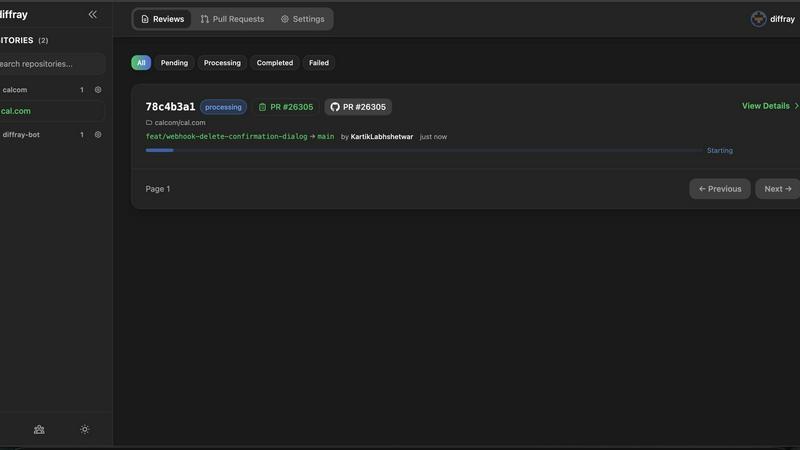
diffray
Fallom
Feature Comparison
diffray
Multi-Agent Architecture
diffray's unique multi-agent architecture features over 30 specialized agents, each focusing on distinct areas such as security, performance, and best practices. This allows for more nuanced and accurate code assessments, leading to a significant reduction in irrelevant feedback.
High Accuracy Feedback
With an impressive 87% reduction in false positives, diffray ensures that development teams receive high-quality, actionable feedback. This focus on accuracy means that developers can trust the insights provided, leading to more effective code improvements.
Accelerated Review Process
By reducing the average PR review time from 45 minutes to just 12 minutes per week, diffray allows development teams to review more code in less time. This efficiency supports faster deployment cycles and enhances overall productivity within software development.
Seamless Integration
diffray integrates effortlessly with popular version control systems like GitHub, GitLab, and Bitbucket. This seamless integration ensures that teams can adopt diffray without disrupting their existing workflows, making it easy to implement across various projects.
Fallom
Real-time Observability
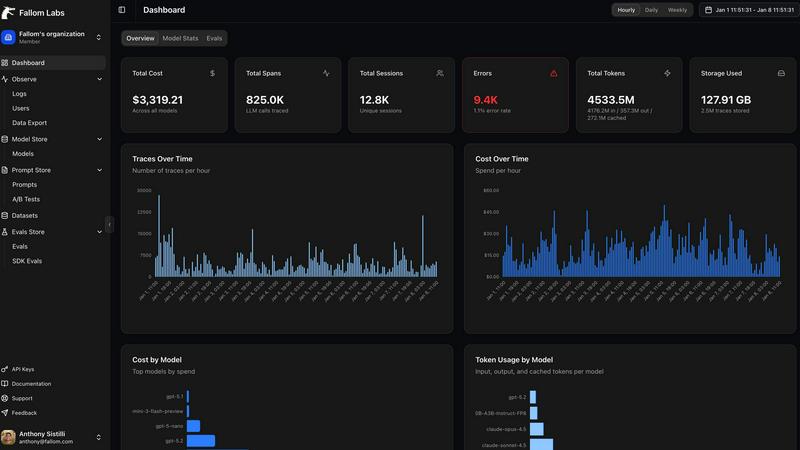
Fallom provides real-time observability for AI agents, allowing users to track tool calls, analyze timing, and debug issues effectively. By visualizing every LLM call, teams can gain insights into performance and usage patterns, ensuring swift identification and resolution of anomalies.
Cost Attribution
The platform offers detailed cost attribution features that track spending per model, user, and team. This transparency aids in budgeting and chargeback processes, enabling organizations to understand their operational costs clearly and allocate resources efficiently.
Compliance and Audit Trails
Fallom is equipped with comprehensive audit trails to support regulatory compliance requirements. With features like input/output logging, model versioning, and user consent tracking, it ensures that organizations can meet stringent standards such as the EU AI Act and GDPR with confidence.
Session Tracking
Fallom allows users to group traces by session, user, or customer, providing complete context for each interaction. This feature enhances the ability to analyze workflows and improves the debugging process by maintaining a clear record of user activities and associated costs.
Use Cases
diffray
Open-Source Projects
For open-source projects, diffray provides a powerful tool for maintaining code quality while managing contributions from multiple developers. Its specialized agents ensure that the code meets community standards without overwhelming maintainers with irrelevant feedback.
Enterprise Development Teams
Enterprise teams benefit from diffray's targeted feedback and reduced false positives, allowing them to focus on critical code issues that impact security and performance. This leads to better risk management and compliance within large-scale software systems.
Continuous Integration/Continuous Deployment (CI/CD)
In CI/CD environments, diffray enhances the automated review process by integrating with CI pipelines. This ensures that code is continuously assessed for quality, allowing for quicker identification of issues before they reach production.
Educational Institutions
Educational institutions teaching software engineering can utilize diffray to assist students in understanding best practices in coding. The tool provides targeted feedback, helping students learn how to improve their coding skills effectively.
Fallom
Debugging AI Workflows
Organizations can utilize Fallom to debug complex agentic workflows by tracing each step of LLM interactions. This capability allows teams to identify bottlenecks or failures in real-time, facilitating quicker resolutions and improving overall system performance.
Cost Management
Fallom’s cost attribution features enable organizations to manage and analyze their AI-related expenses effectively. By tracking costs at granular levels, teams can make informed decisions regarding resource allocation and budget adjustments, enhancing financial oversight.
Compliance Audits
For companies operating under strict regulatory frameworks, Fallom provides the necessary tools to maintain compliance. Its comprehensive audit trails and logging capabilities support organizations in preparing for audits and ensuring adherence to laws such as GDPR and SOC 2.
Performance Monitoring
Fallom allows organizations to monitor LLM performance continuously, spotting anomalies before they escalate into significant issues. With real-time dashboards and detailed latency metrics, teams can maintain optimal performance levels for their AI systems.
Overview
About diffray
diffray is an innovative AI-powered code review tool designed to optimize the pull request (PR) process for development teams. Unlike traditional AI code review solutions that typically deploy a single generic model, diffray employs a sophisticated multi-agent architecture consisting of over 30 specialized agents. Each of these agents is dedicated to specific areas such as security, performance, best practices, and SEO, allowing for targeted feedback that substantially minimizes noise during code reviews. This targeted approach has been shown to reduce false positives by an impressive 87%, while also enabling teams to uncover three times more real issues compared to conventional tools. The efficiency gains from using diffray allow teams to shorten PR review times from an average of 45 minutes to just 12 minutes per week, freeing developers to concentrate on more critical tasks. With seamless integration into popular version control systems like GitHub, GitLab, and Bitbucket, diffray offers a user-friendly setup that can be completed in minutes, making it an ideal solution for both open-source projects and private repositories. Its main value proposition lies in enhancing development workflows, mitigating risks associated with code vulnerabilities, and ultimately improving software quality.
About Fallom
Fallom is an advanced AI-native observability platform meticulously designed for monitoring and optimizing Large Language Model (LLM) and AI agent workloads in real-time production environments. It serves the needs of engineering, product, and compliance teams by providing comprehensive visibility into every interaction with LLMs. The platform's core value proposition lies in its ability to deliver end-to-end tracing of AI calls, capturing essential data such as detailed prompts, model outputs, function/tool calls, token usage, latency metrics, and precise cost calculations per call. Built on the OpenTelemetry standard, Fallom ensures a vendor-agnostic approach with an SDK that allows teams to instrument their applications quickly and efficiently. This eliminates the complexities associated with integrating various monitoring tools. As organizations scale their AI-powered features, Fallom enables them to debug intricate workflows promptly, accurately attribute operational costs, and maintain robust audit trails. This capability is particularly crucial for compliance with stringent regulations such as the EU AI Act, SOC 2, and GDPR. By centralizing observability, Fallom transforms AI operations into a transparent, manageable, and cost-controllable aspect of the modern software stack.
Frequently Asked Questions
diffray FAQ
How does diffray reduce false positives?
diffray employs a multi-agent architecture with over 30 specialized agents that focus on specific aspects of code quality. This targeted approach significantly enhances the accuracy of the feedback, reducing the number of false positives to just 13%.
What types of projects can benefit from using diffray?
diffray is suitable for a wide range of projects, including open-source initiatives, enterprise software development, and CI/CD pipelines. Its flexible integration with popular version control systems makes it an ideal choice for various development environments.
Is diffray easy to set up?
Yes, diffray is designed for user-friendly setup and can be integrated with systems like GitHub, GitLab, and Bitbucket in just a few minutes. This allows teams to quickly start improving their code review processes without significant overhead.
Can diffray help with learning and development?
Absolutely. diffray is not only a tool for professionals but also an excellent resource for educational institutions. It helps students understand coding best practices by providing targeted feedback on their submissions, fostering a better learning environment.
Fallom FAQ
What is Fallom?
Fallom is an AI-native observability platform designed to monitor and optimize Large Language Model interactions in production environments, providing real-time visibility into AI workloads.
How does Fallom ensure compliance?
Fallom supports compliance through comprehensive audit trails, logging of input and output, model versioning, and user consent tracking, ensuring organizations can meet regulatory requirements.
Can Fallom be integrated with existing tools?
Yes, Fallom is built on the OpenTelemetry standard and offers a vendor-agnostic SDK that allows for quick integration into existing applications, simplifying the observability process.
What types of organizations benefit from using Fallom?
Engineering, product, and compliance teams within organizations that leverage AI and LLM technologies benefit significantly from Fallom's real-time monitoring and optimization capabilities, especially those needing to adhere to strict compliance standards.
Alternatives
diffray Alternatives
Diffray is a cutting-edge AI-driven code review tool that falls within the development category. It leverages a unique multi-agent architecture to provide specialized feedback, significantly enhancing the code review process for development teams. As teams seek to optimize their workflows, users often look for alternatives due to various factors such as pricing, feature sets, and compatibility with their existing platforms. These considerations are crucial as they can impact the efficiency and effectiveness of the code review process. When evaluating alternatives, it's essential to look for features that align with your team's specific needs, such as the ability to minimize false positives, the comprehensiveness of feedback, and ease of integration with version control systems. Additionally, considering the user interface and support options can also influence the overall experience and adoption of the tool within the development workflow.
Fallom Alternatives
Fallom is an AI-native observability platform specifically designed for monitoring and optimizing Large Language Model (LLM) and AI agent workloads in production environments. It offers real-time tracing and cost tracking, providing teams with comprehensive visibility into LLM interactions and improving their debugging processes. Users often seek alternatives to Fallom for various reasons, including pricing considerations, the need for specific features, or compatibility with different platforms. When searching for an alternative, it's essential to evaluate the observability capabilities, compliance features, ease of integration, and overall cost-effectiveness to ensure the chosen solution aligns with organizational goals and operational requirements.