diffray vs Skene
Side-by-side comparison to help you choose the right tool.

diffray
Diffray delivers advanced multi-agent AI code reviews that effectively detect genuine bugs while reducing false.
Last updated: February 28, 2026

Skene automates growth signals directly from your codebase, enabling seamless product-led growth without external.
Last updated: February 28, 2026
Visual Comparison
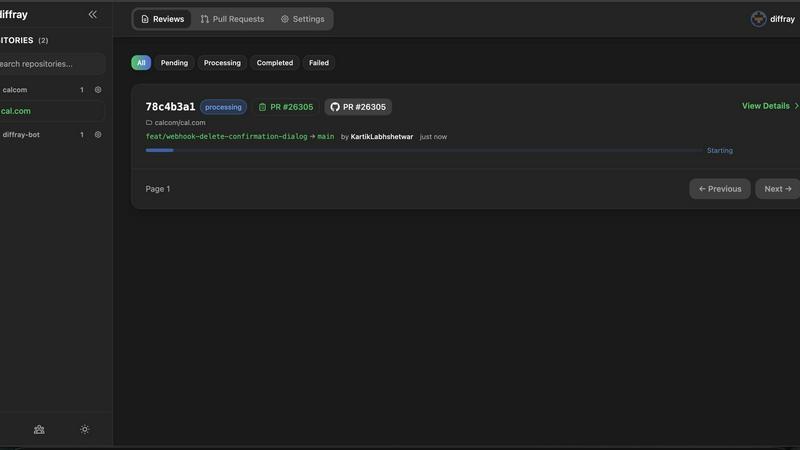
diffray
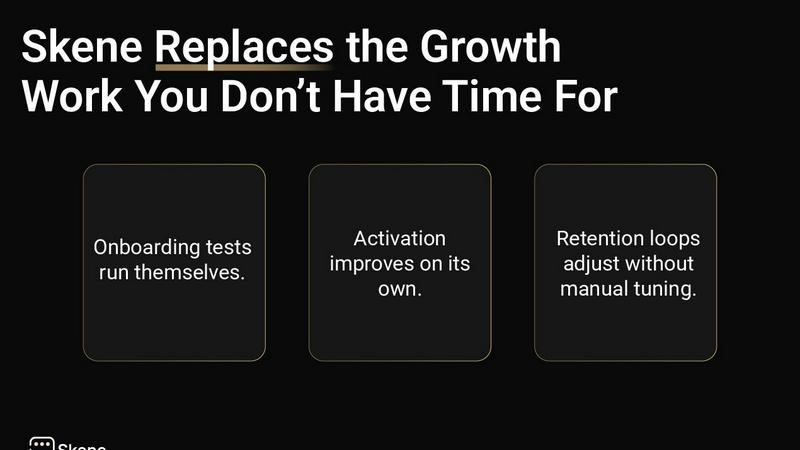
Skene
Feature Comparison
diffray
Multi-Agent Architecture
diffray's unique multi-agent architecture features over 30 specialized agents, each focusing on distinct areas such as security, performance, and best practices. This allows for more nuanced and accurate code assessments, leading to a significant reduction in irrelevant feedback.
High Accuracy Feedback
With an impressive 87% reduction in false positives, diffray ensures that development teams receive high-quality, actionable feedback. This focus on accuracy means that developers can trust the insights provided, leading to more effective code improvements.
Accelerated Review Process
By reducing the average PR review time from 45 minutes to just 12 minutes per week, diffray allows development teams to review more code in less time. This efficiency supports faster deployment cycles and enhances overall productivity within software development.
Seamless Integration
diffray integrates effortlessly with popular version control systems like GitHub, GitLab, and Bitbucket. This seamless integration ensures that teams can adopt diffray without disrupting their existing workflows, making it easy to implement across various projects.
Skene
Deep Codebase Integration
Skene’s ability to analyze the product’s own source code allows it to derive contextual signals directly from the codebase. This feature ensures that growth strategies are inherently aligned with the product’s functionalities and user behaviors, leading to more effective optimizations.
Automated User Flow Generation
Once Skene analyzes the code, it automatically generates optimized user flows for onboarding, activation, and retention. This feature eliminates the need for manual input and allows for rapid deployment of improvements that enhance user experiences.
Real-Time Analytics Dashboard
Skene provides a comprehensive analytics dashboard that tracks real-time user progress, completion rates, engagement metrics, and identifies bottlenecks. This feature enables product teams to make data-driven decisions and optimize user journeys effectively.
Outcome-Based Pricing Model
Skene incorporates an outcome-based pricing model that charges users only when customers successfully complete their onboarding journey. This feature ensures that users pay for tangible results, making it a cost-effective solution for growth.
Use Cases
diffray
Open-Source Projects
For open-source projects, diffray provides a powerful tool for maintaining code quality while managing contributions from multiple developers. Its specialized agents ensure that the code meets community standards without overwhelming maintainers with irrelevant feedback.
Enterprise Development Teams
Enterprise teams benefit from diffray's targeted feedback and reduced false positives, allowing them to focus on critical code issues that impact security and performance. This leads to better risk management and compliance within large-scale software systems.
Continuous Integration/Continuous Deployment (CI/CD)
In CI/CD environments, diffray enhances the automated review process by integrating with CI pipelines. This ensures that code is continuously assessed for quality, allowing for quicker identification of issues before they reach production.
Educational Institutions
Educational institutions teaching software engineering can utilize diffray to assist students in understanding best practices in coding. The tool provides targeted feedback, helping students learn how to improve their coding skills effectively.
Skene
Optimizing Onboarding Experiences
Skene can be used to streamline the onboarding process for new users by automatically identifying and resolving friction points. This leads to higher activation rates and improved user satisfaction.
Enhancing Feature Adoption
By analyzing user behavior, Skene can identify opportunities for promoting underutilized features. It can dynamically create prompts and flows that encourage users to explore and adopt these features effectively.
Reducing Churn Rates
Skene’s capabilities extend to retention strategies by analyzing user interactions and engagement patterns. This allows businesses to proactively address issues that may lead to user churn and maintain customer loyalty.
Facilitating Continuous Improvement
With its self-learning growth engine, Skene supports continuous improvement of user experiences. By consistently analyzing data and optimizing flows, it helps teams innovate and adapt their offerings to meet evolving user needs.
Overview
About diffray
diffray is an innovative AI-powered code review tool designed to optimize the pull request (PR) process for development teams. Unlike traditional AI code review solutions that typically deploy a single generic model, diffray employs a sophisticated multi-agent architecture consisting of over 30 specialized agents. Each of these agents is dedicated to specific areas such as security, performance, best practices, and SEO, allowing for targeted feedback that substantially minimizes noise during code reviews. This targeted approach has been shown to reduce false positives by an impressive 87%, while also enabling teams to uncover three times more real issues compared to conventional tools. The efficiency gains from using diffray allow teams to shorten PR review times from an average of 45 minutes to just 12 minutes per week, freeing developers to concentrate on more critical tasks. With seamless integration into popular version control systems like GitHub, GitLab, and Bitbucket, diffray offers a user-friendly setup that can be completed in minutes, making it an ideal solution for both open-source projects and private repositories. Its main value proposition lies in enhancing development workflows, mitigating risks associated with code vulnerabilities, and ultimately improving software quality.
About Skene
Skene is an innovative AI-powered, fully automated Product-Led Growth (PLG) iteration engine that serves as intelligent infrastructure for software products. Its core functionality is to enable products to achieve autonomous growth by consistently optimizing critical user lifecycle stages such as onboarding, activation, and retention without the need for dedicated growth teams. Skene’s unique advantage lies in its deep integration with the product’s codebase, allowing it to analyze the source code directly. This analysis helps Skene derive contextual signals to understand user behavior, identify friction points, and uncover activation opportunities. By automating the creation, A/B testing, and deployment of improved user flows, Skene effectively establishes a self-learning growth system. Targeted towards indie developers, early-stage startups, and established PLG companies, Skene replaces fragmented and manual growth stacks with a unified, code-native solution. This allows developers to maintain ownership of their growth strategies, version them alongside their code, and interact with them through prompts, thereby eliminating performance overhead and data silos associated with traditional third-party tools.
Frequently Asked Questions
diffray FAQ
How does diffray reduce false positives?
diffray employs a multi-agent architecture with over 30 specialized agents that focus on specific aspects of code quality. This targeted approach significantly enhances the accuracy of the feedback, reducing the number of false positives to just 13%.
What types of projects can benefit from using diffray?
diffray is suitable for a wide range of projects, including open-source initiatives, enterprise software development, and CI/CD pipelines. Its flexible integration with popular version control systems makes it an ideal choice for various development environments.
Is diffray easy to set up?
Yes, diffray is designed for user-friendly setup and can be integrated with systems like GitHub, GitLab, and Bitbucket in just a few minutes. This allows teams to quickly start improving their code review processes without significant overhead.
Can diffray help with learning and development?
Absolutely. diffray is not only a tool for professionals but also an excellent resource for educational institutions. It helps students understand coding best practices by providing targeted feedback on their submissions, fostering a better learning environment.
Skene FAQ
What is PLG software?
PLG (Product-Led Growth) software automates the user journey, allowing users to discover value in a product without manual intervention from sales or customer success teams. It guides users toward activation and feature adoption through the product itself.
How does Skene differ from traditional customer experience software?
Unlike traditional customer experience tools that require manual setup and maintenance, Skene automatically generates onboarding and lifecycle automation by reading your codebase. This ensures everything updates seamlessly with new code deployments.
How long does it take to set up Skene?
Setting up Skene is remarkably quick, taking less than 60 seconds. Users simply connect their GitHub or GitLab repository on a read-only basis, after which Skene analyzes the codebase to generate PLG flows without requiring code changes.
Is my code secure with Skene?
Yes, Skene ensures the security of your code by only requiring read-only access to your repository. The analysis is conducted in a secure, isolated environment, safeguarding your intellectual property and sensitive data.
Alternatives
diffray Alternatives
Diffray is a cutting-edge AI-driven code review tool that falls within the development category. It leverages a unique multi-agent architecture to provide specialized feedback, significantly enhancing the code review process for development teams. As teams seek to optimize their workflows, users often look for alternatives due to various factors such as pricing, feature sets, and compatibility with their existing platforms. These considerations are crucial as they can impact the efficiency and effectiveness of the code review process. When evaluating alternatives, it's essential to look for features that align with your team's specific needs, such as the ability to minimize false positives, the comprehensiveness of feedback, and ease of integration with version control systems. Additionally, considering the user interface and support options can also influence the overall experience and adoption of the tool within the development workflow.
Skene Alternatives
Skene is an AI-powered Product-Led Growth (PLG) iteration engine designed to optimize user lifecycle stages such as onboarding, activation, and retention by analyzing the product's codebase. Users often seek alternatives to Skene for various reasons, including pricing considerations, feature sets that may better suit their specific needs, or compatibility with existing platforms. When choosing an alternative, it is crucial to evaluate factors such as the ability to integrate seamlessly with your current infrastructure, the level of automation provided, and the depth of insights into user behavior and growth opportunities.