File Studio vs TemplateFox
Side-by-side comparison to help you choose the right tool.

File Studio
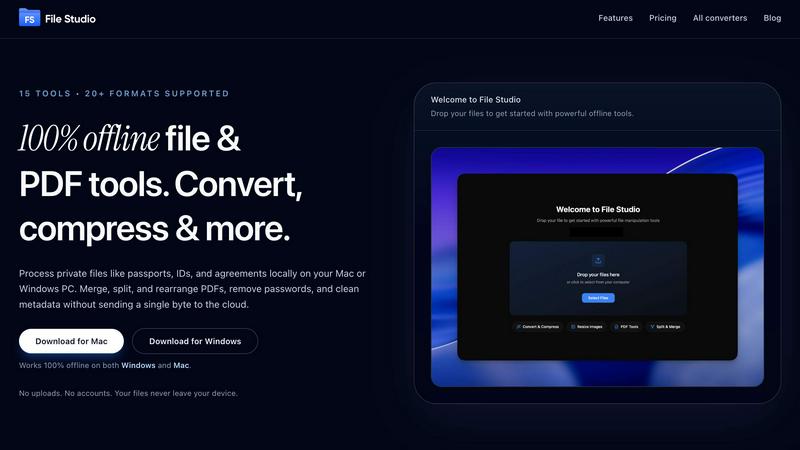
File Studio provides powerful offline tools to convert, edit, and manage files and PDFs securely on your computer.
Last updated: February 26, 2026

TemplateFox
TemplateFox is a visual PDF design platform with dynamic data binding and automated API generation.
Last updated: February 28, 2026
Visual Comparison
File Studio
TemplateFox
Feature Comparison
File Studio
PDF Management Tools
File Studio provides a suite of five dedicated PDF tools that empower users to merge multiple PDFs, split documents into individual pages, reorder and rotate spreads, and remove passwords. This offline functionality ensures that full PDF management is possible without the need to upload any documents to the cloud.
Image Processing Capabilities
With ten image tools available, File Studio supports over 20 formats allowing users to convert, resize, compress, crop, and add watermarks to images. The application can handle files such as HEIC, WebP, and various RAW types, making it versatile for photographers and graphic designers alike.
Batch Processing Functionality
File Studio excels in batch processing, enabling users to convert, resize, or compress entire folders of files in one go. This feature maximizes efficiency, allowing users to save time and effort when dealing with numerous files simultaneously.
Offline Operation
One of the standout features of File Studio is its 100% offline operation. All processing occurs locally on the user’s Mac or Windows PC, ensuring that sensitive documents remain private and secure, as no uploads or user accounts are required for functionality.
TemplateFox
Visual Drag-and-Drop Template Designer
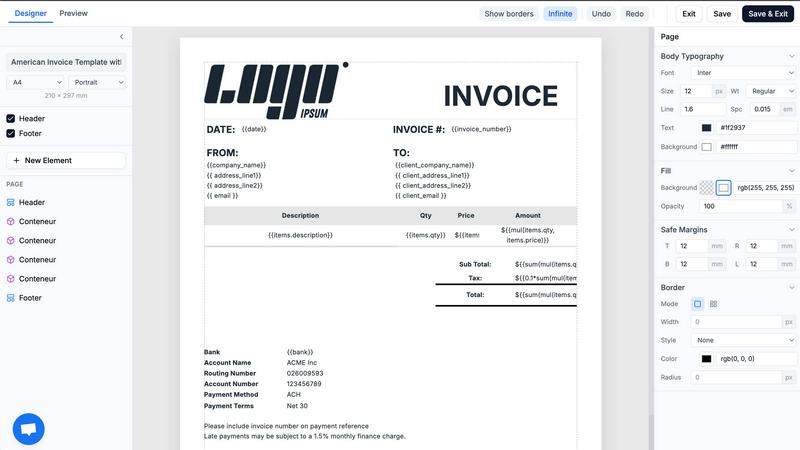
The platform features a fully visual, WYSIWYG (What You See Is What You Get) editor that allows users to construct professional PDF templates without writing a single line of code. Users can drag, drop, and configure various elements like text boxes, images, tables, and barcodes onto a canvas. Each component has a dedicated properties panel for fine-tuning styling, positioning, borders, and colors. This no-code design environment significantly reduces the time and technical expertise required to create complex, data-driven document layouts, making professional template creation accessible to a broader audience.
Dynamic Data Binding and Expressions
TemplateFox supports advanced dynamic data injection, moving beyond simple placeholder replacement. Users can bind template elements to variables from their JSON data payload. The system includes a powerful expression engine with over 100 built-in functions for formatting dates, calculating totals (e.g., sum, tax), rounding numbers, manipulating text, and implementing conditional logic. System variables such as {{sys.page_number}}, {{sys.total_pages}}, and {{sys.current_date}} are automatically available, enabling the creation of intelligent, context-aware documents that adapt their content based on the provided data.
Automated and Scalable PDF Generation API
At its core, TemplateFox provides a high-performance REST API for programmatic PDF generation. After designing a template, users can generate thousands of unique PDF documents by sending a POST request with a unique template ID and a JSON object containing the variable data. The API is designed for low latency, with typical generation times of 1-3 seconds, and can be integrated directly into applications, backend systems, or cron jobs. This feature is essential for automating document workflows at scale, such as bulk invoicing, certificate issuance, or report distribution.
No-Code Integrations and Smart Components
For users operating in no-code or low-code environments, TemplateFox offers direct integrations with platforms like Zapier, Make (Integromat), Airtable, Bubble, and FlutterFlow. This allows for the automation of PDF generation within existing workflows without manual intervention. Furthermore, the platform includes intelligent, data-aware components such as tables that automatically expand rows and span multiple pages based on the dataset, and built-in generators for scanner-ready QR codes and barcodes (Code128, EAN-13) that are rendered dynamically from input data.
Use Cases
File Studio
Freelance Document Management
Freelancers often handle a variety of sensitive documents, from contracts to invoices. File Studio offers robust tools for managing these files securely and efficiently, allowing users to ensure their documents are well-organized and protected.
Photography Workflow Optimization
Photographers can leverage File Studio to manage their images, converting RAW files to more accessible formats, resizing images for web use, and compressing files without losing quality. This helps streamline their workflow and maintain high standards in image quality.
Secure Personal Document Handling
Individuals needing to manage personal documents such as passports or IDs can do so securely with File Studio. The application allows users to edit and protect these sensitive files offline, ensuring their privacy while managing essential documents.
Educational Material Preparation
Teachers and educators can utilize File Studio to prepare educational materials. They can merge various PDFs into single documents, convert image files for presentations, and ensure that all materials are formatted correctly without relying on internet access.
TemplateFox
Automated Invoice and Billing Systems
Businesses and SaaS platforms can integrate TemplateFox's API to automate their entire invoicing cycle. A template for a professional invoice is created once in the visual editor. The application's backend can then automatically generate and dispatch personalized PDF invoices by calling the API with customer data, line items, taxes, and totals after each transaction or on a monthly schedule. This eliminates manual design work, ensures brand consistency, and accelerates the accounts receivable process.
Mass Certificate and Document Generation
Educational institutions, training organizations, and event managers can use TemplateFox to generate certificates, diplomas, or participation letters in bulk. A master certificate template with dynamic fields for the recipient's name, course title, date, and a unique serial number (or QR code) is designed. By uploading a CSV list of recipients or connecting via an integration like Airtable, thousands of unique, personalized certificates can be produced and distributed automatically, saving immense administrative time and effort.
E-commerce Order Fulfillment Packing
E-commerce businesses can streamline their logistics by automating the creation of packing slips and shipping labels. A packing slip template can include the store logo, customer shipping address, order details, and a dynamically generated barcode for the tracking number. Integrated with an e-commerce platform via Zapier or a custom webhook, TemplateFox can instantly generate a PDF packing slip for each new order, ready to be printed and included in the shipment, improving operational efficiency.
Dynamic Business and Operational Reporting
Companies requiring regular operational or financial reports can leverage TemplateFox to transform raw data into formatted PDF documents. A report template with dynamic tables, charts (as images), headers, footers, and page numbers can be created. Backend systems can compile analytics data, call the TemplateFox API with this data, and produce a polished PDF report for stakeholders, executives, or regulatory bodies on a daily, weekly, or monthly basis, ensuring professional and consistent reporting.
Overview
About File Studio
File Studio is a powerful desktop application designed for the offline management of PDFs and images, catering specifically to users who prioritize their privacy and security. It serves a diverse range of professionals including photographers, freelancers, and remote workers who need to handle sensitive documents such as passports, IDs, and contracts without the risk of exposing them to cloud storage. The application's primary value proposition lies in its comprehensive set of tools that allow users to merge, split, reorder, rotate, and secure PDFs with password protection. Additionally, File Studio supports over 20 file formats, including HEIC, WebP, AVIF, and various RAW types, enabling seamless file conversions. With a straightforward one-time purchase model and compatibility across both Mac and Windows platforms, File Studio offers a reliable and powerful solution for file management without the burden of subscriptions or the need for user accounts.
About TemplateFox
TemplateFox is a sophisticated Software-as-a-Service (SaaS) platform engineered for high-performance, automated PDF document generation. It provides a comprehensive solution for developers, indie hackers, and businesses to create, manage, and automate professional PDFs at scale. The core value proposition lies in its dual approach: a powerful, no-code visual template designer and a robust, developer-friendly API. Users can design dynamic PDF templates using an intuitive drag-and-drop WYSIWYG editor, eliminating the need for manual HTML or CSS coding. Once a template is designed, it can be populated with dynamic data and generated into a final PDF document through a simple REST API call or via popular no-code automation platforms like Zapier and Make. The service is architected for speed and reliability, delivering documents in 1-3 seconds, and is built to handle real-world document complexities such as multi-page tables, headers, footers, and embedded barcodes. With a free tier offering 100 PDFs per month, TemplateFox is an accessible yet powerful tool for streamlining document workflows for invoices, certificates, reports, packing slips, and more.
Frequently Asked Questions
File Studio FAQ
Is my data ever uploaded?
No. File Studio processes everything locally on your device. Your files never leave your computer, ensuring 100% offline processing and maximum privacy.
Do you offer a free trial?
Yes. File Studio provides a free trial option, allowing users to explore its features before committing to a purchase, ensuring they can evaluate the software's capabilities.
Can I use File Studio on both Mac and Windows?
Absolutely. File Studio is compatible with both Mac and Windows operating systems, making it accessible for a wide range of users regardless of their device preference.
What file formats does File Studio support?
File Studio supports over 20 file formats, including popular image formats like HEIC, WebP, AVIF, and various RAW types, as well as providing comprehensive PDF management capabilities, making it versatile for many users.
TemplateFox FAQ
What programming languages can I use with the TemplateFox API?
The TemplateFox API is a standard REST API that uses JSON for requests and responses. It is language-agnostic, meaning you can integrate it with any programming language that can make HTTP requests, such as JavaScript (Node.js, frontend), Python, PHP, Java, C#, Go, or Ruby. Comprehensive API documentation with code examples is provided to facilitate integration into your existing tech stack.
Can I use my own fonts and logos in the templates?
Yes, the TemplateFox template designer allows you to upload and use custom fonts (in .ttf or .otf formats) and image files for logos and other graphics. Once uploaded, these assets are stored within your template and will be rendered correctly in the generated PDFs, ensuring full brand consistency across all your automated documents.
How does the dynamic table feature handle very large datasets?
The dynamic table component in TemplateFox is engineered to handle large volumes of data efficiently. When you bind an array of data to a table, it automatically creates a new row for each item. If the data exceeds the available space on a page, the table intelligently breaks and continues onto the next page, with optional configuration to repeat header rows on each subsequent page for clarity. This ensures clean, paginated output regardless of dataset size.
Is there a limit to the number of PDFs I can generate on the free plan?
The free plan, which requires no credit card, includes a quota of 100 PDF generations per month. This allows you to fully test the API, design templates, and integrate the service into a low-volume workflow. For higher volumes, paid subscription plans with increased monthly limits and additional features are available. Usage is tracked per calendar month.
Alternatives
File Studio Alternatives
File Studio is a versatile desktop application that falls within the productivity and management category, particularly focused on file handling and editing. Designed to operate entirely offline, it provides users with powerful tools for managing PDFs and images while ensuring their privacy and security. This makes it a preferred choice for those who need to work with sensitive documents without relying on internet connectivity. Users often seek alternatives to File Studio for various reasons, including pricing, feature sets, and compatibility with different operating systems. It is essential to assess the specific requirements and functionalities that matter most to you when exploring alternatives. Look for options that offer comprehensive file management capabilities, robust security features, and a user-friendly interface to ensure a seamless transition or enhancement of your current workflow.
TemplateFox Alternatives
TemplateFox is a SaaS platform in the Productivity & Management category, specializing in the visual design and automated generation of professional PDF documents. It enables users to create templates via a drag-and-drop editor and produce documents dynamically through API calls or integrations like Zapier. Users may seek alternatives for various reasons, including specific budget constraints, the need for more advanced or different feature sets, or requirements for integration with a particular tech stack or hosting environment. The search often stems from evolving project needs that demand greater customization, different pricing models, or alternative deployment options. When evaluating alternatives, key considerations include the core document generation methodology, such as code-based versus visual template builders, the depth and reliability of API capabilities, and the granularity of data binding and layout control. Scalability, security compliance, and the total cost of ownership based on expected document volume are also critical technical and business factors to assess.