
Finsi OS vs Haporium
Side-by-side comparison to help you choose the right tool.

Finsi OS
Finsi OS is an AI operating system that surfaces e-commerce insights and automates actions to increase customer.
Last updated: February 27, 2026

Haporium automatically syncs and organizes content from over 12 social networks into unified, shareable boards.
Last updated: February 28, 2026
Visual Comparison
Finsi OS
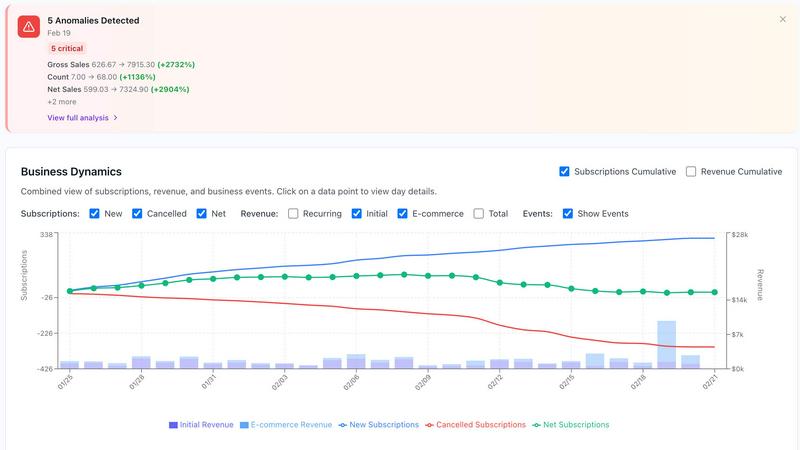
Haporium
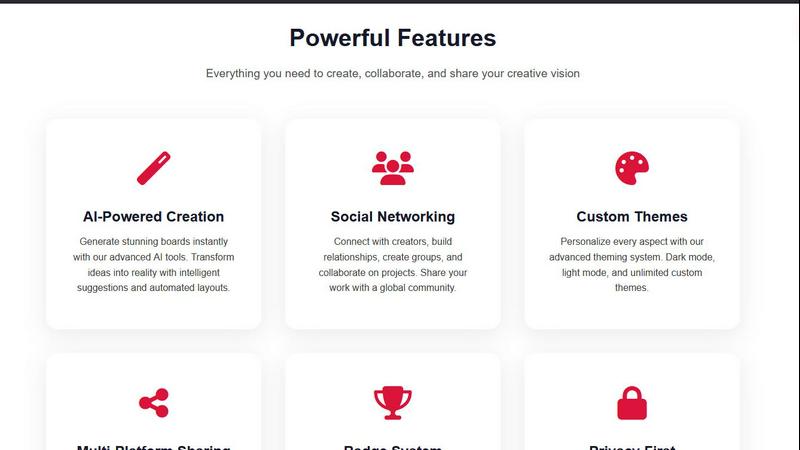
Feature Comparison
Finsi OS
Retention Intelligence
This module provides deep cohort analysis, churn prediction algorithms, and customer health scoring to identify at-risk subscribers before they cancel. It orchestrates automated, personalized lifecycle campaigns across email and other channels based on these predictions. The system integrates behavioral data from platforms like Recharge and Shopify to trigger proactive retention actions, moving from reactive support to intelligent, pre-emptive customer retention.
Profit Intelligence
Finsi OS delivers real-time P&L analytics, unit economics, and contribution margin tracking updated daily, not monthly. It connects advertising spend from Meta and Google directly to revenue and profit data, allowing brands to understand the true profitability of each customer cohort, product, and marketing channel. This feature shifts financial reporting from a backward-looking monthly exercise to a daily operational tool for strategic decision-making.
Ads Autopilot
This AI-powered execution module manages Meta and Google Ads campaigns autonomously. It applies performance rules to pause underperforming ad sets, scale winners, and optimize budgets in real-time based on profitability goals. The system continuously tests and learns, removing manual guesswork and constant monitoring to drive efficient customer acquisition at scale.
AI Recommendations Engine
The platform's central intelligence layer unifies data from all connected sources to generate a ranked, weekly list of actionable recommendations. Each recommendation specifies what action to take, why it matters, and its estimated revenue impact across all modules—from launching a win-back campaign to adjusting ad creative. This prioritizes efforts on the highest-value opportunities.
Haporium
Multi-Platform Content Aggregation
Haporium provides robust API integrations with over 15 major digital platforms including YouTube, Spotify, Steam, Pinterest, TikTok, and GitHub. This feature allows for one-click account connection, enabling the platform to automatically import and continuously sync user-specific content such as playlists, video libraries, game collections, and pinned items. The aggregation engine normalizes data from these disparate sources into a unified feed, eliminating the need for manual cross-platform content collection and ensuring all imported assets remain current.
Dynamic Board Creation and Management
The platform's foundational feature is the customizable Board system. Users can create an unlimited number of Boards for any topic, theme, or project. Each Board is a dynamic collection that supports mixed-media content types: manually added links, images, and text notes can be combined with auto-synced items from connected accounts. Boards offer advanced organizational controls, including drag-and-drop sorting, categorization, and custom labeling, allowing for the creation of complex, structured knowledge repositories and visual portfolios.
Granular Sharing and Collaboration Controls
Haporium implements a detailed privacy and sharing model for Boards. Users can set Boards to Public (discoverable by anyone), Private (visible only to the creator), or Password-Protected for selective access. Furthermore, the platform supports real-time collaborative editing, allowing users to invite team members or friends to contribute to a Board. This facilitates coordinated research, project planning, and community-driven content curation with defined user permissions.
Globalized Multilingual Interface
To support a worldwide user base, Haporium features an extensive localization system with interfaces available in over 40 languages, including English, Français, Español, Deutsch, 中文, and numerous others currently in Beta. This technical implementation ensures that navigation, menus, and instructions are accessible to non-English speakers, lowering the barrier to entry and enabling the formation of global, language-specific communities around shared interests directly within the platform.
Use Cases
Finsi OS
Proactive Subscription Churn Reduction
For DTC subscription brands, Finsi OS analyzes usage patterns, payment history, and engagement signals to assign a churn risk score to each subscriber. It then automatically triggers tailored email sequences or offer flows via Klaviyo or Recharge to re-engage at-risk customers before they cancel, directly improving retention rates and LTV without manual segment building.
Profit-Optimized Ad Spend Management
E-commerce brands can connect their ad accounts to shift from cost-based to profit-based bidding. The Ads Autopilot module uses real-time profit data from the Profit Intelligence layer to automatically reallocate budgets away from channels or campaigns that drive volume but low lifetime value, and towards those that acquire genuinely profitable customers.
Automated Customer Lifecycle Campaign Orchestration
Marketing teams can leverage Smart Segmentation with natural language queries and predictive LTV models to build dynamic customer segments. These segments are instantly pushed to execution platforms like Klaviyo to launch automated, multi-stage campaigns for onboarding, cross-selling, win-back, and loyalty, all orchestrated and measured within Finsi OS.
Data Unification and Insight Acceleration
Operators drowning in data silos use Finsi OS to connect Shopify, Recharge, Klaviyo, and ad platforms in minutes. The AI then analyzes everything, saving an average of 4 hours weekly on manual reporting and reconciliation. Teams gain a single source of truth for performance, enabling faster, more confident strategic decisions based on unified analytics.
Haporium
Academic and Market Research Compilation
Researchers can utilize Haporium to create dedicated Boards for specific studies or topics. By connecting academic databases (via links), GitHub repositories, and relevant video platforms, they can aggregate papers, code, lecture series, and articles in one place. The collaborative features allow research teams to contribute findings simultaneously, while the organizational tools help in structuring literature reviews and source material for easy reference and citation.
Content Creator Media Hub and Portfolio
Digital creators, such as video producers, musicians, and streamers, can use Haporium to build a comprehensive public portfolio. They can auto-sync their YouTube channel, Spotify playlists, and Steam game library into a single Board. This creates a living, auto-updating showcase of their work. Additional Boards can be used to curate inspiration, plan upcoming content series with notes and links, and share curated playlists or favorites with their audience.
Software Development Project Coordination
Development teams can leverage Haporium to centralize project resources. A Board can aggregate relevant GitHub repos, link to documentation, track inspirational UI/UX designs from Pinterest or other sites, and include tutorial videos. The collaborative Board feature turns it into a shared project hub for the entire team, ensuring all assets, references, and links are synchronized and accessible in a single, organized location.
Personal Interest Curation and Community Discovery
Individuals can declutter their digital interests by creating private Boards for hobbies like cooking, travel planning, or learning a language, mixing saved links, videos, and personal notes. Conversely, users can browse the platform's public Boards to discover content curated by others on niche topics, effectively using Haporium as a social discovery engine to find new resources and connect with global communities sharing their passions.
Overview
About Finsi OS
Finsi OS is a comprehensive AI Revenue Intelligence platform engineered specifically for direct-to-consumer (DTC) e-commerce and subscription brands. It functions as an AI operating system, moving beyond traditional dashboards by unifying a brand's entire tech stack—including Shopify, Recharge, Klaviyo, Meta Ads, Google Ads, Stripe, Chargebee, and Zendesk—into a single, actionable interface. The platform's core purpose is to transform data chaos into strategic clarity, enabling brands to reduce customer churn, maximize customer lifetime value (LTV), and acquire customers profitably. It achieves this through 12 integrated modules that span two core functions: "Understand" and "Act." The system employs AI agents to analyze customer behavior, predict churn risk, surface ranked recommendations, and automate execution across retention campaigns and paid advertising. Built by the team that scaled Scentbird, it encapsulates over 11 years of retention expertise. Finsi OS is designed for e-commerce operators, marketers, and founders who seek to act on insights rather than spend time hunting for them, delivering proven results like a 20% average LTV increase and significant weekly time savings on manual reporting.
About Haporium
Haporium is a sophisticated content curation and social discovery platform engineered to address the pervasive issue of digital fragmentation. It functions as a centralized, intelligent hub where users can aggregate, organize, and share digital content from across their entire online ecosystem. The platform's core architectural principle is the creation of personalized, dynamic "Boards." These Boards serve as multi-format containers capable of holding links, images, text notes, and, critically, content that is automatically synced and updated from a wide array of connected third-party accounts and platforms. Haporium is designed for a diverse technical and creative user base, including content creators, researchers, developers, project teams, hobbyists, and any individual seeking to declutter their digital workflow and present curated information in a structured, visually coherent, and shareable format. Its primary technical value proposition is the seamless unification of disparate content sources—such as YouTube, Spotify, Steam, Pinterest, TikTok, and GitHub—into a single, manageable interface via robust API integrations. A key differentiator is its extensive multilingual framework, offering interface localization in over 40 languages, which facilitates global user adoption, cross-cultural community building, and accessibility on an international scale.
Frequently Asked Questions
Finsi OS FAQ
What makes Finsi OS different from other analytics dashboards?
Finsi OS is an AI operating system, not just a dashboard. While dashboards visualize data, Finsi OS unifies data from your entire stack, analyzes it with AI to surface specific, ranked recommendations, and provides built-in tools to execute those actions—from automated ad management to triggered email campaigns. It closes the loop from insight to action.
How does the platform's AI predict customer churn?
The churn prediction model analyzes a multitude of behavioral and transactional signals, including purchase frequency, engagement with emails, product usage patterns, support ticket sentiment, and payment history. It uses machine learning algorithms trained on over 11 years of subscription commerce data to identify patterns indicative of future cancellation and assigns a dynamic risk score to each customer.
Which integrations does Finsi OS support?
The platform offers native, pre-built integrations with core e-commerce and marketing systems including Shopify, Recharge, Klaviyo, Meta Ads, Google Ads, Stripe, Chargebee, and Zendesk. These connections are typically established in minutes via OAuth, ensuring secure and seamless data synchronization for real-time analysis and execution.
Is there a free trial or pilot program available?
Yes, Finsi OS offers a Start Free Pilot program. This allows qualified e-commerce brands to connect their data sources and experience the platform's modules—such as Profit Intelligence, Retention Intelligence, and AI Recommendations—firsthand to validate the impact and ROI before committing to a full subscription.
Haporium FAQ
What platforms can I connect to Haporium?
Haporium supports integration with a wide array of popular digital content and service platforms. Confirmed integrations include YouTube, Spotify, Steam, Pinterest, TikTok, and GitHub. The platform is engineered to connect with over 15+ services in total, with the capability to automatically sync user-specific content like playlists, libraries, and favorites from these connected accounts directly into your Haporium Boards.
Is there a free plan or trial available?
Yes, Haporium offers a "Get Started Free" option that provides full access to core platform features without requiring an immediate account commitment. Users can initiate a Demo Board to experiment with creating boards, adding various content types, and exploring the interface. This demo includes full functionality and can later be transferred to a permanent account once the user decides to sign up.
How does the multilingual support work?
Haporium features a comprehensive localization system. The user interface, including menus, buttons, and instructions, is translated into over 40 languages. You can select your preferred language from the platform's settings or initial landing page. This feature is designed to make the platform accessible to a global audience, with many languages currently available in a Beta state, indicating ongoing refinement and expansion of the translation corpus.
Can I collaborate with others on a single board?
Absolutely. Haporium includes sophisticated collaboration tools. The creator of a Board can invite other Haporium users to edit and contribute to that Board. This enables real-time, team-based curation for projects, research, or shared interest collections. Access is managed by the Board owner, ensuring control over who can view and edit the content within the collaborative workspace.
Alternatives
Finsi OS Alternatives
Finsi OS is an AI Revenue Intelligence platform within the e-commerce marketing and customer retention category. It leverages artificial intelligence to automate churn prediction and execute personalized retention campaigns, aiming to increase customer lifetime value for direct-to-consumer brands. Users may explore alternatives for various reasons, including budget constraints, specific feature requirements not covered by the platform, or the need for integration with a niche technology stack outside of Finsi OS's core connectors. The search often stems from a desire for different pricing models, more granular control over automation workflows, or a platform with a broader or more specialized focus. When evaluating an alternative, key considerations should include the depth of AI and predictive analytics capabilities, the range and reliability of native integrations with your existing e-commerce and subscription tools, the level of automation versus manual intervention required, and the platform's proven impact on measurable metrics like LTV and churn rate. Scalability and the vendor's specific expertise in your vertical are also critical factors.
Haporium Alternatives
Haporium is a content curation and social discovery platform within the digital marketing and productivity software category. It addresses digital fragmentation by aggregating and organizing content from over 15 social networks and content platforms into centralized, shareable Boards. Users may seek alternatives for various reasons, including specific budget constraints, the need for integrations with niche platforms not supported by Haporium, or a preference for different workflow structures and user interface designs. Organizational requirements for team collaboration features or advanced administrative controls can also drive the evaluation of other solutions. When assessing an alternative, key criteria include the breadth and depth of supported platform integrations, the automation level for content synchronization, data security protocols, and overall platform scalability. The availability of multilingual support and the flexibility of the curation and presentation tools are also critical factors for a global or diverse user base.