Fond vs Skene
Side-by-side comparison to help you choose the right tool.

Fond is your AI cooking companion that manages recipes, plans meals, and helps you shop smarter so you can cook with confidence.

Skene automates growth signals directly from your codebase, enabling seamless product-led growth without external.
Last updated: February 28, 2026
Visual Comparison
Fond
Skene
Overview
About Fond
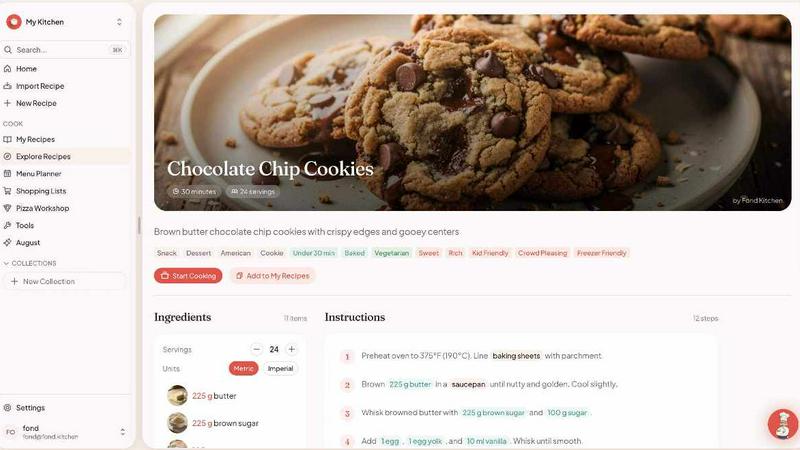
Fond is your all-in-one intelligent kitchen companion, designed to transform how you manage recipes, plan meals, and learn to cook. It's built for home cooks who are tired of juggling bookmarks, cluttered notes, and last-minute grocery runs. At its heart is August, a built-in AI cooking assistant that acts as your personal culinary guide. Fond consolidates your entire cooking workflow: you can instantly import recipes from any website, photo, or text using AI that strips away the ads and lengthy stories. It then helps you generate personalized weekly meal plans in seconds based on your dietary preferences, skill level, or what ingredients you already have. While you cook, August is there to answer questions about techniques and substitutions in real-time. Beyond recipes, Fond offers drag-and-drop meal planning, automatically generated shopping lists sorted by grocery aisle, and a hands-free Cook Mode. It also introduces specialized "Modules" like the Pizza Workshop for enthusiasts who want to dive deep into the craft. Available across all your devices and fully synced, Fond brings order, knowledge, and confidence to your kitchen, making cooking less of a chore and more of a joyful craft.
About Skene
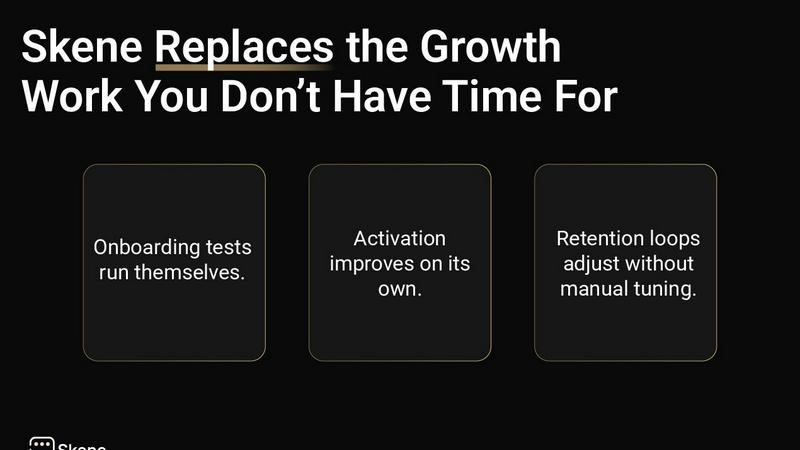
Skene is an innovative AI-powered, fully automated Product-Led Growth (PLG) iteration engine that serves as intelligent infrastructure for software products. Its core functionality is to enable products to achieve autonomous growth by consistently optimizing critical user lifecycle stages such as onboarding, activation, and retention without the need for dedicated growth teams. Skene’s unique advantage lies in its deep integration with the product’s codebase, allowing it to analyze the source code directly. This analysis helps Skene derive contextual signals to understand user behavior, identify friction points, and uncover activation opportunities. By automating the creation, A/B testing, and deployment of improved user flows, Skene effectively establishes a self-learning growth system. Targeted towards indie developers, early-stage startups, and established PLG companies, Skene replaces fragmented and manual growth stacks with a unified, code-native solution. This allows developers to maintain ownership of their growth strategies, version them alongside their code, and interact with them through prompts, thereby eliminating performance overhead and data silos associated with traditional third-party tools.