Fusedash vs RocketShare

Side-by-side comparison to help you choose the right tool.

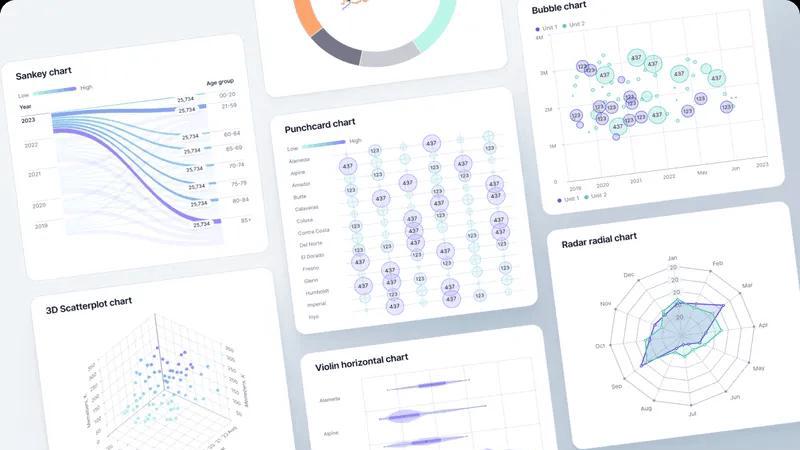
Fusedash transforms raw data into intuitive dashboards and charts, empowering teams to act on insights in real time.

Last updated: March 4, 2026

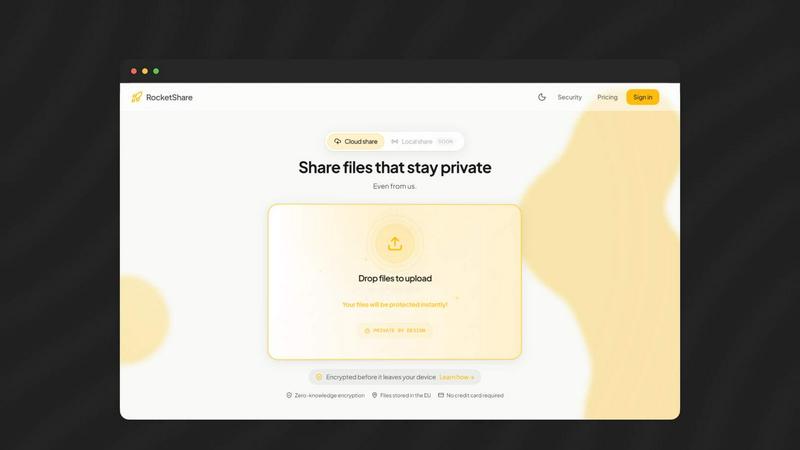
RocketShare provides secure, zero-knowledge encrypted file sharing where only you control access.

Last updated: March 4, 2026

Visual Comparison

Fusedash

Fusedash screenshot

RocketShare

RocketShare screenshot

Feature Comparison

Fusedash

Flexible Views

Fusedash allows users to create diverse visualizations tailored to different stakeholders. Whether it is dashboards, charts, maps, or report-style views, users can customize layouts, filters, and time ranges to ensure that each audience receives the specific insights they need, all without redundant efforts.

AI Chart Generator

The AI Chart Generator within Fusedash empowers users to create visual representations of their data from CSVs or APIs in mere minutes. This feature automatically selects the appropriate chart types, applies necessary comparisons, and refines labels to ensure accurate storytelling through visuals, enhancing the clarity and impact of reports.

Dashboard Software

Fusedash integrates dashboarding and reporting into a single workspace, allowing teams to monitor KPIs and provide contextual insights simultaneously. By combining performance metrics with narrative elements, users can clearly communicate changes, their implications, and future actions, minimizing discrepancies in reporting.

AI Chat

The AI Chat feature serves as an intelligent assistant, enabling users to inquire about their data using plain language. It provides suggestions for suitable metrics, charts, and breakdowns, facilitating a smoother workflow and helping teams quickly transform insights into shareable dashboard views.

RocketShare

Zero-Knowledge, End-to-End Encryption

RocketShare implements a true zero-knowledge encryption model where files are encrypted locally on the sender's device using strong cryptographic standards before upload. The platform's servers never receive or have access to the unencrypted data or the decryption keys. This means that even in the event of a server breach, the encrypted data remains computationally infeasible to decipher. The decryption key is typically part of the shareable URL, granting access only to intended recipients with the complete link.

Dual Sharing Modes: Cloud and Local (P2P)

The platform provides two technical methodologies for file transfer. The Cloud Share mode uploads encrypted files to secure, EU-based data centers for persistent, time-limited access. The Local Share (peer-to-peer) mode establishes a direct, encrypted connection between the sender's and recipient's devices for the transfer, with files never stored on RocketShare's servers. This P2P option is ideal for transient data exchange where cloud persistence is not required.

EU-Based Data Sovereignty

For cloud-based transfers, all encrypted file data is stored exclusively on servers located within the European Union. This provides users with the legal and regulatory assurances associated with EU data protection jurisdiction, including adherence to the General Data Protection Regulation (GDPR) framework for data handling and storage practices.

No-Account Required File Sharing

RocketShare operates on a frictionless, self-serve model that does not mandate account creation for basic file sending. Users can initiate secure transfers immediately without providing personal information or payment details. This reduces barriers to adoption while maintaining full security, as the encryption process is device-based and independent of user authentication on the platform's servers.

Use Cases

Fusedash

Real-Time Monitoring

Fusedash is ideal for teams requiring real-time data insights. By connecting their datasets, users can create live dashboards that provide immediate visibility into performance metrics, allowing quick reactions to emerging trends and ensuring proactive decision-making.

Stakeholder Reporting

Organizations can leverage Fusedash to generate comprehensive reports for stakeholders that combine visual data and narrative context. This ensures that all parties have a unified understanding of performance, reducing the likelihood of miscommunication and aligning strategic objectives.

Data Exploration

Fusedash is perfect for teams that need to explore data dynamically. By utilizing the AI Chart Generator and Smart Chat, users can quickly generate relevant visualizations and insights tailored to specific inquiries, fostering a culture of data-driven exploration and informed decision-making.

Cross-Department Collaboration

Fusedash facilitates collaboration across various departments by enabling teams to share consistent views and definitions. This unified approach ensures that all teams—from finance to marketing—are aligned on key metrics and KPIs, helping to bridge gaps in understanding and enhance overall organizational efficiency.

RocketShare

Law firms and legal professionals can securely share sensitive case files, contracts, deposition transcripts, and client communications. The zero-knowledge architecture ensures attorney-client privilege and work-product doctrine protections are technically enforced, as no third party can intercept or access the confidential materials during transfer or storage.

Healthcare Data Transmission

Medical practices, therapists, and healthcare administrators can use RocketShare to exchange protected health information (PHI), patient records, lab results, and imaging files in compliance with stringent regulations like HIPAA. The platform's encryption and EU data storage provide a robust technical safeguard for patient privacy.

Creative Asset Delivery

Photographers, videographers, and design agencies can deliver high-resolution client galleries, raw footage, and creative proofs. The ability to send files of any size, coupled with guaranteed privacy, protects intellectual property and ensures only paying clients access the final deliverables via the unique, key-embedded link.

Confidential Corporate Collaboration

Teams working on proprietary projects, financial reports, merger & acquisition documents, or source code can collaborate securely. The local P2P sharing option is particularly valuable for transferring draft documents or sensitive data between team members without creating a cloud-based copy, minimizing the digital footprint.

Overview

About Fusedash

Fusedash is an advanced AI-powered data visualization platform engineered to enable teams to convert their interconnected data into clear and actionable insights. It serves as a comprehensive workspace where users can effortlessly create decision-ready dashboards, interactive charts, detailed maps, and narrative reports without the need to replicate the same logic across various disconnected tools. This platform's core value proposition centers on consistency and efficiency: users define key metrics and KPIs once, and these definitions can be reused across every view and report. This ensures that all members of the organization—from leadership and marketing to operations—are aligned with the same trusted numbers. Fusedash is tailored for teams overwhelmed by manual reporting cycles and contradictory data narratives. It empowers users to monitor real-time data effectively and to delve into the underlying reasons behind trends by segmenting data across regions or timeframes. With integrated AI features such as natural language data chat and smart visualization assistance, Fusedash streamlines data exploration and reporting, transforming raw data into a unified source of truth that fosters alignment and prompt action.

About RocketShare

RocketShare is a secure file-sharing platform engineered to provide absolute data privacy through a zero-knowledge encryption architecture. The core operational principle is that user privacy is non-negotiable; the platform is designed so that no entity, including RocketShare's own administrators, can access the content of shared files. This is achieved by performing client-side encryption on the user's device before any data is transmitted. The encryption keys remain solely with the user, often embedded directly within the shareable link, ensuring servers only process cryptographically secure, unreadable data. The platform supports the transfer of files of any size and offers two distinct sharing modalities: cloud-based storage with data housed in EU-based facilities, and a local, peer-to-peer transfer option that minimizes data persistence. Targeted at professionals and organizations handling sensitive information, RocketShare delivers enterprise-grade security within a self-serve, user-friendly interface. Its value proposition is providing top-tier cryptographic security without compromising on simplicity, making robust privacy accessible for legal, creative, healthcare, and corporate sectors.

Frequently Asked Questions

Fusedash FAQ

What types of data sources can Fusedash connect to?

Fusedash can connect to a variety of data sources including CSV files, APIs, and public datasets, allowing users to aggregate and analyze information from multiple origins seamlessly.

How does Fusedash ensure metric consistency across reports?

Users can define key metrics and KPIs once within Fusedash, which are then reused throughout all dashboards and reports. This standardization guarantees that everyone in the organization is referencing the same data definitions, promoting trust in the insights generated.

Can Fusedash be used for real-time data monitoring?

Yes, Fusedash supports real-time data monitoring. By connecting to live data sources, users can create dashboards that update in real-time, providing instant visibility into performance metrics and trends.

Is it possible to customize visualizations in Fusedash?

Absolutely. Fusedash offers extensive customization options for visualizations, including layout adjustments, filter settings, and time range selections, ensuring that each dashboard or report can be tailored to meet specific audience needs.

RocketShare FAQ

How does zero-knowledge encryption work on RocketShare?

Zero-knowledge encryption means the encryption and decryption processes occur exclusively on user devices. When you upload a file, the RocketShare client application on your computer or browser encrypts it using a strong, randomly generated key before it leaves your system. This key is not sent to RocketShare. The encrypted data is then transmitted to our servers. The decryption key is typically appended to the shareable link. Only someone with the full link possesses the key needed to decrypt the file, and this decryption happens locally on the recipient's device.

Where are my files stored?

For files sent via the Cloud Share option, the encrypted data is stored on secure servers located within the European Union. We do not utilize or replicate data to servers outside the EU. For files sent via the Local Share (peer-to-peer) option, the files are never stored on our servers; they are transferred directly between the devices of the sender and recipient over an encrypted channel.

Can RocketShare access or view my files?

No. Under no circumstances can RocketShare or its personnel access the content of your files. The cryptographic design ensures we only handle encrypted data blobs. We do not possess the encryption keys required to decrypt them. This architecture is fundamental to our service and is technically enforced.

Is there a file size limit for transfers?

RocketShare is designed to send files of any size. The platform does not impose artificial caps on file dimensions for its core transfer functionality. Performance will be subject to the sender's and recipient's respective network bandwidth and connectivity, especially for very large files or when using the Local Share mode.

Alternatives

Fusedash Alternatives

Fusedash is an AI-powered data visualization platform that falls under the categories of Analytics & Data and Business Intelligence. It enables teams to turn raw data into actionable insights through clear dashboards and interactive charts. Users often seek alternatives to Fusedash for various reasons, including pricing concerns, specific feature requirements, or compatibility with existing platforms. When evaluating alternatives, it is essential to consider factors such as ease of use, the ability to customize dashboards, integration capabilities, and the level of support offered by the provider. --- [{"question": "What is Fusedash?", "answer": "Fusedash is an AI-powered data visualization platform designed to transform raw data into clear, actionable insights through dashboards and interactive charts."}, {"question": "Who is Fusedash for?", "answer": "Fusedash is built for teams across various departments, including leadership, marketing, and operations, who seek to streamline reporting and ensure everyone is aligned on key metrics."}, {"question": "Is Fusedash free?", "answer": "Fusedash does not offer a free version; pricing details can be obtained from their official website."}, {"question": "What are the main features of Fusedash?", "answer": "Key features of Fusedash include decision-ready dashboards, real-time interfaces, natural language data chat, smart visualization assistance, and the ability to define key metrics for consistent reporting."}]

RocketShare Alternatives

RocketShare is a secure file-sharing and collaboration platform within the productivity and management software category. It distinguishes itself through a strict zero-knowledge encryption model, ensuring that all file data is encrypted client-side before upload, making it inaccessible to the service provider itself. Users may seek alternatives to RocketShare for various reasons, including specific budget constraints, the need for integrated collaboration features like real-time document editing, or requirements for different deployment models such as on-premises solutions. Platform compatibility, storage limits, and administrative control levels are also common decision factors. When evaluating an alternative, key technical criteria include the encryption standard employed (e.g., AES-256), the jurisdiction of data storage, the availability of client-side encryption, and the granularity of user permission controls. The chosen solution should align with both the operational workflow and the specific compliance or security mandates of the user or organization.

Continue exploring