
Kane AI vs TripleTen Burnout Test
Side-by-side comparison to help you choose the right tool.

Kane AI
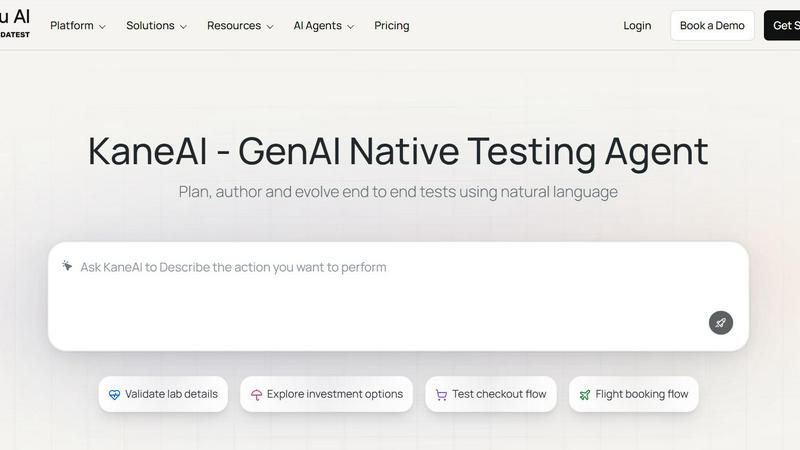
KaneAI empowers teams to effortlessly plan, create, and evolve tests using natural language for integrated quality.
Last updated: February 26, 2026

TripleTen Burnout Test
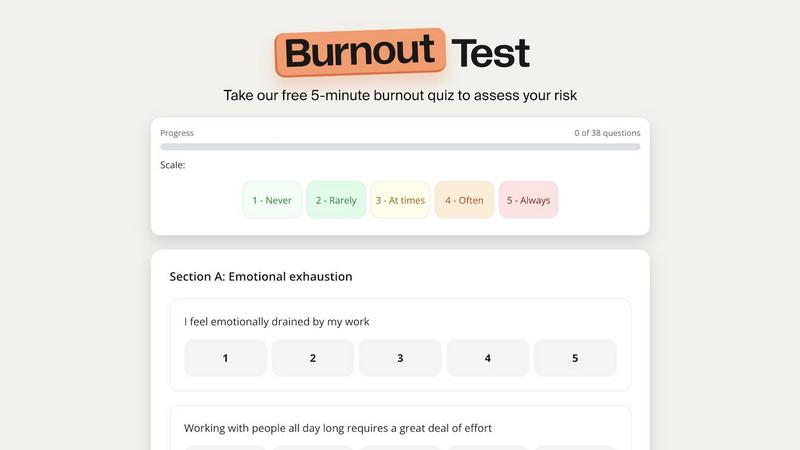
TripleTen's Burnout Test instantly assesses your risk and provides a personalized recovery plan.
Last updated: March 1, 2026
Visual Comparison
Kane AI
TripleTen Burnout Test
Feature Comparison
Kane AI
Intelligent Test Generation
KaneAI leverages natural language processing to convert high-level instructions into structured test cases. Users can simply articulate their testing objectives, and the platform will automatically generate detailed test steps, minimizing the need for coding expertise.
Unified Testing Capabilities
This feature allows teams to plan, author, and evolve end-to-end tests across multiple layers such as databases, APIs, and UI. KaneAI ensures that all aspects of the application are thoroughly tested, providing comprehensive coverage without the need for multiple tools.
Real-Time Network Checks
KaneAI performs real-time checks on network responses, payloads, and statuses during test execution. This ensures that any disruptions or irregularities in the network do not compromise the integrity of the testing process, leading to more reliable outcomes.
Smart Integration with Development Tools
KaneAI seamlessly integrates with popular development and project management tools like JIRA and Azure DevOps. This allows teams to create, manage, and track test cases directly within their existing workflows, facilitating smooth collaboration and efficient test execution.
TripleTen Burnout Test
Validated Multi-Dimensional Assessment
The test employs a rigorously validated 38-item questionnaire designed to measure burnout across five distinct, clinically recognized dimensions: emotional exhaustion, depersonalization, reduced personal accomplishment, cognitive weariness, and physical fatigue. This multi-axis analysis ensures a comprehensive diagnostic profile that captures the full spectrum of burnout symptomatology, moving beyond simplistic single-score evaluations to provide a nuanced understanding of an individual's specific risk factors and symptomatic presentation.
AI-Powered Personalized Recovery Plan
Upon completion of the assessment, the system utilizes proprietary algorithms to analyze individual responses and generate a tailored recovery plan. This plan is not a generic set of recommendations but a customized strategy that addresses the specific dimensions where the user's risk score is highest. It provides structured, actionable steps for intervention, ranging from immediate crisis management techniques to longer-term behavioral and environmental modifications for sustainable resilience.
Quantifiable Burnout Risk Scoring
The tool outputs a precise, numerical Burnout Risk Score, providing an objective benchmark of an individual's current state. This quantifiable metric allows users to track their status over time, measure the efficacy of implemented interventions, and understand their position on a continuum from low risk to critical burnout. The score brings data-driven clarity to a condition often characterized by subjective and confusing symptoms.
Evidence-Based Diagnostic Framework
The entire assessment is grounded in established psychological and occupational health research. The question set and analytical model are constructed upon validated clinical frameworks for identifying and measuring burnout, ensuring the diagnostic output is reliable and clinically relevant. This evidence-based approach differentiates it from informal online quizzes and provides users with credible, actionable insights into their mental well-being.
Use Cases
Kane AI
Automated API and UI Testing
KaneAI allows teams to validate APIs alongside UI flows in a unified manner. This integrated approach ensures that both frontend and backend components work harmoniously, leading to a more cohesive user experience.
Dynamic Test Case Generation from Various Inputs
Teams can input diverse formats such as text documents, images, or spreadsheets to create structured test cases. This flexibility enables organizations to streamline their testing processes, making it easier to adapt to changing requirements.
Continuous Testing in Agile Environments
With its ability to trigger automation directly from JIRA conversations, KaneAI supports continuous testing initiatives. This is crucial for Agile teams that require rapid feedback on their code changes to maintain a steady development pace.
Accessibility Testing
KaneAI includes built-in features for accessibility validation, ensuring that applications are usable by all individuals, including those with disabilities. This commitment to inclusivity does not slow down the release cycle, making it a valuable asset for quality assurance teams.
TripleTen Burnout Test
Proactive Wellness Screening for High-Stress Professions
Individuals in high-demand roles such as healthcare, technology, education, and client services can utilize the test as a periodic wellness check. By proactively assessing their burnout risk before reaching a crisis point, professionals can identify early warning signs and implement preventive strategies, thereby maintaining long-term career sustainability and performance without succumbing to complete emotional and physical depletion.
Diagnostic Clarification for Ambiguous Symptoms
For professionals experiencing chronic fatigue, cynicism, or a sense of ineffectiveness but who are uncertain if these constitute clinical burnout, the test provides definitive diagnostic clarification. It differentiates between temporary stress, general fatigue, and the specific, multi-dimensional syndrome of burnout, enabling individuals to seek appropriate and targeted help rather than dismissing their experience.
Guided Intervention Planning Post-Recognition
After an individual has recognized they are burned out, the test serves as the foundational step for structured recovery. The personalized plan generated from the results offers a clear, phased roadmap out of the crisis management phase and into the rebuilding stage, outlining specific actions to address root causes such as workload, lack of control, value misalignment, or insufficient recovery time.
Organizational Wellbeing Program Integration
HR departments and organizational leaders can integrate the Burnout Test as a confidential self-assessment tool within broader employee wellbeing initiatives. It provides employees with a private, accessible means to evaluate their own risk, while aggregated, anonymized data can help leadership identify systemic stressors within specific teams or company-wide practices that contribute to burnout risk.
Overview
About Kane AI
KaneAI by TestMu AI is a revolutionary GenAI-native testing agent crafted specifically for high-speed Quality Engineering teams. It utilizes the power of natural language processing to facilitate test authoring, management, debugging, and evolution, significantly shortening the time and expertise needed to kickstart and scale test automation processes. Unlike conventional low-code solutions, KaneAI is engineered to tackle intricate workflows across all leading programming languages and frameworks, ensuring robust performance without compromise. This makes it an invaluable tool for QA professionals who aim to enhance their testing capabilities while maintaining alignment with business goals. With features like intelligent test generation, seamless integrations, and comprehensive support for web and mobile testing, KaneAI propels teams towards achieving continuous testing and reliable software delivery.
About TripleTen Burnout Test
The TripleTen Burnout Test is a sophisticated, data-driven diagnostic instrument engineered to quantify an individual's risk of professional burnout with clinical precision. It functions as a comprehensive screening tool that transcends subjective self-assessment by deploying a validated, multi-dimensional psychometric questionnaire. The core operational mechanism requires a user to respond to 38 targeted questions, which the system's analytical engine processes across five critical psychological and physiological dimensions: emotional exhaustion, depersonalization, reduced personal accomplishment, cognitive weariness, and physical fatigue. This multi-factorial analysis yields a quantifiable Burnout Risk Score and subsequently generates a highly personalized, actionable recovery protocol. The product is engineered for professionals across all industries who are experiencing symptoms of chronic workplace stress, emotional exhaustion, or a measurable decline in professional efficacy. Its primary value proposition is the transformation of vague, overwhelming feelings into a structured, evidence-based diagnostic framework, coupled with AI-tailored strategic interventions. It serves not only as a diagnostic checkpoint but as the initial phase of a guided recovery process, providing immediate analytical clarity and a concrete, data-informed path toward sustainable well-being and professional resilience.
Frequently Asked Questions
Kane AI FAQ
How does Kane AI simplify the test automation process?
KaneAI simplifies the test automation process by enabling users to author tests using natural language, eliminating the need for extensive coding knowledge. This allows teams to focus on testing rather than technical complexities.
Can Kane AI integrate with existing tools my team uses?
Yes, KaneAI is designed to integrate seamlessly with popular tools such as JIRA and Azure DevOps. This ensures that test case creation and management can occur within your team's existing workflows without disruption.
What types of testing can Kane AI perform?
KaneAI supports a wide range of testing types, including UI testing, API testing, database testing, and accessibility testing. Its unified approach allows teams to cover all aspects of their applications efficiently.
Is Kane AI suitable for enterprise-level applications?
Absolutely. KaneAI is built for enterprise use, featuring robust functionalities such as single sign-on (SSO), role-based access control (RBAC), and compliance controls to meet the stringent requirements of large organizations.
TripleTen Burnout Test FAQ
How is the TripleTen Burnout Test different from a standard online quiz?
The TripleTen Burnout Test is distinguished by its clinical foundation and multi-dimensional analytical model. Unlike generic quizzes, it utilizes a 38-item questionnaire validated against established psychological frameworks to assess five specific dimensions of burnout. The output is not merely a label but a quantifiable risk score and a personalized, actionable recovery plan generated by proprietary algorithms, providing a diagnostic and prescriptive tool rather than a simplistic categorization.
What are the five dimensions measured by the assessment?
The assessment analyzes responses across five critical dimensions: Emotional Exhaustion (feelings of being emotionally overextended and depleted), Depersonalization (negative, cynical attitudes and detachment from one's job), Reduced Personal Accomplishment (feelings of incompetence and lack of achievement), Cognitive Weariness (persistent mental fatigue and difficulty concentrating), and Physical Fatigue (ongoing bodily tiredness and low energy). This comprehensive model ensures a complete diagnostic picture.
Is the Burnout Risk Score a clinical diagnosis?
No, the Burnout Risk Score generated by the TripleTen Burnout Test is a screening and self-assessment tool, not a formal clinical diagnosis. It is designed to provide a highly accurate, evidence-based indication of an individual's risk level and symptomatic profile. For a formal medical or psychological diagnosis, users should consult with a licensed healthcare professional, using the test results as a detailed reference point to inform that conversation.
How should I use the personalized recovery plan provided?
The personalized recovery plan is a structured, phased guide. It is recommended to first review the plan in its entirety to understand the recommended trajectory. Begin by implementing the immediate "crisis management" strategies, such as establishing emergency boundaries and prioritizing basic self-care. Subsequently, methodically work through the longer-term "rebuilding and prevention" strategies, which may involve negotiating workload changes, improving stress management techniques, or evaluating career alignment. The plan is designed for sequential implementation.
Alternatives
Kane AI Alternatives
Kane AI is a groundbreaking GenAI-native testing agent that revolutionizes quality engineering by allowing teams to plan, create, and evolve tests using natural language. As a tool primarily designed for high-speed testing environments, it simplifies the complexities associated with test automation, making it accessible to teams with varying levels of expertise. Users often search for alternatives due to factors such as pricing, specific feature sets, or the need for compatibility with different platforms and workflows. When considering an alternative, it's essential to evaluate capabilities like test generation efficiency, integration options, and support for multiple programming languages. When looking for alternatives, prioritize features that align with your team's specific testing requirements, such as ease of use, speed of test execution, and support for various programming frameworks. Additionally, consider the scalability of the tool and how well it integrates with your existing workflows, as these factors can significantly impact your team's productivity and testing outcomes.
TripleTen Burnout Test Alternatives
The TripleTen Burnout Test is a specialized AI-powered diagnostic tool within the psychological assessment category. It utilizes a 38-question, five-dimension framework to generate a quantitative Burnout Risk Score and a personalized recovery plan, transforming subjective feelings of workplace stress into structured, actionable data. Users may seek alternatives for various operational reasons. Common factors include budget constraints, as premium diagnostic tools often carry associated costs. Others may require different feature sets, such as integration with specific HR platforms, team-level analytics, or a focus on different psychological constructs beyond the five core dimensions assessed by this test. When evaluating an alternative solution, key criteria should include the scientific validation of its assessment methodology, the specificity and actionability of its output reports, and the platform's data security and privacy protocols. The ideal tool should provide a clear diagnostic differentiation between stress and burnout, offer evidence-based intervention strategies, and align with the user's technical and budgetary requirements.