
LuxSign vs TemplateFox
Side-by-side comparison to help you choose the right tool.

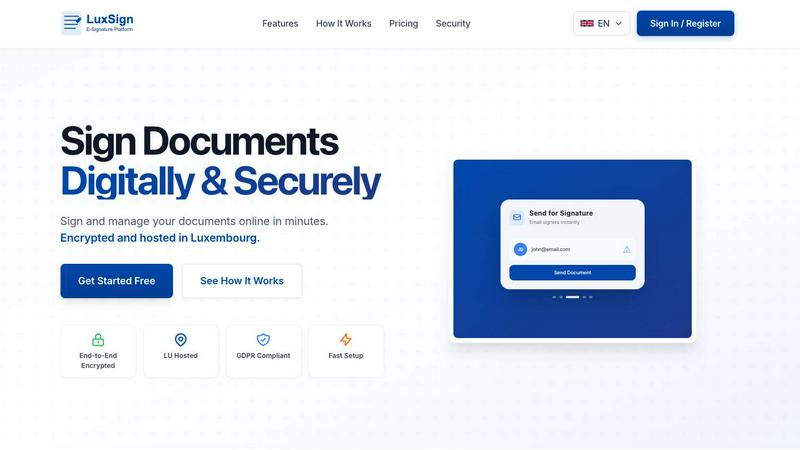
LuxSign enables secure, legally valid electronic signatures across the EU, streamlining document management in minutes.
Last updated: February 26, 2026

TemplateFox
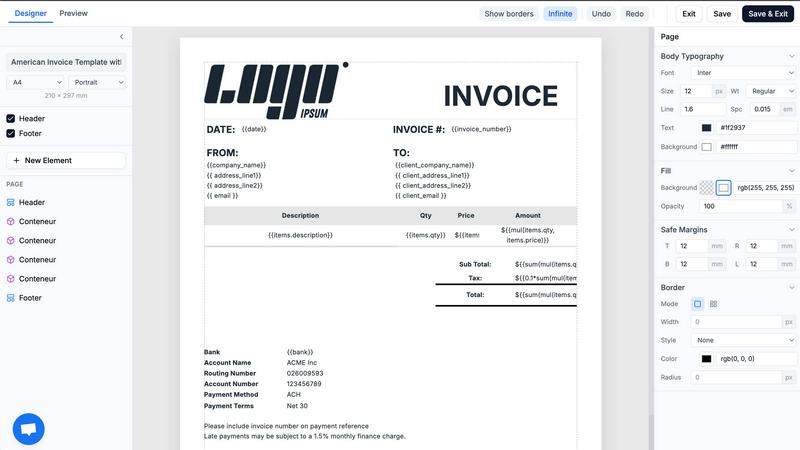
TemplateFox is a visual PDF design platform with dynamic data binding and automated API generation.
Last updated: February 28, 2026
Visual Comparison
LuxSign
TemplateFox
Feature Comparison
LuxSign
Multiple Signature Methods
LuxSign offers a variety of signature methods to accommodate user preferences. You can draw your signature using a mouse or touchscreen, type your name, or upload a signature image. This flexibility allows for quick and personalized document signing, making it suitable for all users.
Advanced Security
The platform employs industry-standard encryption protocols to ensure the security of your documents during upload, storage, and transmission. With data hosted exclusively in Luxembourg, LuxSign guarantees compliance with EU data protection regulations, enhancing the trustworthiness of the platform.
Collaboration Workspaces
LuxSign includes collaboration workspaces that enable teams to share and manage documents effectively. Users can create shared folders, organize files, manage access rights for team members, and streamline the signing workflow, which is essential for collaborative projects and team-based tasks.
Complete Audit Trail
Every action taken on documents within LuxSign is logged in a comprehensive audit trail. This feature includes timestamps, IP addresses, and signer information, ensuring transparency and accountability. It is particularly valuable for compliance and verification purposes, allowing businesses to maintain detailed records of all document interactions.
TemplateFox
Visual Drag-and-Drop Template Designer
The platform features a fully visual, WYSIWYG (What You See Is What You Get) editor that allows users to construct professional PDF templates without writing a single line of code. Users can drag, drop, and configure various elements like text boxes, images, tables, and barcodes onto a canvas. Each component has a dedicated properties panel for fine-tuning styling, positioning, borders, and colors. This no-code design environment significantly reduces the time and technical expertise required to create complex, data-driven document layouts, making professional template creation accessible to a broader audience.
Dynamic Data Binding and Expressions
TemplateFox supports advanced dynamic data injection, moving beyond simple placeholder replacement. Users can bind template elements to variables from their JSON data payload. The system includes a powerful expression engine with over 100 built-in functions for formatting dates, calculating totals (e.g., sum, tax), rounding numbers, manipulating text, and implementing conditional logic. System variables such as {{sys.page_number}}, {{sys.total_pages}}, and {{sys.current_date}} are automatically available, enabling the creation of intelligent, context-aware documents that adapt their content based on the provided data.
Automated and Scalable PDF Generation API
At its core, TemplateFox provides a high-performance REST API for programmatic PDF generation. After designing a template, users can generate thousands of unique PDF documents by sending a POST request with a unique template ID and a JSON object containing the variable data. The API is designed for low latency, with typical generation times of 1-3 seconds, and can be integrated directly into applications, backend systems, or cron jobs. This feature is essential for automating document workflows at scale, such as bulk invoicing, certificate issuance, or report distribution.
No-Code Integrations and Smart Components
For users operating in no-code or low-code environments, TemplateFox offers direct integrations with platforms like Zapier, Make (Integromat), Airtable, Bubble, and FlutterFlow. This allows for the automation of PDF generation within existing workflows without manual intervention. Furthermore, the platform includes intelligent, data-aware components such as tables that automatically expand rows and span multiple pages based on the dataset, and built-in generators for scanner-ready QR codes and barcodes (Code128, EAN-13) that are rendered dynamically from input data.
Use Cases
LuxSign
Real Estate Transactions
In real estate, contracts often require multiple signatures from various parties. LuxSign simplifies this process by allowing parallel signing workflows, which accelerates the transaction timeline and ensures that all necessary approvals are gathered efficiently.
Legal Agreements
Law firms can utilize LuxSign to manage client agreements and retainers. The platform's multi-signer capabilities and detailed audit trails facilitate compliance with legal standards, ensuring that all signatures are valid and traceable.
HR Onboarding
Human resources departments can streamline the onboarding process for new employees by using LuxSign to send offer letters and contracts. Automatic email notifications keep both HR personnel and new hires informed about the signing status, enhancing the onboarding experience.
Business Partnerships
When entering into partnerships, businesses often need to sign multiple agreements. LuxSign allows companies to send and manage these documents easily, ensuring that all parties can sign from anywhere, reducing delays in starting collaborative efforts.
TemplateFox
Automated Invoice and Billing Systems
Businesses and SaaS platforms can integrate TemplateFox's API to automate their entire invoicing cycle. A template for a professional invoice is created once in the visual editor. The application's backend can then automatically generate and dispatch personalized PDF invoices by calling the API with customer data, line items, taxes, and totals after each transaction or on a monthly schedule. This eliminates manual design work, ensures brand consistency, and accelerates the accounts receivable process.
Mass Certificate and Document Generation
Educational institutions, training organizations, and event managers can use TemplateFox to generate certificates, diplomas, or participation letters in bulk. A master certificate template with dynamic fields for the recipient's name, course title, date, and a unique serial number (or QR code) is designed. By uploading a CSV list of recipients or connecting via an integration like Airtable, thousands of unique, personalized certificates can be produced and distributed automatically, saving immense administrative time and effort.
E-commerce Order Fulfillment Packing
E-commerce businesses can streamline their logistics by automating the creation of packing slips and shipping labels. A packing slip template can include the store logo, customer shipping address, order details, and a dynamically generated barcode for the tracking number. Integrated with an e-commerce platform via Zapier or a custom webhook, TemplateFox can instantly generate a PDF packing slip for each new order, ready to be printed and included in the shipment, improving operational efficiency.
Dynamic Business and Operational Reporting
Companies requiring regular operational or financial reports can leverage TemplateFox to transform raw data into formatted PDF documents. A report template with dynamic tables, charts (as images), headers, footers, and page numbers can be created. Backend systems can compile analytics data, call the TemplateFox API with this data, and produce a polished PDF report for stakeholders, executives, or regulatory bodies on a daily, weekly, or monthly basis, ensuring professional and consistent reporting.
Overview
About LuxSign
LuxSign is an advanced electronic signature platform designed specifically for businesses that require high compliance and security for their document signing processes. Developed in Luxembourg, LuxSign ensures that all documents are encrypted end-to-end and stored securely within the country's borders, which upholds the stringent standards of GDPR compliance. The platform adheres to eIDAS SES standards, providing legal validity for contracts across the entire European Union. LuxSign is ideal for enterprises, small businesses, and professionals who need a reliable tool for managing electronic signatures. With capabilities such as parallel and sequential signing workflows, drag-and-drop signature field placement, and automated notifications, LuxSign streamlines the document signing process, making it efficient and secure. Advanced tiers offer additional features like document templates, detailed audit trails, bulk signing, and extensive API support, enabling seamless integration into existing workflows.
About TemplateFox
TemplateFox is a sophisticated Software-as-a-Service (SaaS) platform engineered for high-performance, automated PDF document generation. It provides a comprehensive solution for developers, indie hackers, and businesses to create, manage, and automate professional PDFs at scale. The core value proposition lies in its dual approach: a powerful, no-code visual template designer and a robust, developer-friendly API. Users can design dynamic PDF templates using an intuitive drag-and-drop WYSIWYG editor, eliminating the need for manual HTML or CSS coding. Once a template is designed, it can be populated with dynamic data and generated into a final PDF document through a simple REST API call or via popular no-code automation platforms like Zapier and Make. The service is architected for speed and reliability, delivering documents in 1-3 seconds, and is built to handle real-world document complexities such as multi-page tables, headers, footers, and embedded barcodes. With a free tier offering 100 PDFs per month, TemplateFox is an accessible yet powerful tool for streamlining document workflows for invoices, certificates, reports, packing slips, and more.
Frequently Asked Questions
LuxSign FAQ
Is LuxSign compliant with GDPR?
Yes, LuxSign is fully compliant with GDPR and Luxembourg data protection laws. All documents are encrypted and stored securely within Luxembourg, ensuring that user privacy is maintained.
What types of documents can I sign with LuxSign?
LuxSign supports a variety of document formats, including PDF, DOC, and DOCX. Users can easily upload files up to 10MB for signing, making it versatile for different business needs.
Can I track the signing process in real-time?
Absolutely. LuxSign provides real-time tracking of the signing process. Users receive automatic email notifications when documents are sent, viewed, and signed, allowing for efficient management of document workflows.
What are the benefits of using the API and SDK?
The API and SDK offered in LuxSign's advanced tiers allow for seamless integration into existing systems. This enables businesses to automate workflows, enhance user experience, and customize the signing process according to their needs.
TemplateFox FAQ
What programming languages can I use with the TemplateFox API?
The TemplateFox API is a standard REST API that uses JSON for requests and responses. It is language-agnostic, meaning you can integrate it with any programming language that can make HTTP requests, such as JavaScript (Node.js, frontend), Python, PHP, Java, C#, Go, or Ruby. Comprehensive API documentation with code examples is provided to facilitate integration into your existing tech stack.
Can I use my own fonts and logos in the templates?
Yes, the TemplateFox template designer allows you to upload and use custom fonts (in .ttf or .otf formats) and image files for logos and other graphics. Once uploaded, these assets are stored within your template and will be rendered correctly in the generated PDFs, ensuring full brand consistency across all your automated documents.
How does the dynamic table feature handle very large datasets?
The dynamic table component in TemplateFox is engineered to handle large volumes of data efficiently. When you bind an array of data to a table, it automatically creates a new row for each item. If the data exceeds the available space on a page, the table intelligently breaks and continues onto the next page, with optional configuration to repeat header rows on each subsequent page for clarity. This ensures clean, paginated output regardless of dataset size.
Is there a limit to the number of PDFs I can generate on the free plan?
The free plan, which requires no credit card, includes a quota of 100 PDF generations per month. This allows you to fully test the API, design templates, and integrate the service into a low-volume workflow. For higher volumes, paid subscription plans with increased monthly limits and additional features are available. Usage is tracked per calendar month.
Alternatives
LuxSign Alternatives
LuxSign is a cutting-edge electronic signature platform developed in Luxembourg, designed to meet the rigorous compliance standards required by businesses operating within the EU. As a secure, cloud-based solution, it offers end-to-end encryption and strict adherence to GDPR, making it a reliable choice for organizations that need to ensure the legal validity of their documents across all EU member states. Users often seek alternatives to LuxSign for various reasons including cost considerations, specific feature requirements, or compatibility with existing systems. When evaluating alternatives, it is crucial to assess key factors such as compliance with legal standards, ease of use, integration capabilities, and the ability to support collaborative workflows. Additionally, understanding the security measures and data storage policies of potential alternatives is essential for maintaining regulatory adherence.
TemplateFox Alternatives
TemplateFox is a SaaS platform in the Productivity & Management category, specializing in the visual design and automated generation of professional PDF documents. It enables users to create templates via a drag-and-drop editor and produce documents dynamically through API calls or integrations like Zapier. Users may seek alternatives for various reasons, including specific budget constraints, the need for more advanced or different feature sets, or requirements for integration with a particular tech stack or hosting environment. The search often stems from evolving project needs that demand greater customization, different pricing models, or alternative deployment options. When evaluating alternatives, key considerations include the core document generation methodology, such as code-based versus visual template builders, the depth and reliability of API capabilities, and the granularity of data binding and layout control. Scalability, security compliance, and the total cost of ownership based on expected document volume are also critical technical and business factors to assess.