Mover Marketing AI vs TinyHunt
Side-by-side comparison to help you choose the right tool.

Mover Marketing AI
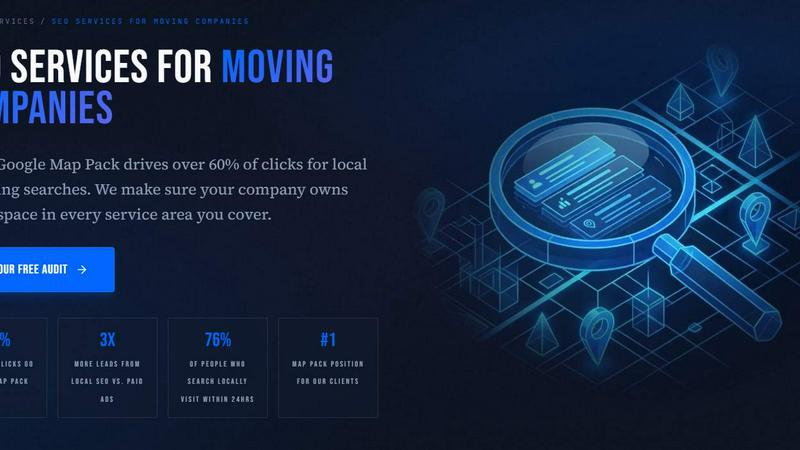
Mover Marketing AI optimizes moving companies' Google Business Profiles and local citations to dominate map pack rankings and attract more customers.
Last updated: April 13, 2026

TinyHunt
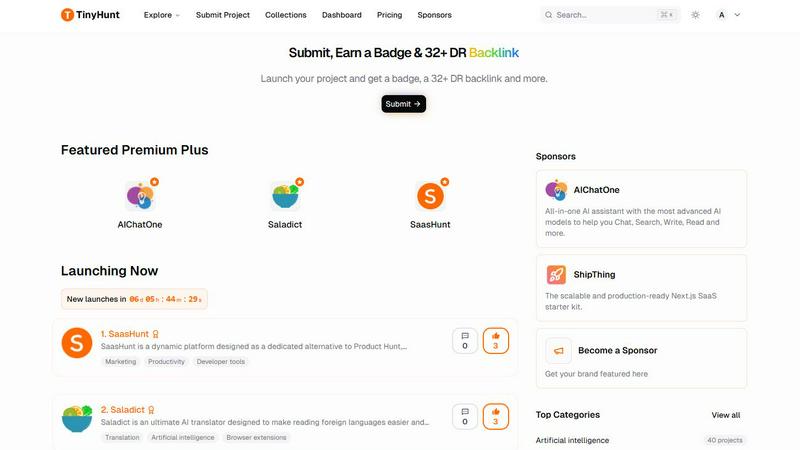
TinyHunt is a weekly platform that boosts indie product visibility with a seven-day featured spotlight.
Last updated: March 1, 2026
Visual Comparison
Mover Marketing AI
TinyHunt
Feature Comparison
Mover Marketing AI
Google Business Profile (GBP) Dominance Suite
This feature encompasses a complete technical audit and granular optimization of a client's Google Business Profile. It includes precise category selection, strategic keyword integration into the business description, management of services and attributes, and a structured posting schedule for updates and offers. The system also implements a proactive Q&A management protocol and a structured review generation strategy, all engineered to maximize GBP relevance, completeness, and engagement signals—key factors Google's local algorithm uses to determine Map Pack rankings.
Local Citation Architecture & NAP Consistency Engine
Mover Marketing AI builds and verifies business citations across a curated list of 50+ high-authority online directories specifically relevant to the moving industry, such as Yelp, BBB, Angi, and MovingCompanyReviews.com. The platform's core function is to ensure absolute Name, Address, and Phone number (NAP) consistency across this digital footprint. This process cleans up existing inconsistent listings and systematically builds new ones, which directly strengthens local search authority and trust signals sent to search engines, a critical component for local ranking success.
Hyper-Localized Service Area Page Generator
This feature involves the technical creation of custom, SEO-optimized landing pages for each city, town, and major neighborhood within a moving company's service radius. Each page is engineered to target a specific set of location-based keywords (e.g., "movers in [City Name]" or "packing services [Neighborhood]"). The pages are built with localized content, schema markup, and clear calls-to-action, transforming a single website into a targeted local lead generation hub that captures search traffic from all covered areas.
Automated Review Generation & Management System
The platform implements automated, post-service email or SMS workflows to solicit customer reviews directly to the company's Google Business Profile. This systematized approach converts satisfied customers into powerful ranking signals without manual follow-up. The feature includes monitoring and reporting on review volume and sentiment, providing a consistent stream of fresh, positive user-generated content that Google's local algorithm heavily favors for businesses in service-based industries like moving.
TinyHunt
Weekly Time-Bound Curation
TinyHunt operates on a structured weekly release cycle, where a new cohort of software products is prominently featured for a precise 7-day period. This model ensures that each project receives sustained, undiluted attention from the platform's audience, maximizing engagement potential. It prevents listings from being buried in a perpetually growing feed, a common issue in static directories, and creates a sense of urgency and freshness that encourages regular user return visits.
High-Authority SEO Backlink
Every project submitted and accepted onto the TinyHunt platform receives a permanent, dofollow backlink from the TinyHunt domain, which boasts a Domain Rating (DR) of 32+. This feature provides immediate and tangible SEO value for makers, enhancing their site's authority and search engine rankings. The backlink is embedded within a detailed, contextually relevant product listing, which search engines weight more favorably than low-quality directory links.
Verified Profile Badge
Upon successful submission and curation, product creators are awarded a verified profile badge. This badge serves as a mark of credibility and validation from the TinyHunt platform, signaling to potential users and customers that the product has been vetted. This social proof can be instrumental in building trust, especially for new products from independent developers or micro-businesses without an established brand presence.
Dual-Pathway Discovery Architecture
The platform is architecturally designed with distinct sections to serve different discovery and promotional needs. The "Launching Now" section provides organic visibility for new products within their dedicated 7-day window. Conversely, the "Featured Premium Plus" section offers a sponsored, high-visibility slot for products seeking amplified promotion. This structure allows users to explore new launches while giving makers options for targeted exposure based on their marketing strategy and budget.
Use Cases
Mover Marketing AI
Establishing Map Pack Presence for New Moving Companies
A newly launched moving company with no online history or reviews can utilize Mover Marketing AI to build its local SEO foundation from scratch. The platform will conduct a competitive gap analysis, perform comprehensive GBP setup and optimization, execute a targeted citation building campaign, and begin creating service area pages. This systematic approach accelerates the time-to-visibility, helping the new entrant compete for Map Pack positions against established competitors within a 2-4 month timeframe.
Reclaiming Local Search Visibility from Competitors
An established moving company that has lost ground to competitors in local search results, despite having superior service, employs Mover Marketing AI for a competitive overhaul. The service starts with a technical audit to identify weaknesses in GBP optimization, citation inconsistencies, or lack of localized content. It then executes a corrective strategy involving GBP enhancement, citation cleanup, and the development of a robust service area page network to reassert local authority and recapture top Map Pack rankings.
Scaling a Regional Service Area Business (SAB)
A moving company that operates across multiple counties or a large metropolitan area as a Service Area Business (with no public storefront) uses the platform to manage its complex local SEO needs. Mover Marketing AI configures the GBP correctly for an SAB, hides the business address as per guidelines, and creates a scalable architecture of service area pages for each municipality served. This ensures the company appears prominently in local searches across its entire operational region without geographic limitations.
Systematizing Lead Generation and Reducing Ad Spend
A moving company overly reliant on volatile and costly pay-per-click (PPC) advertising adopts Mover Marketing AI to build a sustainable, organic lead engine. By focusing on capturing high-intent local searches through Map Pack dominance and targeted service pages, the platform drives qualified leads at a significantly lower cost-per-acquisition than paid ads. This use case allows the business to reduce its dependence on paid advertising, improve marketing ROI, and generate a consistent flow of inbound customer inquiries.
TinyHunt
Product Launch and Initial Traction
Independent developers and solo founders can use TinyHunt as a primary launchpad for their new software product. By being featured in the "Launching Now" section, they gain immediate exposure to a targeted audience of early adopters and professionals. The week-long spotlight drives concentrated traffic, gathers initial user feedback, and can generate the first wave of sign-ups or customers, which is critical for validating product-market fit.
SEO and Domain Authority Building
Makers focused on improving their website's search engine performance utilize TinyHunt to acquire a high-quality backlink from a DR 32+ domain. This is a core use case for SEO strategy, as the contextual link from a relevant, authoritative platform directly contributes to improving the product's own domain authority and organic search rankings, making it easier for potential users to find the product via search engines.
Targeted User Acquisition for Niche Tools
Professionals such as product managers, marketers, and agency owners actively use TinyHunt as a discovery engine to find specialized, niche tools that solve specific productivity or operational challenges. The curated nature of the platform filters out noise, allowing these users to efficiently find and evaluate cutting-edge software that may not be widely advertised on larger, more generic platforms.
Brand Validation and Credibility Enhancement
Early-stage startups and micro-SaaS businesses leverage a TinyHunt feature to build brand credibility. The combination of being listed on a curated platform, receiving a verified badge, and being associated with other innovative products provides third-party validation. This social proof is instrumental in building trust with potential customers, investors, and partners during the critical early growth phases.
Overview
About Mover Marketing AI
Mover Marketing AI is a specialized digital marketing platform engineered exclusively for moving and relocation companies. It functions as a dedicated technical partner, designed to solve the unique local search visibility challenges inherent to the moving industry. The platform's core operational objective is to secure dominant positioning within the Google Map Pack—the top three local business listings that capture over 60% of all clicks for geo-specific searches like "movers near me." It achieves this through a systematic, data-driven methodology that combines deep technical SEO expertise with industry-specific strategy. The service is built for moving companies of all sizes, from local operators to regional service area businesses (SABs), who need to generate high-intent local leads without diverting focus from daily fleet and customer operations. The primary value proposition is a comprehensive, hands-off solution that manages the entire local SEO lifecycle, from foundational technical audits and Google Business Profile optimization to advanced local citation building, service area page creation, and ongoing performance tracking, all tailored to the moving sector's competitive landscape and search behavior patterns.
About TinyHunt
TinyHunt is a specialized, curated discovery platform engineered to surface and promote innovative software products and tools from independent developers, solo founders, and micro-businesses. It operates on a structured, time-bound curation model to maximize visibility and engagement for each featured project. The platform's core value proposition is its dual-function architecture: it serves as a high-signal discovery feed for professionals seeking cutting-edge, niche tools to enhance productivity and drive growth, while simultaneously acting as a powerful launchpad and marketing channel for creators to gain targeted traffic, authoritative backlinks, and community validation. Unlike saturated, broad-based directories, TinyHunt implements a weekly release cycle where a new selection of products is showcased, with each product maintaining a prominent position for a precise 7-day period. This ensures sustained, focused attention and facilitates deeper user exploration and discussion. The platform categorizes listings into distinct sections such as "Launching Now" for new releases and "Featured Premium Plus" for sponsored highlights, providing clear pathways for both organic discovery and amplified promotion. For makers, submission includes tangible benefits like a verified profile badge and a backlink from a domain with a Domain Rating (DR) of 32+, directly impacting SEO and credibility. The target audience includes SaaS founders, product managers, marketers, and tech enthusiasts actively scouting for vetted, emerging solutions.
Frequently Asked Questions
Mover Marketing AI FAQ
How long does it take to see results from the local SEO services?
Most moving companies observe measurable improvements in their Google Business Profile visibility and Map Pack positioning within 2 to 4 months of engagement. The initial phase focuses on quick-win technical optimizations, such as GBP enhancement and citation cleanup, which can yield noticeable results in weeks. The timeline for achieving top rankings is contingent upon specific variables including the current health of the client's local assets, the level of competition in their target service areas, and the overall size of the local market.
Can a moving company without a physical office rank in local search results?
Yes. Moving companies are typically classified as Service Area Businesses (SABs) by Google, which allows them to rank in local search results without maintaining a physical storefront or public-facing address. Mover Marketing AI specializes in configuring Google Business Profiles correctly for SABs, which involves setting a defined service area while hiding the business address from public view. This configuration is fully supported by Google's guidelines and is optimized specifically within our platform's technical framework.
What is the strategy for determining the number of service area pages needed?
The service area page strategy is data-driven and based on the client's operational coverage. We analyze the primary cities, towns, and major neighborhoods where the company provides service. A dedicated, optimized landing page is created for each of these high-priority locations to target precise geo-modified keywords. For a local mover, this typically translates to 10-30 pages. For a regional moving company covering a broader territory, the architecture may encompass 50 or more individually targeted pages to maximize local search capture.
Which online directories are most critical for moving company citations?
The Google Business Profile is the paramount directory and serves as the central hub for local SEO. Beyond GBP, the platform prioritizes citation building on industry-specific and high-authority general directories. The core list includes Yelp, Better Business Bureau (BBB), Angi (formerly Angie's List), HomeAdvisor, and MovingCompanyReviews.com. The system extends to a curated network of over 40 additional directories that possess strong domain authority and are recognized as credible sources by local search algorithms for service-based queries.
TinyHunt FAQ
What are the benefits of submitting my project to TinyHunt?
Submitting your project to TinyHunt provides multiple tangible benefits. Primarily, you receive a permanent, dofollow backlink from a domain with a Domain Rating (DR) of 32+, which is a significant boost for your site's SEO and authority. You also earn a verified profile badge that adds credibility to your product. Furthermore, your product gains exposure to a targeted audience of professionals and early adopters actively seeking new tools, driving qualified traffic and potential user sign-ups during its featured week.
How does the weekly featuring model work?
TinyHunt operates on a strict weekly curation cycle. A new batch of products is selected and featured every week. Once your product is live, it remains in the prominent "Launching Now" section for exactly 7 days. This time-bound approach ensures that each product receives focused attention without competition from an endless stream of new submissions. After the feature week, the product listing remains accessible on the platform with its associated backlink and badge, but it rotates out of the primary spotlight to make way for the next week's selections.
What is the difference between a standard listing and "Featured Premium Plus"?
A standard listing is an organic feature in the "Launching Now" section, available through the standard submission process, and provides the core benefits (backlink, badge, week-long spotlight). "Featured Premium Plus" is a sponsored, premium placement option. It offers amplified visibility, typically in a dedicated, high-position section on the platform. This option is designed for makers who want to maximize exposure beyond the organic weekly cycle and is part of a paid sponsorship package.
Who is the target audience for TinyHunt?
TinyHunt serves a dual audience. For discoverers, the target audience includes professionals such as SaaS founders, product managers, marketers, developers, and tech enthusiasts who are proactively searching for innovative, niche, and productivity-enhancing software tools. For makers, the platform is tailored for independent developers, solo founders, bootstrapped startups, and micro-businesses who are building software products and need an effective channel for launch, marketing, and gaining authoritative backlinks.
Alternatives
Mover Marketing AI Alternatives
Mover Marketing AI is a specialized local SEO platform designed exclusively for moving and relocation companies. Its core function is to enhance a moving company's visibility in local search results, particularly within the Google Maps and Google Business Profile ecosystem, to generate high-intent customer leads. Users may seek alternatives to Mover Marketing AI for several reasons. These can include budget constraints, a need for a broader marketing suite beyond hyper-focused local SEO, or a preference for a self-managed platform versus a service-based model. Some businesses might require integration with specific CRM or scheduling software not supported by a niche provider. When evaluating alternatives, key considerations should include the platform's specific expertise in local SEO mechanics, its track record with service-based businesses, the transparency of its reporting on key performance indicators like map pack rankings and lead volume, and the scalability of its pricing model relative to your company's growth and service area expansion.
TinyHunt Alternatives
TinyHunt is a curated discovery and launch platform within the product marketing and SEO promotion category. It operates on a weekly cycle, providing independent software products with a structured, seven-day spotlight to gain visibility, targeted traffic, and authoritative backlinks from its domain. Users may seek alternatives to TinyHunt for several operational reasons. These can include budget constraints, a need for different submission or visibility models, or a requirement for platforms with different audience demographics or technical specifications. Some may seek perpetual listings versus time-bound campaigns, or platforms with differing curation standards and editorial focus. When evaluating an alternative platform, key technical criteria include the visibility model's duration and structure, the domain authority and SEO value of provided backlinks, the specificity and size of the platform's audience, and the submission cost or revenue share model. The platform's categorization system and the long-term archival and accessibility of featured product pages are also critical for sustained value.