OpenMark AI vs RazFit
Side-by-side comparison to help you choose the right tool.

OpenMark AI benchmarks 100+ LLMs on your task: cost, speed, quality & stability. Browser-based; no provider API keys for hosted runs.

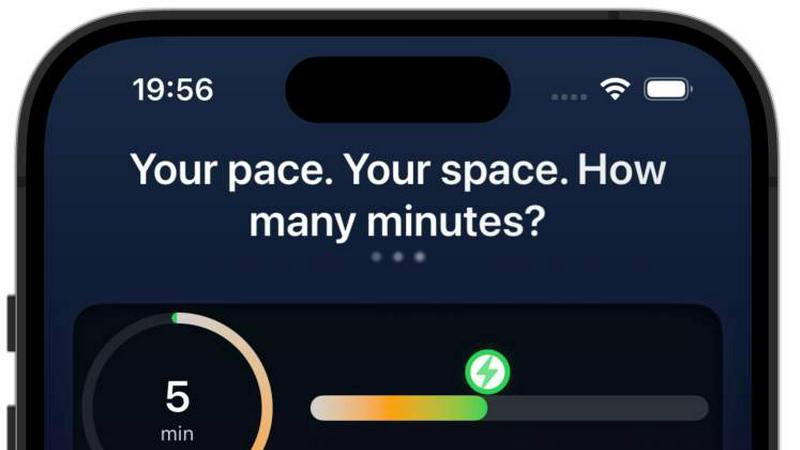
RazFit is an AI-powered personal trainer that delivers personalized, equipment-free bodyweight workouts with video guidance and progress tracking.
Last updated: March 18, 2026
Visual Comparison
OpenMark AI
RazFit
Overview
About OpenMark AI
OpenMark AI is a web application for task-level LLM benchmarking. You describe what you want to test in plain language, run the same prompts against many models in one session, and compare cost per request, latency, scored quality, and stability across repeat runs, so you see variance, not a single lucky output.
The product is built for developers and product teams who need to choose or validate a model before shipping an AI feature. Hosted benchmarking uses credits, so you do not need to configure separate OpenAI, Anthropic, or Google API keys for every comparison.
You get side-by-side results with real API calls to models, not cached marketing numbers. Use it when you care about cost efficiency (quality relative to what you pay), not just the cheapest token price on a datasheet.
OpenMark AI supports a large catalog of models and focuses on pre-deployment decisions: which model fits this workflow, at what cost, and whether outputs are consistent when you run the same task again. Free and paid plans are available; details are shown in the in-app billing section.
About RazFit
RazFit is a sophisticated, native iOS fitness application engineered exclusively with SwiftUI for iPhone and iPad, requiring iOS 18 or later. It is a comprehensive fitness solution designed to deliver measurable physical transformation through high-intensity, bodyweight interval training (HIIT) protocols condensed into 1 to 10-minute daily sessions. The core value proposition is maximum efficiency: it eliminates the need for gym access, specialized equipment, or significant time commitments. The application is architected for a broad user demographic, from fitness novices seeking an accessible entry point to advanced athletes requiring a time-efficient maintenance or conditioning tool. Its technical foundation in SwiftUI ensures a fluid, responsive, and deeply integrated user experience that leverages the full performance capabilities of modern iOS hardware. Central to its functionality is an adaptive AI coaching system featuring two virtual trainers, Orion and Lyss, which conduct initial fitness assessments and dynamically modulate exercise difficulty and selection. This is complemented by a structured gamification layer comprising 32 unlockable achievement milestones, engineered to sustain user engagement over a longitudinal 52-week training cycle. Every prescribed exercise includes scalable modifications, allowing for precise user-controlled progression.