
Agent to Agent Testing Platform vs Pathoura
Side-by-side comparison to help you choose the right tool.

Agent to Agent Testing Platform
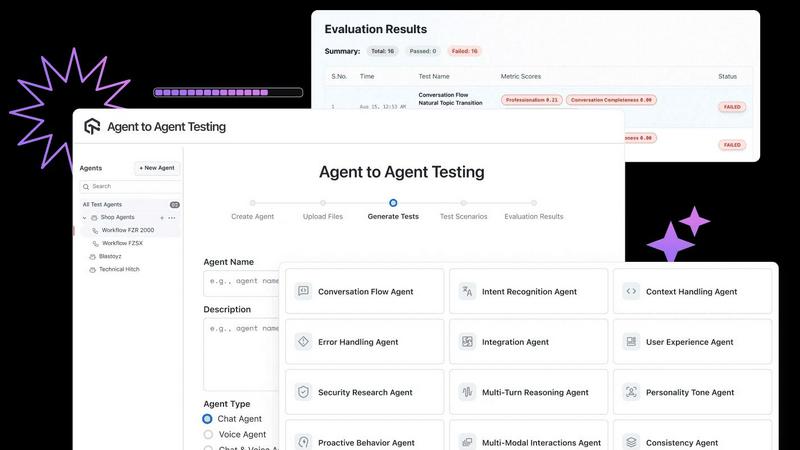
The Agent to Agent Testing Platform validates AI agent behavior across chat, voice, and multimodal systems for security.
Last updated: February 26, 2026

Pathoura
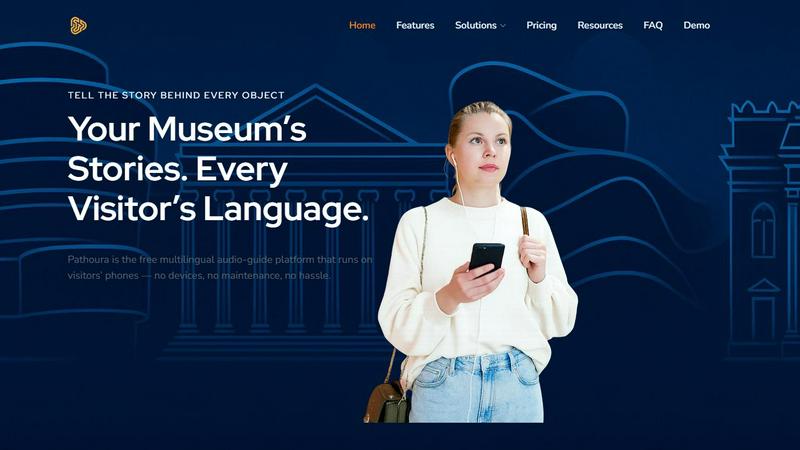
Pathoura creates AI-powered multilingual audio guides for museums that run instantly on visitors' smartphones.
Last updated: March 1, 2026
Visual Comparison
Agent to Agent Testing Platform
Pathoura
Feature Comparison
Agent to Agent Testing Platform
Automated Scenario Generation
This feature allows for the automated creation of diverse test cases that simulate real-world interactions for AI agents. By generating scenarios for chat, voice, and hybrid modalities, the platform ensures comprehensive coverage of various interaction possibilities.
True Multi-Modal Understanding
The platform enables users to define detailed requirements or upload Product Requirement Documents (PRDs) that include diverse inputs such as images, audio, and video. This capability allows for a more accurate assessment of how agents respond to a wide range of stimuli reflective of real-world scenarios.
Autonomous Test Scenario Generation
Users can access an extensive library of hundreds of pre-defined scenarios or create custom test scenarios. This flexibility allows organizations to evaluate AI agents based on specific attributes such as personality tone, data privacy compliance, and intent recognition.
Diverse Persona Testing
By leveraging multiple personas, the platform simulates varied end-user behaviors and interactions. This ensures that AI agents are tested for effectiveness across different user types, such as International Callers or Digital Novices, thus facilitating a more comprehensive evaluation.
Pathoura
AI-Powered Translation & Narration
This feature automates the entire audio content production pipeline. The AI translation engine adapts original exhibit scripts into over 20 target languages, handling contextual and cultural nuances. Subsequently, a natural-sounding text-to-speech (TTS) voice narration engine generates high-quality, expressive audio files in each language. The process allows for previewing and manual editing of both text and audio outputs before final publication, ensuring accuracy and desired tonal quality without external studio resources.
Zero-Installation Visitor Access
Pathoura delivers audio guides through a fully responsive web application that runs directly in a mobile browser. Visitors gain instant access by scanning a dynamically generated QR code placed at an exhibit or by entering a short exhibit number into a shared web link. This methodology eliminates the friction of app store downloads, device compatibility checks, and on-site hardware distribution, sanitization, and charging logistics, providing a immediate and contactless experience.
Centralized Content Management Dashboard
The platform provides institutions with a comprehensive web-based administrative dashboard for end-to-end guide management. Users can create and organize exhibits into thematic tours or physical zones, upload and manage supporting images and text, batch-process translations, monitor publication status, and update content in real-time. This centralized control panel enables non-technical staff to manage the entire audio guide ecosystem without requiring coding or IT support.
Integrated Monetization & Analytics Tools
Pathoura includes configurable tools to help institutions generate revenue directly from their audio guides. Features include the ability to "gate" tours behind a paywall or suggested donation prompt before access is granted. The platform also provides basic analytics on tour usage, such as visitor engagement metrics and language preference data, offering insights to inform future content and operational strategies.
Use Cases
Agent to Agent Testing Platform
Quality Assurance for Enterprises
Enterprises deploying AI agents can utilize the platform to ensure that their agents perform reliably and meet business standards before rollout. This is crucial for maintaining customer satisfaction and safeguarding brand reputation.
Enhancing User Experience
The platform allows organizations to assess how AI agents interact with users across different modalities. By testing under various scenarios, businesses can refine agent responses, leading to improved user interaction and satisfaction.
Compliance and Risk Management
With built-in validation for policy violations and escalation logic, the platform helps organizations ensure their AI agents comply with regulatory standards. This is particularly vital for industries with stringent compliance requirements, such as finance and healthcare.
Performance Optimization
The platform enables regression testing, providing insights into potential areas of concern. This helps organizations prioritize critical issues and optimize their testing efforts, ensuring that AI agents continuously improve in their performance.
Pathoura
Rapid Deployment for Temporary Exhibitions
Museums hosting short-term or traveling exhibitions can use Pathoura to quickly develop and deploy a professional multilingual audio guide. The AI-driven workflow allows curators to write scripts, generate translations and narrations, and publish a complete guide within days or even hours, perfectly aligning with tight exhibition schedules without committing to permanent hardware infrastructure.
Enhancing Accessibility for Multilingual Audiences
Institutions located in tourist destinations or diverse communities can utilize Pathoura to effortlessly offer inclusive interpretation. By providing immediate access to guides in 20+ languages, sites can cater to international visitors and non-native speakers, breaking down language barriers and significantly improving the educational value and engagement for a global audience.
Modernizing Legacy Hardware Systems
Venues burdened by aging, proprietary audio guide hardware can transition to a sustainable, smartphone-based model with Pathoura. This use case eliminates ongoing costs related to device repair, replacement, battery management, and storage, while simultaneously upgrading the visitor experience to a more modern, flexible, and hygienic standard.
Enabling Revenue Generation from Digital Content
Small to mid-sized institutions or heritage sites with limited funding can implement Pathoura's monetization features to create a new revenue stream. By setting a small fee or suggesting a donation for premium audio guide content, organizations can generate sustainable income to support their operational and conservation efforts directly from their visitor offerings.
Overview
About Agent to Agent Testing Platform
Agent to Agent Testing Platform is an innovative AI-native quality and assurance framework that revolutionizes how AI agents are validated in real-world scenarios. As artificial intelligence systems evolve into more autonomous entities, traditional quality assurance (QA) models that are designed for static software become inadequate. This platform is uniquely designed to engage in comprehensive testing, evaluating full multi-turn conversations across various modalities including chat, voice, and phone interactions. Targeted at enterprises deploying AI agents, this platform ensures that the behavior and performance of these agents are thoroughly vetted before they are rolled out into production environments. By introducing advanced multi-agent test generation using over 17 specialized AI agents, it identifies long-tail failures and edge cases that manual testing often overlooks, providing organizations with the confidence that their AI agents will operate reliably and effectively.
About Pathoura
Pathoura is a professional-grade, software-as-a-service (SaaS) platform engineered to modernize and democratize audio guide delivery for cultural institutions. It is specifically designed for museums, art galleries, historical sites, and heritage venues seeking to replace or augment traditional hardware-based audio guide systems. The platform's core value proposition lies in its elimination of capital expenditure and logistical complexity by leveraging visitors' personal smartphones as the delivery medium. Pathoura integrates advanced artificial intelligence to automate the two most resource-intensive production workflows: multilingual translation and voice narration. This enables institutions to rapidly produce and publish natural-sounding audio content in over 20 languages without the need for professional translators, voice actors, or recording studios. The system operates on a streamlined create-translate-share model, managed through a central web dashboard. Visitors access guides instantly via QR code scans or direct web links, requiring no app downloads. Additional functionalities include built-in content management, tour structuring by zones or themes, and integrated monetization tools such as tour gating and donation prompts. Pathoura is architected for scalability, serving organizations of all sizes while significantly reducing operational overhead, maintenance costs, and environmental impact associated with physical hardware.
Frequently Asked Questions
Agent to Agent Testing Platform FAQ
What types of AI agents can be tested using this platform?
The Agent to Agent Testing Platform supports a variety of AI agents, including chatbots, voice assistants, and phone caller agents, providing a comprehensive testing solution across different modalities.
How does the platform ensure the accuracy of AI agent behavior?
The platform utilizes advanced multi-agent test generation and autonomous synthetic user testing to simulate thousands of production-like interactions, ensuring that AI agent behavior is accurately evaluated under varied real-world conditions.
Can organizations create custom test scenarios?
Yes, organizations can create custom scenarios to evaluate their AI agents based on specific needs or requirements, in addition to accessing a library of hundreds of pre-defined scenarios.
What metrics can be evaluated with this platform?
The platform provides insights on several key metrics, including bias, toxicity, hallucination, effectiveness, empathy, and professionalism, enabling organizations to comprehensively assess their AI agents.
Pathoura FAQ
How does the AI-generated narration quality compare to human voice actors?
Pathoura utilizes state-of-the-art neural text-to-speech engines that produce highly natural and expressive voice output. The narration supports multiple accents, genders, and speaking styles within each language. While distinct from a bespoke studio recording with a professional actor, the quality is designed for clarity, pleasant listening, and scalability, allowing for affordable production of content in numerous languages that would otherwise be cost-prohibitive.
Do visitors need an internet connection to use the audio guide?
Yes, an active internet connection (Wi-Fi or cellular data) is required for the visitor's smartphone to initially load the guide's web interface and stream the audio content. Once loaded, some elements may be cached for smoother playback. Institutions are encouraged to provide complimentary guest Wi-Fi to ensure a seamless experience for all visitors.
What kind of technical setup is required for my institution?
Virtually no technical setup is required. The institution needs only an administrative staff member with internet access to manage the Pathoura web dashboard. On-site, the requirement is to print and display QR codes or exhibit numbers alongside your artifacts. There is no need to install software, servers, or networking equipment specifically for the audio guide system.
Can I use my existing audio scripts or recordings with Pathoura?
Yes, the platform is designed for flexibility. You can manually input or copy existing text scripts into the dashboard for AI translation and narration. Furthermore, the system allows for the direct upload of pre-recorded audio files (e.g., from a voice actor) for specific exhibits or languages, giving you full control over the final auditory output where desired.
Alternatives
Agent to Agent Testing Platform Alternatives
Agent to Agent Testing Platform is an innovative AI-native quality assurance framework designed specifically for validating the behavior of AI agents across various communication modalities, including chat, voice, and phone systems. Its primary purpose is to detect security and compliance risks that may arise in real-world interactions, particularly as AI systems become more autonomous and complex. Users typically seek alternatives to this platform for reasons such as pricing considerations, specific feature requirements, or compatibility with their existing technology stacks. When choosing an alternative to the Agent to Agent Testing Platform, it's essential to evaluate several key factors. Look for platforms that offer comprehensive multi-turn conversation testing capabilities, robust support for autonomous synthetic user testing, and effective mechanisms for validating AI behavior in real-world scenarios. Additionally, ensure that the alternative can meet your organization's specific needs regarding scalability, traceability, and compliance validation.
Pathoura Alternatives
Pathoura is a SaaS platform in the AI Assistants category, specifically engineered to modernize audio-guide delivery for museums and cultural institutions. It leverages artificial intelligence to automate the translation and narration of tour content, enabling organizations to create and manage multilingual audio experiences that visitors access directly via their smartphones. Users may explore alternatives to Pathoura for several reasons, including budget constraints, specific feature requirements not covered by the platform, or a need for a different deployment model. Some institutions might prioritize deeper hardware integration, require a different set of supported languages, or seek a solution with a different pricing structure or customer support approach. When evaluating an alternative, key considerations should include the core AI capabilities for translation and voice synthesis, the scalability and ease of the content management system, the flexibility of the visitor access model, and the robustness of built-in monetization tools. The chosen platform should align with the institution's technical capacity, operational workflow, and strategic goals for visitor engagement and revenue generation.