dmaya vs Postproxy
Side-by-side comparison to help you choose the right tool.

dmaya
dMaya is an AI design platform for agencies that generates production-ready UI designs and exports them to code.
Last updated: April 13, 2026

Postproxy
Postproxy simplifies multi-platform publishing by unifying API access and managing platform-specific challenges.
Last updated: February 26, 2026
Visual Comparison
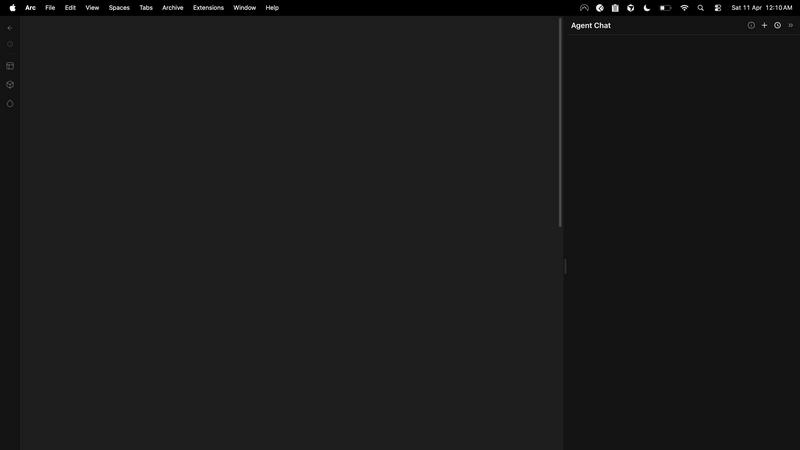
dmaya
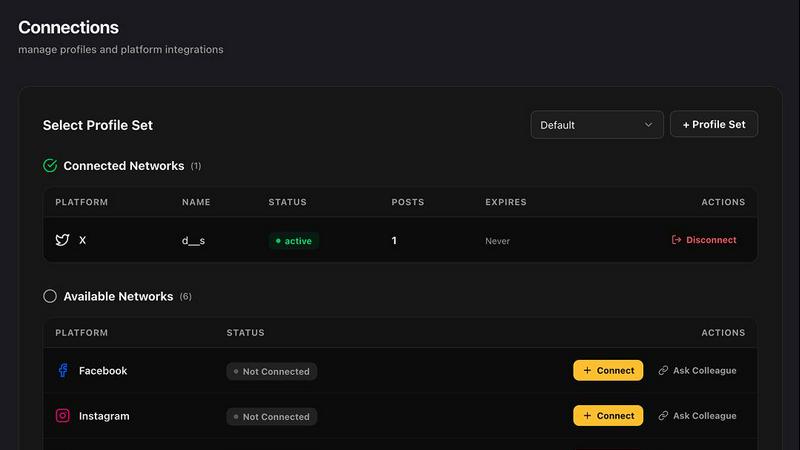
Postproxy
Feature Comparison
dmaya
Conversational AI Design Generation
This core feature allows users to generate initial UI designs by describing their vision in plain English. Input a prompt for a specific interface, such as "a minimalist SaaS admin dashboard with dark mode," and dMaya's AI agent will produce a complete set of screens with coherent layouts, component systems, and responsive considerations. The generation process accounts for standard UI patterns and design principles, delivering a professional starting point in seconds, drastically reducing the time from concept to visual prototype.
Real-Time Conversational Iteration
Beyond initial generation, dMaya enables detailed refinement through an integrated chat interface. Designers can instruct the AI to make precise modifications using natural language, such as "swap the primary color to a blue palette," "convert this layout to a three-column grid," or "add a user profile section to the top navbar." Every change is applied instantly and accurately across the design, with underlying design tokens ensuring visual consistency is automatically maintained throughout all screens and components.
Client Presentation & Feedback Portal
dMaya streamlines the client review process by allowing designers to share projects via a simple, secure URL. Clients can view interactive, browser-based previews of the designs without needing to create an account. They can leave contextual feedback directly on the designs. This functionality consolidates the entire approval cycle within the platform, turning a process that traditionally takes days of email exchanges and meetings into one that can be completed in minutes, with all feedback tracked and actionable.
Design-to-Code Export for AI Development
Once a design is approved, dMaya provides a one-click export function that outputs production-ready front-end code. The export includes clean, well-structured HTML, CSS, and JavaScript that accurately reflects the visual design. This code is specifically formatted to be optimally consumed by AI coding assistants and agents like Claude Code, Cursor, or GitHub Copilot, enabling a seamless handoff for developers to build the final product in any modern framework like React, Next.js, or Flutter.
Postproxy
Unified API Endpoint
Postproxy provides a single API endpoint that simplifies the publishing process across various social media platforms. This eliminates the need for multiple integrations and reduces the risk of platform-specific failures, streamlining the workflow for developers.
Automatic Content Adaptation
The service automatically transforms content to conform to the unique requirements of each platform, including format adjustments and media limitations. This ensures that posts appear correctly and effectively across different social networks without manual intervention.
Robust Error Handling
Postproxy includes advanced error handling mechanisms that manage retries, rate limits, and quotas seamlessly. Users can trust that failures are dealt with systematically, allowing for a smoother publishing experience without extensive troubleshooting.
Comprehensive Analytics
Built-in analytics features provide users with insights into their publishing performance across platforms. This data is crucial for understanding engagement metrics and optimizing future content strategies, helping users make informed decisions based on real-time information.
Use Cases
dmaya
Agency Client Pitches and Concepting
Agencies can use dMaya to rapidly visualize client ideas during discovery calls or pitch meetings. By generating multiple high-fidelity design directions from a brief in real-time, agencies can demonstrate capability and align on visual direction faster. This accelerates the sales cycle, improves win rates, and provides tangible assets for proposals and statements of work, all before committing significant internal resources to detailed design work.
Product Team UI Exploration and Prototyping
Product managers and designers can leverage dMaya to explore diverse UI solutions for new features or products without extensive manual design work. The platform allows for quick A/B testing of different layouts, color schemes, and information architectures. This enables data-informed visual decisions early in the product lifecycle, ensuring engineering resources are only committed to building well-validated and stakeholder-approved interfaces.
Freelancer Project Delivery and Scalability
Freelancers and independent contractors can utilize dMaya to increase their project throughput and service offerings. The tool enables a single designer to handle the ideation, iteration, and client approval phases for multiple projects concurrently with greater speed. This efficiency allows freelancers to take on more work or deliver higher-fidelity results in less time, directly increasing their earning potential and competitive advantage.
Cross-Functional Team Alignment and Handoff
dMaya serves as a single source of truth for design concepts within cross-functional teams. Designers, product managers, and engineers can collaborate in the shared workspace, review iterations, and leave comments. The definitive, approved design and its accompanying exported code package create a clear, unambiguous handoff point from design to development, reducing misinterpretation and rework.
Postproxy
Streamlined Publishing for Agencies
Agencies managing multiple client accounts can leverage Postproxy to publish content across various platforms with a single integration. This reduces the complexity of managing multiple social media accounts and allows for efficient content deployment.
Automated Content Distribution
Businesses using AI-generated content can automate the distribution process using Postproxy. By integrating with LLMs and workflow automation tools, companies can publish high volumes of content consistently and reliably without manual oversight.
Multi-Channel Marketing Campaigns
Marketers can utilize Postproxy to execute comprehensive multi-channel campaigns, ensuring that their messaging is consistent across all platforms. This unified approach helps maintain brand integrity and improves engagement with target audiences.
Simplified Social Media Management
For individuals or teams managing personal brands or small businesses, Postproxy allows easy scheduling and publishing of posts across social media platforms. This simplifies the social media management process and frees up time for creative tasks.
Overview
About dmaya
dMaya is a professional AI-powered design platform engineered specifically for agencies, product teams, and freelancers who operate within a client-driven, design-first workflow. It addresses a critical gap in the current AI tool landscape, which often bypasses visual design to generate code directly. dMaya reinstates the essential design phase, enabling teams to make intentional visual decisions, align stakeholders, and secure approvals before any development begins. The core value proposition lies in its conversational AI interface that generates complete, professional UI designs from text descriptions. Users can describe a SaaS dashboard, e-commerce user flow, or mobile application and receive polished, multi-screen designs in seconds. The platform facilitates rapid iteration through natural language commands to adjust colors, layouts, typography, and components. Once a design is finalized, it can be shared via a client-ready preview link for feedback and approval, eliminating lengthy review cycles. Finally, approved designs are exported as clean, structured HTML, CSS, and JavaScript code, ready to be handed off to AI coding agents like Cursor or Claude Code for implementation in frameworks such as React, Next.js, or Flutter. dMaya is built for speed, collaboration, and precision, ensuring teams can present, approve, and ship with confidence.
About Postproxy
Postproxy is a powerful API designed to streamline social media publishing across multiple platforms, including Instagram, Facebook, YouTube, LinkedIn, and X. By offering a single, unified endpoint, Postproxy eliminates the complexities associated with managing individual platform integrations. This tool is specifically built for developers and automation enthusiasts utilizing platforms like n8n, Zapier, and CI/CD systems. With Postproxy, users can automate OAuth processes, handle rate limits, and manage retries, all while ensuring content is adapted to meet each platform's unique requirements. The main value proposition lies in its ability to transform social media publishing into a predictable, reliable infrastructure, allowing users to focus on content creation rather than the intricacies of platform-specific rules. Whether you are a small business or a large enterprise, Postproxy enables scalable publishing solutions with minimal operational overhead, making it easier to distribute content widely and efficiently.
Frequently Asked Questions
dmaya FAQ
How does dMaya differ from other AI design tools?
dMaya is purpose-built for professional, client-facing workflows where design approval precedes development. Unlike tools that generate code directly, dMaya focuses on producing high-fidelity visual designs that can be presented, iterated upon, and formally approved. It includes client collaboration features like shareable preview links and feedback collection, which are essential for agencies and teams but absent in most AI tools aimed at solo builders.
What kind of code does dMaya export?
dMaya exports clean, vanilla front-end code consisting of semantic HTML, CSS (including Flexbox/Grid for layout), and JavaScript for basic interactivity. The code is not tied to a specific framework but is structured and commented to be easily interpreted and adapted by AI coding agents or developers into any target framework such as React, Next.js, Vue, or Flutter.
Can I collaborate with my team on dMaya?
Yes, dMaya includes built-in team collaboration features. You can invite team members to projects with role-based permissions, work together in real-time on the same canvas, and use comment threads for discussion. This makes it suitable for design teams, product squads, and agency groups needing a shared environment for creation and review.
Do clients need a dMaya account to review designs?
No, clients and external stakeholders do not require any account to review designs. Designers simply generate a shareable preview link from within a dMaya project and send it to their clients. Clients can view the design in their web browser, interact with it, and leave feedback directly on the design without any login or software installation.
Postproxy FAQ
What types of platforms does Postproxy support?
Postproxy currently supports major social media platforms including Instagram, Facebook, YouTube, LinkedIn, and X. This allows for a broad reach when publishing content.
How does Postproxy handle authentication?
Postproxy automates the OAuth authentication process, managing token storage and refresh cycles to ensure seamless access to social media accounts without manual intervention.
Is there a free plan available?
Yes, Postproxy offers a free plan that allows users to get started without a credit card. This is ideal for individuals and small teams looking to test the service before committing to a paid plan.
Can I track the performance of my posts?
Absolutely. Postproxy includes analytics features that provide insights into the performance of your published content across all supported platforms, helping you understand engagement and optimize future posts.
Alternatives
dmaya Alternatives
dmaya is an AI-powered vibe design platform that operates within the design-to-code software category. It enables agencies, teams, and freelancers to generate, iterate, and finalize professional UI designs through conversational AI before exporting clean, production-ready code. This process bridges the critical gap between conceptualization and development, ensuring visual and functional alignment before any engineering resources are committed. Users may explore alternatives to dmaya for various practical reasons. Common considerations include budget constraints and specific pricing models, the need for different feature sets or integration capabilities, and platform requirements such as operating system compatibility or collaboration tools. The search often stems from a need to find a tool that aligns precisely with a team's existing workflow, technical stack, or project scope. When evaluating an alternative design platform, key criteria should include the fidelity and control of the AI-generated output, the efficiency of the client review and approval cycle, and the quality and framework specificity of the exported code. The ideal solution should not only accelerate the initial design phase but also seamlessly integrate into the subsequent development pipeline without creating technical debt or requiring significant rework.
Postproxy Alternatives
Postproxy is a unified API solution designed for seamless social media publishing across multiple platforms, including Instagram, Facebook, YouTube, LinkedIn, and X. It simplifies the complexities of social media management by automating tasks like OAuth, rate limiting, content adaptation, and analytics, allowing developers to focus on efficient publishing rather than dealing with the intricacies of each platform individually. Users often seek alternatives to Postproxy for various reasons, such as pricing models, specific feature sets, or unique platform needs that may not be fully addressed by Postproxy. When considering an alternative, it's essential to evaluate factors such as API reliability, scalability, ease of integration with existing workflows, and the extent of support provided for different social media networks. Understanding these elements will help ensure that the chosen solution aligns well with a user's operational requirements.