Dokie AI vs Proofapp
Side-by-side comparison to help you choose the right tool.

Dokie AI
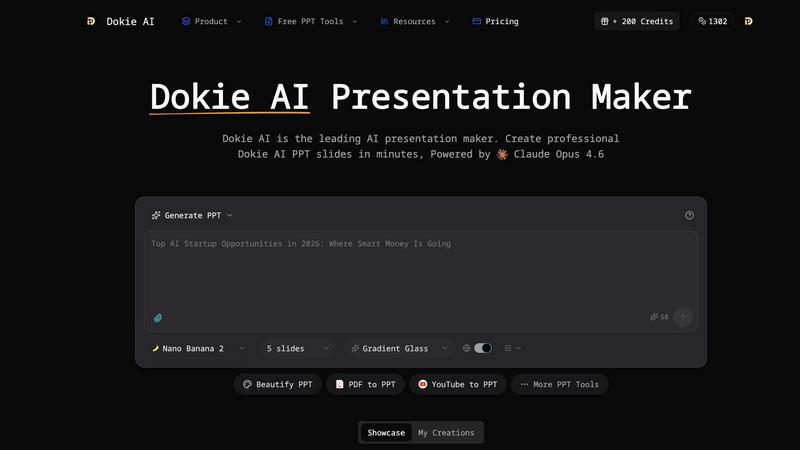
Dokie AI enables users to effortlessly create and enhance professional PPT slides in minutes, powered by Claude Opus 4.6 technology.
Last updated: March 19, 2026

Proofapp
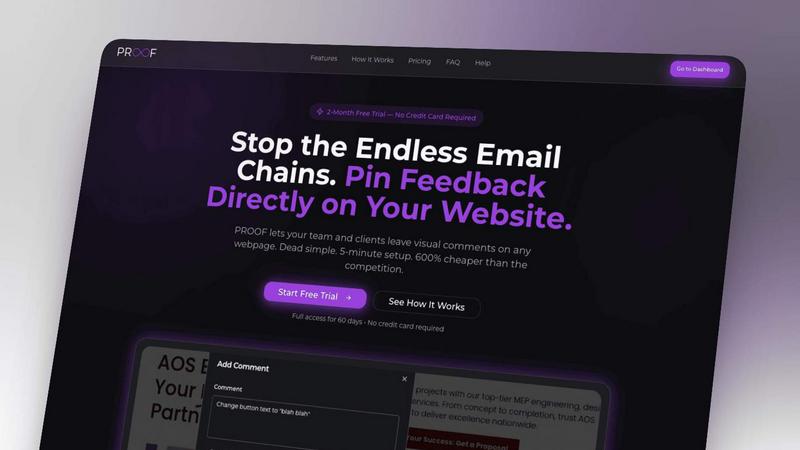
Proofapp enables visual feedback directly on webpages to eliminate miscommunication and streamline design reviews.
Last updated: March 4, 2026
Visual Comparison
Dokie AI
Proofapp
Feature Comparison
Dokie AI
AI Generate PPT
The AI Generate PPT feature allows users to simply describe their presentation topic in plain text. Dokie AI then uses advanced algorithms to create a complete slide deck that includes professional layouts, engaging charts, and compelling content tailored to the topic. This feature is designed to save time while ensuring high-quality results, making it ideal for users who need to produce presentations quickly and efficiently.
AI Beautify PPT
With the AI Beautify PPT feature, users can upload existing presentations and let Dokie AI enhance their design. The AI automatically fixes layouts, applies professional styling, and enhances the overall visual appeal, all while preserving the original content. This feature is particularly useful for users who have existing slides that lack visual impact and want to elevate their presentation's professionalism without starting from scratch.
Speech Notes Generation
Dokie AI's Speech Notes Generation feature automatically creates detailed speaker notes for each slide, providing users with comprehensive talking points. This functionality enhances presentation delivery by ensuring that users have all necessary information at their fingertips, allowing for a more confident and engaging presentation experience.
Multi-format Conversion
Dokie AI supports a range of document-to-PPT conversions, including PDF to PPT, Word to PPT, and HTML to PPT. This feature enables users to easily transform various types of documents and content into professional presentations. By simplifying the conversion process, Dokie AI ensures that users can repurpose their existing content seamlessly and efficiently.
Proofapp
Automated Multi-Breakpoint Capture
Upon submission of a target URL, Proofapp's system automatically initiates a capture sequence to generate pixel-accurate screenshots. This process is configured to execute at standard desktop and mobile viewport dimensions, ensuring that feedback can be contextualized for responsive design behavior. Users are not required to manually take or upload screenshots, which standardizes the review asset and guarantees all stakeholders are evaluating identical visual states. This automated capture protocol is fundamental for conducting thorough cross-device compatibility and layout reviews within a single project environment.
Visual Contextual Commenting
The platform's primary interaction model is based on direct visual annotation. Reviewers can click on any precise coordinate within the captured screenshots to anchor a comment pin. This action initiates a comment thread that is spatially locked to that location, providing absolute clarity regarding the feedback's context. Each thread supports rich text commentary, @mentions for user notification, and reply nesting. This feature technically eliminates the need for verbose positional descriptions (e.g., "top left near the logo") and prevents the common misinterpretation associated with textual feedback alone.
Secure, Account-Free Client Sharing
Proofapp facilitates external collaboration through a secure link-sharing system. Project owners can generate unique, shareable URLs that grant designated clients or stakeholders view and comment access. A critical configuration is that recipients are not mandated to register for a Proofapp account, streamlining the feedback collection process. These share links can be configured with expiration timelines and access controls, providing a balance between convenience and project security. This architecture is designed specifically to simplify the client-review phase without compromising administrative oversight.
Integrated Feedback Resolution Workflow
The platform incorporates a structured workflow system to manage feedback from inception to closure. Each comment thread features a resolution status toggle, allowing team members to mark items as "Resolved." This creates an actionable checklist within the project dashboard, providing clear visibility into pending and completed tasks. The system supports real-time updates, so all collaborators see status changes instantly without page refresh. This formalized tracking mechanism replaces ad-hoc methods like spreadsheets or email tags, offering a systematic approach to handling revision requests and ensuring no feedback item is overlooked.
Use Cases
Dokie AI
Business Presentations
Professionals in various industries can utilize Dokie AI to create impactful business presentations that clearly convey ideas and strategies. The platform's AI-generated content and design ensure that presentations are not only visually appealing but also tailored to specific business needs.
Educational Lectures
Educators can leverage Dokie AI to generate lecture slides that enhance classroom engagement. By converting lecture notes or topics into presentations, instructors can create informative and visually dynamic materials that help students better understand complex subjects.
Marketing Campaigns
Marketing professionals can benefit from Dokie AI by creating compelling presentations for campaigns, product launches, or pitch decks. The AI's ability to generate relevant content and design ensures that marketing materials are persuasive and professionally crafted.
Startup Pitches
Startup founders can use Dokie AI to prepare investor pitch decks that communicate their business vision effectively. The AI's capabilities allow users to quickly generate professional presentations that align with investor expectations and highlight key aspects of their startup.
Proofapp
Agency-Client Website Approval
Digital and marketing agencies utilize Proofapp to manage the website review and sign-off process with their clients. By sharing a secure project link, agencies can present design mockups or live development sites. Clients can then leave precise visual feedback directly on the elements in question, such as button placement, color schemes, or typography. This centralized system replaces chaotic email chains and confusing screen recordings, providing a clear, auditable trail of all client requests and significantly accelerating the final approval and launch timeline.
In-House Development Team Collaboration
Internal product development teams employ Proofapp for cross-functional reviews during sprint cycles. Front-end developers can share a feature branch URL with designers and product managers for pre-deployment review. Designers can verify implementation fidelity against original specs by pinning comments on any discrepancies, while QA testers can log visual bugs directly on the interface. This use case consolidates feedback from various disciplines into one platform, fostering clearer communication and ensuring visual and functional issues are identified and addressed before production deployment.
Freelancer Project Management
Freelance designers and developers leverage Proofapp to present work and collect revisions from their clients in a professional, organized manner. The tool eliminates the back-and-forth of "screenshot tennis" via email or messaging apps. Freelancers can share a single link, and all client feedback is captured visually and contextually, reducing misinterpretation and revision rounds. This efficiency allows freelancers to manage more projects effectively, improve client satisfaction with a streamlined process, and dedicate saved time to billable design or development work.
Marketing Campaign Landing Page Reviews
Marketing teams use Proofapp to collaboratively review and optimize landing pages for campaigns, product launches, or A/B tests. Team members from copywriting, design, and growth marketing can all access the same live page, leaving targeted feedback on headlines, call-to-action buttons, form fields, and overall layout. The visual commenting ensures that suggestions are tied directly to the page element, making it easy for the developer or designer implementing changes to understand exactly what needs adjustment, thereby speeding up the iteration cycle for time-sensitive campaigns.
Overview
About Dokie AI
Dokie AI is an innovative AI-driven presentation maker designed to revolutionize how business professionals, educators, marketers, and startup founders create presentations. By leveraging advanced artificial intelligence, specifically the Claude Opus 4.6 model, Dokie AI automates the entire process of presentation creation, allowing users to generate polished and visually appealing slides without requiring any design skills. The platform stands out from traditional template-based tools by offering true AI content generation that meticulously handles slide structure, layout selection, typography, and visual design. With multiple operational modes such as Generate, Beautify, Speech, and document-to-PPT conversions, Dokie AI streamlines the workflow from concept to completion. The main value proposition lies in its ability to produce professional-grade presentations in minutes, making it an essential tool for anyone looking to enhance their communication and presentation effectiveness.
About Proofapp
Proofapp is a specialized visual feedback and collaborative review platform engineered to streamline the website and digital design approval process. It functions by allowing users to input any live website URL, upon which the platform automatically generates comprehensive screenshots at both desktop and mobile breakpoints. This creates a visual canvas where stakeholders can pin comments, annotations, and file attachments directly onto specific elements of the design. The core value proposition is the elimination of ambiguous, text-based feedback scattered across emails and messaging apps, replacing it with precise, contextual, and actionable visual commentary. Designed for a technical audience including UI/UX designers, front-end developers, digital agencies, marketing teams, and freelancers, Proofapp centralizes all project feedback into a single, organized dashboard. It supports real-time collaboration, threaded discussions, and feedback resolution workflows, significantly reducing revision cycles and miscommunication. A key operational specification is that external clients and reviewers can participate without needing to create an account, accessed via secure, expirable share links, lowering the barrier to entry for collaborative review.
Frequently Asked Questions
Dokie AI FAQ
What makes Dokie AI different from traditional presentation tools?
Dokie AI differentiates itself by using advanced AI technology to automate the entire presentation creation process. Unlike traditional template-based tools, it generates custom content, layouts, and designs tailored to the user's input, saving time and enhancing quality.
Can I use Dokie AI for enhancing existing presentations?
Yes, Dokie AI includes a Beautify feature that allows users to upload existing presentations and automatically enhance their design. This feature fixes layouts and applies professional styling while keeping the original content intact.
How does Dokie AI help with speaker notes?
Dokie AI automatically generates detailed speaker notes for each slide, providing users with essential talking points. This feature enhances presentation delivery by ensuring that users are well-prepared and confident during their presentations.
What types of documents can I convert to PPT using Dokie AI?
Dokie AI supports multiple document conversions, including PDF to PPT, Word to PPT, HTML to PPT, and more. This versatility allows users to easily transform various types of content into professional presentations without starting from scratch.
Proofapp FAQ
How does Proofapp capture website screenshots?
Proofapp utilizes a headless browser automation system to programmatically visit the URL you provide. It renders the page at predefined viewport sizes corresponding to standard desktop and mobile breakpoints. Once the page is fully loaded, the system captures a pixel-accurate screenshot of the viewport. This process happens on Proofapp's servers, requiring no software installation or browser extension from the user. It is designed to capture the page as it appears at the moment of the snapshot, including live content and dynamic elements that have loaded.
Do reviewers or my clients need to create an account?
No, external reviewers and clients do not require a Proofapp account to participate in the feedback process. As the project owner, you generate a secure, shareable link from within your Proofapp dashboard. You then distribute this link to your clients or team members. When they open the link, they are presented with the captured screenshots and can immediately begin leaving visual comments and participating in threads without any registration or login steps, streamlining the collaboration process significantly.
What kind of file attachments are supported in comments?
Proofapp's comment system supports the attachment of various file types to provide comprehensive context for feedback. Users can attach image files (e.g., PNG, JPG, GIF) to show visual references or alternatives. Document files such as PDFs, Word documents, or text files can also be attached for supplementary specifications or copy. There are also provisions for attaching design source files from tools like Figma or Sketch via cloud storage links or direct upload, ensuring all relevant assets are centralized within the feedback thread.
Is there integration with other tools like Slack or project management software?
Yes, Proofapp offers integration capabilities to connect the feedback workflow with other essential tools. A primary integration is with Slack, where teams can configure notifications to receive alerts in specific channels when new comments are posted or resolved on their Proofapp projects. While the provided context does not detail native integrations with specific project management software, the visual and textual data from Proofapp can be systematically used to create tasks in other systems, acting as a centralized source of truth for design and development feedback.
Alternatives
Dokie AI Alternatives
Dokie AI is an advanced AI presentation maker designed to streamline the creation of professional-grade presentations. It falls under the category of design tools, specifically focusing on generating PowerPoint slides with minimal effort from users. This tool is particularly beneficial for business professionals, educators, marketers, and startup founders who may lack design skills but require polished presentations quickly. Users often seek alternatives to Dokie AI for various reasons, including pricing structures, feature sets, and compatibility with specific platforms. When exploring alternatives, it is crucial to consider factors such as the ease of use, customization options, the quality of AI-generated content, and whether the tool supports unique presentation needs. A comprehensive evaluation of these aspects will help ensure that the chosen tool aligns well with the user's requirements and workflow.
Proofapp Alternatives
Proofapp is a specialized visual feedback and website review platform within the design tools category. It streamlines collaboration by allowing users to upload website URLs for automatic screenshot capture, enabling stakeholders to pin comments directly on designs and manage feedback threads without requiring accounts. Users may seek alternatives to Proofapp for various reasons, including specific budget constraints, the need for different feature sets such as native video review or advanced project management integrations, or requirements for deployment on a self-hosted or on-premise infrastructure. Platform compatibility and the scale of team collaboration are also common decision factors. When evaluating an alternative visual feedback solution, key criteria include the method of content capture (URL-based, file upload, screen recording), granularity of annotation tools, permission and guest access controls, and the depth of integration with existing project management and communication stacks. The pricing model's scalability relative to the number of active projects and reviewers is another critical technical consideration.