Nabbed vs Quickfix AI
Side-by-side comparison to help you choose the right tool.

Track jobs & contacts. Get AI intel. Autofill ATS.

Quickfix AI
Quickfix AI instantly diagnoses and explains your system's performance and health in plain English.
Last updated: February 28, 2026
Visual Comparison
Nabbed
Quickfix AI
Overview
About Nabbed
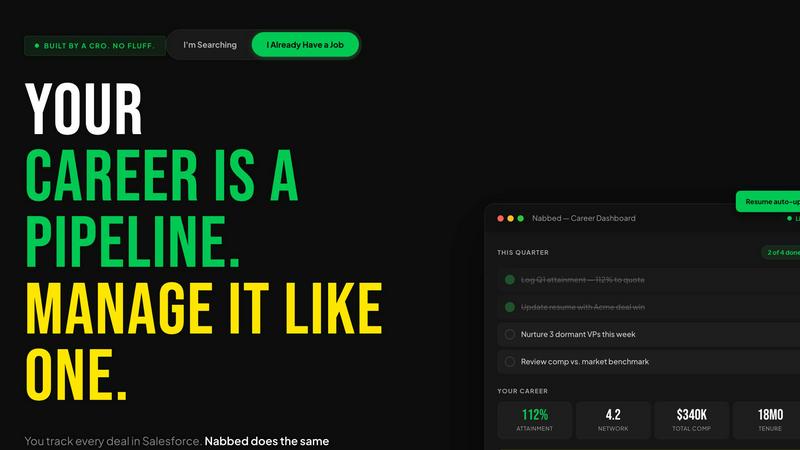
Nabbed is the first CRM built specifically for sales and revenue professionals managing their career. Track job applications in a visual pipeline, build a contact CRM with warm path mapping, get AI-powered company intelligence (funding, headcount, Glassdoor ratings), and autofill applications on 60+ ATS platforms with our Chrome extension. Features include Gmail auto-sync that detects interviews and rejections, hiring signal alerts when target companies are growing, interview prep with AI coaching, salary benchmarking with offer analysis, and a Job Fit Score that matches your profile to listings. Search 11 job sources at once including Google Jobs, Indeed, LinkedIn, and Glassdoor. Free tier available, Core at $19/mo.
About Quickfix AI
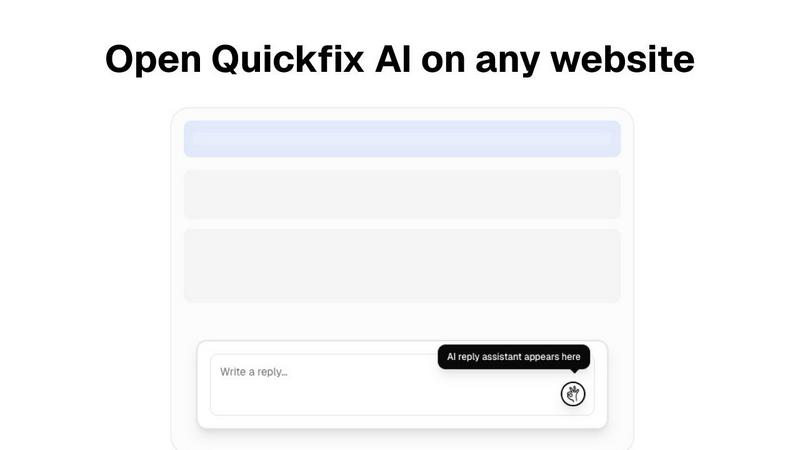
Quickfix AI is an advanced, AI-powered system diagnostics tool engineered to deliver immediate, comprehensive analysis of computer performance, health, and security. It functions as a lightweight software agent capable of executing a full system scan in under 60 seconds, generating a detailed report on all critical hardware and software components. The core innovation of Quickfix AI is its sophisticated AI engine, which transcends simple data aggregation. It interprets complex technical metrics—including CPU utilization, memory pressure, disk health (S.M.A.R.T. status), network throughput, battery cycles, and security posture—and translates them into plain-English explanations. This process demystifies system diagnostics for users of all technical proficiencies, providing not just raw data but context-specific, actionable recommendations for optimization and troubleshooting. Designed for cross-platform compatibility, it supports both Windows and macOS operating systems, consolidating the functionality of multiple specialized utilities into a single, intuitive interface. Its primary user base encompasses individual users troubleshooting performance degradation, tech enthusiasts and gamers monitoring system vitals, and IT support professionals who utilize its secure sharing code feature for efficient remote diagnostics.