rfpaihub vs TemplateFox
Side-by-side comparison to help you choose the right tool.

rfpaihub
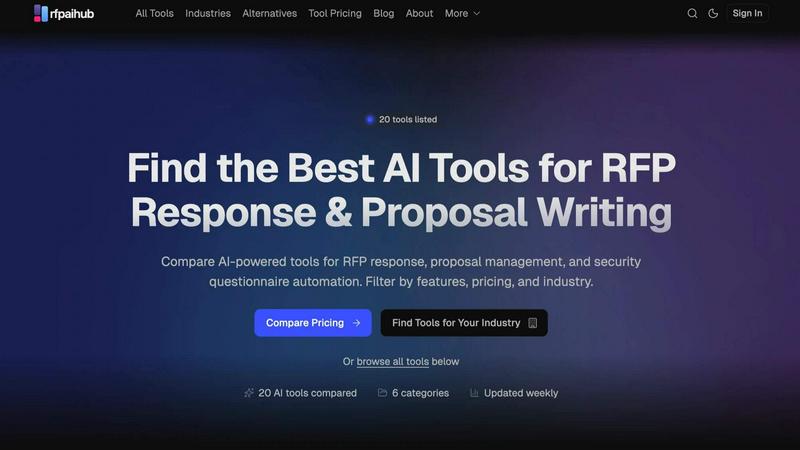
RFP AI Hub is a comprehensive directory for comparing AI-powered RFP response, proposal management, and security questionnaire automation tools.
Last updated: April 13, 2026

TemplateFox
TemplateFox is a visual PDF design platform with dynamic data binding and automated API generation.
Last updated: February 28, 2026
Visual Comparison
rfpaihub
TemplateFox
Feature Comparison
rfpaihub
Curated Tool Directory
The platform maintains a meticulously researched and regularly updated directory of AI-powered RFP and proposal software. Each tool listing includes detailed specifications, categorized features, and verified information to ensure users are comparing accurate and current data. This curation eliminates the need for manual web searches and unreliable third-party reviews.
Advanced Filtering System
Users can refine the tool database using multiple, simultaneous filters. Key filter criteria include software categories (e.g., RFP Response vs. Security Automation), specific features (like AI drafting or content library integration), target industry (such as SaaS, Healthcare, or Finance), and published pricing tiers. This granular filtering allows for highly targeted discovery based on precise workflow needs.
Comparative Analysis Framework
RFP AI Hub provides a structured framework for comparing tools side-by-side. This goes beyond basic feature lists to include practical differentiators relevant to response teams, enabling direct comparison of AI capabilities, integration options, collaboration features, and security protocols to identify the optimal solution for complex organizational requirements.
Vendor-Neutral Educational Content
The site supplements its directory with a dedicated blog and resource sections that offer unbiased educational content on selecting and implementing RFP technology. This includes guides on workflow assessment, ROI justification, and best practices for leveraging AI in proposal processes, positioning the hub as an authoritative source rather than a lead-generation portal.
TemplateFox
Visual Drag-and-Drop Template Designer
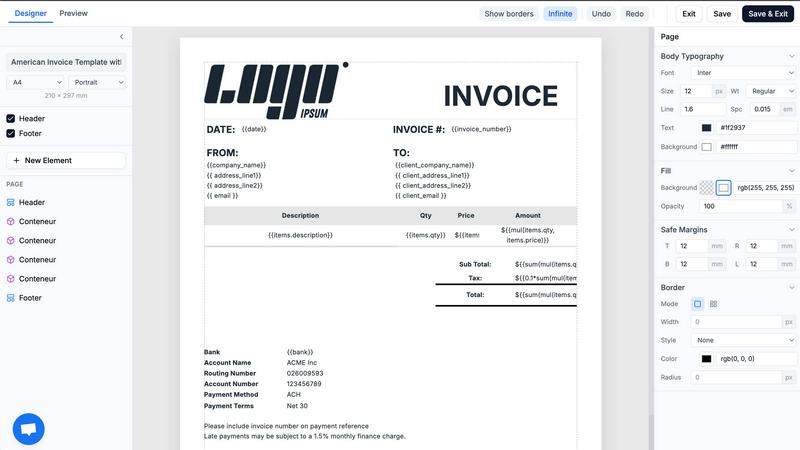
The platform features a fully visual, WYSIWYG (What You See Is What You Get) editor that allows users to construct professional PDF templates without writing a single line of code. Users can drag, drop, and configure various elements like text boxes, images, tables, and barcodes onto a canvas. Each component has a dedicated properties panel for fine-tuning styling, positioning, borders, and colors. This no-code design environment significantly reduces the time and technical expertise required to create complex, data-driven document layouts, making professional template creation accessible to a broader audience.
Dynamic Data Binding and Expressions
TemplateFox supports advanced dynamic data injection, moving beyond simple placeholder replacement. Users can bind template elements to variables from their JSON data payload. The system includes a powerful expression engine with over 100 built-in functions for formatting dates, calculating totals (e.g., sum, tax), rounding numbers, manipulating text, and implementing conditional logic. System variables such as {{sys.page_number}}, {{sys.total_pages}}, and {{sys.current_date}} are automatically available, enabling the creation of intelligent, context-aware documents that adapt their content based on the provided data.
Automated and Scalable PDF Generation API
At its core, TemplateFox provides a high-performance REST API for programmatic PDF generation. After designing a template, users can generate thousands of unique PDF documents by sending a POST request with a unique template ID and a JSON object containing the variable data. The API is designed for low latency, with typical generation times of 1-3 seconds, and can be integrated directly into applications, backend systems, or cron jobs. This feature is essential for automating document workflows at scale, such as bulk invoicing, certificate issuance, or report distribution.
No-Code Integrations and Smart Components
For users operating in no-code or low-code environments, TemplateFox offers direct integrations with platforms like Zapier, Make (Integromat), Airtable, Bubble, and FlutterFlow. This allows for the automation of PDF generation within existing workflows without manual intervention. Furthermore, the platform includes intelligent, data-aware components such as tables that automatically expand rows and span multiple pages based on the dataset, and built-in generators for scanner-ready QR codes and barcodes (Code128, EAN-13) that are rendered dynamically from input data.
Use Cases
rfpaihub
Procurement for Sales Operations Teams
Sales operations leaders tasked with selecting an enterprise RFP response platform can use RFP AI Hub to create a shortlist of qualified vendors. By filtering for tools with specific AI-matching algorithms, Salesforce integration, and enterprise-grade security, they can efficiently evaluate options that meet strict corporate procurement and technical requirements.
Tool Selection by Security & Compliance Teams
Security and compliance professionals overwhelmed by vendor security questionnaires (VSQs) and due diligence queries can utilize the directory to find specialized security questionnaire automation tools. They can filter for platforms with capabilities like automated mapping to frameworks (e.g., SOC 2, ISO 27001) and library management for standardized security responses.
Evaluation by Proposal Management Consultants
Independent consultants or agencies that manage proposals for multiple clients need to recommend tools appropriate for different business sizes and industries. RFP AI Hub allows them to quickly compare pricing models, feature sets, and industry specializations across the market to provide tailored, evidence-based recommendations to each client.
Market Research by Software Vendors
Competing software vendors in the RFP technology space can use the directory to conduct competitive analysis. The structured presentation of features and categories provides a clear overview of the competitive landscape, highlighting market gaps, feature differentiators, and prevailing pricing strategies within specific tool categories.
TemplateFox
Automated Invoice and Billing Systems
Businesses and SaaS platforms can integrate TemplateFox's API to automate their entire invoicing cycle. A template for a professional invoice is created once in the visual editor. The application's backend can then automatically generate and dispatch personalized PDF invoices by calling the API with customer data, line items, taxes, and totals after each transaction or on a monthly schedule. This eliminates manual design work, ensures brand consistency, and accelerates the accounts receivable process.
Mass Certificate and Document Generation
Educational institutions, training organizations, and event managers can use TemplateFox to generate certificates, diplomas, or participation letters in bulk. A master certificate template with dynamic fields for the recipient's name, course title, date, and a unique serial number (or QR code) is designed. By uploading a CSV list of recipients or connecting via an integration like Airtable, thousands of unique, personalized certificates can be produced and distributed automatically, saving immense administrative time and effort.
E-commerce Order Fulfillment Packing
E-commerce businesses can streamline their logistics by automating the creation of packing slips and shipping labels. A packing slip template can include the store logo, customer shipping address, order details, and a dynamically generated barcode for the tracking number. Integrated with an e-commerce platform via Zapier or a custom webhook, TemplateFox can instantly generate a PDF packing slip for each new order, ready to be printed and included in the shipment, improving operational efficiency.
Dynamic Business and Operational Reporting
Companies requiring regular operational or financial reports can leverage TemplateFox to transform raw data into formatted PDF documents. A report template with dynamic tables, charts (as images), headers, footers, and page numbers can be created. Backend systems can compile analytics data, call the TemplateFox API with this data, and produce a polished PDF report for stakeholders, executives, or regulatory bodies on a daily, weekly, or monthly basis, ensuring professional and consistent reporting.
Overview
About rfpaihub
RFP AI Hub is a specialized, free-to-use online directory dedicated to the systematic evaluation and comparison of AI-powered software tools designed for the request for proposal (RFP) response lifecycle, proposal management, and security questionnaire automation. The platform serves as a centralized resource for sales operations teams, proposal managers, security compliance officers, and business development professionals who are seeking to modernize and accelerate their response processes. Its core value proposition lies in its ability to cut through market noise by providing detailed, filterable listings that allow users to identify the most suitable software based on specific functional requirements, industry vertical, team size, and budget constraints. By aggregating and categorizing tools across six distinct categories—including RFP Response, Proposal Writing, Security Questionnaire Automation, Knowledge Base management, Document Generation, and Contract & Bid Management—RFP AI Hub enables informed procurement decisions, potentially reducing tool evaluation time by providing transparent, side-by-side comparisons of capabilities and pricing structures.
About TemplateFox
TemplateFox is a sophisticated Software-as-a-Service (SaaS) platform engineered for high-performance, automated PDF document generation. It provides a comprehensive solution for developers, indie hackers, and businesses to create, manage, and automate professional PDFs at scale. The core value proposition lies in its dual approach: a powerful, no-code visual template designer and a robust, developer-friendly API. Users can design dynamic PDF templates using an intuitive drag-and-drop WYSIWYG editor, eliminating the need for manual HTML or CSS coding. Once a template is designed, it can be populated with dynamic data and generated into a final PDF document through a simple REST API call or via popular no-code automation platforms like Zapier and Make. The service is architected for speed and reliability, delivering documents in 1-3 seconds, and is built to handle real-world document complexities such as multi-page tables, headers, footers, and embedded barcodes. With a free tier offering 100 PDFs per month, TemplateFox is an accessible yet powerful tool for streamlining document workflows for invoices, certificates, reports, packing slips, and more.
Frequently Asked Questions
rfpaihub FAQ
What types of tools does RFP AI Hub compare?
RFP AI Hub compares AI-powered software across six primary operational categories: RFP Response software, Proposal Writing and management platforms, Security Questionnaire Automation tools, Knowledge Base & Answer Library systems, Document Generation engines, and comprehensive Contract & Bid Management suites. This categorization helps users align their search with their core workflow.
How does the platform ensure the accuracy of its tool information?
The platform employs a documented methodology involving direct vendor submissions, verification of public information, and ongoing updates. Vendors are encouraged to submit their product details for review at no cost, and the editorial team cross-references this data with publicly available specifications on vendor websites and product documentation.
Is there a cost to use RFP AI Hub for browsing and comparison?
No, RFP AI Hub operates as a free directory for all end-users. Individuals and teams can browse the entire tool database, utilize all filtering and comparison features, and access educational blog content without any requirement to create an account or pay a subscription fee.
Can I submit a tool to be listed on RFP AI Hub?
Yes, software vendors are invited to submit their AI-powered RFP, proposal, or security questionnaire products for inclusion in the directory. The submission process is free of charge. The editorial team reviews each submission against the platform's inclusion criteria to ensure it fits the defined categories and offers relevant AI-driven functionality before listing.
TemplateFox FAQ
What programming languages can I use with the TemplateFox API?
The TemplateFox API is a standard REST API that uses JSON for requests and responses. It is language-agnostic, meaning you can integrate it with any programming language that can make HTTP requests, such as JavaScript (Node.js, frontend), Python, PHP, Java, C#, Go, or Ruby. Comprehensive API documentation with code examples is provided to facilitate integration into your existing tech stack.
Can I use my own fonts and logos in the templates?
Yes, the TemplateFox template designer allows you to upload and use custom fonts (in .ttf or .otf formats) and image files for logos and other graphics. Once uploaded, these assets are stored within your template and will be rendered correctly in the generated PDFs, ensuring full brand consistency across all your automated documents.
How does the dynamic table feature handle very large datasets?
The dynamic table component in TemplateFox is engineered to handle large volumes of data efficiently. When you bind an array of data to a table, it automatically creates a new row for each item. If the data exceeds the available space on a page, the table intelligently breaks and continues onto the next page, with optional configuration to repeat header rows on each subsequent page for clarity. This ensures clean, paginated output regardless of dataset size.
Is there a limit to the number of PDFs I can generate on the free plan?
The free plan, which requires no credit card, includes a quota of 100 PDF generations per month. This allows you to fully test the API, design templates, and integrate the service into a low-volume workflow. For higher volumes, paid subscription plans with increased monthly limits and additional features are available. Usage is tracked per calendar month.
Alternatives
rfpaihub Alternatives
RFP AI Hub is a specialized directory and comparison platform within the proposal management and productivity software category. It provides a centralized resource for teams to discover, evaluate, and compare AI-powered tools designed for RFP response, proposal creation, and security questionnaire automation. The platform allows users to filter options based on specific features, pricing models, and industry relevance to aid in the software selection process. Users often seek alternatives to any software directory, including RFP AI Hub, for several practical reasons. These can include the need for a platform with different curation criteria, more granular comparison metrics, or integration with existing procurement workflows. Budget constraints may also drive the search for free or lower-cost information sources, while some organizations require evaluation frameworks tailored to highly specific compliance or technical requirements. When evaluating an alternative resource, key considerations should include the depth and accuracy of the tool database, the recency and objectivity of the information provided, and the availability of detailed feature breakdowns. The ideal platform should offer transparent filtering capabilities that align with your team's primary needs, whether that's advanced AI functionality, robust security features, or specific integration capabilities, to ensure an efficient and informed decision-making process.
TemplateFox Alternatives
TemplateFox is a SaaS platform in the Productivity & Management category, specializing in the visual design and automated generation of professional PDF documents. It enables users to create templates via a drag-and-drop editor and produce documents dynamically through API calls or integrations like Zapier. Users may seek alternatives for various reasons, including specific budget constraints, the need for more advanced or different feature sets, or requirements for integration with a particular tech stack or hosting environment. The search often stems from evolving project needs that demand greater customization, different pricing models, or alternative deployment options. When evaluating alternatives, key considerations include the core document generation methodology, such as code-based versus visual template builders, the depth and reliability of API capabilities, and the granularity of data binding and layout control. Scalability, security compliance, and the total cost of ownership based on expected document volume are also critical technical and business factors to assess.