Cybersecurity Readiness Game vs Skene
Side-by-side comparison to help you choose the right tool.

Cybersecurity Readiness Game
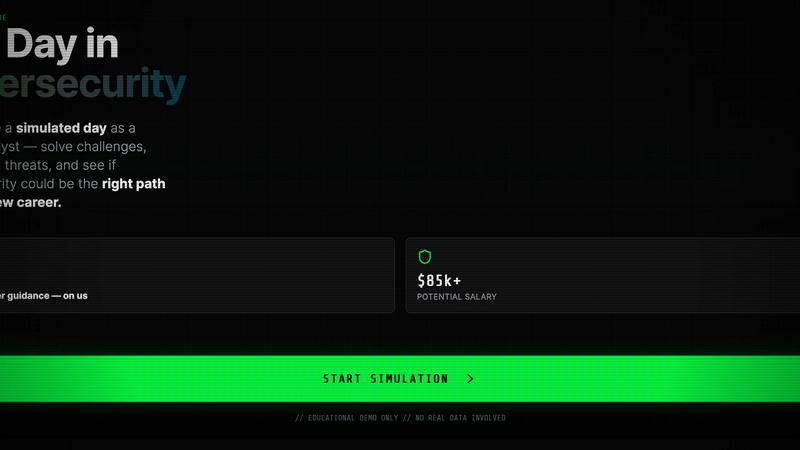
The Cybersecurity Readiness Game simulates breach scenarios to enhance team decision-making and strengthen overall cybersecurity preparedness.
Last updated: March 18, 2026

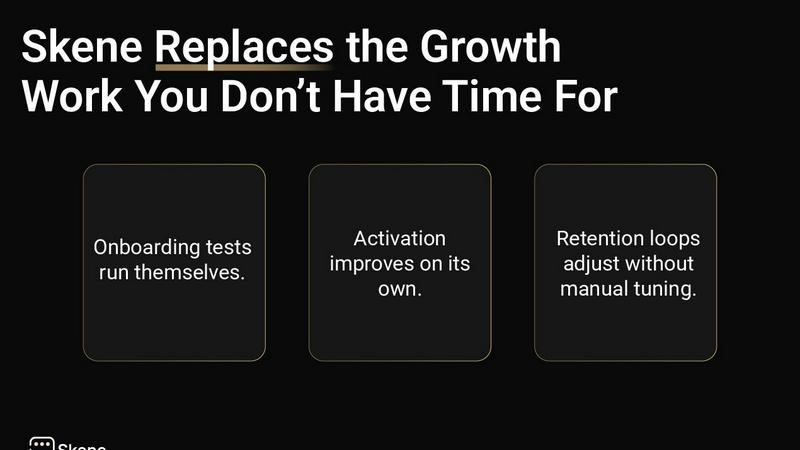
Skene automates growth signals directly from your codebase, enabling seamless product-led growth without external.
Last updated: February 28, 2026
Visual Comparison
Cybersecurity Readiness Game
Skene
Feature Comparison
Cybersecurity Readiness Game
Scenario-Based Learning
Participants can select from a variety of realistic cybersecurity scenarios, each designed to test their decision-making skills in the face of evolving threats. This feature allows for a tailored learning experience that addresses specific organizational needs.
Performance Insights
After completing a scenario, users receive detailed performance metrics that evaluate their decisions and actions. This feedback helps individuals and teams identify strengths and pinpoint areas that require further development, fostering continuous improvement.
No Registration Required
The Cybersecurity Readiness Game is accessible without any registration barriers, enabling immediate participation. This feature encourages more users to engage with the tool, facilitating widespread training across teams.
Applied Decision Practice
The game emphasizes hands-on problem-solving, allowing participants to practice real-world responses to cyber threats. This practical approach not only reinforces theoretical knowledge but also builds confidence in handling actual cyber incidents.
Skene
Deep Codebase Integration
Skene’s ability to analyze the product’s own source code allows it to derive contextual signals directly from the codebase. This feature ensures that growth strategies are inherently aligned with the product’s functionalities and user behaviors, leading to more effective optimizations.
Automated User Flow Generation
Once Skene analyzes the code, it automatically generates optimized user flows for onboarding, activation, and retention. This feature eliminates the need for manual input and allows for rapid deployment of improvements that enhance user experiences.
Real-Time Analytics Dashboard
Skene provides a comprehensive analytics dashboard that tracks real-time user progress, completion rates, engagement metrics, and identifies bottlenecks. This feature enables product teams to make data-driven decisions and optimize user journeys effectively.
Outcome-Based Pricing Model
Skene incorporates an outcome-based pricing model that charges users only when customers successfully complete their onboarding journey. This feature ensures that users pay for tangible results, making it a cost-effective solution for growth.
Use Cases
Cybersecurity Readiness Game
Team Training Sessions
Organizations can utilize the Cybersecurity Readiness Game during team training sessions to enhance collective decision-making skills. By simulating real-world scenarios, teams can practice responding to threats collaboratively, improving communication and coordination.
Individual Skill Development
Individuals looking to enhance their personal cybersecurity skills can engage with the game to gain practical experience. This self-directed learning approach helps users become more competent in identifying and responding to potential cyber threats.
Organizational Assessments
Companies can use the game to assess their overall cybersecurity readiness. By analyzing team performance across various scenarios, organizations can identify gaps in knowledge and preparedness, informing future training initiatives.
Career Exploration
For those considering a career in cybersecurity, the game provides an engaging introduction to the field. Participants can experience the challenges faced by cybersecurity professionals, helping them determine if this career path aligns with their skills and interests.
Skene
Optimizing Onboarding Experiences
Skene can be used to streamline the onboarding process for new users by automatically identifying and resolving friction points. This leads to higher activation rates and improved user satisfaction.
Enhancing Feature Adoption
By analyzing user behavior, Skene can identify opportunities for promoting underutilized features. It can dynamically create prompts and flows that encourage users to explore and adopt these features effectively.
Reducing Churn Rates
Skene’s capabilities extend to retention strategies by analyzing user interactions and engagement patterns. This allows businesses to proactively address issues that may lead to user churn and maintain customer loyalty.
Facilitating Continuous Improvement
With its self-learning growth engine, Skene supports continuous improvement of user experiences. By consistently analyzing data and optimizing flows, it helps teams innovate and adapt their offerings to meet evolving user needs.
Overview
About Cybersecurity Readiness Game
The Cybersecurity Readiness Game is an innovative training tool designed to immerse users in realistic threat scenarios, enabling them to practice critical decision-making skills in a safe environment. It requires no registration, allowing participants to engage immediately with credible challenges that reflect the complexities of real-world cyber incidents. This tool is aimed at individuals and teams seeking to bolster their cybersecurity readiness, particularly in organizations where human error remains a significant vulnerability. By simulating high-pressure situations, the game not only enhances individual skills but also provides valuable insights into team dynamics and readiness levels. Participants evaluate the consequences of their choices, receiving actionable performance feedback that highlights strengths and areas for improvement. Ultimately, the Cybersecurity Readiness Game serves as a crucial resource for organizations looking to strengthen their cyber defenses and foster a culture of cybersecurity awareness.
About Skene
Skene is an innovative AI-powered, fully automated Product-Led Growth (PLG) iteration engine that serves as intelligent infrastructure for software products. Its core functionality is to enable products to achieve autonomous growth by consistently optimizing critical user lifecycle stages such as onboarding, activation, and retention without the need for dedicated growth teams. Skene’s unique advantage lies in its deep integration with the product’s codebase, allowing it to analyze the source code directly. This analysis helps Skene derive contextual signals to understand user behavior, identify friction points, and uncover activation opportunities. By automating the creation, A/B testing, and deployment of improved user flows, Skene effectively establishes a self-learning growth system. Targeted towards indie developers, early-stage startups, and established PLG companies, Skene replaces fragmented and manual growth stacks with a unified, code-native solution. This allows developers to maintain ownership of their growth strategies, version them alongside their code, and interact with them through prompts, thereby eliminating performance overhead and data silos associated with traditional third-party tools.
Frequently Asked Questions
Cybersecurity Readiness Game FAQ
What is cybersecurity preparedness?
Cybersecurity preparedness refers to an organization's ability to anticipate, respond to, and recover from cyber incidents. It involves planning, training, and continuous assessments to mitigate risks effectively.
How does the Cybersecurity Readiness Game help with human error reduction?
The game specifically addresses the human element of cybersecurity by immersing participants in realistic scenarios where they must make decisions. This practice helps users recognize common pitfalls and improve their responses, ultimately reducing human error.
Is the Cybersecurity Readiness Game suitable for beginners?
Yes, the Cybersecurity Readiness Game is designed for all experience levels. Its accessible format allows beginners to learn foundational concepts while providing more advanced users with challenging scenarios to hone their skills.
Can organizations track their team's progress using this game?
Absolutely. The performance insights generated after each scenario allow organizations to track individual and team progress over time. This data can be used to inform training strategies and enhance overall cybersecurity readiness.
Skene FAQ
What is PLG software?
PLG (Product-Led Growth) software automates the user journey, allowing users to discover value in a product without manual intervention from sales or customer success teams. It guides users toward activation and feature adoption through the product itself.
How does Skene differ from traditional customer experience software?
Unlike traditional customer experience tools that require manual setup and maintenance, Skene automatically generates onboarding and lifecycle automation by reading your codebase. This ensures everything updates seamlessly with new code deployments.
How long does it take to set up Skene?
Setting up Skene is remarkably quick, taking less than 60 seconds. Users simply connect their GitHub or GitLab repository on a read-only basis, after which Skene analyzes the codebase to generate PLG flows without requiring code changes.
Is my code secure with Skene?
Yes, Skene ensures the security of your code by only requiring read-only access to your repository. The analysis is conducted in a secure, isolated environment, safeguarding your intellectual property and sensitive data.
Alternatives
Cybersecurity Readiness Game Alternatives
The Cybersecurity Readiness Game is an innovative tool designed to simulate real-world cyber threat scenarios, allowing teams to practice their response strategies in a safe environment. Classified under the Productivity & Management category, this game challenges participants to make critical decisions in the face of simulated breaches, enhancing their cybersecurity readiness. Users often seek alternatives to this tool due to various factors, including pricing structures, specific feature sets, or compatibility with existing platforms. When selecting an alternative, it is essential to consider the comprehensiveness of the simulations, the clarity of performance insights provided, and how well the tool addresses the unique needs of your organization, particularly in closing the human error gap in cybersecurity.
Skene Alternatives
Skene is an AI-powered Product-Led Growth (PLG) iteration engine designed to optimize user lifecycle stages such as onboarding, activation, and retention by analyzing the product's codebase. Users often seek alternatives to Skene for various reasons, including pricing considerations, feature sets that may better suit their specific needs, or compatibility with existing platforms. When choosing an alternative, it is crucial to evaluate factors such as the ability to integrate seamlessly with your current infrastructure, the level of automation provided, and the depth of insights into user behavior and growth opportunities.