Konstruction Group Inc. vs Skene
Side-by-side comparison to help you choose the right tool.

Konstruction Group Inc.
Framing, steel, drywall for custom builds.

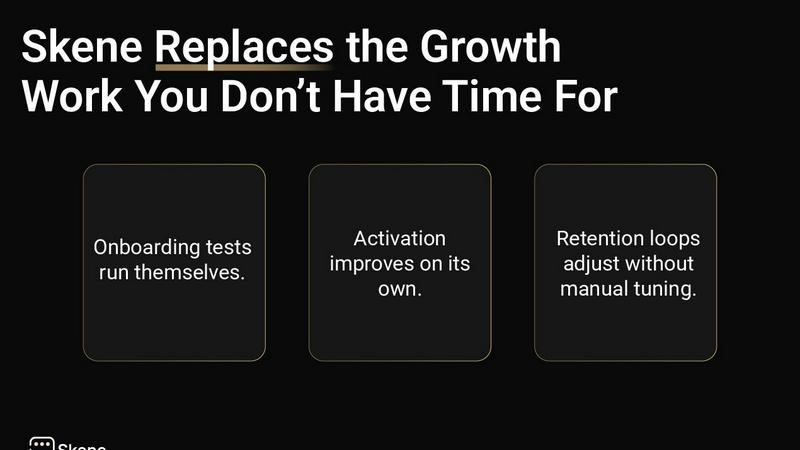
Skene automates growth signals directly from your codebase, enabling seamless product-led growth without external.
Last updated: February 28, 2026
Visual Comparison
Konstruction Group Inc.

Skene
Overview
About Konstruction Group Inc.
Konstruction Group Inc is a professional construction company based in Toronto, Ontario, specializing in comprehensive building services for residential and commercial projects. With over 15 years of industry experience, the company has established itself as a trusted partner for builders, developers, and homeowners throughout the Greater Toronto Area.
Core Services:
- Rough Framing Services
- Structural Steel & Welding
- Insulation Services
- Drywall Services
- Engineering Services
About Skene
Skene is an innovative AI-powered, fully automated Product-Led Growth (PLG) iteration engine that serves as intelligent infrastructure for software products. Its core functionality is to enable products to achieve autonomous growth by consistently optimizing critical user lifecycle stages such as onboarding, activation, and retention without the need for dedicated growth teams. Skene’s unique advantage lies in its deep integration with the product’s codebase, allowing it to analyze the source code directly. This analysis helps Skene derive contextual signals to understand user behavior, identify friction points, and uncover activation opportunities. By automating the creation, A/B testing, and deployment of improved user flows, Skene effectively establishes a self-learning growth system. Targeted towards indie developers, early-stage startups, and established PLG companies, Skene replaces fragmented and manual growth stacks with a unified, code-native solution. This allows developers to maintain ownership of their growth strategies, version them alongside their code, and interact with them through prompts, thereby eliminating performance overhead and data silos associated with traditional third-party tools.