Sidehunt vs TinyHunt
Side-by-side comparison to help you choose the right tool.

Sidehunt
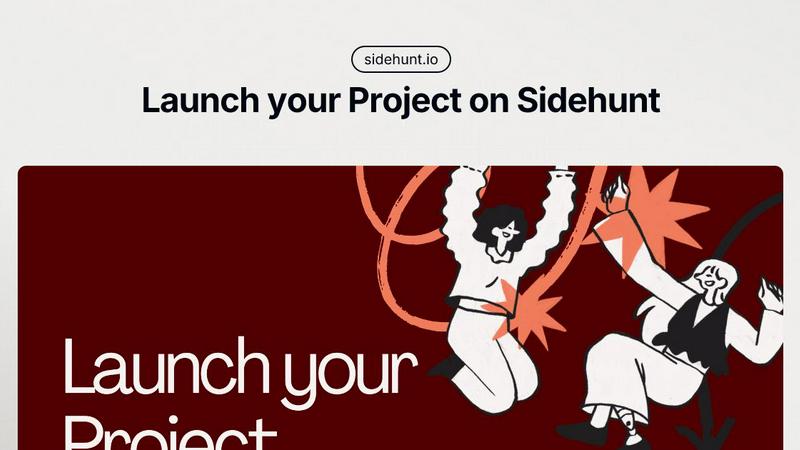
Sidehunt is a weekly competitive platform where developers submit side projects for community voting to gain visibility and win promotional badges.
Last updated: April 13, 2026

TinyHunt
TinyHunt is a weekly platform that boosts indie product visibility with a seven-day featured spotlight.
Last updated: March 1, 2026
Visual Comparison
Sidehunt
TinyHunt
Feature Comparison
Sidehunt
Weekly Hunt Competition
The platform's central feature is a weekly, singular competition where all submitted products for that cycle are listed. This creates a focused environment where users ("hunters") can explore, test, and vote on new launches. The competitive leaderboard, driven by real user votes, provides immediate, transparent feedback on a product's reception relative to its peers, offering clear market validation signals within a defined timeframe.
Premium Spotlight (This Week's Hunt)
This feature offers a prioritized, premium placement within the current week's hunt listings. Products featured in the Premium Spotlight gain enhanced visibility above standard listings, significantly increasing their exposure to the platform's user base. This is a paid placement option designed for creators seeking maximum initial impact and a higher probability of securing votes and early-user attention during the critical launch window.
Structured Discovery & Archives
Sidehunt provides organized discovery mechanisms beyond the current hunt. This includes categorized browsing through "Top Categories" like Artificial Intelligence, Productivity, and SaaS, as well as access to "Past Hunts" archives. These archives allow users to analyze historical launch data, trends, and previously successful products, serving as a valuable research repository for market analysis and competitive insight.
Hall of Fame & Badge System
The platform incorporates a recognition system where the top-voted products in each weekly hunt are awarded badges and dofollow backlinks. This Hall of Fame serves as a permanent record of standout launches, providing lasting credibility and SEO benefits. The badge system gamifies participation and offers tangible rewards for performance, including enhanced domain authority through valuable backlinks.
TinyHunt
Weekly Time-Bound Curation
TinyHunt operates on a structured weekly release cycle, where a new cohort of software products is prominently featured for a precise 7-day period. This model ensures that each project receives sustained, undiluted attention from the platform's audience, maximizing engagement potential. It prevents listings from being buried in a perpetually growing feed, a common issue in static directories, and creates a sense of urgency and freshness that encourages regular user return visits.
High-Authority SEO Backlink
Every project submitted and accepted onto the TinyHunt platform receives a permanent, dofollow backlink from the TinyHunt domain, which boasts a Domain Rating (DR) of 32+. This feature provides immediate and tangible SEO value for makers, enhancing their site's authority and search engine rankings. The backlink is embedded within a detailed, contextually relevant product listing, which search engines weight more favorably than low-quality directory links.
Verified Profile Badge
Upon successful submission and curation, product creators are awarded a verified profile badge. This badge serves as a mark of credibility and validation from the TinyHunt platform, signaling to potential users and customers that the product has been vetted. This social proof can be instrumental in building trust, especially for new products from independent developers or micro-businesses without an established brand presence.
Dual-Pathway Discovery Architecture
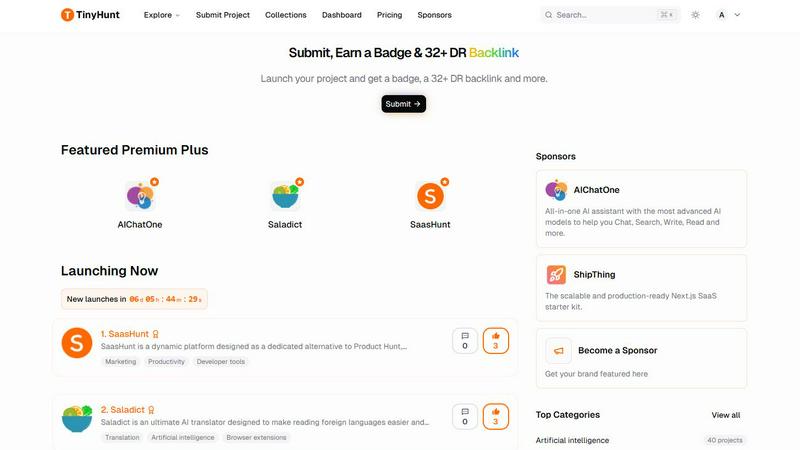
The platform is architecturally designed with distinct sections to serve different discovery and promotional needs. The "Launching Now" section provides organic visibility for new products within their dedicated 7-day window. Conversely, the "Featured Premium Plus" section offers a sponsored, high-visibility slot for products seeking amplified promotion. This structure allows users to explore new launches while giving makers options for targeted exposure based on their marketing strategy and budget.
Use Cases
Sidehunt
MVP Validation for Solo Founders
An independent developer has built a minimum viable product (MVP) for a new SaaS tool and needs to assess genuine user interest before dedicating further resources. By submitting to Sidehunt's weekly hunt, they can collect quantitative votes and qualitative feedback from a targeted audience, validating the core concept and identifying key pain points or desired features for the next development cycle.
Launch Momentum for Small Teams
A small bootstrapped team is preparing for a public beta launch. They use Sidehunt's Premium Spotlight feature to secure top-tier visibility during their launch week. This generates an initial surge of early adopters, creates social proof through votes and rankings, and drives the first wave of sign-ups, effectively building crucial momentum for their public release.
Market Research for Product Managers
A product manager at a larger company is scoping a new feature or side-project concept. They utilize Sidehunt's "Past Hunts" and category browsing to analyze trends, see what similar tools have launched, and understand the feedback those products received. This provides real-world market data on user preferences and competitive landscape without internal bias.
Community Building and Networking
Indie makers and founders use the platform not only to launch but to discover other projects. By actively hunting and providing feedback, they engage with the community, identify potential collaboration partners, discover complementary tools for their stack, and build a network within the indie hacker ecosystem.
TinyHunt
Product Launch and Initial Traction
Independent developers and solo founders can use TinyHunt as a primary launchpad for their new software product. By being featured in the "Launching Now" section, they gain immediate exposure to a targeted audience of early adopters and professionals. The week-long spotlight drives concentrated traffic, gathers initial user feedback, and can generate the first wave of sign-ups or customers, which is critical for validating product-market fit.
SEO and Domain Authority Building
Makers focused on improving their website's search engine performance utilize TinyHunt to acquire a high-quality backlink from a DR 32+ domain. This is a core use case for SEO strategy, as the contextual link from a relevant, authoritative platform directly contributes to improving the product's own domain authority and organic search rankings, making it easier for potential users to find the product via search engines.
Targeted User Acquisition for Niche Tools
Professionals such as product managers, marketers, and agency owners actively use TinyHunt as a discovery engine to find specialized, niche tools that solve specific productivity or operational challenges. The curated nature of the platform filters out noise, allowing these users to efficiently find and evaluate cutting-edge software that may not be widely advertised on larger, more generic platforms.
Brand Validation and Credibility Enhancement
Early-stage startups and micro-SaaS businesses leverage a TinyHunt feature to build brand credibility. The combination of being listed on a curated platform, receiving a verified badge, and being associated with other innovative products provides third-party validation. This social proof is instrumental in building trust with potential customers, investors, and partners during the critical early growth phases.
Overview
About Sidehunt
Sidehunt is a specialized weekly launch platform engineered for the systematic validation and promotion of side projects and independent software products. It operates on a structured, time-boxed model where creators submit their products to a weekly competitive listing known as "The Hunt." The platform's core functionality facilitates the collection of genuine user votes and feedback from a dedicated community of early adopters actively seeking new tools. This process is designed to move beyond simple exposure, providing quantitative and qualitative validation for nascent products. The primary value proposition of Sidehunt lies in its focused, singular weekly competition format, which eliminates noise and ensures that participant products receive concentrated attention from relevant users. It serves as a critical tool for indie hackers, solo founders, and small development teams aiming to gauge market interest, secure initial traction, and iterate based on real user input before committing to broader scaling efforts. The platform's transparent, pay-per-launch pricing model and intuitive interface lower the barrier to entry for product validation.
About TinyHunt
TinyHunt is a specialized, curated discovery platform engineered to surface and promote innovative software products and tools from independent developers, solo founders, and micro-businesses. It operates on a structured, time-bound curation model to maximize visibility and engagement for each featured project. The platform's core value proposition is its dual-function architecture: it serves as a high-signal discovery feed for professionals seeking cutting-edge, niche tools to enhance productivity and drive growth, while simultaneously acting as a powerful launchpad and marketing channel for creators to gain targeted traffic, authoritative backlinks, and community validation. Unlike saturated, broad-based directories, TinyHunt implements a weekly release cycle where a new selection of products is showcased, with each product maintaining a prominent position for a precise 7-day period. This ensures sustained, focused attention and facilitates deeper user exploration and discussion. The platform categorizes listings into distinct sections such as "Launching Now" for new releases and "Featured Premium Plus" for sponsored highlights, providing clear pathways for both organic discovery and amplified promotion. For makers, submission includes tangible benefits like a verified profile badge and a backlink from a domain with a Domain Rating (DR) of 32+, directly impacting SEO and credibility. The target audience includes SaaS founders, product managers, marketers, and tech enthusiasts actively scouting for vetted, emerging solutions.
Frequently Asked Questions
Sidehunt FAQ
What is the cost to launch a product on Sidehunt?
Launching a product in the standard weekly hunt is free of charge. This includes a listing in the weekly competition, eligibility for votes, and a chance to rank on the leaderboard. Sidehunt also offers a paid "Premium Spotlight" feature for enhanced visibility, and sponsorships for featured partner slots, which are separate paid offerings.
How does the voting and ranking system work?
Products submitted to the weekly hunt are displayed to the community of registered users. These users can explore the products and cast votes for those they find interesting or valuable. The products are then ranked in real-time based on the total number of genuine votes received during the hunt period. The top-ranked products at the end of the cycle win badges.
What are the benefits of winning a weekly hunt?
The top three products in each weekly hunt are awarded special badges displayed on their listing, which serve as a mark of credibility and achievement. Furthermore, winners receive a dofollow backlink from the Sidehunt platform to their product's website, which can provide a valuable boost to search engine optimization (SEO) and domain authority.
Can I launch any type of product or service?
Sidehunt is specifically optimized for digital side projects, indie software, SaaS tools, and online services. The platform categorizes products into areas like Artificial Intelligence, Design Tools, Productivity, and Marketing Tools. While the scope is broad within the tech and digital product sphere, physical products or non-digital services may not align with the platform's core audience.
TinyHunt FAQ
What are the benefits of submitting my project to TinyHunt?
Submitting your project to TinyHunt provides multiple tangible benefits. Primarily, you receive a permanent, dofollow backlink from a domain with a Domain Rating (DR) of 32+, which is a significant boost for your site's SEO and authority. You also earn a verified profile badge that adds credibility to your product. Furthermore, your product gains exposure to a targeted audience of professionals and early adopters actively seeking new tools, driving qualified traffic and potential user sign-ups during its featured week.
How does the weekly featuring model work?
TinyHunt operates on a strict weekly curation cycle. A new batch of products is selected and featured every week. Once your product is live, it remains in the prominent "Launching Now" section for exactly 7 days. This time-bound approach ensures that each product receives focused attention without competition from an endless stream of new submissions. After the feature week, the product listing remains accessible on the platform with its associated backlink and badge, but it rotates out of the primary spotlight to make way for the next week's selections.
What is the difference between a standard listing and "Featured Premium Plus"?
A standard listing is an organic feature in the "Launching Now" section, available through the standard submission process, and provides the core benefits (backlink, badge, week-long spotlight). "Featured Premium Plus" is a sponsored, premium placement option. It offers amplified visibility, typically in a dedicated, high-position section on the platform. This option is designed for makers who want to maximize exposure beyond the organic weekly cycle and is part of a paid sponsorship package.
Who is the target audience for TinyHunt?
TinyHunt serves a dual audience. For discoverers, the target audience includes professionals such as SaaS founders, product managers, marketers, developers, and tech enthusiasts who are proactively searching for innovative, niche, and productivity-enhancing software tools. For makers, the platform is tailored for independent developers, solo founders, bootstrapped startups, and micro-businesses who are building software products and need an effective channel for launch, marketing, and gaining authoritative backlinks.
Alternatives
Sidehunt Alternatives
Sidehunt is a specialized launch platform within the product discovery and validation category. It operates on a weekly submission model, focusing exclusively on side projects and indie products to connect creators with an audience of early adopters. The platform's core value proposition lies in its structured, time-bound format designed to generate genuine user feedback and visibility. Users may seek alternatives to Sidehunt for various operational or strategic reasons. Common considerations include different pricing models, such as subscription-based services versus one-time fees, or the need for platforms with a different launch frequency, like daily or monthly cycles. Others might require a broader audience reach beyond the niche indie maker community, more extensive promotional tools, or integrated analytics for deeper post-launch insights. When evaluating an alternative launch platform, key criteria should align with your project's specific goals. Assess the platform's core audience demographics and engagement levels to ensure they match your target users. Scrutinize the submission mechanics, including cost structure, approval processes, and the type of feedback or metrics provided. Finally, consider the platform's track record for driving tangible outcomes, such as user sign-ups or product validation, beyond mere exposure.
TinyHunt Alternatives
TinyHunt is a curated discovery and launch platform within the product marketing and SEO promotion category. It operates on a weekly cycle, providing independent software products with a structured, seven-day spotlight to gain visibility, targeted traffic, and authoritative backlinks from its domain. Users may seek alternatives to TinyHunt for several operational reasons. These can include budget constraints, a need for different submission or visibility models, or a requirement for platforms with different audience demographics or technical specifications. Some may seek perpetual listings versus time-bound campaigns, or platforms with differing curation standards and editorial focus. When evaluating an alternative platform, key technical criteria include the visibility model's duration and structure, the domain authority and SEO value of provided backlinks, the specificity and size of the platform's audience, and the submission cost or revenue share model. The platform's categorization system and the long-term archival and accessibility of featured product pages are also critical for sustained value.