

buzzcutlab
BuzzCut Lab offers precise clipper guard conversions, personalized face shape analysis, and growth timelines for ideal.
About buzzcutlab
Buzzcutlab is a cutting-edge digital platform specifically created to simplify and enhance the experience of selecting, achieving, and maintaining a buzz cut hairstyle. It acts as a comprehensive resource for individuals who are either contemplating their first buzz cut or are seasoned enthusiasts aiming to perfect their look. The platform demystifies the often confusing world of clipper guard numbers by offering personalized guidance tailored to individual needs. Users can leverage a range of tools that include a precise measurement converter, visual comparison charts, a face shape analysis feature, and a hair growth timeline. Buzzcutlab empowers its users to make informed decisions based on their unique hair type, desired appearance, facial structure, and maintenance preferences, ultimately ensuring that the chosen guard length is well-suited to their specific features and lifestyle. Whether users are looking for a clean military-style cut or a more relaxed look, buzzcutlab provides all the necessary information to achieve their desired hairstyle with confidence.
Features
Buzz Cut Length Converter
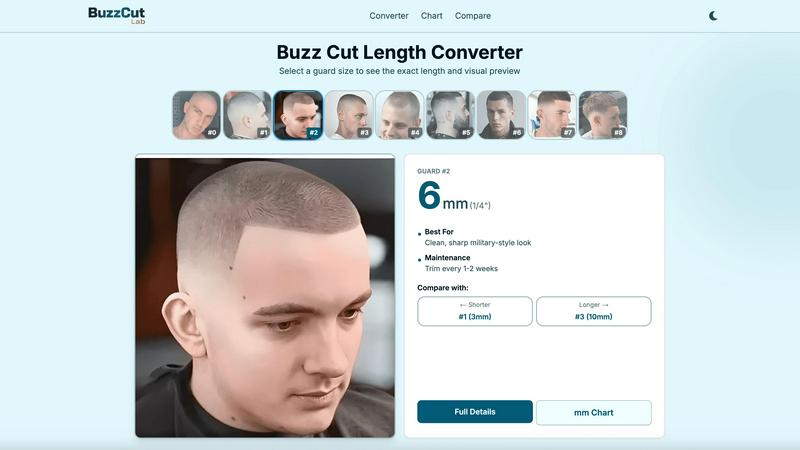
The buzz cut length converter allows users to select a specific guard size and instantly view the corresponding hair length in both millimeters and inches. This feature provides visual previews, making it easier for users to understand what to expect from their chosen guard length.
Face Shape Analyzer
This innovative tool invites users to upload a photo, which is then analyzed to deliver personalized guard size recommendations and potential fade styles. By aligning haircut choices with facial features, users can achieve a look that enhances their natural beauty.
Hair Growth Timeline
The hair growth timeline tool visualizes the projected growth of hair from any selected guard size to a desired target length. It includes week-by-week checkpoints, helping users plan their trims and manage their style effectively over time.
Detailed Guard Size Guides
Buzzcutlab offers extensive guides for each clipper guard size ranging from #0 to #8. Each guide includes specifications such as the exact measurements, scalp visibility, maintenance requirements, and the best use cases for each size, providing users with comprehensive knowledge about their options.
Use Cases
First-Time Buzz Cut User
Individuals new to buzz cuts can utilize buzzcutlab's resources to understand guard sizes, visualize lengths, and find the right style that suits their face shape. This support alleviates any anxiety about their first cut.
Style Refinement for Enthusiasts
Seasoned buzz cut users seeking to refine their look can benefit from the face shape analyzer and detailed guard size comparisons. These tools allow them to explore variations in length and styling options, enhancing their overall appearance.
Hair Growth Management
Users looking to manage their hair growth between professional barber visits can utilize the hair growth timeline. This tool helps them visualize their hair's growth and plan timely trims to maintain their desired style.
Comparison Between Guard Sizes
Individuals unsure about which guard size to choose can use buzzcutlab's comparison tools. By placing different guard sizes side by side, users can make informed decisions based on length, maintenance, and scalp visibility, ensuring they select the best option for their needs.
Frequently Asked Questions
What does guard number mean?
Guard numbers range from #0 to #8 and indicate the size of the clipper blade. Higher numbers correspond to longer hair lengths. For example, #1 is 3mm, #2 is 6mm, and this continues up to #8, which is 25mm.
Which guard size should I start with?
If you are new to buzz cuts, starting with a #2 guard (6mm) is often recommended. It provides a clean look while allowing for easy maintenance. You can adjust up or down based on your comfort and facial structure.
Can I use different guard sizes on the same haircut?
Yes, many users opt for different guard sizes to create fades or blends. For instance, using a shorter guard on the sides and a longer guard on top can achieve a stylish, layered look.
How often should I trim my buzz cut?
The frequency of trims depends on the guard size you choose. Generally, a #2 guard may require trims every 1-2 weeks, while a #3 guard may last 2-3 weeks before needing maintenance. Regular trimming helps maintain the sharpness of the cut.
Similar to buzzcutlab

AIdorable
Adopt a virtual baby who grows, learns, and remembers you.

Peekviewer
Anonymous Instagram viewer. Browse profiles, stories, and posts without an account or leaving a trace.

GeoRank
GeoRank combines 9 calibrated data layers covering 190 countries with AI analysis to rank locations by crypto capital gains tax and compare them.

AI Fruit
AI Fruit uses advanced AI models like Kling and Veo to generate viral talking fruit, ASMR cuts, and surreal hybrid videos in 1080p from a prompt or.

Caesura
Caesura is a macOS menu-bar app that reminds you to drink water, stretch, rest your eyes, and breathe on science-backed intervals.

PrettyScale
PrettyScale analyzes 468 facial landmarks entirely in-browser to score attractiveness, detect face shape, find celebrity look-alikes, and estimate.

Burge Coffee
Burge Coffee provides free, browser-based tools and field guides for home roasting, batch tracking, and discovering small roasters without accounts.