

Alternatives to Self-Healing Integrations
Plumbed.io's self-healing platform automates the full integration lifecycle with AI-driven monitoring and proactive error handling for enterprise.
Explore 20 alternatives to Self-Healing Integrations. Compare features, pricing, and find the best fit for your needs.


Memorable Contact
AI-powered relationship memory that helps you remember people, the context behind your connections, and reconnect
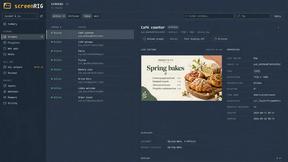
screenRIG
Signage and kiosk infrastructure for AI agents. Your agent publishes images, video, streams, web pages and apps to screens via one plugin.screenRIG is

layahost
Moderation, routing, intent and scoring for any text over one Jev-compatible API, hosted in the EU.

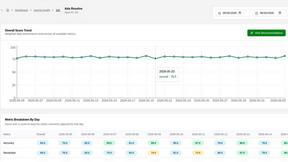

Hailuo AI
Create Hailuo AI videos from text or images with guided prompts, motion and camera controls, flexible settings, and downloadable results.


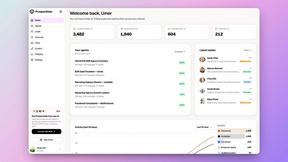
Speechyou
AI transcription for voice notes, meetings, and audio files in 1,700 languages, with AI summaries and subtitle export and unlimited chat ai usage.
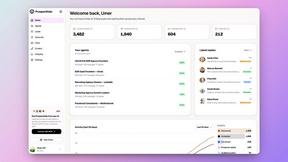
ProspectHalo
AI sales agent that finds qualified leads, runs outreach, follows up automatically, creates content, and helps book more meetings.

benchmark.directory
An independent directory of 145 AI tools across 20 categories. Every listing was paid for, set up and used on real work. No sponsored placements, ever

Tools Network
saasgrow.ai lists SaaS growth tools that founders actually use. Listing is free, screened on submission, and goes live the moment you verify our badge


Built2WinWeb AI SEO
Custom PHP websites, AI Indexing Pack ($599 one‑time), and WebAgentScan SaaS ($9/mo). MCP, A2A, llms.txt, full ownership.

saasgrow.ai
saasgrow.ai is a curated directory of SaaS growth tools where every listing is screened before it goes live and placement can't be bought.


Skydive
Skydive lets teams create AI agents that can complete real work inside the tools they already use.

seedream 5.0 Pro
Create breathtaking high-resolution images with Seedream 5.0 Pro, the advanced AI image generator.

AttractivenessTestLab
Free AI-powered attractiveness test that scores your photo 0-100 with tips.
About Self-Healing Integrations Alternatives
Self-Healing Integrations, developed by Plumbed.io, represents a paradigm shift in the category of AI-driven system connectivity, specifically designed to function as an AI-managed lifecycle for custom integrations. Unlike static point-to-point connectors or traditional middleware, this agentic platform focuses on the post-deployment reality: most tools merely build integrations, but Plumbed builds them and then actively keeps them running through automated monitoring, adaptation, and maintenance. This positions it as a solution for complex, evolving enterprise environments rather than simple, one-time data transfers. Users commonly seek alternatives for several specific reasons, including budget constraints where the AI-managed lifecycle model may present a higher upfront cost compared to simpler DIY tools, or a need for a lower technical barrier to entry for teams without dedicated integration engineers. Others may require a more traditional, hands-on control interface for granular data mapping, or they might be evaluating platforms that offer a broader suite of business process automation beyond just integration maintenance. When choosing an alternative, it is critical to evaluate the platform’s capability for autonomous healing (e.g., automatic schema adaptation and error recovery), the depth of its API coverage for your specific legacy systems, the transparency of its monitoring logs, and whether the pricing model scales linearly with the number of active channels or data volume.
FAQs about Self-Healing Integrations Alternatives
What is Self-Healing Integrations?
Self-Healing Integrations is a feature of the Plumbed.io agentic platform that replaces traditional custom integration projects with an AI-managed lifecycle. Instead of just building a connection between systems, it actively monitors, maintains, and adapts integrations after they go live. This capability ensures that ongoing changes in APIs, data schemas, or system endpoints are automatically detected and remediated without manual intervention.
Who is Self-Healing Integrations for?
Self-Healing Integrations is designed for organizations that rely on custom integrations requiring continuous changes, monitoring, and maintenance post-launch. It is particularly suited for enterprises that are currently paying an integration tax, where launching new channels, systems, or partners is slow and expensive due to manual upkeep. The target user is typically a technical team or integration architect seeking to automate the lifecycle management of complex, evolving connections.
Is Self-Healing Integrations free?
The provided product content does not specify a free tier or pricing model for Self-Healing Integrations. As a feature of the Plumbed.io agentic platform, it is likely offered as part of a commercial subscription or usage-based plan. Users should contact Plumbed.io directly for specific pricing details and to determine if a free trial is available.
What are the main features of Self-Healing Integrations?
The core feature is the AI-managed lifecycle, which includes autonomous monitoring for drift and errors, automatic healing of broken connections, and proactive adaptation to schema changes. It also provides ongoing maintenance after go-live, eliminating the need for manual re-coding when upstream or downstream systems update. This platform replaces the traditional 'build and forget' approach with a continuous, self-maintaining integration system.