Coursebricks vs qtrl.ai
Side-by-side comparison to help you choose the right tool.

Coursebricks
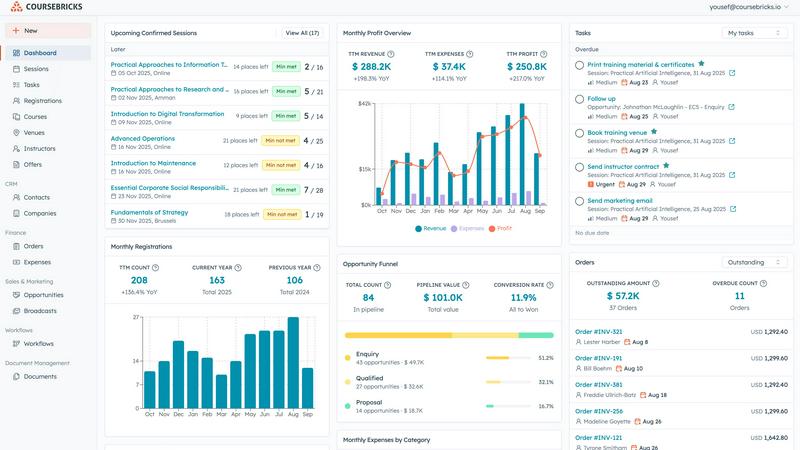
Coursebricks is an all-in-one ERP platform for managing training operations, scheduling, and CRM.
Last updated: March 1, 2026

qtrl.ai
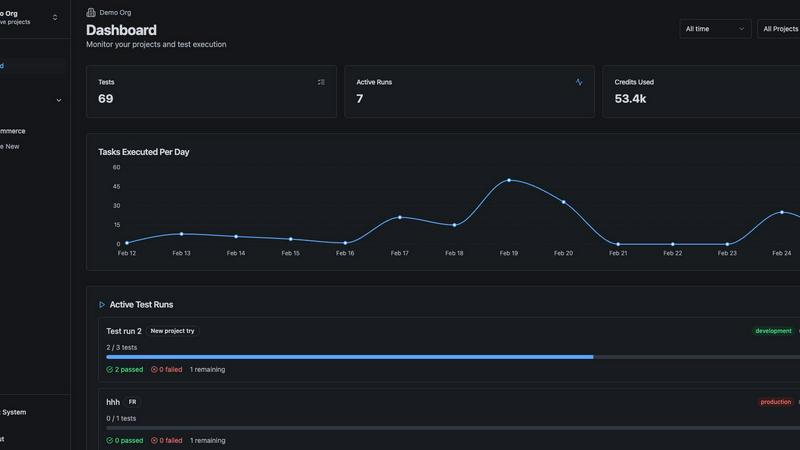
qtrl.ai empowers QA teams to scale testing with AI while maintaining control, governance, and seamless integration.
Last updated: March 4, 2026
Visual Comparison
Coursebricks
qtrl.ai
Feature Comparison
Coursebricks
Unified Course Scheduling
Manage your entire course schedule from a single, unified dashboard view. This feature allows administrators to assign instructors, venues, and specific training materials to each scheduled course instance. It provides real-time tracking of resource availability, helps manage scheduling conflicts proactively, and keeps the entire operational team synchronized without the need to switch between disparate spreadsheets or software applications, ensuring optimal resource utilization and calendar accuracy.
Integrated Website & Checkout
Display and sell your courses directly through a professional, customizable website storefront. This feature enables organizations to accept registrations and bookings online, offering both instant credit card payments via Stripe integration and invoice-based booking options. All customer information, order details, and payment status are captured automatically and fed directly into the platform's built-in CRM, creating a seamless flow from marketing to enrollment and eliminating manual data entry from web forms.
Advanced Email Marketing & Broadcasts
Increase course enrollment rates through targeted, segmented email campaigns. This tool provides advanced filtering capabilities to send personalized promotions, reminders, and newsletters to specific audience segments based on their history, interests, or behavior. By enabling automated, data-driven communication, training providers can boost fill rates, generate qualified leads, and nurture customer relationships effectively, all from within the same platform used for course management.
Workflow Automation Engine
Automate critical administrative and communication workflows to ensure consistency and save time. Configure rules to automatically send confirmation emails upon registration, share pre-course training materials, follow up with payment reminders, distribute post-course surveys, and deliver completion certificates. All automated communications feature full tracking visibility, providing administrators with clear insights into delivery status and learner engagement without manual intervention.
qtrl.ai
Autonomous QA Agents
qtrl.ai's autonomous QA agents are designed to execute instructions on demand or continuously, enabling teams to run tests across multiple environments at scale. These agents operate within predefined rules to ensure compliance and quality, conducting real browser executions instead of relying on simulations. This feature allows teams to maintain a high degree of control while benefiting from automation.
Enterprise-Grade Test Management
The platform provides a centralized system for managing test cases, plans, and execution runs. With full traceability and audit trails, teams can easily track their testing efforts, ensuring transparency and accountability. This feature supports both manual and automated workflows, making it ideal for organizations that prioritize compliance and auditability in their QA processes.
Progressive Automation
qtrl.ai implements a progressive automation approach that allows teams to start with human-written instructions and gradually transition to AI-generated tests. This feature includes intelligent suggestions for new tests based on existing coverage, ensuring that teams can continuously improve their testing processes. Review, approval, and refinement are integral to every step, providing teams with the flexibility to control their automation journey.
Adaptive Memory
The adaptive memory feature builds a living knowledge base of the application by learning from exploration, test execution, and identified issues. This capability powers smarter, context-aware test generation, making the testing process more effective with every interaction. As teams engage with the platform, it becomes increasingly adept at understanding application behavior, resulting in more accurate and efficient testing.
Use Cases
Coursebricks
Corporate Learning & Development Departments
Internal L&D teams utilize Coursebricks to manage the entire lifecycle of employee training programs. The platform allows them to schedule sessions, manage internal instructor and venue calendars, handle employee registrations (often with approval workflows), track attendance and completion, and automatically issue certificates. The centralized system provides leadership with detailed reports on training spend, participation rates, and program effectiveness, aligning L&D initiatives with organizational goals.
Professional Training Providers & Academies
Commercial training companies leverage Coursebricks as their primary business operating system. They use it to manage a public-facing course catalog on their website, process secure online payments, handle customer inquiries through the integrated CRM, and automate key client communications. The platform's tools for managing leads, invoices, expenses, and instructor payments streamline back-office operations, enabling these providers to scale their course offerings and improve profitability.
Educational Institutions Offering Continuing Education
Universities, colleges, and other educational institutions offering non-degree or continuing professional education (CPE) courses use Coursebricks to extend their reach. The platform enables them to create a branded portal for course registration and payment separate from their main student information system, making it easier for external professionals to enroll. Features for managing venues, materials, and automated certificate delivery are particularly valuable for administering these specialized, often revenue-generating, programs.
Blended (Hybrid) Training Delivery Organizations
Organizations that deliver training both in-person and through live virtual webinars benefit from Coursebricks' agnostic approach to delivery mode. The system provides a single schedule to manage physical and virtual sessions, unified registration for both types, and consistent automated communications (e.g., sending virtual meeting links for online sessions and venue details for classroom ones). This eliminates the need for separate tools for different delivery formats, simplifying operations for both staff and learners.
qtrl.ai
Product-Led Engineering Teams
For product-led engineering teams, qtrl.ai offers a robust framework to manage and scale quality assurance practices without losing oversight. With its AI-driven automation, these teams can accelerate their development cycles while maintaining high-quality standards, ensuring that new features are rigorously tested before release.
QA Teams Scaling Beyond Manual Testing
QA departments transitioning from manual testing to automated solutions find qtrl.ai particularly valuable. The platform supports a gradual shift to automation, allowing teams to begin with manual test management before incorporating AI-generated tests. This empowers QA teams to enhance their productivity and coverage without compromising control.
Companies Modernizing Legacy QA Workflows
Organizations looking to modernize outdated QA workflows can leverage qtrl.ai to integrate advanced test management and automation capabilities. The platform's flexibility allows companies to adopt new testing methodologies while ensuring compliance and traceability, ultimately improving the efficiency of their QA processes.
Enterprises Requiring Governance and Traceability
For enterprises that necessitate strict governance and audit trails in their QA processes, qtrl.ai provides the necessary tools to maintain visibility and control. The platform's comprehensive test management features and adaptive memory capabilities ensure that all testing activities are documented and traceable, meeting the demands of regulatory compliance.
Overview
About Coursebricks
Coursebricks is a comprehensive, cloud-based training management software platform engineered to consolidate the entire operational lifecycle of a training business into a single, unified system. It is specifically architected for professional training providers, corporate learning and development (L&D) departments, and educational institutions that deliver a blend of in-person classroom courses and live virtual webinars. The platform's core value proposition is the elimination of administrative fragmentation by integrating all critical functions—including course scheduling, customer relationship management (CRM), registrations, payment processing, website management, and advanced reporting—within one centralized architecture. This all-in-one system provides organizations with the operational flexibility to scale, the data-driven insights necessary for strategic growth, and the ability to reallocate resources from manual administrative tasks back to core training activities. By centralizing control over instructors, venues, materials, and communications, Coursebricks ensures operational synchronization, reduces errors from manual data entry, and delivers a seamless, professional experience for both administrators and learners, ultimately empowering training organizations to design, deliver, and scale learning experiences with complete control.
About qtrl.ai
qtrl.ai is an advanced quality assurance (QA) platform designed to streamline and enhance software testing processes for teams of all sizes. By integrating enterprise-grade test management with sophisticated AI-driven automation, qtrl.ai provides a comprehensive solution that empowers software teams to scale their QA efforts effectively without sacrificing control or governance. This platform serves a diverse range of users, including product-led engineering teams, QA departments transitioning from manual testing, organizations modernizing outdated workflows, and enterprises that require strict compliance and traceability. At its core, qtrl.ai offers a centralized hub for organizing test cases, planning test runs, tracing requirements to coverage, and tracking quality metrics through real-time dashboards. Its intelligent automation features enable teams to incrementally adopt AI-driven testing solutions, ensuring that they maintain oversight and control while enhancing their testing capabilities. Ultimately, qtrl.ai's mission is to bridge the gap between the traditional slow pace of manual testing and the complex nature of conventional automation, delivering a reliable pathway to faster and more intelligent quality assurance.
Frequently Asked Questions
Coursebricks FAQ
What is a training management system?
A training management system (TMS) is a specialized software platform designed to automate and streamline the administrative, operational, and financial processes involved in running a training business or department. Unlike a general Learning Management System (LMS) which focuses primarily on hosting and tracking online learning content, a TMS like Coursebricks handles the business side: scheduling, resource management (instructors, venues), registrations, payments, CRM, website integration, and reporting. It serves as the central operational hub for all training-related activities.
Do I need technical knowledge to use Coursebricks?
No, Coursebricks is designed for usability and does not require advanced technical knowledge to operate its core functions. The platform features an intuitive interface for scheduling, registrations, and communication. Furthermore, it provides a free, ready-to-use website that can be customized without coding. For advanced integrations with tools like Zapier, WordPress, or Xero, straightforward setup wizards and documentation are provided, enabling non-technical administrators to connect and automate workflows efficiently.
Can I showcase my courses directly on my own website?
Yes, Coursebricks includes powerful website integration capabilities. You can either use the provided free, customizable website to display your course catalog and accept registrations, or you can seamlessly integrate Coursebricks with an existing WordPress site (or other websites via API). This allows your course schedule, details, and booking functionality to be automatically displayed and updated on your own branded domain, providing a professional storefront experience for potential learners.
Is my data secure?
Yes, Coursebricks employs enterprise-grade security measures to protect your data. As a cloud-based platform, it utilizes secure data centers with robust physical and network security. The application itself implements standard security protocols including encryption in transit (via HTTPS/TLS) and strict access controls within the platform. You can define user roles and permissions to control exactly what each team member can see and edit. For specific details on data processing, a Data Processing Addendum (DPA) is available.
qtrl.ai FAQ
How does qtrl.ai ensure the quality of AI-generated tests?
qtrl.ai ensures the quality of AI-generated tests by implementing a review and approval process. Teams can assess suggested tests based on coverage and context, allowing for refinement before execution. This oversight minimizes the risks associated with automated testing.
Can qtrl.ai integrate with existing CI/CD pipelines?
Yes, qtrl.ai supports integration with existing CI/CD pipelines. This capability allows teams to seamlessly incorporate quality assurance into their development workflows, facilitating continuous quality feedback loops and improving overall efficiency.
What types of environments can qtrl.ai run tests in?
qtrl.ai can execute tests across various environments, including development, testing, staging, and production. The platform allows for per-environment variables and encrypted secrets, ensuring secure and consistent test execution across all stages of the application lifecycle.
Is there support available for new users of qtrl.ai?
Yes, qtrl.ai provides comprehensive support for new users, including documentation, tutorials, and customer assistance. This ensures that teams can effectively utilize the platform's features and maximize their quality assurance efforts from the outset.
Alternatives
Coursebricks Alternatives
Coursebricks is a comprehensive, cloud-based training management software platform categorized as an all-in-one ERP for training operations, scheduling, and CRM. It is engineered to consolidate the entire operational lifecycle of a training business into a single, unified system, integrating scheduling, CRM, registrations, payment processing, and website management. Users may explore alternatives to Coursebricks for various reasons, including specific budgetary constraints, the need for different feature sets, or platform requirements that diverge from its integrated all-in-one architecture. Some organizations may require deeper customization, alternative integration pathways, or a different balance between core training management functions and other business processes. When evaluating an alternative training management platform, key considerations should include the scope of its scheduling and resource management capabilities, the flexibility of its integrated website and payment processing systems, and the depth of its reporting and CRM functionalities. The platform's ability to scale with organizational growth and its architecture for ensuring data synchronization and reducing administrative overhead are also critical technical specifications to assess.
qtrl.ai Alternatives
qtrl.ai is a modern quality assurance (QA) platform that enables software teams to enhance their testing processes through AI-driven automation while maintaining full control and governance. By combining enterprise-grade test management with intelligent automation, qtrl.ai provides a centralized hub for organizing test cases, planning runs, and tracking quality metrics, making it particularly appealing to product-led engineering teams and companies seeking to modernize their QA workflows. Users often search for alternatives to qtrl.ai due to various reasons, including pricing, specific feature requirements, or compatibility with existing platforms. When selecting an alternative, it's essential to consider factors such as the level of automation offered, ease of integration with current systems, user experience, and the ability to maintain compliance and governance standards. Finding a solution that aligns with your team's needs is crucial for effective quality assurance.