
Crawlkit vs Hostim.dev
Side-by-side comparison to help you choose the right tool.

Crawlkit
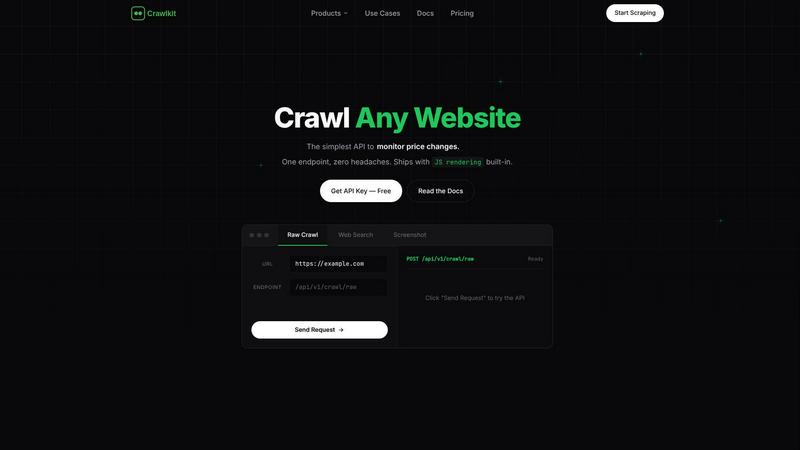
CrawlKit provides a developer-friendly API for seamless web scraping and data extraction from any site or platform.
Last updated: February 28, 2026

Hostim.dev
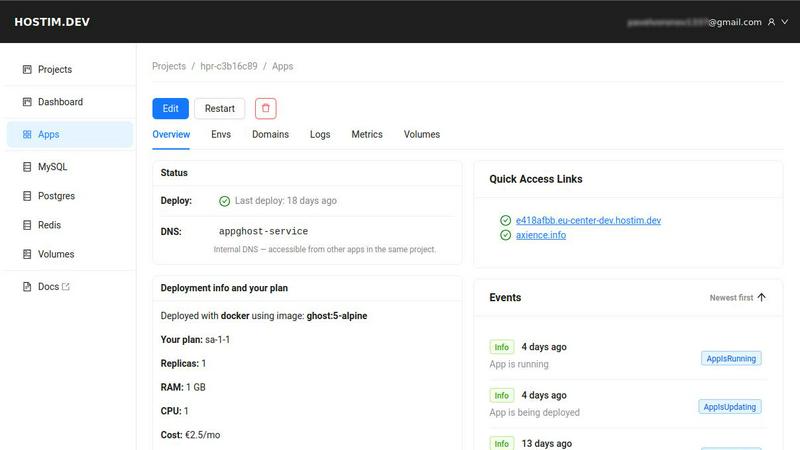
Hostim.dev deploys Docker apps with managed databases on GDPR-compliant EU bare-metal servers.
Last updated: March 1, 2026
Visual Comparison
Crawlkit
Hostim.dev
Feature Comparison
Crawlkit
Unified API for Diverse Data Sources
Crawlkit consolidates various data extraction capabilities within a single API, enabling users to retrieve structured data from multiple sources such as LinkedIn, Instagram, and app stores with just one API call. This unified approach eliminates the hassle of managing multiple tools for different platforms.
Advanced Anti-Bot Bypassing
Crawlkit is engineered to handle sophisticated anti-bot measures, ensuring reliable data extraction even from sites protected by technologies like Cloudflare and PerimeterX. This feature allows users to access critical data without getting blocked or interrupted by security protocols.
Comprehensive Data Extraction Capabilities
Users can extract a wide range of data types, including raw HTML, structured data from professional networks, and even visual snapshots of web pages. This versatility supports various data needs, from simple web scraping to complex data analysis tasks, making Crawlkit suitable for various applications.
Flexible, Transparent Pricing Model
Crawlkit employs a credit-based pricing system that ensures users only pay for what they use, with no hidden fees or minimum commitments. This transparent pricing approach allows for scaling as needed, with credits that never expire, ensuring users can manage costs effectively while maximizing their data extraction capabilities.
Hostim.dev
EU Bare-Metal Hosting with GDPR Compliance
Hostim.dev operates on dedicated bare-metal servers located in Germany, ensuring high performance and low latency for European users. This architecture provides a solid foundation for applications requiring consistent resource allocation. By being hosted exclusively within the EU, the platform guarantees GDPR compliance by default, addressing data sovereignty concerns for businesses and developers handling European user data without requiring additional configuration or legal vetting of third-party data processors.
Docker, Git, and Docker Compose Deployment
The platform supports multiple deployment methodologies natively. Developers can launch applications directly from a public or private Docker image, connect a Git repository for continuous deployment, or paste a complete Docker Compose file to deploy multi-service application stacks. This flexibility allows teams to migrate existing containerized workflows without modification. The system automatically parses the Compose file, provisions the defined services, and establishes the necessary networking between containers, removing the need for manual orchestration setup.
Integrated Managed Databases and Volumes
Hostim.dev provides built-in, managed database services including MySQL, PostgreSQL, and Redis, which are provisioned instantly alongside your application. These databases are pre-wired to your application containers with environment variables, eliminating manual connection string configuration. Persistent block storage volumes are also available, offering reliable data storage for stateful services. This integration consolidates the application stack management into a single interface and billing point.
Per-Project Isolation and Cost Tracking
Every application or client project is encapsulated within its own fully isolated environment, encompassing compute, networking, and data. This ensures security and prevents resource conflicts. Crucially, each project has its own dedicated cost tracking and billing, starting from €2.5 per month. This model provides absolute financial transparency, making it simple for freelancers and agencies to quote fixed prices to clients and track profitability per project without unexpected cross-charges.
Use Cases
Crawlkit
CRM Enrichment
Crawlkit can enrich customer relationship management systems by automatically pulling essential LinkedIn profile data such as job titles, company information, and contact details for leads. This automation streamlines the sales process and enhances lead quality.
Social Media Insights
Businesses can utilize Crawlkit for tracking competitor growth on platforms like Instagram. By monitoring follower counts, engagement metrics, and post performance over time, organizations gain valuable insights into social media strategies and trends.
App Review Analysis
Crawlkit enables teams to analyze app reviews from various app stores, helping organizations understand user feedback and sentiment. By aggregating reviews, companies can make data-driven decisions to improve their applications and user experience.
Market Research and Competitive Intelligence
Crawlkit is instrumental in gathering data for market research and competitive intelligence. By extracting information from diverse sources, businesses can identify market trends, analyze competitor strategies, and make informed decisions based on comprehensive data.
Hostim.dev
Freelancer Client Project Delivery
Freelancers can use Hostim.dev to rapidly deploy and deliver web applications for clients. By using Docker Compose, they can ship complex stacks (app, database, cache) in minutes. The per-project billing allows for clean cost pass-through or markup, and the isolated project environment enables easy, secure handover of the running application to the client post-engagement, without providing access to other projects or underlying infrastructure.
Agency Managing Multiple Client Portfolios
Digital agencies benefit from the strict per-client project isolation, which provides security and operational boundaries between different client workloads. The platform offers clear cost breakdowns for each project, simplifying internal accounting and client invoicing. The EU-based, GDPR-compliant hosting is a key selling point for agencies serving European customers, ensuring regulatory adherence is built into the service.
Startup Prototyping and MVP Launch
Startups and small teams can leverage Hostim.dev to go from code to a live, scalable prototype or Minimum Viable Product (MVP) with minimal DevOps investment. The built-in databases, automatic HTTPS, and monitoring allow developers to focus on product features. The predictable flat pricing protects against unforeseen cloud bills during the early, unpredictable usage stages, aiding in budget control.
Student and Developer Learning Projects
Students and developers building portfolio projects can access professional-grade deployment tooling without complexity or high cost. The free trial and student credits provide a risk-free environment to learn Docker, database integration, and deployment workflows on real, production-like infrastructure. This results in tangible, publicly accessible projects that demonstrate practical skills to potential employers.
Overview
About Crawlkit
Crawlkit is a powerful web data extraction platform meticulously designed for developers, data engineers, and data science teams seeking to streamline their data collection processes. It offers a comprehensive, scalable API that allows users to programmatically access and extract data from any website, effectively removing the need for complex in-house scraping infrastructures. Crawlkit addresses the modern challenges of web scraping, such as dealing with JavaScript-rendered single-page applications (SPAs), navigating aggressive anti-bot protections like Cloudflare and PerimeterX, and overcoming IP rate limiting and CAPTCHA challenges. By managing intricate tasks like proxy rotation, headless browser management, automatic retries, and session handling, Crawlkit empowers users to concentrate on data consumption and analysis. Its primary value proposition lies in delivering reliable, high-success-rate data extraction through a straightforward REST API interface, supporting various data extraction modalities including fetching raw HTML, running web searches, capturing full-page visual snapshots, and extracting structured data from professional networks. Accessible via developer-friendly SDKs for Node.js, Python, Go, and more, Crawlkit simplifies the data extraction process across multiple platforms, making it an indispensable tool for any data-driven organization.
About Hostim.dev
Hostim.dev is a specialized Platform-as-a-Service (PaaS) engineered to streamline the deployment and management of containerized applications. It functions as a managed bare-metal platform, hosted exclusively on infrastructure within Germany, providing a robust, GDPR-compliant foundation for modern software. The core value proposition is the complete abstraction of infrastructure complexity, allowing developers to focus exclusively on building their applications rather than managing servers, networking, or orchestration systems. Users can deploy directly from existing Docker images, Git repositories, or full Docker Compose configurations without any rewrites, with the platform automatically handling provisioning, networking, service integration, and security. It is designed for freelancers, agencies, startups, and students who require a simple, transparent, and controlled environment to launch personal projects, client work, or SaaS products. Hostim.dev eliminates the need to navigate intricate cloud provider consoles, write extensive YAML configurations, or deal with unpredictable usage-based billing, offering a flat, per-project pricing model instead.
Frequently Asked Questions
Crawlkit FAQ
What types of data can I extract using Crawlkit?
Crawlkit allows users to extract a variety of data types, including structured data from social networks, app stores, and web pages, as well as raw HTML and visual snapshots. This flexibility supports diverse data collection needs.
How does Crawlkit handle anti-bot protections?
Crawlkit is specifically designed to navigate and bypass advanced anti-bot measures, such as CAPTCHAs and IP rate limiting. This capability ensures reliable data extraction without being blocked by security protocols.
Is there a limit on the number of API calls I can make?
Crawlkit operates on a credit-based system, allowing users to make API calls without imposed rate limits. Users can buy additional credits as needed, providing the flexibility to scale their data extraction efforts without restrictions.
What programming languages does Crawlkit support?
Crawlkit offers SDKs for multiple programming languages, including Node.js, Python, and Go, facilitating easy integration into various development environments. This support ensures developers can efficiently utilize the platform within their preferred tech stack.
Hostim.dev FAQ
What does the free tier include?
The free tier is structured as a 5-day trial project, requiring no credit card for signup. During this trial, users have full access to the platform's capabilities to deploy a complete application stack. This includes deploying from Docker, Git, or Compose files, and utilizing built-in services like managed databases (MySQL, PostgreSQL, Redis) and volumes. The trial encompasses all features such as automatic HTTPS, live logs, metrics, and project isolation, allowing for a comprehensive evaluation of the service.
Can I deploy with just a Docker Compose file?
Yes, deploying with a Docker Compose file is a primary workflow supported by Hostim.dev. You can directly paste your existing docker-compose.yml file into the platform's interface. The system will automatically interpret the file, provision all defined services, set up the private network between the containers as specified, and deploy the entire stack. No rewriting or adaptation for a proprietary platform format is required, ensuring portability and simplicity.
Where is my application hosted?
All applications deployed on Hostim.dev are hosted exclusively on bare-metal servers within professional data centers located in Germany. This provides the performance benefits of dedicated hardware while ensuring all data remains within the European Union. This geographic and jurisdictional specificity is fundamental to the platform's guarantee of GDPR compliance by default for data storage and processing.
Do I need to know Kubernetes or DevOps to use this?
No, knowledge of Kubernetes or advanced DevOps practices is not required to use Hostim.dev. The platform is explicitly designed to abstract away the complexity of container orchestration, cluster management, and infrastructure provisioning. Developers only need familiarity with Docker and, optionally, Docker Compose to define their application services. The platform manages all underlying operations, including scaling, networking, load balancing, and security patching.
Alternatives
Crawlkit Alternatives
CrawlKit is a developer-first API platform designed for reliable web scraping, search, and screenshot capture from any website. It serves as a comprehensive web data extraction solution geared towards developers, data engineers, and data science teams, enabling them to access and collect data without the complexities of maintaining in-house scraping infrastructure. Users often seek alternatives to CrawlKit due to various reasons such as pricing structures, specific feature sets, or varying platform needs that may align better with their project requirements. When evaluating alternatives, it is essential to consider factors like ease of use, scalability, support for different data types, built-in anti-bot capabilities, and the flexibility of API integration to ensure that the chosen solution meets both current and future data extraction needs.
Hostim.dev Alternatives
Hostim.dev is a specialized Platform-as-a-Service (PaaS) focused on deploying Docker-based applications on managed bare-metal servers in Germany. It caters to developers seeking a streamlined, GDPR-compliant hosting environment with integrated databases, eliminating infrastructure management complexity. Users may explore alternatives for various reasons, including budget constraints, a need for global server locations outside the EU, requirements for specific cloud provider integrations, or a preference for different pricing models such as pure usage-based billing over fixed plans. The feature set, particularly around scaling granularity and supported orchestration tools, also drives comparison. When evaluating an alternative, key considerations include the core infrastructure type (shared, virtualized, or bare-metal), compliance certifications, native service integrations like databases, deployment workflow simplicity, pricing transparency, and the geographical distribution of data centers relative to your target audience.