Fallom vs qtrl.ai
Side-by-side comparison to help you choose the right tool.

Fallom is an AI-native observability platform for real-time tracing and cost tracking of LLMs and agents, ensuring.
Last updated: February 28, 2026

qtrl.ai
qtrl.ai empowers QA teams to scale testing with AI while maintaining control, governance, and seamless integration.
Last updated: March 4, 2026
Visual Comparison
Fallom
qtrl.ai
Feature Comparison
Fallom
Real-time Observability
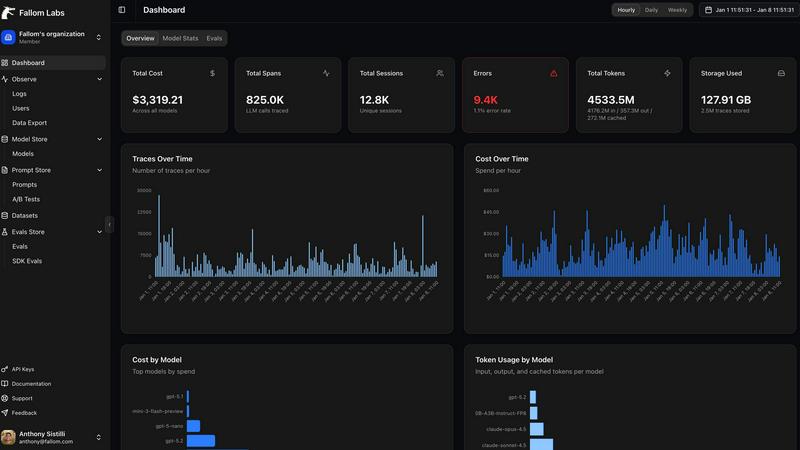
Fallom provides real-time observability for AI agents, allowing users to track tool calls, analyze timing, and debug issues effectively. By visualizing every LLM call, teams can gain insights into performance and usage patterns, ensuring swift identification and resolution of anomalies.
Cost Attribution
The platform offers detailed cost attribution features that track spending per model, user, and team. This transparency aids in budgeting and chargeback processes, enabling organizations to understand their operational costs clearly and allocate resources efficiently.
Compliance and Audit Trails
Fallom is equipped with comprehensive audit trails to support regulatory compliance requirements. With features like input/output logging, model versioning, and user consent tracking, it ensures that organizations can meet stringent standards such as the EU AI Act and GDPR with confidence.
Session Tracking
Fallom allows users to group traces by session, user, or customer, providing complete context for each interaction. This feature enhances the ability to analyze workflows and improves the debugging process by maintaining a clear record of user activities and associated costs.
qtrl.ai
Autonomous QA Agents
qtrl.ai's autonomous QA agents are designed to execute instructions on demand or continuously, enabling teams to run tests across multiple environments at scale. These agents operate within predefined rules to ensure compliance and quality, conducting real browser executions instead of relying on simulations. This feature allows teams to maintain a high degree of control while benefiting from automation.
Enterprise-Grade Test Management
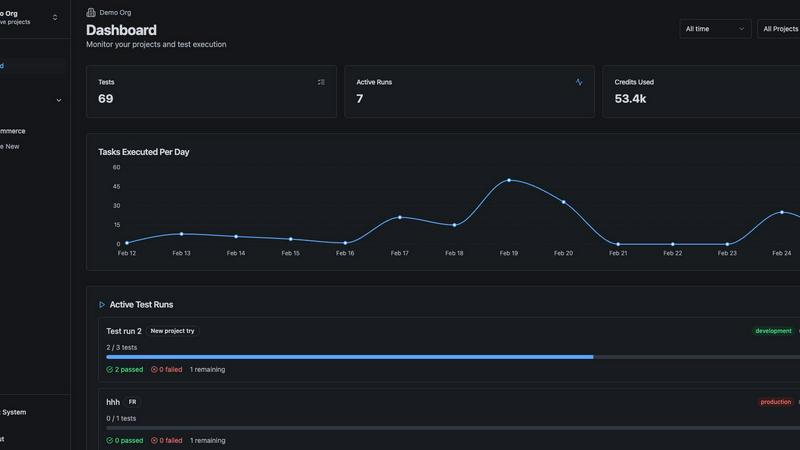
The platform provides a centralized system for managing test cases, plans, and execution runs. With full traceability and audit trails, teams can easily track their testing efforts, ensuring transparency and accountability. This feature supports both manual and automated workflows, making it ideal for organizations that prioritize compliance and auditability in their QA processes.
Progressive Automation
qtrl.ai implements a progressive automation approach that allows teams to start with human-written instructions and gradually transition to AI-generated tests. This feature includes intelligent suggestions for new tests based on existing coverage, ensuring that teams can continuously improve their testing processes. Review, approval, and refinement are integral to every step, providing teams with the flexibility to control their automation journey.
Adaptive Memory
The adaptive memory feature builds a living knowledge base of the application by learning from exploration, test execution, and identified issues. This capability powers smarter, context-aware test generation, making the testing process more effective with every interaction. As teams engage with the platform, it becomes increasingly adept at understanding application behavior, resulting in more accurate and efficient testing.
Use Cases
Fallom
Debugging AI Workflows
Organizations can utilize Fallom to debug complex agentic workflows by tracing each step of LLM interactions. This capability allows teams to identify bottlenecks or failures in real-time, facilitating quicker resolutions and improving overall system performance.
Cost Management
Fallom’s cost attribution features enable organizations to manage and analyze their AI-related expenses effectively. By tracking costs at granular levels, teams can make informed decisions regarding resource allocation and budget adjustments, enhancing financial oversight.
Compliance Audits
For companies operating under strict regulatory frameworks, Fallom provides the necessary tools to maintain compliance. Its comprehensive audit trails and logging capabilities support organizations in preparing for audits and ensuring adherence to laws such as GDPR and SOC 2.
Performance Monitoring
Fallom allows organizations to monitor LLM performance continuously, spotting anomalies before they escalate into significant issues. With real-time dashboards and detailed latency metrics, teams can maintain optimal performance levels for their AI systems.
qtrl.ai
Product-Led Engineering Teams
For product-led engineering teams, qtrl.ai offers a robust framework to manage and scale quality assurance practices without losing oversight. With its AI-driven automation, these teams can accelerate their development cycles while maintaining high-quality standards, ensuring that new features are rigorously tested before release.
QA Teams Scaling Beyond Manual Testing
QA departments transitioning from manual testing to automated solutions find qtrl.ai particularly valuable. The platform supports a gradual shift to automation, allowing teams to begin with manual test management before incorporating AI-generated tests. This empowers QA teams to enhance their productivity and coverage without compromising control.
Companies Modernizing Legacy QA Workflows
Organizations looking to modernize outdated QA workflows can leverage qtrl.ai to integrate advanced test management and automation capabilities. The platform's flexibility allows companies to adopt new testing methodologies while ensuring compliance and traceability, ultimately improving the efficiency of their QA processes.
Enterprises Requiring Governance and Traceability
For enterprises that necessitate strict governance and audit trails in their QA processes, qtrl.ai provides the necessary tools to maintain visibility and control. The platform's comprehensive test management features and adaptive memory capabilities ensure that all testing activities are documented and traceable, meeting the demands of regulatory compliance.
Overview
About Fallom
Fallom is an advanced AI-native observability platform meticulously designed for monitoring and optimizing Large Language Model (LLM) and AI agent workloads in real-time production environments. It serves the needs of engineering, product, and compliance teams by providing comprehensive visibility into every interaction with LLMs. The platform's core value proposition lies in its ability to deliver end-to-end tracing of AI calls, capturing essential data such as detailed prompts, model outputs, function/tool calls, token usage, latency metrics, and precise cost calculations per call. Built on the OpenTelemetry standard, Fallom ensures a vendor-agnostic approach with an SDK that allows teams to instrument their applications quickly and efficiently. This eliminates the complexities associated with integrating various monitoring tools. As organizations scale their AI-powered features, Fallom enables them to debug intricate workflows promptly, accurately attribute operational costs, and maintain robust audit trails. This capability is particularly crucial for compliance with stringent regulations such as the EU AI Act, SOC 2, and GDPR. By centralizing observability, Fallom transforms AI operations into a transparent, manageable, and cost-controllable aspect of the modern software stack.
About qtrl.ai
qtrl.ai is an advanced quality assurance (QA) platform designed to streamline and enhance software testing processes for teams of all sizes. By integrating enterprise-grade test management with sophisticated AI-driven automation, qtrl.ai provides a comprehensive solution that empowers software teams to scale their QA efforts effectively without sacrificing control or governance. This platform serves a diverse range of users, including product-led engineering teams, QA departments transitioning from manual testing, organizations modernizing outdated workflows, and enterprises that require strict compliance and traceability. At its core, qtrl.ai offers a centralized hub for organizing test cases, planning test runs, tracing requirements to coverage, and tracking quality metrics through real-time dashboards. Its intelligent automation features enable teams to incrementally adopt AI-driven testing solutions, ensuring that they maintain oversight and control while enhancing their testing capabilities. Ultimately, qtrl.ai's mission is to bridge the gap between the traditional slow pace of manual testing and the complex nature of conventional automation, delivering a reliable pathway to faster and more intelligent quality assurance.
Frequently Asked Questions
Fallom FAQ
What is Fallom?
Fallom is an AI-native observability platform designed to monitor and optimize Large Language Model interactions in production environments, providing real-time visibility into AI workloads.
How does Fallom ensure compliance?
Fallom supports compliance through comprehensive audit trails, logging of input and output, model versioning, and user consent tracking, ensuring organizations can meet regulatory requirements.
Can Fallom be integrated with existing tools?
Yes, Fallom is built on the OpenTelemetry standard and offers a vendor-agnostic SDK that allows for quick integration into existing applications, simplifying the observability process.
What types of organizations benefit from using Fallom?
Engineering, product, and compliance teams within organizations that leverage AI and LLM technologies benefit significantly from Fallom's real-time monitoring and optimization capabilities, especially those needing to adhere to strict compliance standards.
qtrl.ai FAQ
How does qtrl.ai ensure the quality of AI-generated tests?
qtrl.ai ensures the quality of AI-generated tests by implementing a review and approval process. Teams can assess suggested tests based on coverage and context, allowing for refinement before execution. This oversight minimizes the risks associated with automated testing.
Can qtrl.ai integrate with existing CI/CD pipelines?
Yes, qtrl.ai supports integration with existing CI/CD pipelines. This capability allows teams to seamlessly incorporate quality assurance into their development workflows, facilitating continuous quality feedback loops and improving overall efficiency.
What types of environments can qtrl.ai run tests in?
qtrl.ai can execute tests across various environments, including development, testing, staging, and production. The platform allows for per-environment variables and encrypted secrets, ensuring secure and consistent test execution across all stages of the application lifecycle.
Is there support available for new users of qtrl.ai?
Yes, qtrl.ai provides comprehensive support for new users, including documentation, tutorials, and customer assistance. This ensures that teams can effectively utilize the platform's features and maximize their quality assurance efforts from the outset.
Alternatives
Fallom Alternatives
Fallom is an AI-native observability platform specifically designed for monitoring and optimizing Large Language Model (LLM) and AI agent workloads in production environments. It offers real-time tracing and cost tracking, providing teams with comprehensive visibility into LLM interactions and improving their debugging processes. Users often seek alternatives to Fallom for various reasons, including pricing considerations, the need for specific features, or compatibility with different platforms. When searching for an alternative, it's essential to evaluate the observability capabilities, compliance features, ease of integration, and overall cost-effectiveness to ensure the chosen solution aligns with organizational goals and operational requirements.
qtrl.ai Alternatives
qtrl.ai is a modern quality assurance (QA) platform that enables software teams to enhance their testing processes through AI-driven automation while maintaining full control and governance. By combining enterprise-grade test management with intelligent automation, qtrl.ai provides a centralized hub for organizing test cases, planning runs, and tracking quality metrics, making it particularly appealing to product-led engineering teams and companies seeking to modernize their QA workflows. Users often search for alternatives to qtrl.ai due to various reasons, including pricing, specific feature requirements, or compatibility with existing platforms. When selecting an alternative, it's essential to consider factors such as the level of automation offered, ease of integration with current systems, user experience, and the ability to maintain compliance and governance standards. Finding a solution that aligns with your team's needs is crucial for effective quality assurance.