Fusedash vs SERPView
Side-by-side comparison to help you choose the right tool.

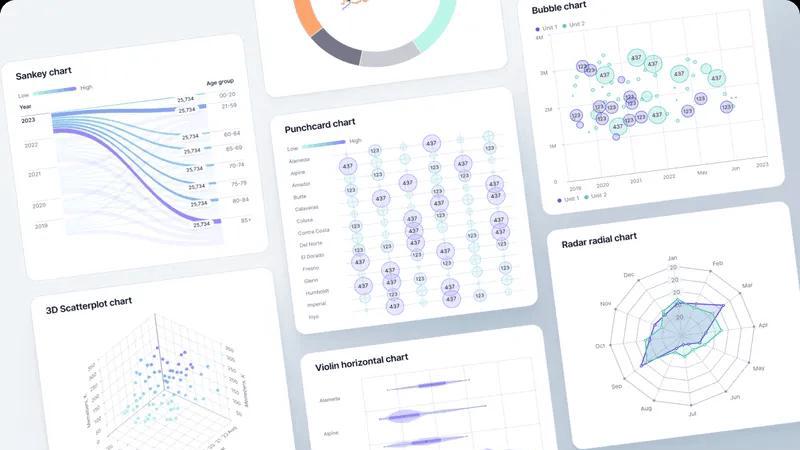
Fusedash transforms raw data into intuitive dashboards and charts, empowering teams to act on insights in real time.
Last updated: March 4, 2026

SERPView
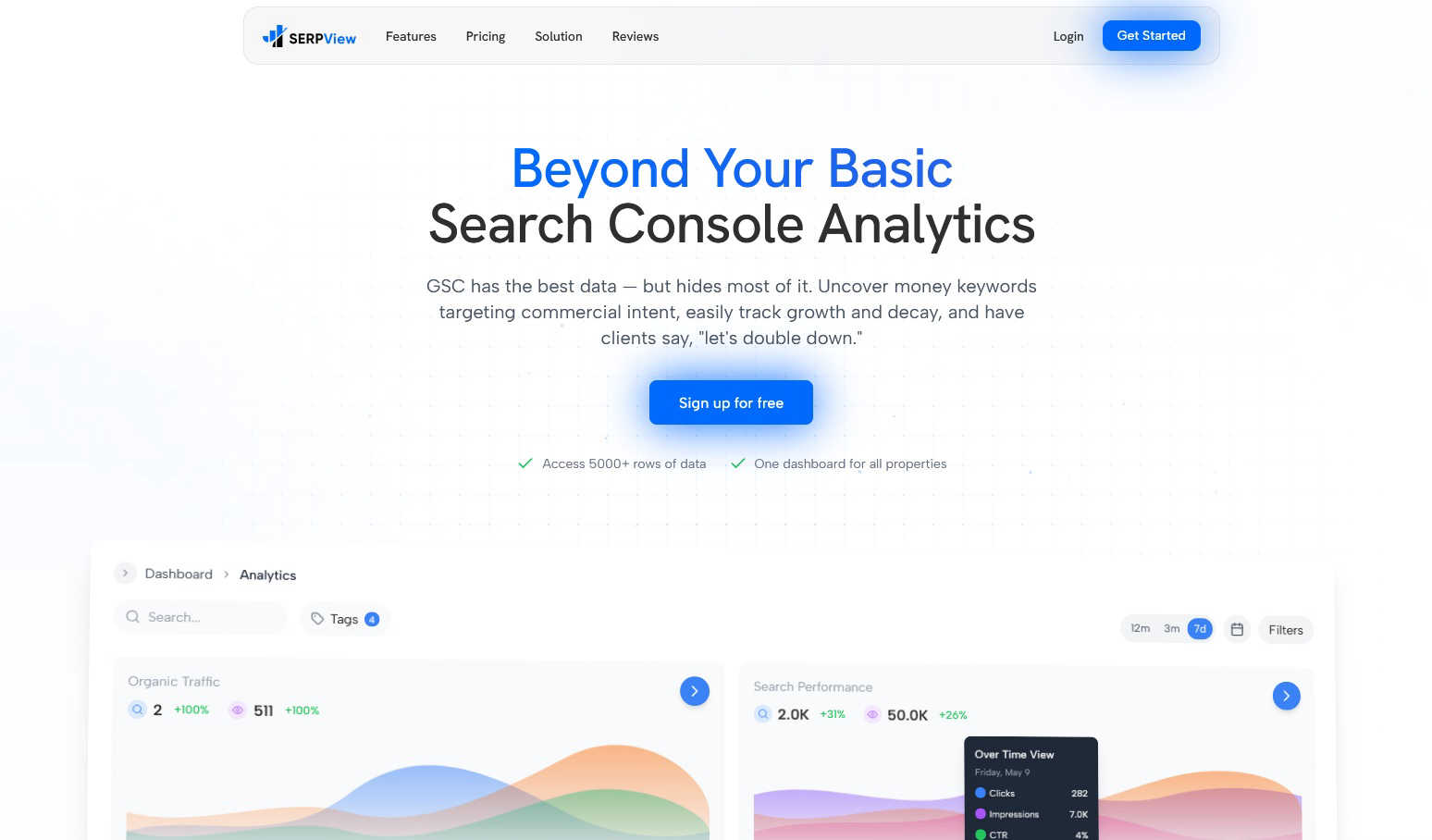
SERPView enhances Google Search Console with unlimited data access and advanced analytics for comprehensive performance.
Last updated: March 1, 2026
Visual Comparison
Fusedash
SERPView
Feature Comparison
Fusedash
Flexible Views
Fusedash allows users to create diverse visualizations tailored to different stakeholders. Whether it is dashboards, charts, maps, or report-style views, users can customize layouts, filters, and time ranges to ensure that each audience receives the specific insights they need, all without redundant efforts.
AI Chart Generator
The AI Chart Generator within Fusedash empowers users to create visual representations of their data from CSVs or APIs in mere minutes. This feature automatically selects the appropriate chart types, applies necessary comparisons, and refines labels to ensure accurate storytelling through visuals, enhancing the clarity and impact of reports.
Dashboard Software
Fusedash integrates dashboarding and reporting into a single workspace, allowing teams to monitor KPIs and provide contextual insights simultaneously. By combining performance metrics with narrative elements, users can clearly communicate changes, their implications, and future actions, minimizing discrepancies in reporting.
AI Chat
The AI Chat feature serves as an intelligent assistant, enabling users to inquire about their data using plain language. It provides suggestions for suitable metrics, charts, and breakdowns, facilitating a smoother workflow and helping teams quickly transform insights into shareable dashboard views.
SERPView
Performance Tracking
SERPView allows users to access up to 50,000 rows of Google Search Console data, surpassing the 1,000-row limit imposed by GSC. This feature enables comprehensive tracking of critical metrics such as clicks, impressions, click-through rates (CTR), and average position, offering unprecedented insights into search performance without limitations.
Keyword Analysis
This feature empowers users to discover high-value keywords that demonstrate commercial intent. SERPView enables the identification of new keyword opportunities and facilitates the tracking of position changes over time. Users can gain insights into which keywords are driving traffic and how their rankings fluctuate, helping them optimize their SEO strategy effectively.
Page Analysis
SERPView provides detailed analysis of individual page performance in search results. Users can easily identify which pages are excelling and which are underperforming. This feature also highlights optimization opportunities, allowing users to refine their content strategy based on real performance data, driving better search visibility.
Mobile vs Desktop Analysis
With this feature, users can compare search performance across device types, such as mobile and desktop. SERPView highlights performance differences, helping users identify whether they need to optimize their content for mobile users or focus on desktop strategies. This granular analysis enhances user understanding of audience behavior and informs tailored optimization efforts.
Use Cases
Fusedash
Real-Time Monitoring
Fusedash is ideal for teams requiring real-time data insights. By connecting their datasets, users can create live dashboards that provide immediate visibility into performance metrics, allowing quick reactions to emerging trends and ensuring proactive decision-making.
Stakeholder Reporting
Organizations can leverage Fusedash to generate comprehensive reports for stakeholders that combine visual data and narrative context. This ensures that all parties have a unified understanding of performance, reducing the likelihood of miscommunication and aligning strategic objectives.
Data Exploration
Fusedash is perfect for teams that need to explore data dynamically. By utilizing the AI Chart Generator and Smart Chat, users can quickly generate relevant visualizations and insights tailored to specific inquiries, fostering a culture of data-driven exploration and informed decision-making.
Cross-Department Collaboration
Fusedash facilitates collaboration across various departments by enabling teams to share consistent views and definitions. This unified approach ensures that all teams—from finance to marketing—are aligned on key metrics and KPIs, helping to bridge gaps in understanding and enhance overall organizational efficiency.
SERPView
SEO Performance Optimization
SEO professionals can leverage SERPView to gain a comprehensive view of their website’s search performance. By accessing extensive GSC data, they can identify trends, measure the impact of SEO initiatives, and refine strategies based on actionable insights.
Content Strategy Development
Content strategists can utilize SERPView to analyze which topics and keywords drive traffic to their site. By identifying high-performing pages and underperforming content, they can tailor their content strategies to focus on topics that resonate with their audience and improve overall engagement.
Competitive Analysis
Digital marketers can use SERPView to conduct competitive analysis by tracking keyword rankings and performance metrics against competitors. This feature helps marketers identify gaps in their strategy and discover new opportunities to outperform rivals in search results.
International SEO Management
For businesses operating in multiple countries, SERPView provides insights into how their website performs across different regions and languages. By analyzing international data, users can optimize their global SEO strategies, ensuring they cater to diverse audiences effectively.
Overview
About Fusedash
Fusedash is an advanced AI-powered data visualization platform engineered to enable teams to convert their interconnected data into clear and actionable insights. It serves as a comprehensive workspace where users can effortlessly create decision-ready dashboards, interactive charts, detailed maps, and narrative reports without the need to replicate the same logic across various disconnected tools. This platform's core value proposition centers on consistency and efficiency: users define key metrics and KPIs once, and these definitions can be reused across every view and report. This ensures that all members of the organization—from leadership and marketing to operations—are aligned with the same trusted numbers. Fusedash is tailored for teams overwhelmed by manual reporting cycles and contradictory data narratives. It empowers users to monitor real-time data effectively and to delve into the underlying reasons behind trends by segmenting data across regions or timeframes. With integrated AI features such as natural language data chat and smart visualization assistance, Fusedash streamlines data exploration and reporting, transforming raw data into a unified source of truth that fosters alignment and prompt action.
About SERPView
SERPView is a powerful analytics platform designed to maximize the utility of Google Search Console (GSC) data. It addresses the inherent limitations of the GSC interface, which restricts users to a mere 1,000 rows of data and complicates the management of multiple properties. This platform is tailored for SEO professionals, digital marketers, and content strategists who demand detailed, actionable insights to enhance organic search performance. SERPView aggregates and expands GSC data into a centralized, user-friendly dashboard, allowing access to over 50,000 rows of data. With features for keyword, page, and competitive analysis, SERPView transforms raw search performance metrics into clear, visual insights. This enables users to make informed decisions, uncover hidden opportunities, and accurately track the effects of their SEO efforts with unmatched clarity and efficiency, ultimately driving better results in their digital marketing strategies.
Frequently Asked Questions
Fusedash FAQ
What types of data sources can Fusedash connect to?
Fusedash can connect to a variety of data sources including CSV files, APIs, and public datasets, allowing users to aggregate and analyze information from multiple origins seamlessly.
How does Fusedash ensure metric consistency across reports?
Users can define key metrics and KPIs once within Fusedash, which are then reused throughout all dashboards and reports. This standardization guarantees that everyone in the organization is referencing the same data definitions, promoting trust in the insights generated.
Can Fusedash be used for real-time data monitoring?
Yes, Fusedash supports real-time data monitoring. By connecting to live data sources, users can create dashboards that update in real-time, providing instant visibility into performance metrics and trends.
Is it possible to customize visualizations in Fusedash?
Absolutely. Fusedash offers extensive customization options for visualizations, including layout adjustments, filter settings, and time range selections, ensuring that each dashboard or report can be tailored to meet specific audience needs.
SERPView FAQ
What is SERPView?
SERPView is an advanced analytics platform that enhances the capabilities of Google Search Console, allowing users to access more data, perform detailed analysis, and make informed SEO decisions.
How does SERPView improve upon Google Search Console?
SERPView removes the limitations of Google Search Console by providing access to up to 50,000 rows of data, facilitating easier multi-property management, and offering advanced analytical tools that uncover critical insights.
Who can benefit from using SERPView?
SERPView is designed for SEO professionals, digital marketers, and content strategists who require in-depth analytics and actionable intelligence to optimize their organic search performance and drive website traffic.
Is there a free trial available for SERPView?
Yes, SERPView offers a free sign-up option, allowing potential users to explore the platform's capabilities and see how it can enhance their SEO efforts without any initial investment.
Alternatives
Fusedash Alternatives
Fusedash is an AI-powered data visualization platform that falls under the categories of Analytics & Data and Business Intelligence. It enables teams to turn raw data into actionable insights through clear dashboards and interactive charts. Users often seek alternatives to Fusedash for various reasons, including pricing concerns, specific feature requirements, or compatibility with existing platforms. When evaluating alternatives, it is essential to consider factors such as ease of use, the ability to customize dashboards, integration capabilities, and the level of support offered by the provider. --- [{"question": "What is Fusedash?", "answer": "Fusedash is an AI-powered data visualization platform designed to transform raw data into clear, actionable insights through dashboards and interactive charts."}, {"question": "Who is Fusedash for?", "answer": "Fusedash is built for teams across various departments, including leadership, marketing, and operations, who seek to streamline reporting and ensure everyone is aligned on key metrics."}, {"question": "Is Fusedash free?", "answer": "Fusedash does not offer a free version; pricing details can be obtained from their official website."}, {"question": "What are the main features of Fusedash?", "answer": "Key features of Fusedash include decision-ready dashboards, real-time interfaces, natural language data chat, smart visualization assistance, and the ability to define key metrics for consistent reporting."}]
SERPView Alternatives
SERPView is a cutting-edge analytics platform designed to enhance the utility of Google Search Console data. As a tool that falls under the analytics and data category, SERPView caters to SEO professionals, digital marketers, and content strategists who need in-depth insights to optimize their organic search performance. Users often seek alternatives to SERPView for various reasons, including pricing structures, specific feature sets, or compatibility with their existing platforms. When considering alternatives, users should prioritize features such as data access limits, analytical capabilities, user interface design, and overall scalability. It's also essential to evaluate how well an alternative aligns with individual business needs and objectives, ensuring it provides the necessary tools for effective decision-making and performance tracking.