

SERPView
SERPView enhances Google Search Console with unlimited data access and advanced analytics for comprehensive performance.
tool Details
Explore More
Alternatives
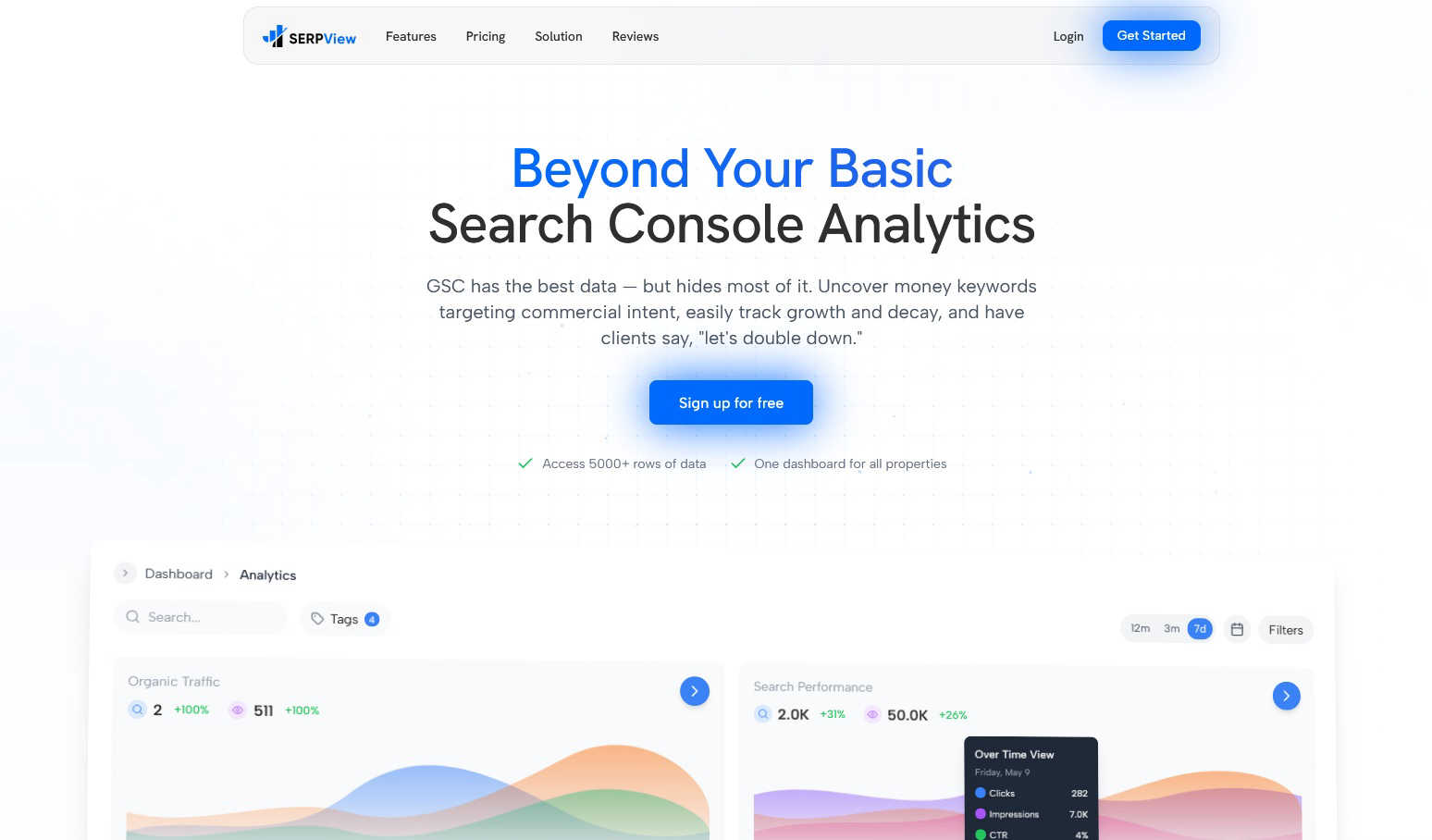
About SERPView
SERPView is a powerful analytics platform designed to maximize the utility of Google Search Console (GSC) data. It addresses the inherent limitations of the GSC interface, which restricts users to a mere 1,000 rows of data and complicates the management of multiple properties. This platform is tailored for SEO professionals, digital marketers, and content strategists who demand detailed, actionable insights to enhance organic search performance. SERPView aggregates and expands GSC data into a centralized, user-friendly dashboard, allowing access to over 50,000 rows of data. With features for keyword, page, and competitive analysis, SERPView transforms raw search performance metrics into clear, visual insights. This enables users to make informed decisions, uncover hidden opportunities, and accurately track the effects of their SEO efforts with unmatched clarity and efficiency, ultimately driving better results in their digital marketing strategies.
Features
Performance Tracking
SERPView allows users to access up to 50,000 rows of Google Search Console data, surpassing the 1,000-row limit imposed by GSC. This feature enables comprehensive tracking of critical metrics such as clicks, impressions, click-through rates (CTR), and average position, offering unprecedented insights into search performance without limitations.
Keyword Analysis
This feature empowers users to discover high-value keywords that demonstrate commercial intent. SERPView enables the identification of new keyword opportunities and facilitates the tracking of position changes over time. Users can gain insights into which keywords are driving traffic and how their rankings fluctuate, helping them optimize their SEO strategy effectively.
Page Analysis
SERPView provides detailed analysis of individual page performance in search results. Users can easily identify which pages are excelling and which are underperforming. This feature also highlights optimization opportunities, allowing users to refine their content strategy based on real performance data, driving better search visibility.
Mobile vs Desktop Analysis
With this feature, users can compare search performance across device types, such as mobile and desktop. SERPView highlights performance differences, helping users identify whether they need to optimize their content for mobile users or focus on desktop strategies. This granular analysis enhances user understanding of audience behavior and informs tailored optimization efforts.
Use Cases
SEO Performance Optimization
SEO professionals can leverage SERPView to gain a comprehensive view of their website’s search performance. By accessing extensive GSC data, they can identify trends, measure the impact of SEO initiatives, and refine strategies based on actionable insights.
Content Strategy Development
Content strategists can utilize SERPView to analyze which topics and keywords drive traffic to their site. By identifying high-performing pages and underperforming content, they can tailor their content strategies to focus on topics that resonate with their audience and improve overall engagement.
Competitive Analysis
Digital marketers can use SERPView to conduct competitive analysis by tracking keyword rankings and performance metrics against competitors. This feature helps marketers identify gaps in their strategy and discover new opportunities to outperform rivals in search results.
International SEO Management
For businesses operating in multiple countries, SERPView provides insights into how their website performs across different regions and languages. By analyzing international data, users can optimize their global SEO strategies, ensuring they cater to diverse audiences effectively.
Frequently Asked Questions
What is SERPView?
SERPView is an advanced analytics platform that enhances the capabilities of Google Search Console, allowing users to access more data, perform detailed analysis, and make informed SEO decisions.
How does SERPView improve upon Google Search Console?
SERPView removes the limitations of Google Search Console by providing access to up to 50,000 rows of data, facilitating easier multi-property management, and offering advanced analytical tools that uncover critical insights.
Who can benefit from using SERPView?
SERPView is designed for SEO professionals, digital marketers, and content strategists who require in-depth analytics and actionable intelligence to optimize their organic search performance and drive website traffic.
Is there a free trial available for SERPView?
Yes, SERPView offers a free sign-up option, allowing potential users to explore the platform's capabilities and see how it can enhance their SEO efforts without any initial investment.
Similar to SERPView
SubmitMap
A directory of launch platforms: who each accepts, what disqualifies you, and how to submit. Free to read, and your agent can do the submitting.

GROWNX
Real-time App Store analytics with an AI copilot for portfolio owners.

LetsLaunch
LetsLaunch is a product launch directory for SaaS and micro-SaaS founders who want to publish a new product and reach people browsing startup tools. I

LaunchBert
LaunchBert saves you hours launching to directories - with a curated roadmap, one-click badge integration, and a form auto-fill Chrome extension.

Built2WinWeb AI SEO
Custom PHP websites, AI Indexing Pack ($599 one‑time), and WebAgentScan SaaS ($9/mo). MCP, A2A, llms.txt, full ownership.

Build or Skip
Build or Skip helps builders find products already making money before they commit to a new idea.