HookMesh vs qtrl.ai
Side-by-side comparison to help you choose the right tool.

HookMesh ensures reliable webhook delivery with automatic retries and a self-service portal for seamless customer.
Last updated: February 26, 2026

qtrl.ai
qtrl.ai empowers QA teams to scale testing with AI while maintaining control, governance, and seamless integration.
Last updated: March 4, 2026
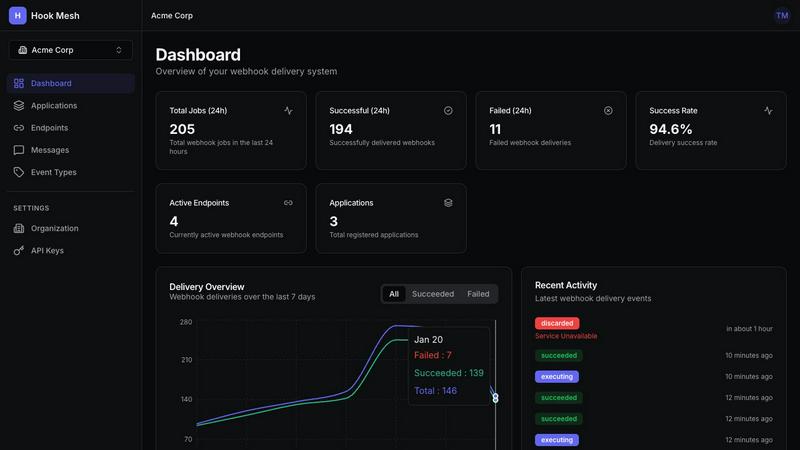
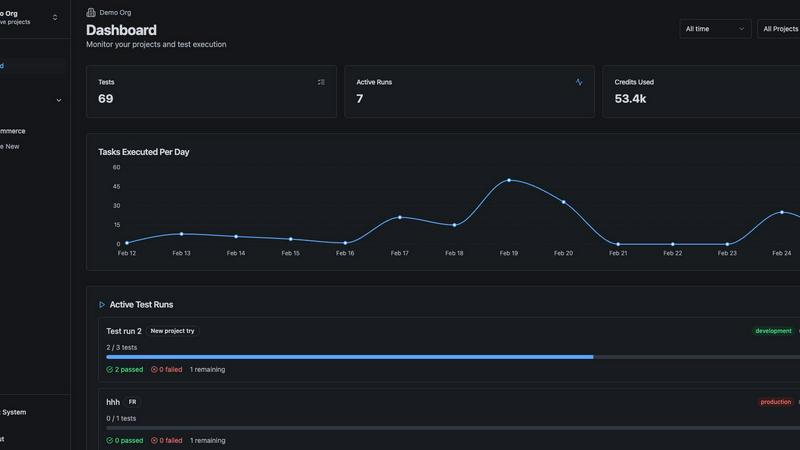
Visual Comparison
HookMesh
qtrl.ai
Feature Comparison
HookMesh
Reliable Delivery
HookMesh guarantees that webhook events are never lost. The platform employs automatic retries with an exponential backoff strategy, which intelligently spaces out retry attempts to avoid overwhelming slow endpoints. This ensures that even if a delivery fails initially, it will be retried for up to 48 hours, maximizing the chances of successful delivery.
Circuit Breaker
To maintain system integrity, HookMesh includes a circuit breaker feature that automatically disables failing endpoints. By monitoring the performance of each endpoint, the circuit breaker prevents subsequent requests from overwhelming an already struggling endpoint. Once the endpoint recovers, it is automatically re-enabled, ensuring continuous and reliable operations.
Customer Portal
The customer portal is an embeddable user interface that allows your customers to manage their webhook endpoints with ease. Users can add new endpoints, view detailed delivery logs, and instantly replay failed webhooks, all from a simple, intuitive interface. This self-service capability reduces the support burden on your team and enhances customer satisfaction.
Developer Experience
HookMesh is designed with developers in mind, offering a REST API for complete programmatic access to its features along with official SDKs for JavaScript, Python, and Go. This means developers can integrate webhook capabilities into their applications with just a few lines of code, significantly reducing the time to market and streamlining the development process.
qtrl.ai
Autonomous QA Agents
qtrl.ai's autonomous QA agents are designed to execute instructions on demand or continuously, enabling teams to run tests across multiple environments at scale. These agents operate within predefined rules to ensure compliance and quality, conducting real browser executions instead of relying on simulations. This feature allows teams to maintain a high degree of control while benefiting from automation.
Enterprise-Grade Test Management
The platform provides a centralized system for managing test cases, plans, and execution runs. With full traceability and audit trails, teams can easily track their testing efforts, ensuring transparency and accountability. This feature supports both manual and automated workflows, making it ideal for organizations that prioritize compliance and auditability in their QA processes.
Progressive Automation
qtrl.ai implements a progressive automation approach that allows teams to start with human-written instructions and gradually transition to AI-generated tests. This feature includes intelligent suggestions for new tests based on existing coverage, ensuring that teams can continuously improve their testing processes. Review, approval, and refinement are integral to every step, providing teams with the flexibility to control their automation journey.
Adaptive Memory
The adaptive memory feature builds a living knowledge base of the application by learning from exploration, test execution, and identified issues. This capability powers smarter, context-aware test generation, making the testing process more effective with every interaction. As teams engage with the platform, it becomes increasingly adept at understanding application behavior, resulting in more accurate and efficient testing.
Use Cases
HookMesh
E-commerce Order Processing
In an e-commerce setting, HookMesh can be utilized to send order completion notifications to various services, such as inventory management, shipping providers, and customer relationship management (CRM) systems. By ensuring reliable delivery of these critical events, businesses can keep their operations synchronized and enhance customer satisfaction.
SaaS Event Notifications
For SaaS products that need to notify users of important events such as account updates or feature releases, HookMesh provides a reliable solution for managing these notifications. With automatic retries and visibility into delivery logs, product teams can ensure that users receive timely updates without the hassle of managing webhook failures.
Payment Processing
Payment gateways can leverage HookMesh to deliver payment confirmation webhooks to merchants. By utilizing the platform’s circuit breaker and retry logic, payment processors can ensure that notifications are reliably sent even during peak transaction times, thereby maintaining trust with merchants and end users.
Integration with Third-Party Services
Businesses that integrate with third-party services can benefit from HookMesh by easily sending webhook events to those services. Whether it is for CRM systems, marketing tools, or analytics platforms, HookMesh simplifies the process and ensures that webhook events are delivered consistently, allowing for seamless data flow between systems.
qtrl.ai
Product-Led Engineering Teams
For product-led engineering teams, qtrl.ai offers a robust framework to manage and scale quality assurance practices without losing oversight. With its AI-driven automation, these teams can accelerate their development cycles while maintaining high-quality standards, ensuring that new features are rigorously tested before release.
QA Teams Scaling Beyond Manual Testing
QA departments transitioning from manual testing to automated solutions find qtrl.ai particularly valuable. The platform supports a gradual shift to automation, allowing teams to begin with manual test management before incorporating AI-generated tests. This empowers QA teams to enhance their productivity and coverage without compromising control.
Companies Modernizing Legacy QA Workflows
Organizations looking to modernize outdated QA workflows can leverage qtrl.ai to integrate advanced test management and automation capabilities. The platform's flexibility allows companies to adopt new testing methodologies while ensuring compliance and traceability, ultimately improving the efficiency of their QA processes.
Enterprises Requiring Governance and Traceability
For enterprises that necessitate strict governance and audit trails in their QA processes, qtrl.ai provides the necessary tools to maintain visibility and control. The platform's comprehensive test management features and adaptive memory capabilities ensure that all testing activities are documented and traceable, meeting the demands of regulatory compliance.
Overview
About HookMesh
HookMesh is a sophisticated platform designed to streamline and enhance the delivery of webhooks for modern SaaS products. In the rapidly evolving digital landscape, developers often face significant challenges when building and managing webhooks in-house. HookMesh addresses these complexities by providing a robust solution that handles retry logic, circuit breakers, and debugging delivery issues, allowing businesses to focus on their core offerings without getting bogged down by technical hurdles. With HookMesh, organizations can ensure reliable delivery of webhook events through a battle-tested infrastructure that incorporates automatic retries, exponential backoff, and idempotency keys. This makes it particularly appealing for developers and product teams who aim to deliver a seamless experience for their customers. The self-service portal empowers customers by facilitating easy endpoint management, full visibility into webhook delivery logs, and the ability to replay failed webhooks with a single click. Overall, HookMesh offers peace of mind for organizations looking to optimize their webhook strategy.
About qtrl.ai
qtrl.ai is an advanced quality assurance (QA) platform designed to streamline and enhance software testing processes for teams of all sizes. By integrating enterprise-grade test management with sophisticated AI-driven automation, qtrl.ai provides a comprehensive solution that empowers software teams to scale their QA efforts effectively without sacrificing control or governance. This platform serves a diverse range of users, including product-led engineering teams, QA departments transitioning from manual testing, organizations modernizing outdated workflows, and enterprises that require strict compliance and traceability. At its core, qtrl.ai offers a centralized hub for organizing test cases, planning test runs, tracing requirements to coverage, and tracking quality metrics through real-time dashboards. Its intelligent automation features enable teams to incrementally adopt AI-driven testing solutions, ensuring that they maintain oversight and control while enhancing their testing capabilities. Ultimately, qtrl.ai's mission is to bridge the gap between the traditional slow pace of manual testing and the complex nature of conventional automation, delivering a reliable pathway to faster and more intelligent quality assurance.
Frequently Asked Questions
HookMesh FAQ
What is HookMesh?
HookMesh is a webhook delivery management platform designed to simplify the complexities associated with building and maintaining webhooks for SaaS products. It ensures reliable delivery, automatic retries, and provides an intuitive customer portal for endpoint management.
How does HookMesh handle failed webhook deliveries?
HookMesh employs automatic retries and an exponential backoff strategy to manage failed deliveries. If an endpoint fails, HookMesh will retry for up to 48 hours while implementing a circuit breaker to prevent overloading the endpoint.
Can I manage webhook endpoints through HookMesh?
Yes, HookMesh provides a self-service customer portal that allows users to manage their webhook endpoints. Customers can add, edit, and delete endpoints, view delivery logs, and replay failed webhooks with ease.
Is there a free tier available for HookMesh?
Absolutely! HookMesh offers a free tier that includes 5,000 webhooks per month with no credit card required. This allows businesses to test the service and evaluate its capabilities without any upfront investment.
qtrl.ai FAQ
How does qtrl.ai ensure the quality of AI-generated tests?
qtrl.ai ensures the quality of AI-generated tests by implementing a review and approval process. Teams can assess suggested tests based on coverage and context, allowing for refinement before execution. This oversight minimizes the risks associated with automated testing.
Can qtrl.ai integrate with existing CI/CD pipelines?
Yes, qtrl.ai supports integration with existing CI/CD pipelines. This capability allows teams to seamlessly incorporate quality assurance into their development workflows, facilitating continuous quality feedback loops and improving overall efficiency.
What types of environments can qtrl.ai run tests in?
qtrl.ai can execute tests across various environments, including development, testing, staging, and production. The platform allows for per-environment variables and encrypted secrets, ensuring secure and consistent test execution across all stages of the application lifecycle.
Is there support available for new users of qtrl.ai?
Yes, qtrl.ai provides comprehensive support for new users, including documentation, tutorials, and customer assistance. This ensures that teams can effectively utilize the platform's features and maximize their quality assurance efforts from the outset.
Alternatives
HookMesh Alternatives
HookMesh is a sophisticated solution in the realm of webhook delivery, designed to streamline the integration process for SaaS applications. As organizations grow, they often encounter challenges related to webhook management, such as ensuring reliable delivery, handling retries, and providing visibility to end-users. Consequently, many users seek alternatives to HookMesh for various reasons, including pricing, feature sets, and specific platform requirements that may not be fully addressed by HookMesh. When exploring alternatives, it's crucial to consider factors such as reliability, ease of use, and the availability of customer support. Users should look for solutions that provide robust webhook management capabilities, including automatic retries, detailed logging, and a user-friendly interface. Additionally, evaluating the scalability and flexibility of the alternative can ensure it meets both current and future organizational needs.
qtrl.ai Alternatives
qtrl.ai is a modern quality assurance (QA) platform that enables software teams to enhance their testing processes through AI-driven automation while maintaining full control and governance. By combining enterprise-grade test management with intelligent automation, qtrl.ai provides a centralized hub for organizing test cases, planning runs, and tracking quality metrics, making it particularly appealing to product-led engineering teams and companies seeking to modernize their QA workflows. Users often search for alternatives to qtrl.ai due to various reasons, including pricing, specific feature requirements, or compatibility with existing platforms. When selecting an alternative, it's essential to consider factors such as the level of automation offered, ease of integration with current systems, user experience, and the ability to maintain compliance and governance standards. Finding a solution that aligns with your team's needs is crucial for effective quality assurance.