MindMap AI vs RocketShare
Side-by-side comparison to help you choose the right tool.

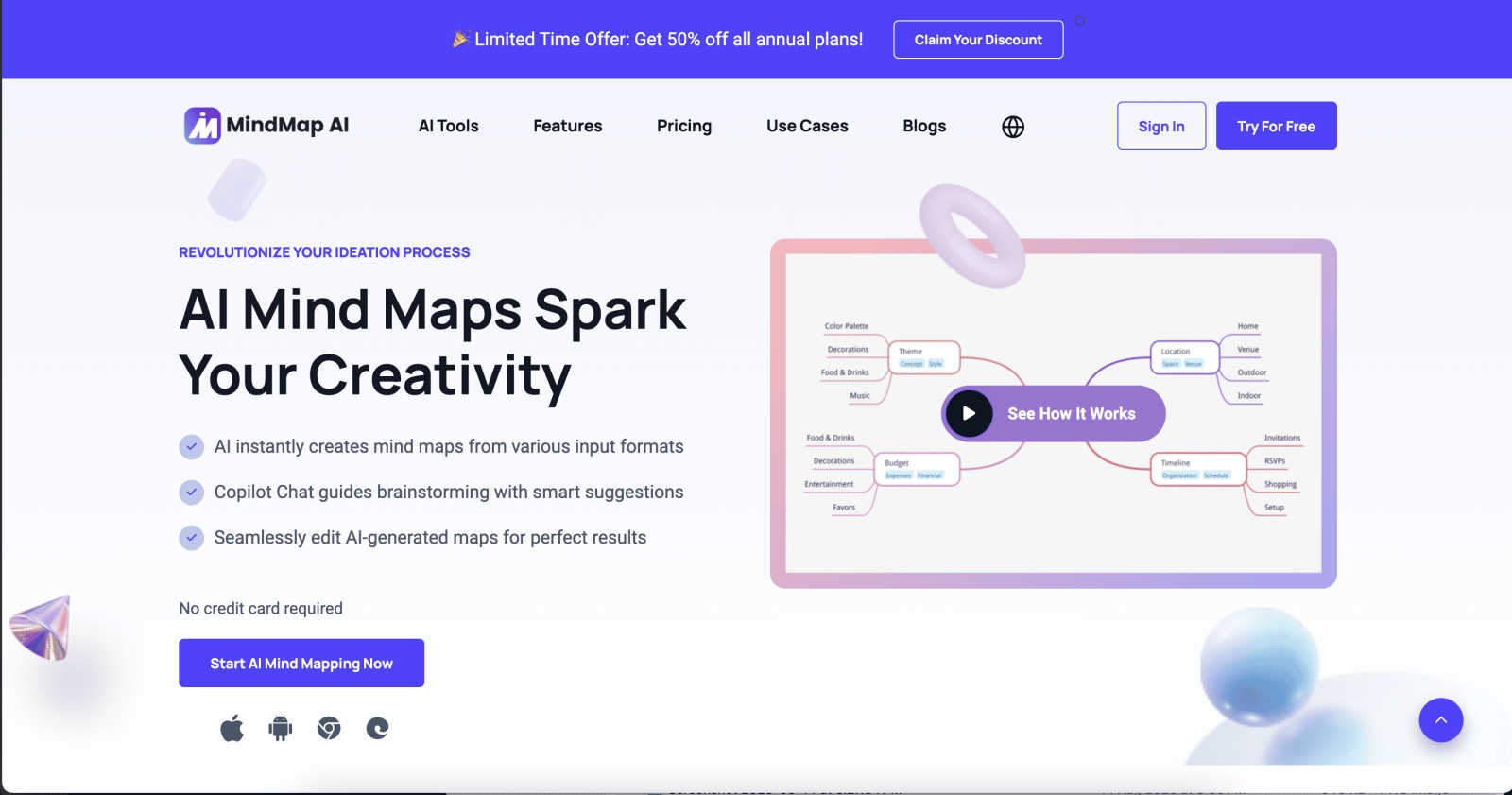
MindMap AI instantly generates and co-edits structured mind maps from any document or idea.
Last updated: March 1, 2026

RocketShare
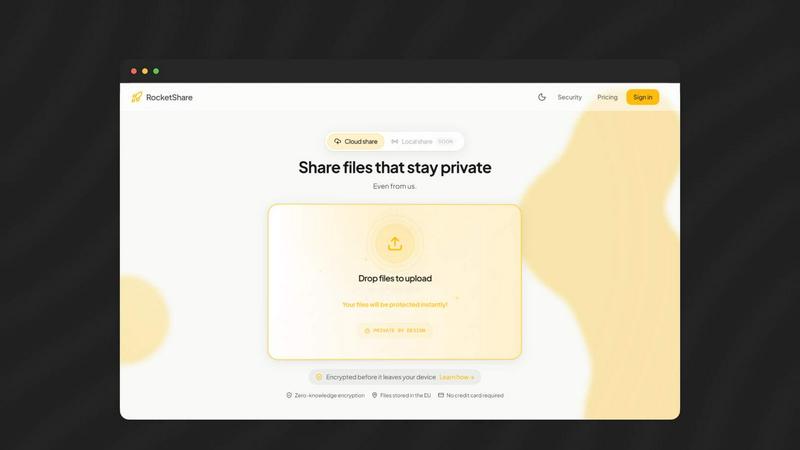
RocketShare provides secure, zero-knowledge encrypted file sharing where only you control access.
Last updated: March 4, 2026
Visual Comparison
MindMap AI
RocketShare
Feature Comparison
MindMap AI
AI Thinking Mode with Step-by-Step Reasoning
This proprietary engine is the core of MindMap AI's accuracy. It analyzes input content by understanding context, hierarchy, and semantic relationships before generating any visual structure. This process ensures that every mind map is logically structured, meaningful, and accurate on the first attempt, producing coherent maps rather than a collection of random, disconnected branches. It is designed for reliability in professional and academic settings.
Multi-Format File-to-Map Conversion
The platform can ingest and process a vast array of file formats, instantly transforming them into clean, editable mind maps. Supported inputs include text, PDFs, images, audio recordings, video files, Markdown, CSV, JSON, and XML. This feature eliminates the manual, time-consuming process of building a map from scratch, allowing users to immediately engage with the core ideas and structure extracted from their source material.
MindMark Stability & Continuous Co-Editing
MindMap AI is built to respect user input. The MindMark Stability system guarantees that manual edits, custom layouts, and personal structural choices remain untouched and are never overwritten by AI actions. Users maintain full manual control while the AI co-creates alongside them, allowing for seamless expansion, summarization, reorganization, and styling of map elements in seconds without breaking the established design.
Flexible Layouts & Instant Aesthetics
Users can visualize their project in three distinct chart views: Mind Map, Organizational Chart, and Logic Chart. The underlying structure remains perfectly aligned across all layouts. Coupled with a library of presentation-ready themes, this allows for instant visual polish. Users have total customization control over colors, fonts, shapes, and can add functional widgets like Priority Flags and Due Dates to create actionable plans.
RocketShare
Zero-Knowledge, End-to-End Encryption
RocketShare implements a true zero-knowledge encryption model where files are encrypted locally on the sender's device using strong cryptographic standards before upload. The platform's servers never receive or have access to the unencrypted data or the decryption keys. This means that even in the event of a server breach, the encrypted data remains computationally infeasible to decipher. The decryption key is typically part of the shareable URL, granting access only to intended recipients with the complete link.
Dual Sharing Modes: Cloud and Local (P2P)
The platform provides two technical methodologies for file transfer. The Cloud Share mode uploads encrypted files to secure, EU-based data centers for persistent, time-limited access. The Local Share (peer-to-peer) mode establishes a direct, encrypted connection between the sender's and recipient's devices for the transfer, with files never stored on RocketShare's servers. This P2P option is ideal for transient data exchange where cloud persistence is not required.
EU-Based Data Sovereignty
For cloud-based transfers, all encrypted file data is stored exclusively on servers located within the European Union. This provides users with the legal and regulatory assurances associated with EU data protection jurisdiction, including adherence to the General Data Protection Regulation (GDPR) framework for data handling and storage practices.
No-Account Required File Sharing
RocketShare operates on a frictionless, self-serve model that does not mandate account creation for basic file sending. Users can initiate secure transfers immediately without providing personal information or payment details. This reduces barriers to adoption while maintaining full security, as the encryption process is device-based and independent of user authentication on the platform's servers.
Use Cases
MindMap AI
Academic Research and Synthesis
Students and researchers can utilize MindMap AI to deconstruct complex papers, books, and lecture materials. By converting PDFs and notes into structured maps, they can visually synthesize information, identify key themes and gaps in literature, and outline research papers or theses with a clear hierarchical flow, significantly accelerating the comprehension and writing process.
Strategic Business Planning and Analysis
Professionals and teams can transform lengthy strategy documents, competitor analyses, and market research reports into interactive maps. This enables the clear visualization of goals, initiatives, risks, and dependencies. The AI's ability to uncover second-order connections helps in identifying non-obvious strategic insights and refining business plans for executive presentation.
Project Management and Agile Workflows
Project managers can convert project briefs, meeting notes, and audio recordings into dynamic maps to outline project scope, break down work structures, and assign tasks. Using widgets like Priority Flags and Due Dates within the map turns it into a living project plan that teams can collaboratively edit and track, ensuring alignment and clarity across all stakeholders.
Creative Ideation and Content Development
Writers, marketers, and creatives can use the platform to brainstorm campaign ideas, plot narratives, or structure content outlines. Starting from a simple prompt or an existing document, the AI helps expand concepts, suggest related topics, and organize thoughts into a coherent visual framework, streamlining the creative process from initial chaos to a structured execution plan.
RocketShare
Legal Document Exchange
Law firms and legal professionals can securely share sensitive case files, contracts, deposition transcripts, and client communications. The zero-knowledge architecture ensures attorney-client privilege and work-product doctrine protections are technically enforced, as no third party can intercept or access the confidential materials during transfer or storage.
Healthcare Data Transmission
Medical practices, therapists, and healthcare administrators can use RocketShare to exchange protected health information (PHI), patient records, lab results, and imaging files in compliance with stringent regulations like HIPAA. The platform's encryption and EU data storage provide a robust technical safeguard for patient privacy.
Creative Asset Delivery
Photographers, videographers, and design agencies can deliver high-resolution client galleries, raw footage, and creative proofs. The ability to send files of any size, coupled with guaranteed privacy, protects intellectual property and ensures only paying clients access the final deliverables via the unique, key-embedded link.
Confidential Corporate Collaboration
Teams working on proprietary projects, financial reports, merger & acquisition documents, or source code can collaborate securely. The local P2P sharing option is particularly valuable for transferring draft documents or sensitive data between team members without creating a cloud-based copy, minimizing the digital footprint.
Pricing Comparison
MindMap AI
MindMap AI offers a free tier that provides users with 50 credits monthly at no cost and does not require a credit card to start. For detailed information on premium plans, subscription tiers, enterprise pricing, and specific feature access beyond the free credits, users are directed to visit the official MindMap AI website's "Pricing" section for the most current and comprehensive breakdown.
RocketShare
The provided context indicates that specific pricing plans, tiers, or costs are not detailed in the available material. The website highlights a "No credit card required" approach for initial use, suggesting a possible freemium model or free tier for basic services. For detailed, current pricing information regarding premium features, storage limits, or team plans, users are directed to visit the official RocketShare website and navigate to its dedicated "Pricing" section.
Overview
About MindMap AI
MindMap AI is an advanced, AI-powered cognitive workspace designed to transform unstructured information into structured, actionable intelligence. It is engineered for professionals, teams, students, and researchers who require a sophisticated tool for ideation, planning, and knowledge synthesis. The platform transcends traditional mind mapping by intelligently processing diverse inputs—including text, PDFs, Word documents, presentations, images, audio, video, Markdown, CSV, JSON, and HTML files—and converting them into dynamic, interactive visual maps. Its core value proposition lies in a proprietary step-by-step reasoning engine that ensures generated maps are contextually accurate and hierarchically meaningful, avoiding random associative branches. MindMap AI functions as a central hub for collaborative thinking, offering seamless co-editing across web, mobile, and browser extensions. Key capabilities include conversational interaction with maps via Co-Pilot Chat, automatic expansion of concepts, content summarization, and uncovering second-order connections. With multi-format export, robust manual editing tools, and flexible visual layouts, it provides a scalable enterprise solution for moving from informational chaos to operational clarity and strategic insight.
About RocketShare
RocketShare is a secure file-sharing platform engineered to provide absolute data privacy through a zero-knowledge encryption architecture. The core operational principle is that user privacy is non-negotiable; the platform is designed so that no entity, including RocketShare's own administrators, can access the content of shared files. This is achieved by performing client-side encryption on the user's device before any data is transmitted. The encryption keys remain solely with the user, often embedded directly within the shareable link, ensuring servers only process cryptographically secure, unreadable data. The platform supports the transfer of files of any size and offers two distinct sharing modalities: cloud-based storage with data housed in EU-based facilities, and a local, peer-to-peer transfer option that minimizes data persistence. Targeted at professionals and organizations handling sensitive information, RocketShare delivers enterprise-grade security within a self-serve, user-friendly interface. Its value proposition is providing top-tier cryptographic security without compromising on simplicity, making robust privacy accessible for legal, creative, healthcare, and corporate sectors.
Frequently Asked Questions
MindMap AI FAQ
What file types can MindMap AI process?
MindMap AI supports a comprehensive range of input formats for conversion into mind maps. This includes standard documents (PDF, Word, PowerPoint), multimedia files (images, audio, video), structured data (CSV, JSON, XML, HTML), and plain text formats (Markdown, TXT). This versatility allows users to transform almost any digital content into a visual map instantly.
How does MindMap AI ensure the accuracy of its generated maps?
Accuracy is ensured through the proprietary AI Thinking Mode, which employs a step-by-step reasoning engine. Instead of making immediate associative leaps, the AI first analyzes the input to understand context, establish a logical hierarchy, and determine meaningful relationships between concepts. This methodological approach guarantees that the resulting map is structurally sound and contextually relevant.
Can I manually edit a map created by the AI?
Absolutely. Manual control is a foundational principle of MindMap AI. The platform's MindMark Stability feature ensures that all manual edits, custom formatting, and structural adjustments are permanently preserved. The AI functions as a co-editor that expands and suggests around your work without overwriting or altering your direct input, giving you complete creative authority.
Is MindMap AI suitable for handling large, complex documents?
Yes, the platform is specifically engineered for large document processing. It can handle extensive texts and reports with stable chart generation and provides reliable, coherent summaries. The system is optimized to maintain structural integrity and processing efficiency even with substantial inputs, ensuring consistent results without disproportionately high resource consumption.
RocketShare FAQ
How does zero-knowledge encryption work on RocketShare?
Zero-knowledge encryption means the encryption and decryption processes occur exclusively on user devices. When you upload a file, the RocketShare client application on your computer or browser encrypts it using a strong, randomly generated key before it leaves your system. This key is not sent to RocketShare. The encrypted data is then transmitted to our servers. The decryption key is typically appended to the shareable link. Only someone with the full link possesses the key needed to decrypt the file, and this decryption happens locally on the recipient's device.
Where are my files stored?
For files sent via the Cloud Share option, the encrypted data is stored on secure servers located within the European Union. We do not utilize or replicate data to servers outside the EU. For files sent via the Local Share (peer-to-peer) option, the files are never stored on our servers; they are transferred directly between the devices of the sender and recipient over an encrypted channel.
Can RocketShare access or view my files?
No. Under no circumstances can RocketShare or its personnel access the content of your files. The cryptographic design ensures we only handle encrypted data blobs. We do not possess the encryption keys required to decrypt them. This architecture is fundamental to our service and is technically enforced.
Is there a file size limit for transfers?
RocketShare is designed to send files of any size. The platform does not impose artificial caps on file dimensions for its core transfer functionality. Performance will be subject to the sender's and recipient's respective network bandwidth and connectivity, especially for very large files or when using the Local Share mode.
Alternatives
MindMap AI Alternatives
MindMap AI is a sophisticated, AI-powered mind mapping platform within the productivity and management software category. It is engineered to transform unstructured information from documents, recordings, and ideas into structured, interactive visual maps using a proprietary reasoning engine. Users may seek alternatives for various practical reasons. Common considerations include budget constraints and specific pricing model needs, a requirement for different feature sets or integrations, or a preference for platforms with a different user experience or platform compatibility, such as a stronger focus on native desktop applications. When evaluating alternatives, key criteria should include the depth and accuracy of AI-powered generation, the range of supported input and export formats, real-time collaboration capabilities, and the overall flexibility of the visual workspace. The core objective remains finding a tool that effectively bridges the gap between raw information and actionable, structured intelligence.
RocketShare Alternatives
RocketShare is a secure file-sharing and collaboration platform within the productivity and management software category. It distinguishes itself through a strict zero-knowledge encryption model, ensuring that all file data is encrypted client-side before upload, making it inaccessible to the service provider itself. Users may seek alternatives to RocketShare for various reasons, including specific budget constraints, the need for integrated collaboration features like real-time document editing, or requirements for different deployment models such as on-premises solutions. Platform compatibility, storage limits, and administrative control levels are also common decision factors. When evaluating an alternative, key technical criteria include the encryption standard employed (e.g., AES-256), the jurisdiction of data storage, the availability of client-side encryption, and the granularity of user permission controls. The chosen solution should align with both the operational workflow and the specific compliance or security mandates of the user or organization.