Nano Banana Pro vs SVG to 3D
Side-by-side comparison to help you choose the right tool.

Nano Banana Pro
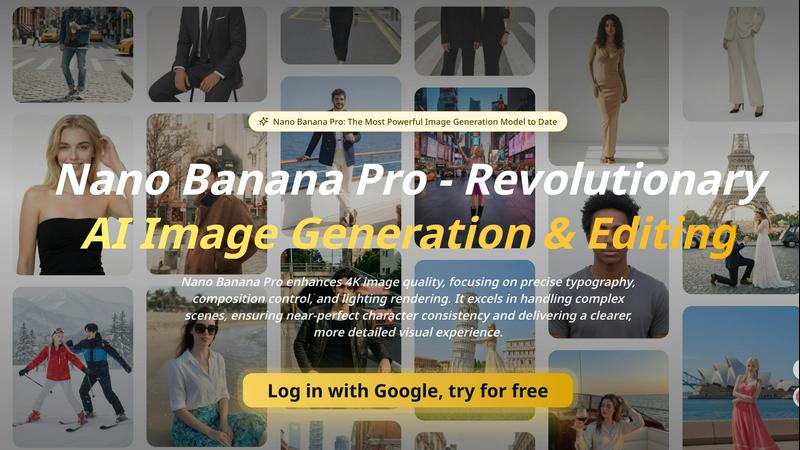
Nano Banana Pro is a revolutionary AI image generation model that delivers native 2K resolution, superior 4K upscaling, and exceptional detail.
Last updated: April 13, 2026
SVG to 3D
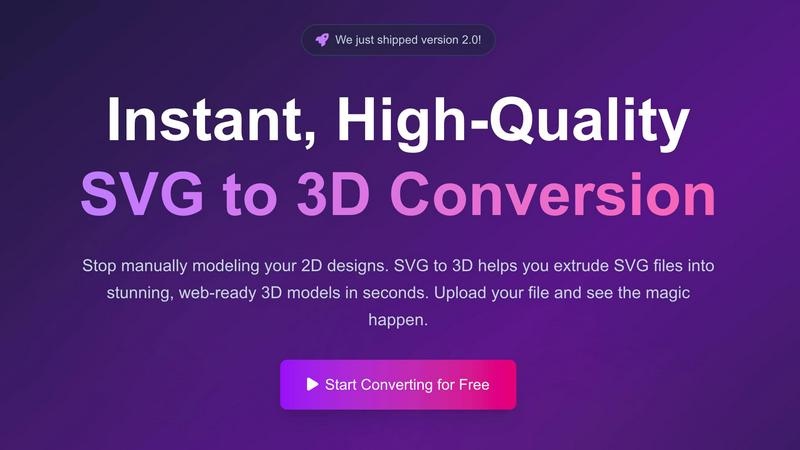
Effortlessly convert SVG files into high-quality 3D models with advanced controls and instant processing in your.
Last updated: February 26, 2026
Visual Comparison
Nano Banana Pro
SVG to 3D
Feature Comparison
Nano Banana Pro
Native 2K Resolution with 4K Upscaling
Nano Banana Pro generates images at a native 2K resolution, providing a foundational level of exceptional detail and clarity that surpasses typical ~1024x1024 outputs. The model incorporates an intelligent 4K upscaling algorithm that enhances these images further, delivering ultra-high-definition visuals suitable for large-format printing, digital displays, and professional media. This dual-resolution approach ensures that fine textures, sharp edges, and micro-details are preserved and amplified, resulting in a clearer, more detailed visual experience without the artifacting common in post-process upscaling.
Enhanced Typography and Text Rendering
This feature directly addresses one of the most persistent challenges in AI image generation: accurate text creation. Nano Banana Pro leverages groundbreaking technology to produce flawless typography for logos, signage, book covers, UI elements, and marketing content. It stabilizes character alignment, corrects spacing errors, and improves the readability of small text and labels. This makes it an indispensable tool for branding and design professionals who require pixel-perfect textual elements integrated seamlessly into their generated visuals.
Intent-Driven Prompt Interpretation & Composition Control
Moving beyond literal prompt interpretation, Nano Banana Pro demonstrates a superior understanding of user intent and complex scene structure. It allows for precise composition control, enabling creators to dictate spatial relationships, object placement, and overall scene layout with greater accuracy. The model exhibits stronger reasoning for spatial logic and physical coherence, resulting in images where objects interact believably within their environment, motion is understood, and the compositional balance aligns with professional artistic principles.
Advanced Character Consistency and Scene-Aware Editing
Nano Banana Pro excels at maintaining near-perfect character consistency across multiple generations, a critical feature for storyboarding and character-driven content. It reliably preserves facial features, proportions, and stylistic coherence. Furthermore, its image editing capabilities, such as inpainting and outpainting, are significantly enhanced. These tools are scene-aware, meaning they make intelligent adjustments that respect the existing lighting, textures, and context of the original image, resulting in seamless edits without noticeable artifacts.
SVG to 3D
One-Click to GLB for the Web
This feature allows users to export their 3D models as lightweight GLB files optimized specifically for web applications. Developers can seamlessly integrate these files into projects using Three.js or React Three Fiber, enhancing user experiences with interactive 3D elements.
3D-Print Ready
SVG to 3D supports clean STL exports, making it easy for users to take their 3D models directly into 3D printing software. This feature simplifies the workflow, allowing creators to produce tangible items from their digital designs without needing complex CAD software.
Advanced Material System
Users can apply realistic PBR (Physically Based Rendering) materials, custom textures, and professional lighting effects to their 3D models, enabling them to stand out in any project. This advanced material system enhances the visual quality and realism of the final output.
Lightning-Fast Processing
SVG to 3D utilizes optimized algorithms to deliver rapid conversion times, allowing users to transform their SVG files into 3D models in seconds rather than minutes. This efficiency is crucial for professionals who need to iterate quickly and meet tight deadlines.
Use Cases
Nano Banana Pro
Professional Product Visualization and Marketing
Ideal for creating high-fidelity product shots, advertisements, and comparison infographics. For instance, generating detailed side-by-side visuals of product models (like different smartphone configurations) with clear typography for specs and pros/cons. The model's precise control over composition, materials, and lighting allows for the creation of photorealistic or stylized product imagery that meets brand standards and engages consumers effectively.
Social Media Content and UGC Pipeline Creation
Perfect for agencies and influencers needing a high volume of cohesive, platform-specific content. The model can generate authentic-looking social media post screenshots, complete with realistic interface elements, captions, and engagement metrics. Its ability to render specific cinematic lighting, depth of field, and detailed environments (like a sunset beach) enables the rapid creation of compelling visual assets tailored for Instagram, Facebook, and other channels.
Storyboarding and Concept Art for Media
Serves as a powerful tool for filmmakers, game developers, and authors to visualize scenes and characters consistently. The enhanced character consistency ensures that a protagonist or creature maintains its identity across various shots and angles. The improved prompt interpretation allows for the construction of complex, multi-character scenes with specific emotional tones and dynamic compositions, accelerating the pre-production conceptual phase.
Brand Asset and Localization Tool Development
Essential for design teams creating logos, branded merchandise visuals, and packaging mockups where typography is paramount. The model's flawless text rendering ensures brand names and slogans are reproduced accurately. Additionally, it can be integrated into pipelines for localizing marketing materials, quickly generating new visuals with translated text that maintains the original layout's integrity and aesthetic quality.
SVG to 3D
Create Interactive 3D Logos and Icons for Web
Web developers and designers can easily convert SVG logos and icons into 3D models ready for interactive web applications. This use case enhances brand identity and adds depth to user interfaces, making websites more engaging.
From Digital Design to Physical Object
The tool enables users to convert their 2D designs into 3D printable models. This functionality is essential for artists and designers who wish to create physical representations of their digital artwork or prototypes without the need for complex modeling software.
Enhance Your UI/UX Designs
Designers can utilize SVG to 3D to add depth and realism to UI components. By integrating 3D elements into mockups, they can present their ideas more effectively to clients and stakeholders, improving the overall design review process.
Streamline Game Development
Game developers can quickly generate 3D assets from SVG graphics, optimizing their workflow by avoiding the lengthy modeling processes typically required. This use case is ideal for creating unique 3D elements in games, saving time and resources.
Overview
About Nano Banana Pro
Nano Banana Pro represents a significant leap forward in AI-powered image generation and editing technology. Positioned as the most powerful image generation model to date, it is built upon the advanced Gemini 3.0 Pro Image architecture, offering substantial improvements over its predecessor. The core value proposition of Nano Banana Pro lies in its ability to generate and manipulate images with unprecedented fidelity, control, and coherence. It is engineered for professional creators, marketers, product designers, and content teams who require high-quality, reliable visual assets for production-level work. The model specializes in delivering native 2K resolution imagery with intelligent 4K upscaling, ensuring that every output is crisp and detailed. Its primary focus areas include mastering complex typography for branding materials, providing precise compositional control for intentional scene building, and rendering physically accurate lighting and materials. By excelling in character consistency and handling intricate, multi-element scenes, Nano Banana Pro transforms from a simple image generator into a comprehensive visual creation workbench, enabling users to move from conceptual drafts to final, publishable assets within a single, powerful platform.
About SVG to 3D
SVG to 3D is a powerful online tool designed to effortlessly convert 2D SVG vector graphics into stunning high-quality 3D models. This innovative solution was developed to address the common frustrations of designers, developers, and 3D printing enthusiasts who often find traditional software like Blender or Cinema 4D cumbersome and time-consuming. With SVG to 3D, users can quickly upload their SVG files and transform them into professional-grade 3D models in mere seconds. This tool is perfect for web developers looking to enhance their projects with interactive 3D elements, as well as for those in the 3D printing community who need precise models ready for fabrication. The main value proposition lies in its user-friendly interface, advanced customization options, and lightning-fast processing capabilities, all while maintaining a focus on privacy and security by keeping files processed locally in the browser.
Frequently Asked Questions
Nano Banana Pro FAQ
What is the main difference between Nano Banana and Nano Banana Pro?
The primary difference lies in the underlying model architecture and resulting output quality. Nano Banana Pro is built on the more advanced Gemini 3.0 Pro Image model, while the standard version uses Gemini 2.5 Flash Image. This grants Pro significant advantages: native 2K resolution with 4K upscaling versus ~1024x1024, vastly superior typography and text rendering, intent-driven prompt interpretation for complex compositions, and dramatically improved character consistency and scene-aware editing capabilities, making it suitable for professional, production-level work.
What image formats and sizes does Nano Banana Pro support for input and output?
For input, the workbench accepts uploads in JPEG, PNG, or WebP format, with a maximum file size of 10MB. Users can also generate images from text prompts directly. For output, the model provides control over aspect ratio (including 1:1, 16:9, 9:16, etc.) and resolution, starting at 2K. The generated images can be exported in PNG format, ensuring high quality with transparency support where applicable.
How does Nano Banana Pro handle complex prompts with multiple specific details?
Nano Banana Pro features improved prompt interpretation that is more intent-driven rather than purely literal. It demonstrates stronger reasoning for scene structure, spatial relationships, and physical logic. This allows it to successfully parse and visualize complex prompts that involve specific lighting conditions (e.g., "golden sunset," "cinematic lighting"), compositional elements (e.g., "shallow depth of field," "overlay text"), and detailed environmental descriptions, synthesizing them into a coherent and well-structured final image.
Is Nano Banana Pro suitable for creating consistent characters for a story or comic series?
Yes, this is one of its standout capabilities. Nano Banana Pro excels at ensuring near-perfect character consistency across multiple image generations. It reliably maintains facial features, body proportions, clothing style, and other defining characteristics. This makes it an excellent tool for creators developing visual narratives, as it reduces identity drift and allows for the generation of a coherent cast of characters in various poses and scenes, which is essential for storyboards, comics, and concept art.
SVG to 3D FAQ
How does SVG to 3D work?
SVG to 3D works by allowing users to upload SVG files and then applying advanced algorithms to convert these 2D graphics into 3D models. Users can adjust settings like thickness and bevels in real-time before exporting their models.
What file formats can I export my 3D models in?
You can export your models in multiple formats, including GLB, GLTF, OBJ, and STL. This versatility ensures compatibility with various 3D software and applications, whether for web development or 3D printing.
Is my data secure when using SVG to 3D?
Yes, SVG to 3D prioritizes user privacy and security. Files are processed locally in your browser whenever possible, which means your designs are not uploaded to external servers, keeping them safe and secure.
Can I use SVG to 3D for commercial projects?
Absolutely. SVG to 3D is designed for both personal and commercial use. Whether you are a freelancer, a small business, or a large corporation, you can utilize this tool to create and export 3D models for your projects.
Alternatives
Nano Banana Pro Alternatives
Nano Banana Pro is a state-of-the-art AI image generation model, categorized as an AI Assistant for visual content creation. It is engineered to produce high-fidelity 4K images with exceptional control over typography, composition, and lighting, making it a powerful tool for professional-grade visual projects. Users may seek alternatives for various practical reasons. These can include budget constraints, as premium models often carry significant costs. Others might require different feature sets, such as specialized artistic styles, faster generation speeds, or integration with specific software platforms and workflows not supported by a given tool. When evaluating an alternative AI image generator, key considerations should align with your project needs. Prioritize the model's core capabilities in resolution output, detail handling, and consistency control. Assess its proficiency with complex prompts and scenes, the granularity of its control parameters, and the overall robustness of its rendering engine for your intended use case.
SVG to 3D Alternatives
SVG to 3D is a specialized tool designed for transforming 2D SVG vector graphics into high-quality 3D models. It falls under the category of AI Assistants, catering primarily to developers, designers, and 3D printing enthusiasts who seek efficient solutions for model creation. Users often seek alternatives due to various reasons such as pricing constraints, feature limitations, or specific platform requirements that may not be met by existing tools. When searching for an alternative, it is essential to consider factors such as ease of use, export capabilities, and the range of features offered. Users should evaluate whether an alternative can accommodate their workflow needs while providing the necessary quality and customization options for their projects.