Threat Watch vs Zignt
Side-by-side comparison to help you choose the right tool.

Threat Watch
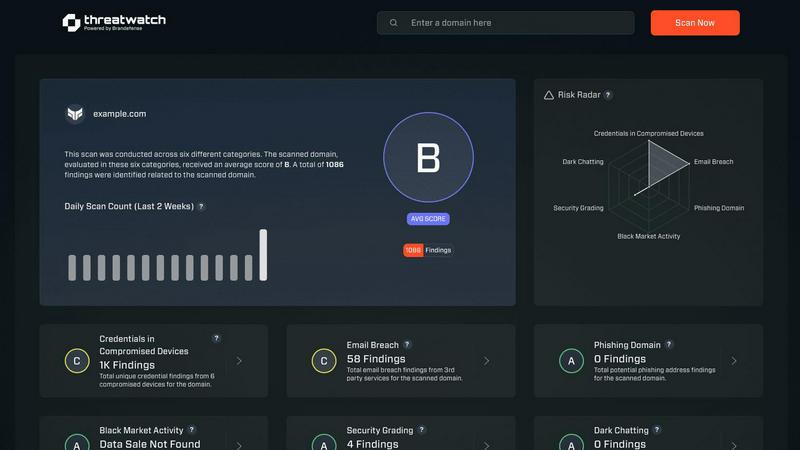
Threat Watch instantly analyzes your cybersecurity posture across credentials, devices, and dark web exposures.
Last updated: March 1, 2026

Zignt streamlines contract management with reusable templates, secure sharing, and instant automated signing for.
Last updated: March 1, 2026
Visual Comparison
Threat Watch
Zignt

Feature Comparison
Threat Watch
Continuous Attack Surface Monitoring
Threat Watch performs non-stop, automated discovery and inventory of all external-facing digital assets linked to an organization, including domains, subdomains, IP addresses, and cloud instances. It employs advanced reconnaissance techniques to map the entire attack surface, ensuring no asset goes unmonitored. This continuous scanning provides a real-time, dynamic view of potential entry points for adversaries, forming the foundational layer for all subsequent security analysis and threat detection processes.
Unified Threat Intelligence Correlation
The platform's core engine aggregates raw data from a multitude of sources, including proprietary scanners, breach databases, phishing feeds, and dark web monitoring. It then applies correlation algorithms and contextual analysis to transform this data into prioritized intelligence. By linking a compromised credential found on the dark web to a vulnerable server in the IT inventory, Threat Watch provides a complete narrative of risk, moving beyond isolated alerts to deliver a comprehensive understanding of interconnected threats.
Automated Exposure Assessment & Prioritization
Threat Watch automatically assesses identified exposures against severity and impact criteria, assigning a risk score to each finding. It utilizes a rules-based prioritization engine that factors in asset criticality, exploit availability, and threat actor activity. This automation eliminates alert fatigue by surfacing only the most critical issues that require immediate intervention, allowing security teams to focus their resources effectively on remediating the vulnerabilities that pose the greatest business risk.
Real-Time Alerting and Integrations
The platform provides configurable, real-time alerting via email, SMS, and integration with popular Security Information and Event Management (SIEM) systems and ticketing platforms like ServiceNow and Jira. This ensures that critical findings are routed directly into existing security workflows and incident response procedures without delay. The API-first design allows for seamless data exchange with other security tools, enabling Threat Watch to function as a central intelligence hub within a broader security architecture.
Zignt
Template Creation and Reusability
Zignt allows users to create contract templates that can be reused indefinitely. With features like drag-and-drop field placement, users can easily add date fields, text boxes, and signature blocks to their PDF documents. This capability saves significant time as users no longer need to recreate contracts from scratch for each transaction.
Seamless Sharing Options
Users can share contracts effortlessly via email or through a unique Zignt Link, akin to a payment link but specifically for contracts. Automated reminders can be sent to signers, ensuring that everyone is notified and contracts are signed promptly. This simplifies the signing process and enhances user engagement.
AI-Powered Renewal Tracking
Zignt's AI functionality automatically identifies important contract dates, including renewals and expirations. The system sends out smart reminders to users, enabling them to stay ahead of deadlines without the need for manual tracking. This feature is crucial for businesses that manage numerous contracts simultaneously.
Comprehensive Security and Compliance
Zignt prioritizes security with bank-grade encryption and compliance with international standards such as the E-SIGN Act and GDPR. Each signature is backed by a complete audit trail, ensuring that all transactions are traceable and legally enforceable. This level of security protects users and instills confidence in the signing process.
Use Cases
Threat Watch
Proactive External Risk Management for CISOs
CISOs and risk management leaders utilize Threat Watch to gain a continuous, board-ready overview of the organization's external cyber risk posture. The platform provides quantified metrics and trending data on exposure categories, enabling informed decision-making on security investments and resource allocation. It supports compliance reporting and demonstrates due diligence by providing evidence of proactive monitoring and management of digital risks beyond the corporate firewall.
Accelerated Incident Response and Threat Hunting
Security Operations Center (SOC) analysts and incident responders use Threat Watch to rapidly investigate security alerts and breaches. By providing immediate context—such as whether a compromised employee credential is actively for sale or if a breached server was previously identified as vulnerable—the platform significantly shortens investigation cycles. It serves as a critical tool for proactive threat hunting, allowing teams to search for indicators of compromise (IOCs) related to their specific organization across monitored datasets.
Third-Party and Supply Chain Risk Assessment
Organizations employ Threat Watch to evaluate the external security posture of partners, vendors, and acquisition targets. By monitoring the digital assets associated with third-party entities, security teams can identify if a supplier's exposed credentials or vulnerable systems could serve as a pivot point into their own network. This use case extends the platform's value beyond internal security to managing supply chain and ecosystem risk.
Brand Protection and Phishing Mitigation
Marketing and fraud prevention teams leverage the platform's capabilities to detect phishing campaigns and brand impersonation. Threat Watch continuously scans for fraudulent domains, phishing kits, and malicious infrastructure that mimic the organization's legitimate web properties. Early detection allows for swift takedown requests and proactive customer communication, thereby protecting the brand's reputation and reducing the success rate of social engineering attacks.
Zignt
Streamlining Legal Processes
Law firms can utilize Zignt to manage legal contracts efficiently. By employing reusable templates, lawyers can prepare documents quickly, allowing for faster client onboarding and contract execution while maintaining compliance with legal standards.
Enhancing Sales Operations
Sales teams can leverage Zignt to expedite the contract signing process with clients. Automated reminders and easy-to-use share links ensure that contracts are signed promptly, reducing the sales cycle and improving customer satisfaction.
Optimizing Vendor Management
Procurement departments can benefit from Zignt's AI capabilities to track vendor contracts and their renewal dates. This enables teams to negotiate better terms and avoid lapses in service, ensuring continuous operations and compliance.
Facilitating Remote Work
With remote teams becoming the norm, Zignt's cloud-based platform allows team members to collaborate on contract preparation and management from anywhere. This flexibility supports a more agile workflow and enhances overall team productivity.
Overview
About Threat Watch
Threat Watch is a sophisticated, unified cybersecurity intelligence and exposure management platform engineered for enterprise IT security teams, Chief Information Security Officers (CISOs), and risk management professionals. It serves as a centralized diagnostic console for an organization's external cyber health, providing continuous, automated surveillance and analysis of its entire digital asset portfolio. The platform's architecture is designed to aggregate, normalize, and correlate disparate security signals from across the clear, deep, and dark web into a single, coherent, and actionable overview. By perpetually mapping and scanning the external attack surface, Threat Watch identifies, validates, and prioritizes critical security exposures across five core categories: compromised credentials, vulnerable internet-facing devices, breached corporate accounts, active phishing infrastructure, and dark web data leaks. This intelligence-driven approach enables organizations to transition from a reactive, incident-response model to a proactive, preventative security posture. The solution delivers real-time insights and automated risk assessments, which dramatically reduces both the Mean Time to Identify (MTTI) and Mean Time to Remediate (MTTR) critical vulnerabilities, thereby systematically hardening an organization's external defenses against evolving cyber threats.
About Zignt
Zignt is a cutting-edge contract management solution tailored to enhance efficiency and organization for teams across various sectors. Designed with user experience in mind, it empowers businesses to create reusable contract templates that significantly streamline the process of sending and signing documents. This tool is ideal for organizations of all sizes, from startups to established enterprises, looking to optimize their contract workflows while ensuring compliance and security. Zignt's intuitive interface supports batch task management, allowing users to process multiple contracts simultaneously. Key features include AI-driven renewal tracking, real-time visibility into contract statuses, and seamless collaboration through secure sharing options. The platform ultimately reduces manual effort, enhances productivity, and facilitates a faster and more organized contract process.
Frequently Asked Questions
Threat Watch FAQ
What types of assets does Threat Watch discover and monitor?
Threat Watch automatically discovers and continuously monitors a wide range of external digital assets. This includes all owned domains and subdomains, public IP addresses, SSL certificates, cloud storage instances (e.g., AWS S3 buckets, Azure Blobs), and network infrastructure devices exposed to the internet. The discovery process is agentless and based on passive and active reconnaissance techniques, ensuring comprehensive coverage without requiring internal network access.
How does Threat Watch source its data on compromised credentials and dark web exposures?
The platform aggregates data from a vast array of sources, including continuous crawling of dark web marketplaces, forums, and paste sites; integration with commercial and proprietary breach databases; and monitoring of underground communication channels. This data is then de-duplicated, validated, and correlated with the organization's monitored assets (e.g., corporate email domains) to ensure alerts are relevant and actionable, reducing false positives.
Can Threat Watch integrate with our existing security tools?
Yes, Threat Watch is built with an API-first architecture, enabling robust integration capabilities. It offers out-of-the-box integrations with major SIEM platforms (e.g., Splunk, IBM QRadar, LogRhythm), ticketing systems (e.g., ServiceNow, Jira), and orchestration tools. This allows automated ingestion of Threat Watch intelligence into existing workflows, ensuring alerts are acted upon within established security processes and that data is available for correlation with internal telemetry.
What is the deployment process and does it require internal agents?
Threat Watch is delivered as a cloud-native Software-as-a-Service (SaaS) platform, requiring no software installation or internal deployment of agents. The setup process is typically initiated by defining the organization's digital assets (e.g., root domains, IP ranges) for monitoring. The platform then begins its automated discovery and scanning processes externally, with no impact on internal network performance or bandwidth.
Zignt FAQ
How does Zignt ensure the security of contracts?
Zignt utilizes bank-grade encryption (256-bit SSL/TLS) for all documents, ensuring that data is secure both in transit and at rest. Additionally, the platform is compliant with international standards such as GDPR, providing comprehensive data protection.
Can I customize contract templates in Zignt?
Yes, users can create and customize contract templates by adding various fields like date fields, text boxes, and signature blocks. These templates can be reused multiple times, saving significant time in contract preparation.
Is Zignt suitable for small businesses?
Absolutely. Zignt is designed for teams of all sizes, making it an ideal solution for small businesses seeking to optimize their contract workflows without incurring high costs or complicated processes.
What kind of support does Zignt offer?
Zignt provides email support to all users, ensuring that any questions or issues can be addressed promptly. Additionally, users have access to basic analytics to track their contract activities and performance.
Alternatives
Threat Watch Alternatives
Threat Watch is a specialized Business Intelligence platform focused on external attack surface management and cybersecurity exposure. It provides automated, continuous diagnostics of an organization's digital footprint, prioritizing risks from credential leaks to vulnerable internet-facing assets. Organizations may seek alternatives for various operational reasons. Common drivers include budget constraints, the need for specific feature integrations, or a requirement for a platform that aligns with a different internal workflow or existing security stack. The search often centers on finding a tool that matches their unique scale and risk profile. When evaluating alternatives, key criteria should include the scope of attack surface discovery, the depth and sources of dark web and credential monitoring, the automation of risk prioritization, and the platform's ability to deliver actionable intelligence that reduces mean time to remediation. The ideal solution offers comprehensive visibility tailored to the organization's asset landscape.
Zignt Alternatives
Zignt is an advanced contract management tool that falls within the realm of business intelligence solutions. It is designed to streamline contract workflows through features like reusable templates, automated signing, and secure sharing options, making it a valuable asset for organizations of all sizes. However, users often seek alternatives to Zignt due to various factors such as pricing, specific feature sets, platform compatibility, or a desire for a different user experience. When looking for an alternative to Zignt, it is essential to evaluate the specific needs of your organization. Consider the level of customization available in template creation, the efficiency of contract sharing methods, and the security measures in place. Additionally, assess whether the alternative offers features like automated reminders, batch task management, and renewal tracking to ensure that it meets the unique challenges of your contract management process.