securememo.app vs Website-Blocker
Side-by-side comparison to help you choose the right tool.

securememo.app
Securememo.app is an open source, client side encrypted memo service with zero tracking.

Website-Blocker
Website-Blocker is a cloud-synced parental control extension that blocks harmful sites and manages screen time.
Last updated: March 1, 2026
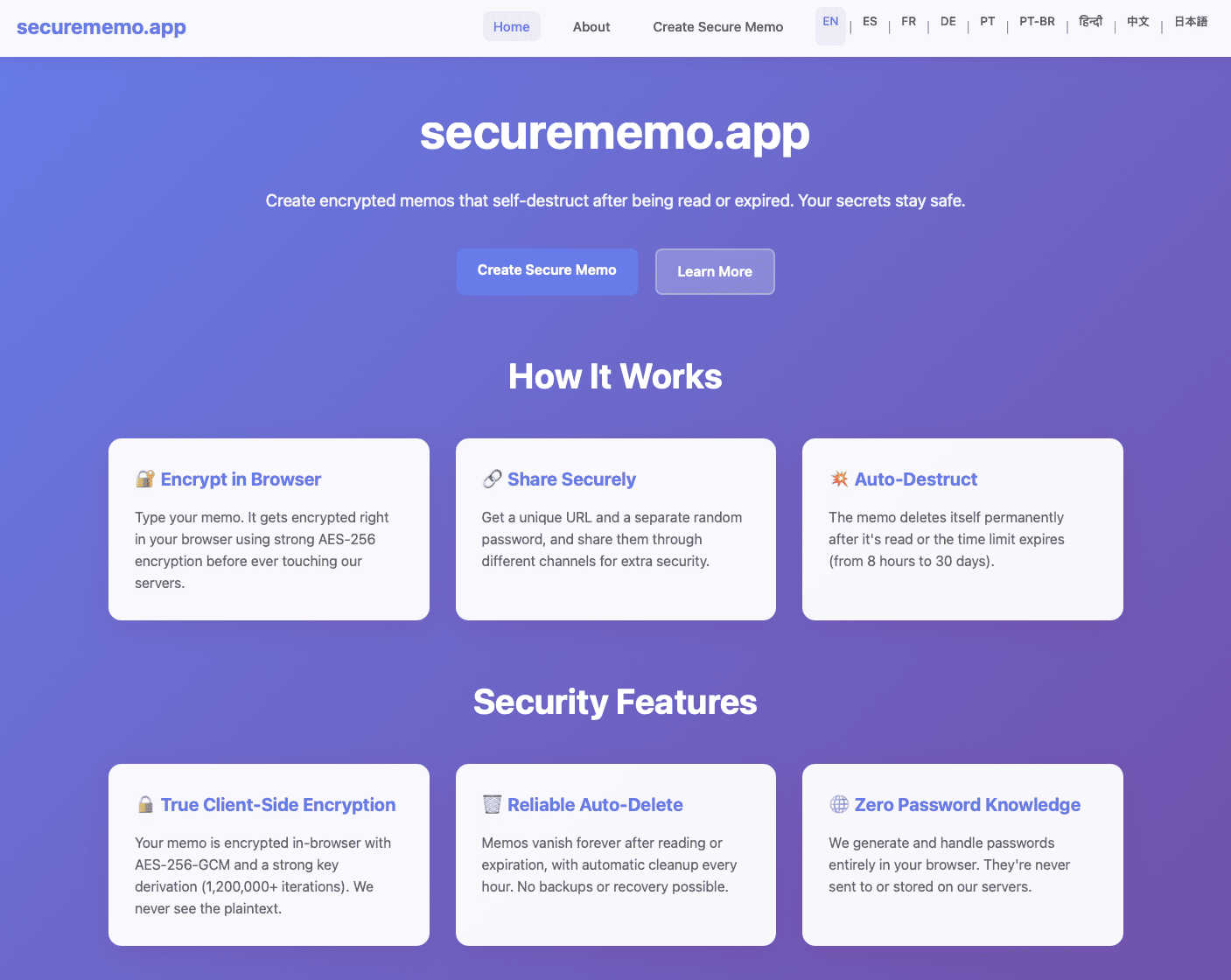
Visual Comparison
securememo.app
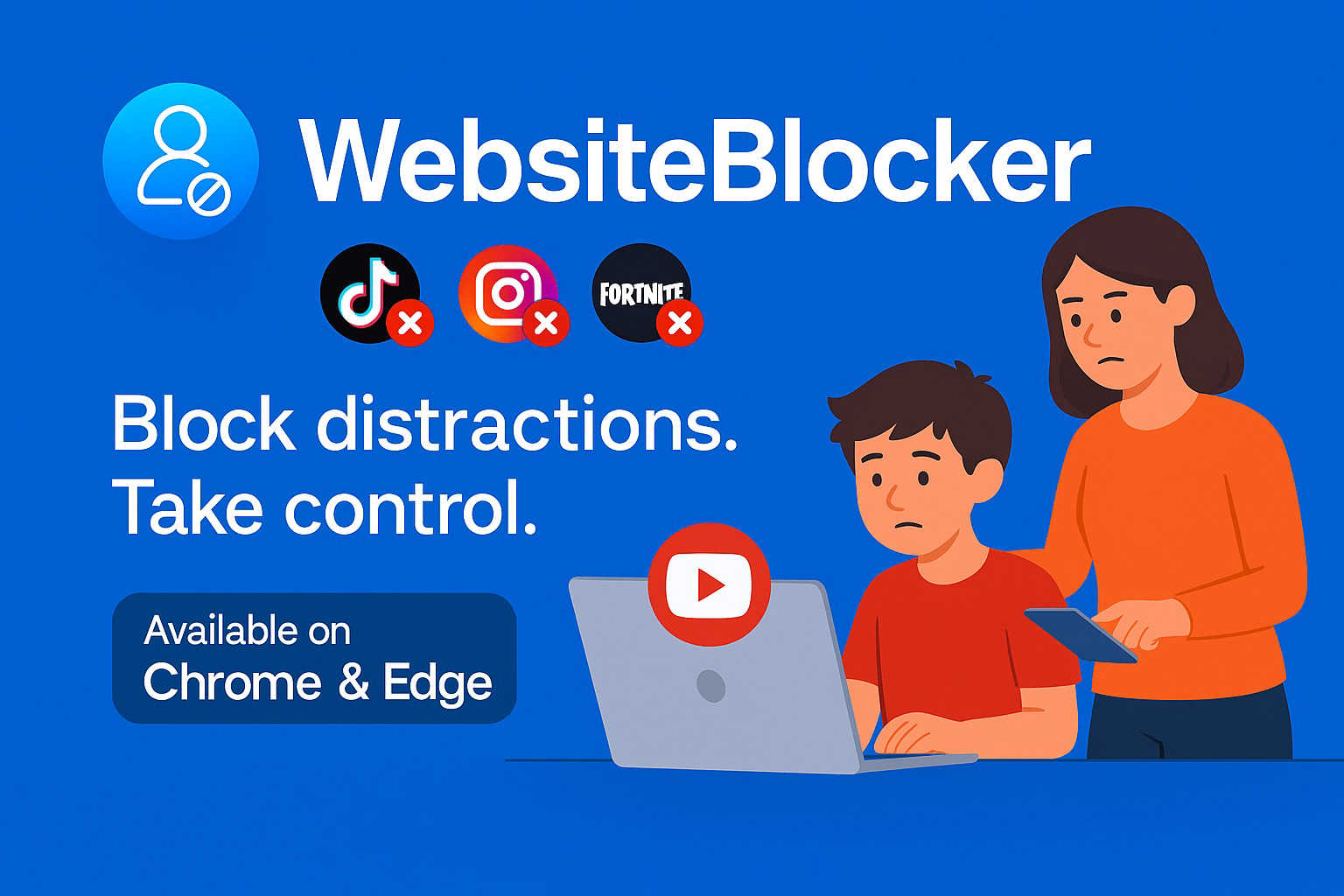
Website-Blocker
Feature Comparison
securememo.app
Client-Side Encryption
All data processing and encryption occur exclusively within the user's web browser using robust cryptographic algorithms before any data is sent to the securememo.app servers. This architectural design ensures that plaintext content of memos is never exposed to the network or the service's infrastructure. The encryption keys are generated and managed locally, guaranteeing that only the intended recipient with the correct password can ever decrypt and view the note's contents, providing a true zero-knowledge environment.
Self-Destructing Notes
Each memo created on the platform is ephemeral by design. Once a note is created and a unique link is generated, it is programmed to automatically and permanently delete itself from the servers after being accessed by the recipient. This feature enforces data minimalism and eliminates the risk of sensitive information persisting in any database, providing a secure, one-time viewing mechanism that leaves no long-term digital footprint.
Zero-Knowledge Password Generation
For each memo, a strong, cryptographically random password is generated locally on the creator's device. This password is never transmitted to or stored by securememo.app's servers. The service operates on a zero-knowledge principle where it has no access to this decryption key. Secure sharing of the memo requires the creator to transmit this password to the recipient through a separate, trusted channel (e.g., a secure messaging app or in person), creating a necessary two-factor access mechanism.
No-Account Anonymity
The service is designed for immediate use without any registration, sign-up, or account creation process. This approach maximizes user privacy and anonymity by not collecting any personally identifiable information (PII) such as email addresses or usernames. Users can create and share encrypted memos instantly, which lowers the barrier to entry and aligns with the product's core philosophy of privacy-by-design and operational security.
Website-Blocker
Cloud-Powered Synchronization & Management
The platform's foundation is its secure cloud backend. All blocking rules, schedules, and settings are stored centrally and synchronized in real-time across every installed browser extension. Management is performed through an intuitive cloud portal or the companion PWA mobile application, allowing administrators to remotely update policies, monitor status, and gain usage insights from any location. This architecture guarantees that a rule created on one device is instantly propagated to all others, ensuring unwavering policy enforcement without manual device-by-device configuration.
Granular Blocking with Category & URL Filters
Website-Blocker provides multi-layered filtering for precise control. Users can block individual websites by entering specific URLs or domain names. For broader, more efficient control, the solution includes category-based blocking, enabling the instant restriction of entire groups of websites (e.g., social media, gaming, adult content) with a single action. This dual approach allows for both targeted restriction of known problematic sites and proactive filtering against entire classes of distracting or inappropriate content.
Advanced Scheduling & Timer-Based Access
Beyond simple blocking, the tool enables sophisticated time management. Users can implement recurring daily or weekly schedules to define permitted browsing hours for specific sites or categories. Complementing this is a precise timer-based browsing feature, which allows access to a selected website only for a pre-set duration. Once the timer expires, access is automatically revoked. These features are essential for enforcing structured screen time limits and promoting disciplined, focused work or study sessions.
Password Protection & Custom Redirects
To ensure the integrity of the configured controls, all administrative settings are protected by a secure master password. This prevents unauthorized users from altering block lists, schedules, or disabling the extension. Furthermore, when a website is blocked, administrators can utilize the custom redirect feature. Instead of displaying a standard error page, blocked attempts can be redirected to a user-defined page, such as a productivity reminder, an educational alternative, or a family-friendly search portal, turning a restriction into a positive reinforcement opportunity.
Use Cases
securememo.app
Secure Credential Sharing
Professionals can safely transmit sensitive login credentials, API keys, or database passwords to colleagues or clients. By using securememo.app, the credentials are encrypted end-to-end and self-destruct upon first view, mitigating the risks associated with sending such data via email, SMS, or standard messaging platforms where logs are retained and security may be compromised.
Confidential Legal or Business Communication
Lawyers, journalists, or business executives can share confidential case details, draft documents, or strategic information with the assurance of client-side encryption and ephemeral storage. This use case is critical for maintaining attorney-client privilege or protecting sensitive business intelligence from interception or unauthorized server-side access.
One-Time Private Messaging
Individuals requiring a private, non-traceable conversation channel can use the service to exchange messages that leave no permanent record. This is applicable for whistleblowers, individuals in sensitive situations, or anyone needing to share personal information without creating a persistent chat history that could be subpoenaed or hacked.
Secure Disposable Notes for Personal Data
Users can create encrypted notes containing personal information like social security numbers, bank account details, or travel documents for their own temporary reference. The self-destruct feature acts as a secure, automated cleanup, ensuring this highly sensitive data does not remain stored on any device or cloud service indefinitely.
Website-Blocker
Parental Control & Child Digital Safety
Parents can deploy Website-Blocker to create a safe online environment for their children. By blocking access to inappropriate content categories and specific risky websites, they can shield children from harmful material. Simultaneously, parents can set enforceable screen time schedules for gaming or social media and use timer-based limits for educational sites to prevent overuse. The cloud sync ensures these protections are active on the child's laptop, desktop, and any other device where the extension is installed.
Individual Productivity & Focus Enhancement
Professionals, freelancers, and students utilize the tool to eliminate self-inflicted digital distractions. By blocking social media, news, and entertainment sites during work or study hours using recurring schedules, users can maintain deep focus. The timer-based feature is particularly useful for allowing short, controlled breaks on specific sites without the risk of losing track of time, thereby combating procrastination and improving overall time management and output quality.
Managed Device Access in Educational Settings
Educators and administrators in schools or libraries can use the cloud management portal to configure standardized browsing policies across multiple devices. They can block distracting websites and games on classroom computers while allowing access to educational resources. The scheduling feature can ensure these restrictions are only active during school hours, and the password protection prevents students from circumventing the rules, maintaining a conducive learning environment.
Family-Wide Digital Wellbeing & Routine Enforcement
Families can adopt Website-Blocker to establish and enforce healthy digital habits for all members. Parents can set household rules, such as "no social media after 9 PM" or "one hour of gaming per day," applied consistently across everyone's devices. The custom redirect can point to a family activity board or reading list. This centralized management fosters shared accountability and helps the entire family disconnect and engage in offline activities according to a agreed-upon routine.
Overview
About securememo.app
Securememo.app is a specialized web application engineered for the secure creation and transmission of sensitive textual information. It functions as a privacy-first, ephemeral note-taking and sharing service that operates entirely within a user's web browser. The core value proposition is its uncompromising commitment to data sovereignty and user anonymity through a robust implementation of client-side encryption and a zero-knowledge architecture. This means all cryptographic operations, including key generation and data encryption/decryption, are performed locally on the user's device before any data is transmitted. The service is designed for individuals and professionals who require a trusted, temporary channel for sharing confidential data such as passwords, access keys, personal messages, or sensitive documents in plain text. By eliminating the need for user accounts and ensuring the service provider has no technical means to access the content of the memos, securememo.app prioritizes ease of use without sacrificing the highest standards of security. Its availability in over 20 languages further extends its accessibility to a global audience seeking a reliable tool for discrete, one-time communication.
About Website-Blocker
Website-Blocker is a comprehensive, cloud-synchronized digital management platform engineered as a browser extension for Chrome, Edge, and Firefox. It functions as a dual-purpose tool for both advanced parental control and individual productivity enhancement. The core architecture integrates a browser extension with a secure cloud portal and a Progressive Web App (PWA), creating a multi-device ecosystem. This system provides granular control over internet access, enabling users to block specific URLs, implement category-based filtering, and enforce custom browsing schedules with timer-based or recurring time windows. The primary value proposition is its real-time synchronization; all configuration settings, block lists, and schedules are stored and managed centrally in the cloud. This ensures consistent policy enforcement and remote management capabilities across all supervised devices, whether at home or on the go. Designed for parents seeking to safeguard children from harmful content and manage screen time, as well as for professionals and students aiming to eliminate digital distractions, Website-Blocker delivers a robust, scalable solution for digital safety and focused habit formation.
Frequently Asked Questions
securememo.app FAQ
How does the encryption work technically?
The encryption process is executed entirely within your web browser. When you create a memo, the application generates a strong, random encryption key locally. Your text is then encrypted with this key using advanced standards (like AES-256-GCM) before it is ever sent over the internet to securememo.app's servers. The service only stores and transmits this encrypted ciphertext. The decryption key is presented to you as a password, which must be shared separately with the recipient to unlock the note.
What happens if the recipient loses the password?
Due to the zero-knowledge architecture, the password for decrypting the memo exists only with the creator and the recipient. Securememo.app's servers never receive or store this password. Therefore, if the password is lost, there is absolutely no technical way for anyone, including the service administrators, to recover the contents of the encrypted memo. The data remains cryptographically secure and permanently inaccessible.
Are there any limits on memo size or content?
While specific limits are subject to the service's operational policy, typical constraints for such a service involve a maximum character count for the memo body (e.g., several thousand characters) to ensure performance and manage server storage for the encrypted text. The content is usually plain text, and the service is designed for textual data rather than file attachments. Users should consult the application interface for the exact, current limitations.
How is the "self-destruct" mechanism enforced?
Once a memo is created, it is stored on securememo.app's servers in its encrypted state. The system is programmed to permanently delete the encrypted data from its databases immediately after the unique access link is used successfully (i.e., the correct password is entered and the note is decrypted and displayed for the first time). This deletion is automatic, irreversible, and is a fundamental part of the data processing workflow.
Website-Blocker FAQ
On which browsers and devices does Website-Blocker work?
Website-Blocker is engineered as a browser extension compatible with Google Chrome, Microsoft Edge, and Mozilla Firefox. Its cloud-synchronized architecture means settings configured via the online portal or PWA app are enforced on any device where the extension is installed and logged into the same account. This provides cross-platform control across Windows, macOS, and ChromeOS desktops/laptops.
How does the cloud synchronization work?
The extension communicates with Website-Blocker's secure cloud servers. When you create or modify a blocking rule, schedule, or setting in the web portal or mobile PWA, that change is immediately pushed to our cloud database. Each installed extension periodically checks in with the cloud server and downloads the latest configuration, applying it locally within seconds. This ensures real-time policy updates and consistent management across all endpoints.
Can the blocked settings be bypassed or uninstalled by a child?
The extension incorporates several security measures to prevent circumvention. Administrative functions, including disabling the extension, modifying settings, or uninstalling it, are protected by a master password set by the parent or administrator. Furthermore, the extension is designed to resist simple removal attempts by non-admin users on managed devices, providing a robust layer of enforcement for parental controls.
What is the difference between the free and Gold Plan?
The free tier offers core website blocking and basic scheduling capabilities. Upgrading to the Gold Plan (starting at $7.50/month) unlocks advanced features including category-based blocking for efficient filtering of entire website types, custom redirects to guide users to alternative pages, password protection for settings, full access to the cloud management portal and PWA for remote control, and detailed usage insights to monitor browsing activity across protected devices.