

Alternatives to Tuning Engines
Tuning Engines is a governed universal runtime that unifies model inference, tuning, and evaluations through one API with transparent cost pricing.
Explore 20 alternatives to Tuning Engines. Compare features, pricing, and find the best fit for your needs.
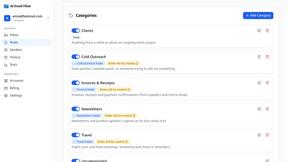
AI Email Filter
AI Email Filter sorts incoming mail into folders using plain-language prompts you write. Works with any IMAP mailbox; bring your own LLM if you want.
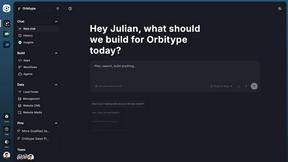



benchmark.directory
An independent directory of 145 AI tools across 20 categories. Every listing was paid for, set up and used on real work. No sponsored placements, ever
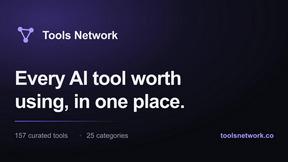
Tools Network
saasgrow.ai lists SaaS growth tools that founders actually use. Listing is free, screened on submission, and goes live the moment you verify our badge
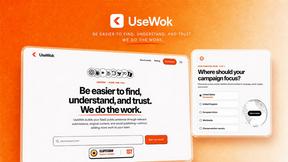

Postqued
Schedule and publish social content across 10 platforms with one dashboard, API, and MCP built for teams and AI agents.

EntreDash
Turn daily annoyances and raw ideas into inventions, products, and businesses. EntreDash provides a virual personal advisory board using AI automation

Luffy
Luffy is an AI employee in Slack that remembers your workspace and executes tasks across every app.

Wisegrid
Spreadsheet-native work management with AI formulas, dashboards, automation, reporting, and project views for growing teams.

Groniz
Run your social media on autopilot with AI agents. Post & schedule to 32+ networks from Claude Code, Codex, or Console.

ideaFast
IdeaFast helps you find real customer pain from Reddit, see the evidence behind it, and turn the strongest problems into startup ideas worth building.

EchoLeads AI
EchoLeads AI is an enterprise-grade platform using autonomous AI voice agents to automate cold calling, lead qualification, and omnichannel.
Distro
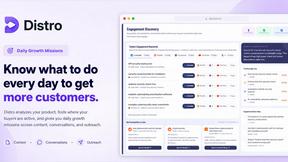
Distro is an AI distribution operator that maps buyer intent signals across platforms and automates personalized outreach in your voice.

Skygen AI
Skygen AI is an autonomous agent platform that executes complex multi-step tasks like data analysis, trip planning, and job applications directly.
HyperLake
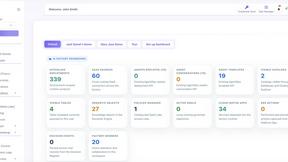
HyperLake provisions sovereign AI agent infrastructure in your cloud with governed data access and zero compute markup.

Minded
Minded enables you to effortlessly create AI agents that handle tasks efficiently, training them through simple screen recordings and natural.
YCaaS
YCaaS delivers comprehensive AI agents that seamlessly manage all roles and processes from start to finish, enhancing operational efficiency.
About Tuning Engines Alternatives
Tuning Engines is a unified AI control and governance layer, belonging to the category of AI orchestration and automation platforms. It is designed to consolidate the full AI lifecycle—spanning inference, model routing, fine-tuning, agent management, and policy enforcement—into a single governed system for organizations building production intelligence. Users commonly look for alternatives due to specific requirements around pricing models, the need for lighter-weight integration with existing infrastructure, or platform preferences that may not align with Tuning Engines’ comprehensive but opinionated approach to governance and policy-as-code. When evaluating an alternative to Tuning Engines, organizations should prioritize platforms that offer robust API compatibility, particularly with OpenAI and Anthropic standards, to ensure seamless migration of existing workflows. Critical considerations include the depth of observability and auditability features, such as runtime traces and usage analytics, as well as the flexibility of role-based access controls and budget enforcement for multi-team environments. Additionally, assess whether the alternative supports the specific agent frameworks and coding tools your team relies on, such as MCP servers or CLI integrations, and verify that it provides scalable model routing and fallback policies without sacrificing latency or cost transparency.
FAQs about Tuning Engines Alternatives
What is Tuning Engines?
Tuning Engines is a unified AI control and governance layer designed for teams building production intelligence across models, agents, tools, and fine-tuned systems. It consolidates the full AI lifecycle—including inference, model routing, fine-tuning, evaluations, guardrails, and usage analytics—into a single governed platform. The platform provides OpenAI-compatible APIs and Anthropic-compatible routes, enabling developers to connect various AI workflows and coding agents through a centralized orchestration system.
Who is Tuning Engines for?
Tuning Engines is built for development teams and administrators who need to move beyond isolated AI experiments into a secure, observable, and cost-aware production environment. It serves developers who require OpenAI-compatible APIs, CLI workflows, and MCP access for building and integrating AI agents, as well as admins who need role-based access, per-key budgets, rate limits, and auditability controls. The platform is ideal for organizations managing multiple models, agents, and tools across different teams that require tenant isolation and centralized governance.
Is Tuning Engines free?
The provided product description does not specify a free tier or pricing model for Tuning Engines. As a unified orchestration and governance platform designed for production-scale AI operations, it is typically offered as a commercial solution with billing controls and team management features. Organizations interested in pricing should consult the official Tuning Engines documentation or contact their sales team for detailed information on plans and potential trial options.
What are the main features of Tuning Engines?
Tuning Engines offers a comprehensive set of features including inference management, model routing with fallback policies, fine-tuning job orchestration, dataset and evaluation management, and support for custom models and agents. It includes policy-as-code through AGT YAML, guardrails, runtime traces, usage analytics, and role-based access controls with per-key budgets and rate limits. The platform also provides integrations with coding agents such as Claude Code, Cursor, and VS Code, along with MCP servers, reusable skills, and resource catalogs for models, tools, and agents.