
Deeploy vs Threat Watch
Side-by-side comparison to help you choose the right tool.

Deeploy
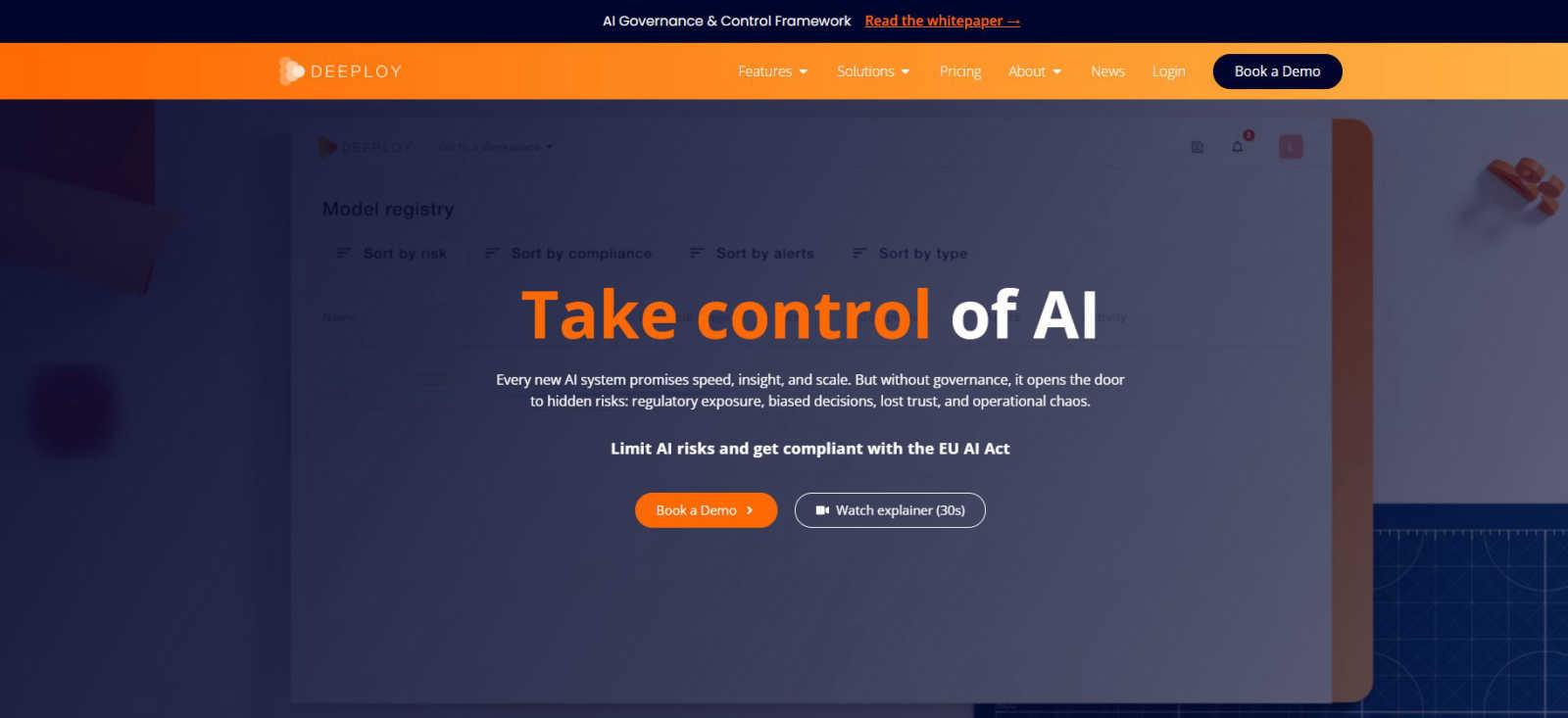
Deeploy provides technical controls and real-time monitoring for comprehensive AI governance and compliance.
Last updated: March 1, 2026

Threat Watch
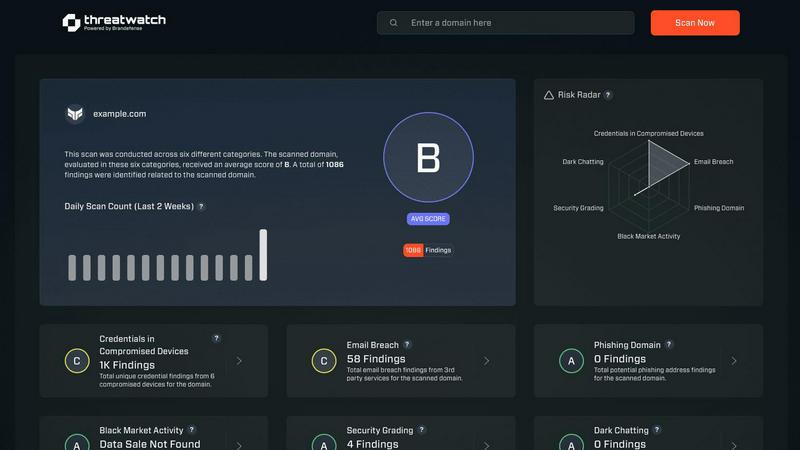
Threat Watch instantly analyzes your cybersecurity posture across credentials, devices, and dark web exposures.
Last updated: March 1, 2026
Visual Comparison
Deeploy
Threat Watch
Feature Comparison
Deeploy
AI Discovery and Onboarding
This feature provides complete visibility across an organization's AI landscape. It enables the discovery, onboarding, and centralized management of every AI system from a single interface. The platform connects to any existing MLOps or Generative AI platform, eliminating blind spots without requiring disruptive migration. This creates a centralized registry and inventory, establishing the foundational layer for all subsequent governance activities and ensuring no AI application operates outside of oversight.
Control Frameworks
Deeploy offers guided workflows to navigate complex AI regulations with confidence. Organizations can select from default, pre-configured control frameworks based on standards like ISO 42001 and the NIST AI RMF, or build custom frameworks tailored to internal policies. The platform facilitates rapid AI system risk classification and establishes clear accountability through structured approval processes. This feature translates abstract regulatory requirements into a manageable, structured compliance roadmap.
Control Implementation
This feature turns governance frameworks into enforceable, engineer-friendly controls. It provides development and operations teams with clear, actionable requirements for each AI system, automating the linkage between policy and practice. Compliance velocity is accelerated by up to 90% through the use of pre-built templates and the automatic collection of audit evidence. AI-powered assessments can handle repetitive compliance verification tasks, reducing manual overhead.
Real-Time Monitoring and Explainability
Deeploy provides continuous, production-level monitoring to prevent AI incidents. It delivers instant alerts for model drift, performance degradation, or output anomalies, allowing teams to intervene before issues impact users or create compliance breaches. The platform includes tracing and guardrails to protect Large Language Model (LLM) outputs. Built-in explainability tools provide insights into model predictions, which is crucial for risk management, debugging, and maintaining transparency.
Threat Watch
Continuous Attack Surface Monitoring
Threat Watch performs non-stop, automated discovery and inventory of all external-facing digital assets linked to an organization, including domains, subdomains, IP addresses, and cloud instances. It employs advanced reconnaissance techniques to map the entire attack surface, ensuring no asset goes unmonitored. This continuous scanning provides a real-time, dynamic view of potential entry points for adversaries, forming the foundational layer for all subsequent security analysis and threat detection processes.
Unified Threat Intelligence Correlation
The platform's core engine aggregates raw data from a multitude of sources, including proprietary scanners, breach databases, phishing feeds, and dark web monitoring. It then applies correlation algorithms and contextual analysis to transform this data into prioritized intelligence. By linking a compromised credential found on the dark web to a vulnerable server in the IT inventory, Threat Watch provides a complete narrative of risk, moving beyond isolated alerts to deliver a comprehensive understanding of interconnected threats.
Automated Exposure Assessment & Prioritization
Threat Watch automatically assesses identified exposures against severity and impact criteria, assigning a risk score to each finding. It utilizes a rules-based prioritization engine that factors in asset criticality, exploit availability, and threat actor activity. This automation eliminates alert fatigue by surfacing only the most critical issues that require immediate intervention, allowing security teams to focus their resources effectively on remediating the vulnerabilities that pose the greatest business risk.
Real-Time Alerting and Integrations
The platform provides configurable, real-time alerting via email, SMS, and integration with popular Security Information and Event Management (SIEM) systems and ticketing platforms like ServiceNow and Jira. This ensures that critical findings are routed directly into existing security workflows and incident response procedures without delay. The API-first design allows for seamless data exchange with other security tools, enabling Threat Watch to function as a central intelligence hub within a broader security architecture.
Use Cases
Deeploy
Enterprise-Wide AI Inventory and Compliance
Large organizations with AI models scattered across different departments and platforms use Deeploy to create a single source of truth. The platform automates the discovery and onboarding of all AI assets into a central registry. This enables comprehensive risk assessment, streamlined compliance reporting for regulations like the EU AI Act, and efficient resource management for the entire AI portfolio.
Accelerating Safe Generative AI Adoption
Companies integrating LLMs and other generative AI into customer-facing applications deploy Deeploy to govern these complex systems. The platform implements necessary guardrails, monitors for prompt injection or harmful output, and maintains audit trails of LLM interactions. This allows businesses to leverage generative AI's potential while controlling its inherent risks and proving due diligence to regulators.
Streamlining Model Deployment and Lifecycle Management
ML teams utilize Deeploy to operationalize the governance checkpoints within their MLOps pipelines. The platform integrates governance requirements directly into the deployment process, providing explainability and monitoring from day one. This reduces the time-to-production for new models from weeks to hours while ensuring each deployment meets all organizational control and compliance standards automatically.
Enabling Human-in-the-Loop Oversight
In high-stakes industries like healthcare or finance, Deeploy facilitates mandatory human oversight. The platform's explainability features and feedback loops allow subject matter experts (e.g., clinicians, risk officers) to review and validate critical AI-driven decisions. This creates a documented chain of human accountability, which is essential for ethical AI use, building trust, and meeting specific regulatory requirements for human oversight.
Threat Watch
Proactive External Risk Management for CISOs
CISOs and risk management leaders utilize Threat Watch to gain a continuous, board-ready overview of the organization's external cyber risk posture. The platform provides quantified metrics and trending data on exposure categories, enabling informed decision-making on security investments and resource allocation. It supports compliance reporting and demonstrates due diligence by providing evidence of proactive monitoring and management of digital risks beyond the corporate firewall.
Accelerated Incident Response and Threat Hunting
Security Operations Center (SOC) analysts and incident responders use Threat Watch to rapidly investigate security alerts and breaches. By providing immediate context—such as whether a compromised employee credential is actively for sale or if a breached server was previously identified as vulnerable—the platform significantly shortens investigation cycles. It serves as a critical tool for proactive threat hunting, allowing teams to search for indicators of compromise (IOCs) related to their specific organization across monitored datasets.
Third-Party and Supply Chain Risk Assessment
Organizations employ Threat Watch to evaluate the external security posture of partners, vendors, and acquisition targets. By monitoring the digital assets associated with third-party entities, security teams can identify if a supplier's exposed credentials or vulnerable systems could serve as a pivot point into their own network. This use case extends the platform's value beyond internal security to managing supply chain and ecosystem risk.
Brand Protection and Phishing Mitigation
Marketing and fraud prevention teams leverage the platform's capabilities to detect phishing campaigns and brand impersonation. Threat Watch continuously scans for fraudulent domains, phishing kits, and malicious infrastructure that mimic the organization's legitimate web properties. Early detection allows for swift takedown requests and proactive customer communication, thereby protecting the brand's reputation and reducing the success rate of social engineering attacks.
Overview
About Deeploy
Deeploy is an enterprise-grade AI Governance platform engineered to provide centralized oversight, compliance, and monitoring for all AI systems within an organization. It serves as the critical governance infrastructure for technology, risk, and compliance (TRC) teams managing complex and sprawling AI portfolios. The platform is specifically designed to address the operational and regulatory challenges that arise when deploying AI at scale, particularly under stringent frameworks like the EU AI Act. Deeploy enables complete visibility and control by allowing organizations to discover, onboard, and manage every AI model—whether built on traditional MLOps pipelines or modern Generative AI platforms—from a single, unified interface. Its core value proposition lies in transforming governance from a theoretical, manual burden into an enforceable, automated, and integrated practice. By offering capabilities such as real-time explainability, human feedback loops, automated audit trails, and guided control frameworks, Deeploy significantly reduces operational and compliance risks. This ensures that enterprises can accelerate AI innovation and scaling while maintaining rigorous oversight, proving compliance to auditors and regulators, and building trust with internal and external stakeholders.
About Threat Watch
Threat Watch is a sophisticated, unified cybersecurity intelligence and exposure management platform engineered for enterprise IT security teams, Chief Information Security Officers (CISOs), and risk management professionals. It serves as a centralized diagnostic console for an organization's external cyber health, providing continuous, automated surveillance and analysis of its entire digital asset portfolio. The platform's architecture is designed to aggregate, normalize, and correlate disparate security signals from across the clear, deep, and dark web into a single, coherent, and actionable overview. By perpetually mapping and scanning the external attack surface, Threat Watch identifies, validates, and prioritizes critical security exposures across five core categories: compromised credentials, vulnerable internet-facing devices, breached corporate accounts, active phishing infrastructure, and dark web data leaks. This intelligence-driven approach enables organizations to transition from a reactive, incident-response model to a proactive, preventative security posture. The solution delivers real-time insights and automated risk assessments, which dramatically reduces both the Mean Time to Identify (MTTI) and Mean Time to Remediate (MTTR) critical vulnerabilities, thereby systematically hardening an organization's external defenses against evolving cyber threats.
Frequently Asked Questions
Deeploy FAQ
What types of AI systems can Deeploy govern?
Deeploy is designed as a platform-agnostic governance layer. It can govern AI systems built on any major MLOps platform (e.g., MLflow, Sagemaker, Databricks), proprietary in-house systems, and models from modern Generative AI platforms (e.g., utilizing OpenAI, Anthropic, or open-source LLMs). This includes both cloud-based and on-premises deployments, providing a unified view across the entire technology stack.
How does Deeploy help with compliance with the EU AI Act?
Deeploy provides structured workflows aligned with the EU AI Act's requirements. It helps classify AI systems into appropriate risk categories, implements necessary conformity assessment procedures, and automates the documentation and evidence collection needed for technical documentation and post-market monitoring. The platform's control frameworks can be customized to map directly to the Act's specific provisions.
Does implementing Deeploy require migrating our existing AI models?
No, migration is not required. Deeploy operates as an overlay governance infrastructure. It connects to your existing AI platforms and systems via APIs and integrations, discovering and onboarding models in their current environment. This allows you to establish centralized control and visibility without the cost, risk, and disruption of re-platforming or migrating your live AI applications.
How does the real-time monitoring feature work?
Deeploy's monitoring agents collect performance metrics, data drift statistics, and operational logs from deployed models in real-time. This data is analyzed against predefined thresholds and baselines. The system triggers instant alerts via integrated channels (e.g., email, Slack, PagerDuty) when anomalies, performance drops, or compliance deviations are detected, enabling proactive incident management.
Threat Watch FAQ
What types of assets does Threat Watch discover and monitor?
Threat Watch automatically discovers and continuously monitors a wide range of external digital assets. This includes all owned domains and subdomains, public IP addresses, SSL certificates, cloud storage instances (e.g., AWS S3 buckets, Azure Blobs), and network infrastructure devices exposed to the internet. The discovery process is agentless and based on passive and active reconnaissance techniques, ensuring comprehensive coverage without requiring internal network access.
How does Threat Watch source its data on compromised credentials and dark web exposures?
The platform aggregates data from a vast array of sources, including continuous crawling of dark web marketplaces, forums, and paste sites; integration with commercial and proprietary breach databases; and monitoring of underground communication channels. This data is then de-duplicated, validated, and correlated with the organization's monitored assets (e.g., corporate email domains) to ensure alerts are relevant and actionable, reducing false positives.
Can Threat Watch integrate with our existing security tools?
Yes, Threat Watch is built with an API-first architecture, enabling robust integration capabilities. It offers out-of-the-box integrations with major SIEM platforms (e.g., Splunk, IBM QRadar, LogRhythm), ticketing systems (e.g., ServiceNow, Jira), and orchestration tools. This allows automated ingestion of Threat Watch intelligence into existing workflows, ensuring alerts are acted upon within established security processes and that data is available for correlation with internal telemetry.
What is the deployment process and does it require internal agents?
Threat Watch is delivered as a cloud-native Software-as-a-Service (SaaS) platform, requiring no software installation or internal deployment of agents. The setup process is typically initiated by defining the organization's digital assets (e.g., root domains, IP ranges) for monitoring. The platform then begins its automated discovery and scanning processes externally, with no impact on internal network performance or bandwidth.
Alternatives
Deeploy Alternatives
Deeploy is an enterprise-grade AI Governance platform within the Business Intelligence and compliance technology category. It provides centralized oversight, real-time monitoring, and automated controls to manage operational and regulatory risks for AI systems at scale, addressing stringent frameworks like the EU AI Act. Organizations may seek alternatives to Deeploy for various reasons, including specific budgetary constraints, the need for different feature integrations, or platform requirements that prioritize other aspects of MLOps or governance. The search often stems from a need to align tool capabilities precisely with internal risk management protocols, existing tech stack compatibility, or the scale of AI deployment. When evaluating an alternative, key considerations should include the platform's ability to provide comprehensive AI system discovery and inventory management, support for customizable and automated control frameworks, and robust features for real-time explainability and audit trails. The solution must offer enterprise-grade security and seamlessly integrate with diverse MLOps and Generative AI platforms to ensure complete governance coverage without disruptive migration.
Threat Watch Alternatives
Threat Watch is a specialized Business Intelligence platform focused on external attack surface management and cybersecurity exposure. It provides automated, continuous diagnostics of an organization's digital footprint, prioritizing risks from credential leaks to vulnerable internet-facing assets. Organizations may seek alternatives for various operational reasons. Common drivers include budget constraints, the need for specific feature integrations, or a requirement for a platform that aligns with a different internal workflow or existing security stack. The search often centers on finding a tool that matches their unique scale and risk profile. When evaluating alternatives, key criteria should include the scope of attack surface discovery, the depth and sources of dark web and credential monitoring, the automation of risk prioritization, and the platform's ability to deliver actionable intelligence that reduces mean time to remediation. The ideal solution offers comprehensive visibility tailored to the organization's asset landscape.