

Alternatives to Game Server Backend
Game Server Backend unifies player auth, data, leaderboards, and dedicated server hosting into a single API for multiplayer games.
Explore 20 alternatives to Game Server Backend. Compare features, pricing, and find the best fit for your needs.

layahost
Moderation, routing, intent and scoring for any text over one Jev-compatible API, hosted in the EU.

laya.tools
A free directory of 950+ projects built on Laya, the open-source decision model. Updated daily.

Sprite Sheet Maker
A free browser-based toolkit for creating, cutting, converting, and previewing sprite sheet animations.

Forms Plugin
The #1 Native Form Builder Plugin for Framer - No Code, No Embeds, No External Platforms.

Wan Video
Create Wan video content from text, images, references, or clips with Wan Video, a flexible Wan 2.7 video generator.


AkraLabs
Where modern software products get discovered, launched, and distributed. Explore verified AI tools, SaaS startups, and developer software.

JsonTranslate
Translate JSON, Markdown, and TXT files while preserving keys, paths, and project structure.


GPT Image 2 API
Generate and edit production-ready images with GPT Image 2 API, detailed prompts, reference images, clear text, and developer-friendly workflows.

Firma.dev
Pay-as-you-go e-signature API and no-code sending. €0.049 per envelope, no monthly minimums, legally valid in 55+ countries.

Minimax H3
Turn raw prompts into polished videos and images with Minimax H3’s swift creative engine.
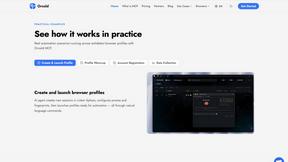
Ornold
Ornold MCP lets AI agents control Chromium and antidetect browsers: click, type, read screens, record workflows, replay profiles without scripts.


AIQualityHQ
AIQualityHQ provides deterministic evaluations across six prompt quality dimensions with instant scores and actionable fixes.

RedLinz
RedLinz turns screenshots into AI prompts by letting you circle and annotate exactly what you want an LLM to change.

About Game Server Backend Alternatives
Game Server Backend is a hosted backend platform purpose-built for multiplayer game development, falling squarely into the Dev Tools category. It consolidates essential operational infrastructure—player authentication, persistent data storage, leaderboards, matchmaking, server hosting, and live-ops configuration—into a single, unified API. Developers and studios often seek alternatives due to specific constraints: pricing models that may not scale with their user base, a need for bespoke platform integrations not supported out of the box, or a requirement for self-hosted infrastructure for compliance or latency reasons. Others may find that the bundled feature set, while comprehensive, does not align perfectly with their game’s unique matchmaking logic or economy design, prompting a search for more modular or customizable solutions. When evaluating an alternative, focus on the specific bottlenecks in your current workflow. For authentication, verify support for your target platforms—whether that is Steam, Epic Games Store, or console SDKs—and check if the provider offers anonymous-to-upgradable account flows. For data persistence, assess the maximum size and query capabilities of per-user JSON state, as some alternatives impose strict limits or lack indexing. For leaderboards, confirm whether regional scoping and real-time updates are supported, as many simple solutions only offer global, static rankings. Finally, consider the SDK quality; a drop-in SDK for your engine (Unity, Unreal, Godot) that wraps REST calls in idiomatic APIs will save significant development time compared to raw HTTP integrations. Always test the free tier thoroughly before committing, as hidden costs often emerge with active user growth.
FAQs about Game Server Backend Alternatives
What is Game Server Backend?
Game Server Backend (GSB) is a hosted backend platform specifically designed for multiplayer game development. It provides a single, unified API that bundles all essential operational infrastructure, including player authentication, persistent JSON state storage, leaderboards with global and regional scopes, matchmaking, server hosting, and a live-ops configuration layer. GSB eliminates the need for developers to stitch together separate vendors for auth, data persistence, rankings, and server discovery.
Who is Game Server Backend for?
GSB is built for studios and indie developers creating multiplayer games across Unity, Unreal Engine, Godot, Roblox, and custom game servers. It is particularly suited for teams that want to ship a multiplayer title without rebuilding backend services from scratch, offering a clean path from prototype to live production. The platform is accessible to teams of all sizes, from solo developers to small studios, thanks to its free forever Dev plan that requires no credit card.
Is Game Server Backend free?
Yes, Game Server Backend offers a free forever Dev plan that does not require a credit card to sign up. This plan provides access to the core feature set, including authentication, data storage, leaderboards, and server hosting, making it ideal for prototyping and small-scale deployments. For production-scale games with higher user counts or additional resource needs, paid tiers are available that scale with your player base.
What authentication methods does Game Server Backend support?
Game Server Backend supports three authentication paths out of the box: anonymous accounts that can be upgraded to persistent accounts later, passwordless email sign-in for frictionless onboarding, and Steam OpenID for PC titles. These methods are designed to cover common multiplayer game scenarios, from early access testing to full retail releases, and are integrated directly into the provided SDKs for Unity, Unreal Engine, and Godot.